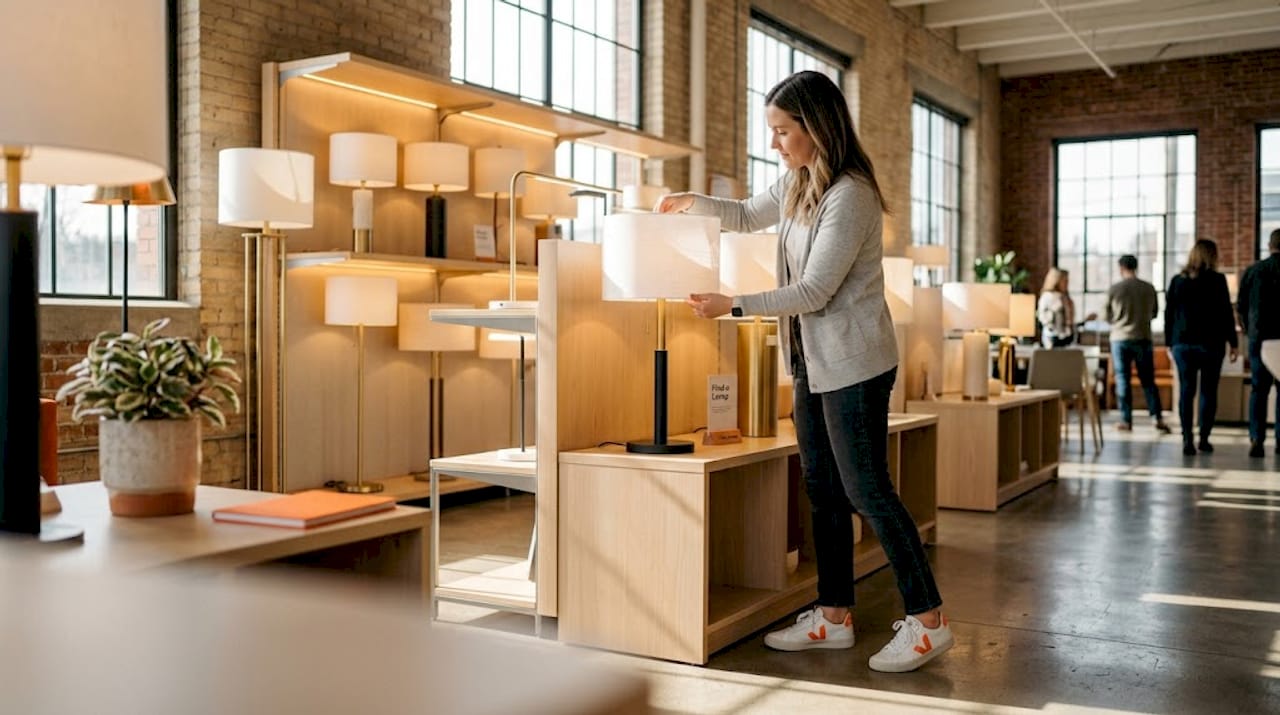
Ooit een showroom binnengelopen waar de lampen gewoon... zingen? Waar elk stuk aanvoelt als een ontdekking, de texturen eruit springen en het ontwerp echt tot leven komt? Dat is geen magie; dat is meesterlijke lampstyling. Aan de andere kant hebben we allemaal wel eens een saaie, slecht verlichte presentatie gezien waar zelfs de meest exquise lampen doodslaan, waardoor je volkomen ongeïnspireerd raakt. De waarheid is dat weten hoe je lampen in showrooms moet stylen niet alleen gaat over het tonen van producten; het gaat over het creëren van een ervaring, het vertellen van een verhaal en uiteindelijk klanten uitnodigen om die prachtige lampen in hun eigen huis voor te stellen.
Bij Find a Lamp geloven we dat elke lamp een persoonlijkheid heeft die wacht om te stralen. Deze gids is jouw exclusieve blik achter de schermen om de kunst en wetenschap achter werkelijk betoverende lampdisplays te begrijpen. We duiken diep in fundamentele verlichtingsconcepten, nauwkeurige plaatsing, ruimtelijke styling en de subtiele fouten die zelfs de helderste collecties kunnen dimmen. Maak je klaar om je aanpak te transformeren en elke lamp een ster te maken!
Inhoudsopgave
- De Drie Pijlers van Licht: Ontmaskering van Showroomverlichtingslagen
- Nauwkeurige Plaatsing en de Wetenschap van Glans: Verlichtingsspecificaties
- De Spotlight Beheersen: Technieken om Lampkenmerken te Accentueren
- Voorbij de Gloeilamp: Lampen Stylen met Ontwerpelementen en Ruimtelijke Arrangementen
- De Stille Saboteurs: Veelvoorkomende Fouten en Hoe Ze te Vermijden
- De Kracht van Minder: De Kunst van Subtiliteit in Showroom Lampstyling
- Jouw Huis, Jouw Showroom: Ontdek Stijlvolle Lampen met Find a Lamp
- Veelgestelde Vragen
Kernpunten
| Punt | Details |
|---|---|
| Gelaagde verlichting is koning | Combineer omgevings-, accent- en verbindende verlichting om diepte, focus en een comfortabele sfeer te creëren. |
| Hoge CRI is ononderhandelbaar | Gebruik lichtbronnen met een Color Rendering Index (CRI) van 90+ om ware kleuren en texturen te onthullen. |
| Neutraal is je beste vriend | Kies voor zachtgrijze of warmwitte achtergronden om lampen te laten opvallen zonder visuele concurrentie. |
| Versla het verblindingsmonster | Strategische stralingshoeken, diffusers en zorgvuldige plaatsing voorkomen harde verblinding en reflecties. |
| Vertel een verhaal met vignetten | Integreer lampen in lifestyle-settings met behulp van rekwisieten, variërende hoogtes en doordachte ruimtelijke arrangementen. |
| Minder is vaak meer | Focus op zorgvuldig samengestelde, intentionele verlichting in plaats van simpelweg "meer licht" om blijvende indrukken te creëren. |
De Drie Pijlers van Licht: Ontmaskering van Showroomverlichtingslagen
Om je lampdisplays echt naar een hoger niveau te tillen, moet je denken als een lichtontwerper. Dit betekent begrijpen dat verlichting geen enkele, vlakke entiteit is, maar een symfonie van verschillende lagen die harmonieus samenwerken. Stel je voor dat je een huis bouwt: je hebt een stevige fundering nodig, dan structurele muren, en tot slot decoratieve elementen. Verlichting werkt op dezelfde manier.
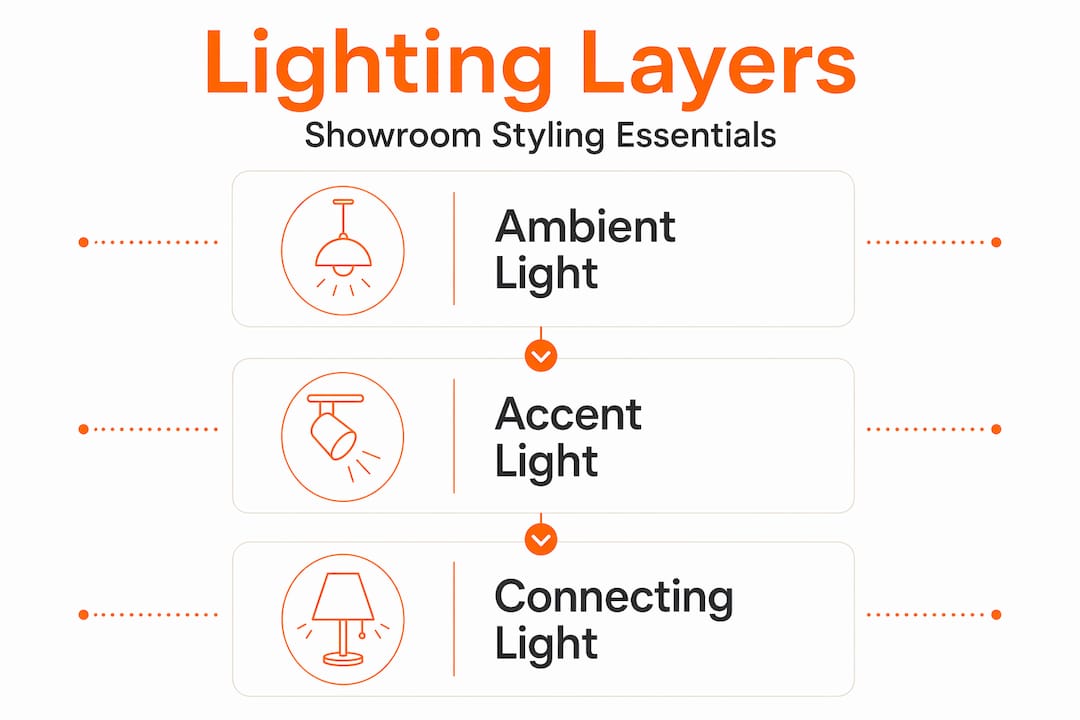
Studio De Schutter's uitgebreide showroom planning gids benadrukt de cruciale rol van het lagen van licht in omgevings-, accent- en verbindende verlichting. Elke laag dient een uniek doel en draagt bij aan een uitnodigende en visueel dynamische ruimte. Verwaarloos er zelfs maar één, en je display loopt het risico onvolledig of ongeïnspireerd aan te voelen.
- Omgevingslicht: De Welkome Omhelzing
Dit is je fundamentele, algemene verlichting, die een comfortabele, uniforme helderheid door de hele showroom biedt. Zie het als de algehele "sfeer" verlichting. Het zorgt ervoor dat bezoekers gemakkelijk door de ruimte kunnen navigeren, zonder harde schaduwen of verblindende plekken. Voor een lampenshowroom moet omgevingslicht zacht, diffuus en consistent zijn, een aangenaam podium scheppend zonder de individuele sterren van de show te overheersen. Het wordt vaak bereikt met inbouwverlichting, koofverlichting of gelijkmatig verdeelde plafondarmaturen. - Accentlicht: De Spotlight Aandachtstrekker
Nu hebben we het over drama! Accentverlichting is precies gerichte verlichting, ontworpen om specifieke lampen of displayvignetten te benadrukken. Dit is waar je het oog trekt, focuspunten creëert en de unieke kenmerken van elke lamp benadrukt. Een smalle lichtbundel op een sculpturale voet, of een zorgvuldig onder een hoek geplaatste railspot die de textuur van een kap verlicht, kan een lamp transformeren van een eenvoudig object in een kunstwerk. Deze laag creëert visuele hiërarchie en leidt de blik van je klant naar je belangrijkste of visueel meest opvallende stukken. - Verbindend Licht: De Onbezongen Held
Vaak over het hoofd gezien, voegt verbindend licht cruciale diepte en samenhang toe aan je showroom. Het verlicht verticale oppervlakken zoals muren, architectonische kenmerken en overgangszones tussen verschillende displayruimtes. Zonder dit kan je showroom aanvoelen als een reeks geïsoleerde eilanden onder spotlights, zonder flow en warmte. Muurverlichting, uplights, of zelfs zacht verlichte planken kunnen een gevoel van ruimtelijkheid creëren, de hele omgeving meer geïntegreerd laten aanvoelen en die ongemakkelijke donkere hoeken voorkomen. Het verbindt letterlijk de punten en brengt het hele ontwerp samen.
Wanneer deze drie lagen vakkundig in balans zijn, is het resultaat meer dan alleen een goed verlichte ruimte; het is een meeslepende ervaring. Shoppers kijken niet alleen naar lampen; ze stellen zich ze voor in hun eigen huis, een concept dat we verder verkennen in onze gids voor gelaagde verlichting voor woonruimtes. Het gaat erom een sfeer te creëren waarin elke lamp voelt alsof hij erbij hoort, nog voordat hij is gekocht.
Nauwkeurige Plaatsing en de Wetenschap van Glans: Verlichtingsspecificaties
Zodra je de kunst van het lagen beheerst, is het tijd om specifiek te worden. De juiste lampplaatsing en technische verlichtingsspecificaties zijn cruciaal om ervoor te zorgen dat je lampen niet alleen de aandacht trekken, maar ook levensecht lijken. Dit is waar de magie van design de wetenschap van licht ontmoet.
Een van de meest kritische specificaties is de Color Rendering Index (CRI). CRI meet hoe nauwkeurig een lichtbron de ware kleuren van objecten weergeeft in vergelijking met natuurlijk daglicht. Zie het zo: een licht met een lage CRI kan een levendig rood er dof uit laten zien, of een rijke houttint er vlak uit laten zien. Voor lampen, waar materiaal, afwerking en kapkleur van het grootste belang zijn, is een hoge CRI absoluut ononderhandelbaar.
Falcon Group's 2025 retail verlichtingsgids pleit sterk voor een CRI van 90 of hoger. Met een CRI van 90+ zullen de subtiele variaties in een keramisch glazuur, het ingewikkelde weefsel van een linnen kap, of de geborstelde afwerking van een metalen voet allemaal met verbluffende nauwkeurigheid worden weergegeven. Dit bouwt vertrouwen op bij je klanten en vermindert de kans op retouren als gevolg van waargenomen kleurverschillen aanzienlijk.
Volgende: Verlichtingsniveaus (Lux). Dit verwijst naar de hoeveelheid licht die op een oppervlak valt. Je wilt niet elke lamp met dezelfde intensiteit bestralen. Verschillende lampen en displaytypes vereisen variërende luxniveaus om echt te stralen zonder over- of onderbelicht te zijn.
- Grote Vloerlampen of Statement Pieces: 300 tot 500 lux. Deze stukken trekken de aandacht door hun grootte en vorm, en vereisen voldoende licht om hun silhouet te definiëren zonder ze te overheersen.
- Gedetailleerde Tafellampen of Ingewikkelde Ontwerpen: 600 tot 1.000 lux. Voor lampen met delicaat vakmanschap, unieke texturen of fijne details helpen hogere luxniveaus die nuances naar voren te brengen.
- Hanglampen of Pendellampen: 400 tot 700 lux. Hier moet het licht de armatuur zelf benadrukken en tegelijkertijd de kwaliteit van het licht dat het uitstraalt demonstreren.
En laten we de kracht van achtergronden niet vergeten. Rocky Mountain Hardware adviseert het gebruik van neutrale achtergronden met gelaagde verlichting en lifestyle-vignetten om ervoor te zorgen dat lampen opvallen. Een zacht, mat grijs, een warm gebroken wit, of zelfs een muur met textuur van gips biedt een perfect canvas dat niet concurreert met het ontwerp van de lamp. Vermijd drukke patronen of oververzadigde kleuren die het oog kunnen afleiden.
| Lamptype | Aanbevolen Lux | CRI Minimum | Achtergrondsuggestie | Kleurtemperatuur |
|---|---|---|---|---|
| Grote Vloerlampen | 300 tot 500 lux | 90+ | Warmwit of lichtgrijs | 2700K - 3000K |
| Tafellampen met Detail | 600 tot 1.000 lux | 92+ | Zachtgrijs of mat neutraal | 2700K - 3000K |
| Hanglampen of Pendellampen | 400 tot 700 lux | 90+ | Donkere contrastmuur of houten paneel | 2700K - 3500K |
| Boog- of Statementlampen | 300 tot 500 lux | 90+ | Open witte ruimte of gestructureerd pleisterwerk | 2700K - 3000K |
Pro Tip: Overweeg bij het positioneren van lampen om ze een paar centimeter van de muur af te plaatsen. Deze subtiele opening laat accentlicht de muur erachter strelen, waardoor een prachtig halo-effect ontstaat dat diepte en waargenomen waarde toevoegt. Het is een klein detail dat een grote impact heeft!
Vergeet niet, shoppers kopen niet zomaar een lamp; ze kopen een visie voor hun huis. Door CRI, luxniveaus en achtergronden nauwgezet te controleren, presenteer je niet alleen een product – je verkoopt een droom. Gebruik onze gids voor het matchen van lampstijlen om specifieke lampesthetiek te koppelen aan de perfecte showroomcontext.
De Spotlight Beheersen: Technieken om Lampkenmerken te Accentueren
Nu we de lagen en de specificaties begrijpen, laten we het hebben over techniek. Het gaat erom hoe je licht manipuleert om de ware schoonheid van elke lamp te onthullen, zodat de unieke kenmerken ervan zingen. Een doordachte benadering van verlichtingstechniek is wat een memorabele presentatie echt onderscheidt van een alledaagse.
Alcon Lighting benadrukt het belang van het balanceren van omgevings-, accent- en taaklagen met veelzijdige railverlichting en variërende helderheidsniveaus. Uniforme, vlakke verlichting is de vijand van textuur en detail. Het ontdoet een lamp van zijn karakter, waardoor een handgeblazen glazen voet er niet anders uitziet dan een massaproduct.
Hier lees je hoe je sterke showroomverlichtingstechnieken implementeert:
- Omarm Verstelbaarheid: Investeer in verstelbare inbouw- en railspots. Je displays zullen evolueren, en vaste verlichting zal snel een beperking worden. De mogelijkheid om lichtbundels te richten, lenzen te wisselen en de intensiteit aan te passen is van het grootste belang voor dynamische styling.
- Varieer Helderheid met Intentie: Niet elke lamp heeft dezelfde hoeveelheid licht nodig. Creëer een visuele reis door een helderder accent op een 'hero'-lamp te plaatsen, en vervolgens zachter omgevingslicht voor complementaire stukken. Dit leidt het oog en voorkomt visuele vermoeidheid.
- Hoek is Alles: Plaats spotlights niet direct boven de lamp of op dezelfde hoogte als de lampenkap. Verlicht in plaats daarvan iets van bovenaf (denk aan 30-45 graden van de verticaal) en onder een lichte hoek ten opzichte van de lamp. Dit creëert subtiele schaduwen en highlights die de textuur van kappen (linnen, rotan, zijde) en de afwerking van lampvoeten (geborsteld metaal, gepolijst keramiek, gesneden hout) onthullen.
- Uplight voor Drama: Voor vloerlampen met interessante voeten of sculpturale elementen, overweeg discrete uplights die aan de voet zijn geplaatst. Deze techniek volgt het silhouet van de lamp naar boven, voegt een dramatische flair toe en benadrukt de vorm. Het werkt wonderwel voor lampen gemaakt van unieke materialen zoals marmer, gegoten hars of gehamerd koper.
- Bestrijd Verblinding met Elegantie: Verblinding is een klantafstoter. Frosted glas diffusers, honingraat lamellen op spotlights en zorgvuldige armatuurplaatsing zijn je beste vrienden. Diffuse lichtbronnen verspreiden licht zachtjes, zorgen voor een gelijkmatige dekking op een lampenkap zonder harde reflecties die shoppers kunnen verblinden of afleiden van het product. Zorg ervoor dat lichtbronnen verborgen of goed afgeschermd zijn van typische kijkhoeken.
Overweeg bij het kiezen van je lichtbronnen deze technische details:
- Stralingshoek: Voor accentverlichting is een stralingshoek van 24 tot 36 graden vaak ideaal, wat een gerichte maar zachte lichtbundel oplevert. Bredere stralen (40-60 graden) zijn beter voor bredere accentuering of verbindend licht.
- Kleurtemperatuur (CCT): Voor de meeste residentiële lampcollecties is een warmwitte LED in het bereik van 2.700K tot 3.000K perfect. Dit bootst de gezellige gloed van gloeilampen na en voelt uitnodigend aan. Koelere temperaturen (3500K+) kunnen een ruimte sterieler doen aanvoelen, wat over het algemeen niet wenselijk is voor een op thuis gericht product zoals lampen.
- Dimfuncties: Installeer dimmers op elk circuit. Hierdoor kun je de sfeer aanpassen voor verschillende momenten van de dag, speciale evenementen, of zelfs om de dimfuncties van de lampen zelf te demonstreren.
Wil je deze technieken virtueel testen? Met onze tools bij Find a Lamp kun je lampen visualiseren voordat je ze koopt, zodat je de plaatsing en het effect kunt perfectioneren zonder één armatuur te verplaatsen!
Voorbij de Gloeilamp: Lampen Stylen met Ontwerpelementen en Ruimtelijke Arrangementen
Lampen bestaan niet in een vacuüm. Om shoppers echt te betrekken, moet je ze integreren in meeslepende verhalen en uitnodigende ruimtes. Doordachte ruimtelijke styling creëert een meeslepende ervaring die diep resoneert, waardoor klanten de lampen in hun eigen leven kunnen visualiseren.
Yellow Architects' 2025 showroomontwerp illustreert dit principe prachtig, met gebruik van platforms van verschillende hoogtes, doolhofachtige scheidingswanden en "ervaringskamers" die echte huiselijke settings nabootsen. Dit transformeert de showroom van een loutere presentatieruimte in een reeks inspirerende vignetten, elk met een onderscheidend verhaal en een ander verlangen oproepend.
Hier lees je hoe je datzelfde ruimtelijke drama in je eigen display kunt opbouwen:
- Varieer Platformhoogtes: Vermijd een eentonige, vlakke presentatie. Gebruik verhogingen, sokkels en tafels van verschillende hoogtes om visueel ritme en hiërarchie te creëren. Een hoge vloerlamp op een laag platform, een compacte tafellamp op een console van middelhoogte, en een hanglamp erboven creëren dynamische beweging voor het oog.
- Creëer Zones met Scheidingswanden: Gebruik matglas, houten lamellen of zelfs stoffen panelen om semi-privé "kamers" of intieme zones te creëren. Deze scheidingswanden isoleren lampclusters, waardoor ze kunnen gloeien als afgebakende scènes, wat een gevoel van ontdekking stimuleert terwijl shoppers door de ruimte bewegen.
- Creëer Lifestyle Vignetten: Hier komen lampen echt tot leven. Combineer een mid-century tafellamp met een stapel zorgvuldig uitgekozen kunstboeken, een comfortabele fauteuil en een kleine potplant. Presenteer een rustieke vloerlamp naast een plaid met textuur en een houten bijzettafel. Deze vignetten vertellen een verhaal, demonstreren hoe de lamp past in een gewenste levensstijl, waardoor het direct aantrekkelijker en herkenbaarder wordt.
- Groepeer op Esthetiek, Niet Alleen Categorie: In plaats van alle tafellampen bij elkaar te groeperen, en dan alle vloerlampen, probeer dan te groeperen op stijl. Toon lampen in industriële stijl met ruwe metalen rekwisieten, onafgewerkte bakstenen achtergronden en minimalistisch meubilair. Combineer zachte, organisch gevormde lampen met natuurlijke materialen, warme tinten en knusse textiel. Dit helpt klanten om zich te verbinden met een specifieke esthetiek die ze misschien zoeken.
- Gebruik Verticale Ruimte: Vergeet het plafond niet! Hangende pendels op verschillende hoogtes, die een waterval-effect creëren, voegen drama toe en trekken het oog naar boven, waardoor de hele ruimte hoger en ruimer aanvoelt. Dit is bijzonder effectief voor het tentoonstellen van collecties kroonluchters of unieke pendelontwerpen.
- Houd Achtergronden Doordacht: Zoals eerder vermeld, zijn neutrale, matte achtergronden essentieel. Je kunt echter subtiele textuur toevoegen met gipsafwerkingen, houten panelen of zelfs een diepe, sfeervolle accentmuur in een specifieke zone om het karakter van een lamp te versterken zonder deze te overheersen.
| Ruimtelijk Element | Effect op Lampdisplay | Beste Toepassing |
|---|---|---|
| Platforms van verschillende hoogtes | Creëert visueel ritme, hiërarchie en waargenomen waarde. | Gemengde collecties, individuele 'hero'-stukken. |
| Doolhofscheidingswanden / Zonering | Isoleert displays, creëert intieme scènes, stimuleert ontdekking. | Lifestyle-vignetten, merkspecifieke collecties. |
| Verticale pendelopstelling | Voegt drama toe, benut plafondruimte, creëert beweging. | Pendel- en kroonluchterdisplays, entrees. |
| Lifestyle-vignetten | Contextualiseert lampen in echte settings, inspireert de verbeelding. | Tafel- en vloerlampdisplays, demonstreert veelzijdigheid. |
| Zorgvuldig uitgekozen rekwisieten | Verbetert de esthetiek, vertelt een verhaal, voegt karakter toe. | Alle lamptypes, vooral voor thematische displays. |
Door lampen doordacht te rangschikken binnen een goed ontworpen ruimte, transformeer je een simpele winkeltrip in een inspirerende designreis. Voor diepere inspiratie over het matchen van ruimtelijke arrangementen met designstijlen, verken je onze gids over verlichting voor interieurdesignstijlen.
De Stille Saboteurs: Veelvoorkomende Fouten en Hoe Ze te Vermijden
Zelfs met de beste bedoelingen kunnen een paar veelvoorkomende misstappen je prachtige lampdisplays stilletjes ondermijnen. Het begrijpen van deze valkuilen en weten hoe je je opstelling kunt controleren, is cruciaal voor het consequent leveren van een positieve, vertrouwenwekkende ervaring voor je kopers.
De Falcon Group's 2025 gids waarschuwt beknopt voor verschillende kritieke fouten die de producthelderheid en de klantervaring kunnen verminderen:
- Overmatige Helderheid: Meer licht is niet altijd beter. Overbelichting kan kleuren vervagen, harde schaduwen creëren en een ruimte overweldigend in plaats van uitnodigend laten aanvoelen. Het zorgt er ook voor dat lampen minder speciaal lijken.
- Mengen van Kleurtemperaturen (CCT): Dit is een grote. Een warmwitte (2700K) lamp naast een koelwitte (4000K) spot plaatsen, creëert visuele dissonantie. Kleuren zullen inconsistent lijken en de hele presentatie zal onsamenhangend en onbetrouwbaar aanvoelen. Houd een consistente CCT aan binnen een enkele displayzone.
- Verticale Spotlights Direct Boven Producten: Dit creëert onflatteuze, scherpe neerwaartse schaduwen op lampenkappen en -voeten, waardoor ze vlak en onaantrekkelijk lijken. Het leidt ook vaak tot verblinding. Verlicht vanuit een hoek om vorm en textuur te onthullen.
- Muurverlichting Negeren: Zoals besproken bij verbindend licht, vlakt het negeren van verticale oppervlakken de hele compositie af. Muren die in het donker verdwijnen achter je lampen, laten de ruimte kleiner en minder verfijnd aanvoelen.
- Plafonds Overbelichten: Hoewel omgevingslicht belangrijk is, kan het plafond overspoelen met helder, uniform licht afbreuk doen aan de lampen zelf en een ongeïnspireerde, institutionele sfeer creëren. Focus licht op de producten en de reis van de klant.
Voer voordat je een nieuwe presentatie onthult een grondige verificatie uit. Zie het als een pre-vlucht checklist:
- Loop het Klantpad: Beweeg fysiek door de showroom zoals een klant dat zou doen. Controleer op directe verblinding van blootgestelde lampen of lichtbronnen. Zijn er storende reflecties op glanzende lampoppervlakken? Een keramische voet moet een zachte, gecontroleerde highlight tonen, geen harde reflectie van het plafondrooster.
- Kleurconsistentiecontrole: Houd een witte kaart of een stuk stof onder verschillende lichten in dezelfde zone. Verschijnen de kleuren consistent? Zien sommige lampen er vreemd geel, blauw of groen uit? Studio De Schutter test reflecties, verblinding en kijkhoeken ter plaatse nauwgezet om een coherente verlichtingshiërarchie te garanderen.
- Schaduwspel: Observeer de schaduwen. Zijn ze zacht en versterkend, of hard en storend? Goede verlichting creëert opzettelijke schaduwen die vorm en textuur definiëren.
- Achtergrondbetrokkenheid: Zijn de muren achter je lampen voldoende verlicht? Vullen ze de presentatie aan of verdwijnen ze in saaiheid?
- Aanpasbaarheidstest: Als je dimmers hebt, test dan verschillende lichtscènes. Hoe ziet de presentatie eruit bij "ochtendlicht" intensiteit versus "avondambiance"? Dit zorgt voor veelzijdigheid voor verschillende momenten van de dag of speciale evenementen.
“Ware uitstraling in een showroom gaat niet over het overspoelen van elke hoek met licht. Het komt voort uit een heldere ruimtelijke dramaturgie, waarbij elke laag van verlichting zijn rol met intentie speelt.” – Studio De Schutter
Door deze veelvoorkomende valkuilen actief te vermijden en je opstellingen rigoureus te controleren, zorg je ervoor dat elke lamp in je showroom in het beste licht wordt gepresenteerd, wat het vertrouwen van de klant opbouwt en hun algehele ervaring verbetert. Voor meer informatie over het matchen van de juiste lamp met de juiste setting, raadpleeg onze gids voor lamptypes en armaturen.
De Kracht van Minder: De Kunst van Subtiliteit in Showroom Lampstyling
Als er één overkoepelend principe is dat werkelijk uitzonderlijke lampenshowrooms definieert, dan is het dit: minder is vaak meer. De meest memorabele displays gebruiken niet noodzakelijkerwijs het meeste licht; ze gebruiken