The Ultimate Guide to Layered Lighting: How to Illuminate Your Home Like a Pro
Lighting is more than just flipping a switch. It's an art form, a science, and a powerful tool for transforming the mood and functionality of your home. Think of it as the unsung hero of interior design! At "Find a Lamp," we believe that well-planned lighting can elevate any space, making it feel more inviting, comfortable, and stylish. The secret? Layered lighting. Let's dive in!
Layered lighting is the technique of combining three primary types of light – ambient, task, and accent – to create a balanced and visually appealing illumination scheme. Each layer serves a distinct purpose, working together to provide the right amount of light where you need it, while also adding depth, dimension, and personality to your space. Think of it like creating a symphony of light, where each instrument (or light fixture) plays a crucial role in the overall harmony.
The Foundation: Ambient Lighting
Ambient light, also known as general lighting, is the foundational layer of any lighting design. It's the overall illumination that fills a room, providing a comfortable level of brightness that allows you to see and move around safely. Think of it as the equivalent of natural daylight, providing a soft, even glow that sets the tone for the entire space.
- Purpose: To provide uniform, base-level light for a room, ensuring safe navigation and a comfortable atmosphere. It's the backdrop upon which you build your other lighting layers.
- Common Fixtures:
- Chandeliers: Perfect for dining rooms, entryways, and living rooms, adding a touch of elegance and providing widespread illumination.
- Flush-mount or Semi-flush Mount Ceiling Lights: Ideal for rooms with lower ceilings, providing a clean and unobtrusive source of ambient light.
- Recessed Downlights: Offer a sleek and modern look, providing focused downlighting that can be strategically placed throughout a room. Consider using adjustable gimbal recessed lights to direct the light where you need it most.
- Large Floor Lamps (Torchiere): These lamps direct light upwards, bouncing it off the ceiling to create a soft, diffused ambient glow. They are great for adding height and filling dark corners.
- Track Lighting (with multiple heads directed upwards): Another way to create ambient light by bouncing it off the ceiling.
- Pro Tip: Always, *always* install a dimmer switch for your ambient lighting! This gives you complete control to transition from bright and functional to soft and atmospheric with a simple adjustment. Imagine hosting a lively dinner party versus settling in for a cozy movie night – a dimmer switch allows you to create the perfect ambiance for any occasion. Also, consider smart bulbs for even greater control and automation!
- Example: In a living room, ambient lighting could come from recessed lights controlled by a dimmer, supplemented by a torchiere floor lamp in a corner to soften shadows.
The Workhorse: Task Lighting
Task lighting is exactly what it sounds like: it illuminates the specific areas where you perform specific tasks. Whether you're engrossed in a novel, whipping up a culinary masterpiece, or burning the midnight oil at your desk, task lighting provides focused, brighter light to prevent eye strain, improve concentration, and enhance productivity. It's all about functionality and precision.
- Purpose: To provide focused illumination for specific activities, making it easier and more comfortable to perform tasks without straining your eyes.
- Common Fixtures:
- Desk Lamps: Essential for home offices, providing direct light for reading, writing, and computer work. Look for adjustable models that allow you to customize the height and angle of the light.
- Under-Cabinet Lighting in the Kitchen: A must-have for illuminating countertops, making food preparation safer and more enjoyable. LED strip lights or puck lights are popular choices.
- Bedside Reading Lamps or Wall Sconces: Offer focused light for reading in bed without disturbing your partner. Wall sconces free up valuable nightstand space.
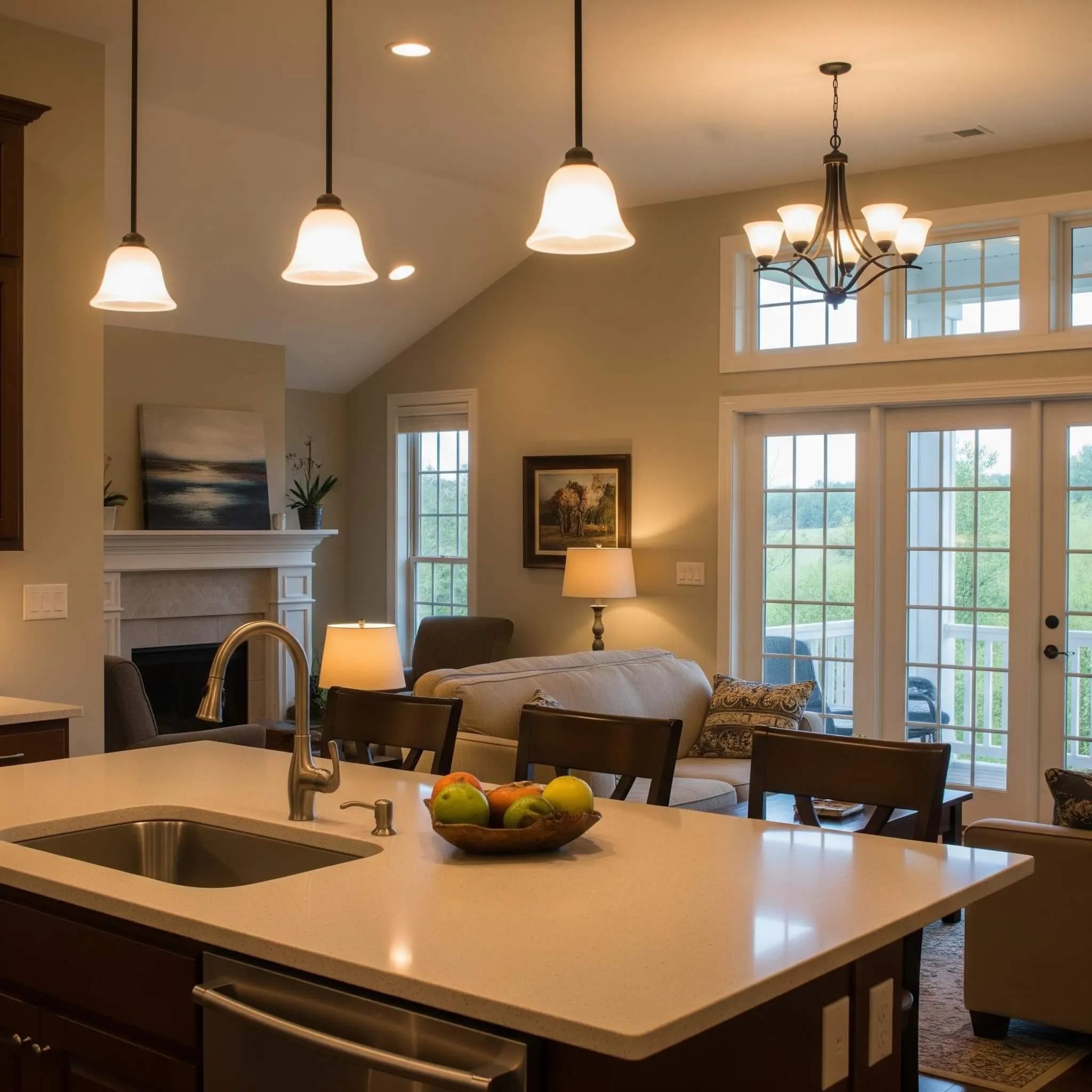
- Pendant Lights Over a Kitchen Island: Provide both task and ambient lighting for food preparation, dining, and socializing.
- Floor Lamps with Adjustable Arms: Great for reading nooks or providing task lighting next to a sofa or armchair.
- Magnifying Lamps: Ideal for detailed hobbies such as model building or jewelry making.
- Pro Tip: Position task lights to the side of your workspace (opposite your dominant hand) to avoid casting shadows over your task. Adjustable arms and heads are a huge plus for directing light exactly where you need it. Consider the color temperature of your task lighting as well. A cooler, bluer light (around 4000K-5000K) is generally better for tasks that require focus and concentration, while a warmer light (around 2700K-3000K) is more relaxing and suitable for reading.
- Example: In a home office, a desk lamp with an adjustable arm provides focused light for computer work, while under-cabinet lighting illuminates the shelves above the desk.
- External Link: Check out this article on the importance of proper task lighting from Architectural Digest for more inspiration.
The Finishing Touch: Accent Lighting
Accent lighting is the most dramatic and artistic layer of your lighting scheme. Its purpose is to create visual interest, highlight architectural details, and showcase the things you love, like artwork, sculptures, plants, or prized possessions. It adds depth, contrast, and a touch of luxury to your design, transforming a room from ordinary to extraordinary.
- Purpose: To draw attention to focal points, add a layer of sophistication, and create a sense of drama and visual appeal. It's the jewelry of your lighting design.
- Common Fixtures:
- Track Lighting: Highly versatile, allowing you to direct light onto multiple objects or areas.
- Wall-Mounted Picture Lights: Specifically designed to illuminate artwork, bringing out the colors and textures.
- Directional Spotlights: Perfect for highlighting sculptures, architectural features, or plants.
- Slim Wall Sconces (Up/Down Lighting): Create an upward or downward wash of light, adding a subtle and elegant touch to walls.
- Recessed Accent Lights: Similar to recessed downlights but with a narrower beam angle, ideal for highlighting specific objects.
- Display Cabinet Lighting: Showcases collectibles and adds a touch of elegance.
- Pro Tip: For maximum impact, accent lighting should be about three times brighter than your ambient light. This contrast is what makes your chosen feature "pop." Consider using different beam angles to achieve the desired effect. A narrow beam angle will create a more focused and dramatic highlight, while a wider beam angle will provide a softer, more diffused glow. Also, pay attention to the color rendering index (CRI) of your accent lights. A high CRI (80 or above) will ensure that the colors of your artwork or objects are accurately rendered.
- Example: In a living room, accent lighting could be used to highlight a painting above the fireplace with a picture light, while spotlights illuminate a collection of sculptures on a shelf.
- External Link: The Illuminating Engineering Society (IES) offers valuable resources and standards for lighting design.
Bringing It All Together: The Symphony of Light
A truly successful lighting scheme uses all three layers – ambient, task, and accent – in harmony. It's about creating a balanced and dynamic environment that meets your functional needs while also enhancing the aesthetic appeal of your space. Think of it as composing a symphony, where each instrument (or light fixture) plays a vital role in the overall performance.
For example, a living room might have recessed lights controlled by a dimmer for ambient glow, a stylish floor lamp with an adjustable arm for reading (task), and a picture light over the mantelpiece to highlight a favorite artwork (accent). In a kitchen, you might have recessed lights for general illumination, under-cabinet lighting for food preparation, and pendant lights over the island for both task and ambient lighting.
By thinking in layers, you can create a dynamic, flexible, and beautiful space that adapts to your changing needs and moods. You can transform a room from bright and functional to soft and atmospheric with a simple adjustment of your dimmer switches. You can highlight the features you love and create a welcoming and inviting atmosphere for your family and friends.
Beyond the Basics: Additional Considerations
- Color Temperature: As mentioned earlier, color temperature plays a crucial role in the overall ambiance of a room. Warmer color temperatures (2700K-3000K) create a cozy and inviting atmosphere, while cooler color temperatures (4000K-5000K) are more energizing and suitable for tasks that require focus.
- Light Bulbs: Choosing the right light bulbs is essential for achieving the desired lighting effect. LED bulbs are the most energy-efficient option and offer a long lifespan. Consider the brightness (lumens) and color temperature (Kelvin) when selecting bulbs.
- Smart Lighting: Smart lighting systems offer unparalleled control and customization. You can adjust the brightness, color temperature, and even the color of your lights with your smartphone or voice assistant. You can also create custom lighting scenes for different activities and moods.
- Natural Light: Don't forget to take advantage of natural light! Maximize natural light by keeping windows clean and using light-colored window treatments. Mirrors can also be used to reflect and amplify natural light.
Ready to transform your home with the power of layered lighting? Our AI-powered tool at "Find a Lamp" can help you discover the perfect fixtures for each layer, tailored to your specific needs and style. Start exploring today and unlock the potential of your space!
External Link: For more inspiration and expert advice on lighting design, visit a reputable design blog like MyDomaine.