Sfeerverlichting: Het Geheim Achter Gezelligheid en Comfort in Jouw Huis
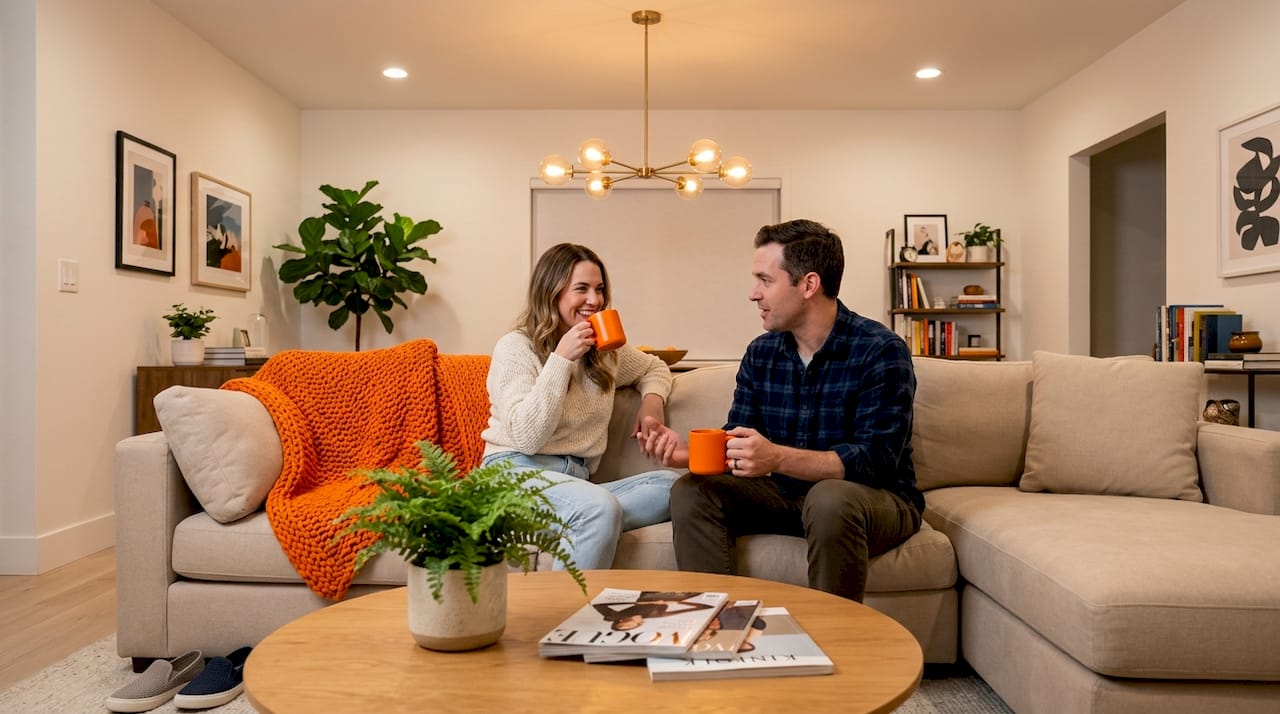
Ben je ooit een kamer binnengelopen en voelde het meteen... goed? Als een warme knuffel, een zacht gefluister, of een perfect gezette kop thee? Grote kans dat je niet alleen het meubilair of de verfkleur bewonderde. Je ervoer de magie van uitzonderlijke sfeerverlichting. Het is de onbezongen held van interieurdesign, de basisgloed die bepaalt hoe een ruimte aanvoelt, hoe uitnodigend deze is, en uiteindelijk hoeveel je ervan houdt om er te zijn.
De meeste huiseigenaren weten instinctief wanneer een kamer "niet klopt", zonder te kunnen benoemen waarom. Negen van de tien keer is sfeerverlichting de boosdoener. Voorbeelden van sfeerverlichting variëren van het sculpturale drama van een kroonluchter tot de subtiele gloed van LED-strips die achter een boekenkast zijn weggewerkt, en elke keuze vormt hoe een kamer aanvoelt om in te leven. Om het goed te doen, moet je een paar belangrijke principes begrijpen voordat je een armatuur koopt. Deze uitgebreide gids loodst je daar precies doorheen, met de criteria, praktijkvoorbeelden en de beslissingen die een prachtig verlicht huis onderscheiden van een huis met alleen maar lampen erin. Maak je klaar om je ruimte te transformeren van louter functioneel naar werkelijk fantastisch!
Inhoudsopgave
- Belangrijke Criteria voor het Kiezen van Sfeerverlichting: Jouw Basis voor de Juiste Gloed
- Voorbeeld Sfeerverlichting 1: Inbouw- & Opbouw Plafondlampen – De Onzichtbare Werkpaarden
- Voorbeeld Sfeerverlichting 2: Kroonluchters & Hanglampen – Statementstukken met Inhoud
- Voorbeeld Sfeerverlichting 3: Indirect Licht met Koof- & LED-stripverlichting – De Meester van Sfeer
- Sfeerverlichtingsopties Vergelijken: Helderheid, Installatie en Stijl
- Hoe Kies Je de Juiste Sfeerverlichting voor Jouw Ruimte: Een Stappenplan
- De Oncomfortabele Waarheid over Beslissingen over Sfeerverlichting
- Ontdek Sfeerverlichtingsoplossingen op Maat voor Jouw Huis
- Veelgestelde Vragen
Belangrijke Lessen voor Jouw Verlichtingsreis
| Punt | Details |
|---|---|
| Overweeg kamergrootte | Kamerafmetingen en plafondhoogte bepalen hoeveel sfeerverlichtingsarmaturen je nodig hebt voor gelijkmatig licht. Grote kamers vragen om meer bronnen; lage plafonds geven de voorkeur aan opbouwlampen. |
| Omarm warm licht | Kies lampen onder 3000K Kelvin (idealiter 2700K) om werkelijk gezellige, uitnodigende sfeerverlichting te creëren die je huis als een toevluchtsoord doet aanvoelen. |
| Laagjes aanbrengen | Meerdere lichtpunten zijn cruciaal! Ze voorkomen harde schaduwen, elimineren donkere hoeken en laten kamers merkbaar groter en evenwichtiger aanvoelen. |
| Dimmers zijn essentieel | Niet onderhandelbaar voor flexibiliteit! Pas de helderheid eenvoudig aan verschillende tijden van de dag, activiteiten en stemmingen aan – van heldere ochtenden tot intieme avonden. |
| Huurders hebben opties | Plug-in lampen, strategische vloer-uplighters en slimme LED-strips bieden ongelooflijke sfeerverlichtingsoplossingen zonder permanente bedrading. |
Belangrijke Criteria voor het Kiezen van Sfeerverlichting: Jouw Basis voor de Juiste Gloed
Voordat we ons storten op oogverblindende armaturen, laten we de basis leggen. Zie sfeerverlichting als de grondverf voor je kamer – het zet de algehele toon voordat je accentkleuren toevoegt. De armaturen die je kiest, moeten de kamer dienen, niet andersom. Hier zijn de kernfactoren die de moeite waard zijn om te evalueren om ervoor te zorgen dat je sfeerverlichting altijd perfect is:
- Kamergrootte en Plafondhoogte: De Grote Schaal van Licht
Dit is je startpunt. Een uitgestrekte open woonruimte heeft totaal andere behoeften dan een knusse leeshoek. Grotere kamers hebben meer armatuurpunten nodig om licht gelijkmatig te verdelen en sombere hoeken te voorkomen. Een woonkamer van bijvoorbeeld 4,5x6 meter (ca. 27 m²) heeft misschien 4-6 inbouwspots nodig of een combinatie van een centrale hanglamp met strategische vloerlampen, terwijl een slaapkamer van 3x3 meter (9 m²) perfect tevreden kan zijn met één plafondlamp en een paar bedlampjes. Lage plafonds (2,4 meter of minder) geven de voorkeur aan slanke, onopvallende opbouw- of semi-opbouwstijlen, terwijl hogere plafonds (2,7+ meter) een wereld aan mogelijkheden openen voor dramatische hangarmaturen, grote kroonluchters en elegante koofinstallaties. - Kleurtemperatuur: De Warmtefactor
Hier komt "gezellig" echt om de hoek kijken. Kleurtemperatuur, gemeten in Kelvin (K), bepaalt of je licht warm en uitnodigend aanvoelt of koel en klinisch. Voor sfeerverlichting in ontspannende ruimtes zoals slaapkamers, woonkamers en eetruimtes, wil je absoluut onder de 3000 Kelvin blijven. Streef naar 2700K – dit bootst de warme, gouden gloed van traditionele gloeilampen en kaarslicht na, waardoor alles (en iedereen!) er beter uitziet en meer ontspannen aanvoelt. Boven de 3000K gaan, vooral in het bereik van 4000K+, kan een ruimte hard, steriel en onwelkom doen aanvoelen. Architectural Digest benadrukt consequent het belang van warm licht voor het creëren van een uitnodigende sfeer. - Gelaagde Verlichting: De Kracht van Drie
Een enkele bovenlichtbron is de doodzonde van lichtontwerp. Het creëert een harde "poel" van licht direct eronder, werpt onflatteuze schaduwen en laat de rest van de kamer dof en verwaarloosd aanvoelen. Een gelaagde verlichtingsaanpak is je geheime wapen. Dit betekent het combineren van sfeerverlichting (algemene verlichting), taakverlichting (voor specifieke activiteiten zoals lezen of koken) en accentverlichting (om kunst of architectonische kenmerken te benadrukken). Specifiek voor sfeerverlichting zorgt het combineren van plafondarmaturen met indirecte lichtbronnen (zoals koofverlichting) en misschien een of twee vloerlampen voor een gelijkmatige warmteverdeling, elimineert het schaduwen en laat het kamers merkbaar groter en geraffineerder aanvoelen. - Dimmers: Jouw Sfeer Maestro
Deze zijn niet onderhandelbaar. Serieus. Een ruimte die moet werken voor een heldere ochtendkoffie, geconcentreerd middagwerk en intieme zaterdagavonddiners kan simpelweg niet vertrouwen op een vaste lichtinstelling. Dimmers stellen je in staat de helderheid aan te passen aan elk moment van de dag, activiteit of stemming. Ze transformeren een eentonige kamer in een dynamische, aanpasbare omgeving. Stel je voor dat je je plafondlampen dimt tot 30% voor een filmavond, of ze helderder maakt tot 80% om schoon te maken – dat is de kracht van dimmers.
Verlichting is niet louter decoratief. Verlichting is goed voor 20 tot 30% van de totale impact van een kamerontwerp, wat betekent dat de armatuurbeslissingen die je neemt echt gewicht in de schaal leggen over hoe je ruimte overkomt op iedereen die deze betreedt.
Pro Tip: Bij het schatten van hoeveel armaturen een kamer nodig heeft voor sfeerverlichting, is een goede vuistregel om te streven naar ongeveer 20 lumen per vierkante meter. Dus een woonkamer van 20 m² zou ongeveer 4000 lumen aan sfeerverlichting nodig hebben. Als je armaturen elk 500 lumen leveren, heb je 8 armaturen nodig. Pas dit aan op basis van de plafondkleur (donkerdere plafonds absorberen meer licht en vereisen meer bronnen) en persoonlijke voorkeur.
Nu je de belangrijkste overwegingen begrijpt, laten we de meest voorkomende en effectieve sfeerverlichtingsopties verkennen.
Voorbeeld Sfeerverlichting 1: Inbouw- & Opbouw Plafondlampen – De Onzichtbare Werkpaarden
Inbouwspots (vaak 'can lights' of 'pot lights' genoemd) en opbouwplafondarmaturen zijn de onbezongen helden, de stille werkpaarden van sfeerverlichting. Ze zitten stil, nemen geen visuele ruimte in en werpen een brede, gelijkmatige lichtgloed die een hele kamer bedekt zonder aandacht te vragen. Ze zijn het summum van minimalistische functie en bieden licht zonder af te leiden van je inrichting.
Wat ze bijzonder effectief maakt voor woonkamers, slaapkamers en zelfs keukens:
- Gelijkmatige, Naadloze Dekking: Vier tot zes inbouwspots, strategisch verdeeld over een plafond van 20 tot 40 vierkante meter, leveren de soort uitgebalanceerde sfeeregaliteit die een enkele hanglamp simpelweg niet kan repliceren. Ze baden de kamer in een zachte gloed, elimineren donkere hoeken en creëren een gevoel van ruimtelijkheid.
- Comfortabele Lumen Output: Voor sfeerdoeleinden, richt je op 300 tot 500 lumen per armatuur. Dit bereik ondersteunt veilige beweging en comfortabel zicht zonder de hardheid van taakverlichting, waardoor het perfect is voor algemene verlichting. Zoek naar armaturen met een brede spreidingshoek (bijv. 60 graden of meer) om de dekking te maximaliseren.
- Designneutraliteit: Omdat ze in wezen onzichtbaar zijn (of op zijn minst zeer discreet), werken inbouwspots in vrijwel elke interieurstijl. Van strak Scandinavisch minimalisme tot gezellige moderne boerderijstijl of warm maximalisme, ze passen naadloos, waardoor je meubels en kunst de hoofdrol spelen.
- Dimmercompatibiliteit: Het combineren met dimmers is van het grootste belang. Dit stelt je in staat moeiteloos over te schakelen van heldere, energieke ochtenden naar zachte, intieme avonden, of zelfs een subtiele gloed voor een filmavond, allemaal zonder een enkele lamp te verwisselen.
De ene ontwerpfout die je moet vermijden: vertrouw niet op een enkele centrale armatuur. Eén bovenlicht in het midden van een kamer creëert een heldere poel direct eronder en donkere, onflatteuze hoeken overal elders. Het verspreiden van lichtbronnen over het plafond elimineert dit probleem volledig, waardoor een veel comfortabelere en uitnodigendere sfeer ontstaat.
Voor huurders die geen inbouwverlichting kunnen installeren, kan een cluster van stijlvolle opbouw- of semi-opbouw hanglampen op verschillende hoogtes het effect van verspreid licht nabootsen, visuele interesse toevoegen en volledig verwijderbaar zijn. Voor degenen die wel kunnen renoveren, bekijk tips voor gelijkmatige plafondverlichting voor advies over afstand en plaatsing om optimale uniformiteit te bereiken.
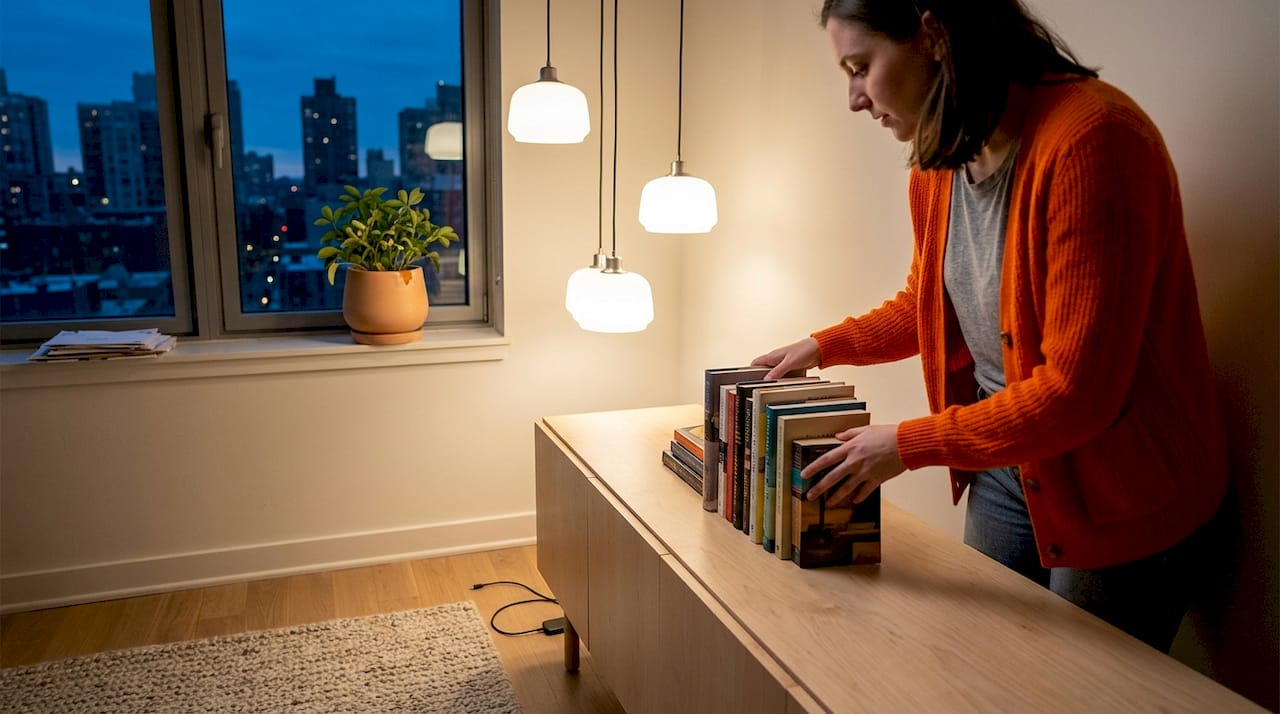
Pro Tip: Gebruik "warm-dimmende" LED-lampen in inbouwarmaturen. Dit zijn magische lampen die naar een warmere, amberkleurige tint verschuiven wanneer ze dimmen, wat het natuurlijke gedrag van gloeilampen nabootst. Dit creëert een instinctief gezelligere sfeer bij lagere helderheidsniveaus, waardoor je avonden echt speciaal worden.
Naast plafondarmaturen kan sfeerverlichting ook afkomstig zijn van decoratieve statementstukken die persoonlijkheid en flair toevoegen.
Voorbeeld Sfeerverlichting 2: Kroonluchters & Hanglampen – Statementstukken met Inhoud
Een kroonluchter doet iets wat een inbouwspot nooit kan: hij vult de kamer als een aanwezigheid, een blikvanger die de blik omhoog trekt en de hele ruimte verankert met een soort van stille autoriteit. Wanneer correct gekozen en gecombineerd met de juiste dimmer en lampkleurtemperatuur, levert het ook werkelijk prachtige sfeerverlichting, en wordt het zowel een functionele lichtbron als een kunstwerk.
Belangrijke overwegingen bij het kiezen van kroonluchters of hanglampen voor sfeerdoeleinden:
- Plafondhoogte & Schaal: Dit is cruciaal. Kroonluchters en grote hanglampen hebben minstens 2,7 meter vrije ruimte nodig om goed te hangen zonder de ruimte te overweldigen of een gevaar te worden. Voor eetkamers moet de onderkant van het armatuur doorgaans 75-90 cm boven het tafelblad hangen. In kamers met plafonds van 2,4 meter, overweeg semi-opbouwversies of kleinere, gestroomlijndere hanglampen die visueel drama behouden met minder hangafstand. Overmaatse armaturen kunnen een grote kamer grandioos doen aanvoelen, terwijl een te klein armatuur verloren zal lijken.
- Materiaal Keuzes & Lichtverspreiding: Glas- en metaalcombinaties bieden blijvende esthetische veelzijdigheid en passen natuurlijk bij zowel eigentijdse als traditionele interieurs. Zoek naar armaturen met doorschijnende glasdiffusers of stoffen kappen, die bijzonder effectief zijn in het verzachten van de lichtbron en het elimineren van harde verblinding, wat zorgt voor een comfortabele sfeervolle gloed in plaats van een verblindende spotlight. Mat of geëtst glas is uitstekend voor zachte, gelijkmatige verspreiding.
- Dekking & Architectonisch Accent: Hoewel vaak gericht op een specifiek gebied (zoals een eettafel), kan een kroonluchter met een brede kap of een cluster van hanglampen dienen als een statement sfeerverlichtingsbron die zachtjes architectonische kenmerken eromheen accentueert, niet alleen het gebied er direct onder. Het verspreide licht helpt het bovenste volume van een kamer te vullen, wat diepte toevoegt.
- Dimmerintegratie: Hier verdienen kroonluchters echt hun volle waarde. Bij 100% helderheid tijdens een levendig etentje creëren ze een levendige energie. Gedimd tot 30% voor een romantische maaltijd of een rustige avond, produceren ze de soort gouden warmte die een kamer bewoond en levendig doet aanvoelen, waardoor de sfeer direct verandert.
Specifiek voor eetkamers levert een kroonluchter die 75 tot 90 cm boven het tafelblad hangt tegelijkertijd sfeer- en zacht taaklicht, waardoor je maaltijd en gasten perfect worden verlicht. In woonkamers verankert een oversized hanglamp of een geclusterde multi-lichtinstallatie boven de zithoek de meubelgroep op dezelfde manier als een goed vloerkleed op vloerniveau, waardoor de aandacht wordt getrokken en de ruimte wordt gedefinieerd.
Ontdek onze selectie kroonluchters en hanglampen om te zien hoe verschillende armatuurschalen werken in diverse kamergroottes en stijlen.
“Sfeervolle kroonluchterverlichting voegt comfortabele helderheid toe zonder te verblinden. Combineer met dimmers en glas-metaalcombinaties voor een tijdloze esthetiek die overgaat van helder en sociaal naar gedimd en intiem zonder een enkel element te veranderen.” — Architectural Digest Mood Lighting Guide
Als plafondarmaturen niet bij je ruimte passen, of als je een extra laagje magie wilt toevoegen, overweeg dan indirecte opties die sfeervolle gloed creëren zonder harde stralen.
Voorbeeld Sfeerverlichting 3: Indirect Licht met Koof- & LED-stripverlichting – De Meester van Sfeer
Indirecte sfeerverlichting is misschien wel het meest onderschatte hulpmiddel in huisdesign. In plaats van licht naar beneden te werpen vanuit een zichtbare bron, kaatst het licht van een plafond of muur, zodat de gloed aanvoelt alsof deze uit de kamer zelf komt. Het effect is meeslepend, opmerkelijk flatterend en ongelooflijk kalmerend – denk aan een zachte zonsonderganggloed in plaats van een spotlight.
Waarom indirecte verlichting in bijna elk huis thuishoort:
- Ruimtelijke Expansie & Illusie: Koofverlichting en LED-strips die licht van plafonds of muren weerkaatsen, kunnen een ruimte 20 tot 30% groter doen aanvoelen, vooral als de muren of het plafond een lichte kleur hebben. Door de omtrek of de bovenste delen van een kamer te verlichten, trekt het de blik naar buiten en omhoog, waardoor een expansief gevoel ontstaat – een echte aanwinst voor kamers onder de 25 vierkante meter.
- Geen Verblinding, Maximaal Comfort: Omdat de lichtbron volledig verborgen is en de verlichting wordt gereflecteerd, zijn er geen zichtbare heldere punten die knijpen of ongemak veroorzaken. Dit is waarom indirecte verlichting zo populair is in thuisbioscopen, slaapkamers en badkamers – het biedt voldoende licht zonder enige hardheid, perfect voor ontspanning.
- Architectonische Verfraaiing & Drama: Een strip warm LED-licht weggewerkt in een plafondkoof, achter een zwevende plank, langs de basis van een kookeiland, of onder een badkamermeubel vestigt de aandacht op de structuur en kenmerken van de kamer zonder om aandacht te schreeuwen. Het creëert subtiele accenten en dramatische schaduwen, wat diepte en verfijning toevoegt.
- Huurder-vriendelijke Flexibiliteit: Dit is een enorme overwinning! Plug-in vloer-uplighters (torchière lampen) en zelfklevende LED-strips achter tv's, monitoren, planken of zelfs kunstwerken voegen aanzienlijke sfeervolle vulling toe zonder dat er ook maar één draad in de muur wordt aangeraakt. Je krijgt direct sfeerverlichting zonder toestemming van de verhuurder of een rekening van een aannemer.
De ideeën voor indirecte sfeerverlichting die vandaag beschikbaar zijn, gaan veel verder dan eenvoudige LED-tape. Neon-achtige diffuse flexstrips bieden continue, stipvrije lichtlijnen. Kleurafstemmende RGBW-systemen stellen je in staat de kleur en warmte van je licht te veranderen met een app. Batterij-aangedreven plakspots kunnen in kasten of onder planken worden weggewerkt voor snelle, gemakkelijke sfeer, zonder professionele installatie.
Pro Tip: Wanneer je LED-strips plaatst voor een sfeervol effect, zorg er dan voor dat de strip zelf volledig verborgen is. Als je de daadwerkelijke diodes kunt zien vanuit een zittende of staande positie, is de strip te blootgesteld en zal deze verblinding veroorzaken in plaats van een zachte sfeer. Een eenvoudig aluminium profiel met een diffuser, een verzonken richel in het timmerwerk, of strategische plaatsing achter een rand lost dit in de meeste installaties op.
Om te begrijpen welke sfeeropties het beste bij jouw ruimte passen, bekijk deze vergelijkende samenvatting.
Sfeerverlichtingsopties Vergelijken: Helderheid, Installatie en Stijl
Kiezen tussen verlichtingstypes is eenvoudiger wanneer je de afwegingen naast elkaar kunt zien. Hier is hoe de belangrijkste opties zich verhouden tot de factoren die het meest van belang zijn voor het creëren van die perfecte gezellige gloed.
| Armatuurtype | Lichtopbrengst | Installatiecomplexiteit | Stijlimpact | Beste pasvorm voor de kamer |
|---|---|---|---|---|
| Inbouwspots | Hoog (300-500 lm elk), gelijkmatige gloed | Matig (vereist bedrading, plafonduitsparingen) | Minimaal, modern, verdwijnt | Woonkamers, keukens, gangen, badkamers – elke kamer die naadloos algemeen licht nodig heeft. |
| Opbouw plafondlampen | Matig tot hoog, direct naar beneden gericht | Laag tot matig (basisbedrading) | Subtiel tot decoratief, afhankelijk van armatuur | Slaapkamers, entrees, kleinere kamers, lage plafonds. |
| Kroonluchters | Matig tot hoog, vaak diffuus | Hoog (professionele bedrading, plafondondersteuning) | Sterk, statement-makend middelpunt | Eetkamers, woonkamers, foyers, grote slaapkamers. |
| Hanglampclusters | Matig, kan gericht of diffuus zijn | Matig (bedrading, zorgvuldige afstand) | Gedurfd, architectonisch, definieert zones | Open woonruimtes, kookeilanden, trappenhuizen, entrees. |
| Koofverlichting | Zacht, diffuus, naadloze gloed | Hoog (vereist ingebouwd architectonisch detail) | Geraffineerd, naadloos, dramatisch | Slaapkamers, media kamers,
Misschien vind je deze lampen ook leukBlader door onze uitgebreide catalogus lampen met directe links om te kopen bij vertrouwde retailers. Vind lampen |