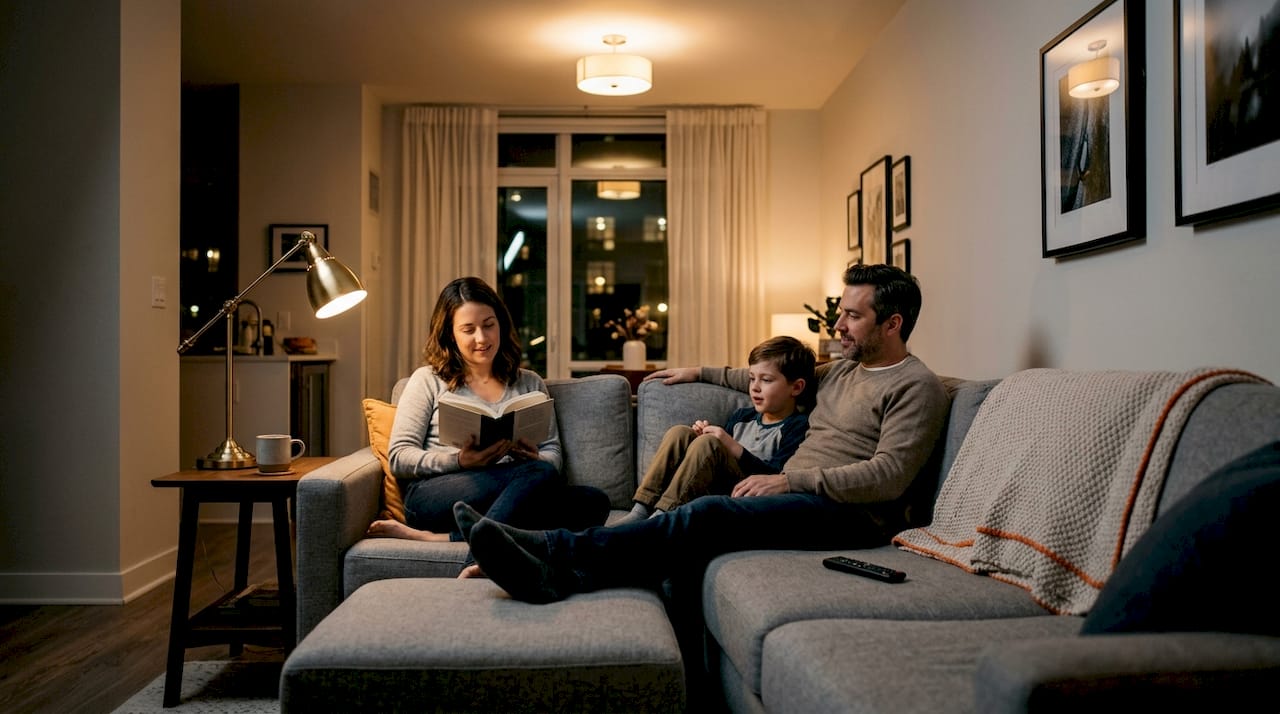
Few design decisions carry as much weight as lighting, yet most of us treat it as an afterthought. We choose a ceiling fixture, maybe add a floor lamp, and call it done. The result? A living room that feels flat, either too bright for a relaxed evening or too dim for focused tasks. But what if your living room could effortlessly shift from a vibrant social hub to a cozy reading nook, then to a dramatic movie night setting, all with a simple tap or voice command? The secret that experienced designers rely on is a layered approach, one that weaves together multiple light sources at different heights and intensities. Welcome to the world of intelligent illumination, where your living room truly lives up to its potential.
At Find a Lamp, we believe lighting isn't just about brightness; it's about mood, function, and personal expression. It's about designing an experience. In this comprehensive guide, we're diving deep into the art and science of living room lighting. We’ll cover everything from mastering the magic of layered light and harnessing smart controls, to selecting stylish fixtures and uncovering brilliant renter-friendly tricks that require zero drilling. Get ready to craft a living room that doesn't just look good, but feels utterly right for every moment of your day.
Understand Layered Lighting: The Creative Foundation
Think of layered lighting as the architecture behind a great room. Without it, even the most beautifully furnished living room can feel one-dimensional, like a painting viewed under a single fluorescent tube rather than the warm, directional glow of a gallery spotlight. Layered lighting is the primary methodology for living room illumination, combining ambient, task, and accent layers at varying heights and intensities for depth, flexibility, and mood control.
There are three distinct layers, and each one plays a specific, critical role in creating a dynamic and functional space:
- Ambient Lighting: The Room's Embrace
This is your room’s base layer, the overall illumination that fills the space so you can move around safely and comfortably. Think recessed downlights, flush-mount ceiling fixtures, chandeliers, and pendant lights. Ambient sources are typically positioned overhead and cover the widest area. Without this layer, the room simply feels dark and uninviting. It’s the foundational glow that sets the initial tone. - Task Lighting: Focused Functionality
Task lighting targets specific activities, providing focused illumination where you need it most. Reading lamps beside sofas, a swing-arm sconce near a favorite armchair, or a table lamp positioned close to a workspace all belong here. Task lighting is brighter and more focused than ambient light. It protects your eyes during concentrated work, reduces strain, and adds a functional anchor to different zones within the room, making activities like reading, crafting, or even just filling out paperwork comfortable. - Accent Lighting: The Art of Emphasis
Accent lighting is where personality truly enters the picture. It draws the eye to what you love most: a gallery wall, a sculptural plant, a textured stone fireplace surround, or an architectural alcove. Picture lights above artwork, LED strip lights tucked behind shelving, or a small directional spotlight aimed at a prized ceramic piece all count as accent sources. Accent lighting typically operates at one-third of the intensity of ambient light, creating contrast that adds visual drama, highlights textures, and makes your decor pop. It's about creating focal points and adding depth.
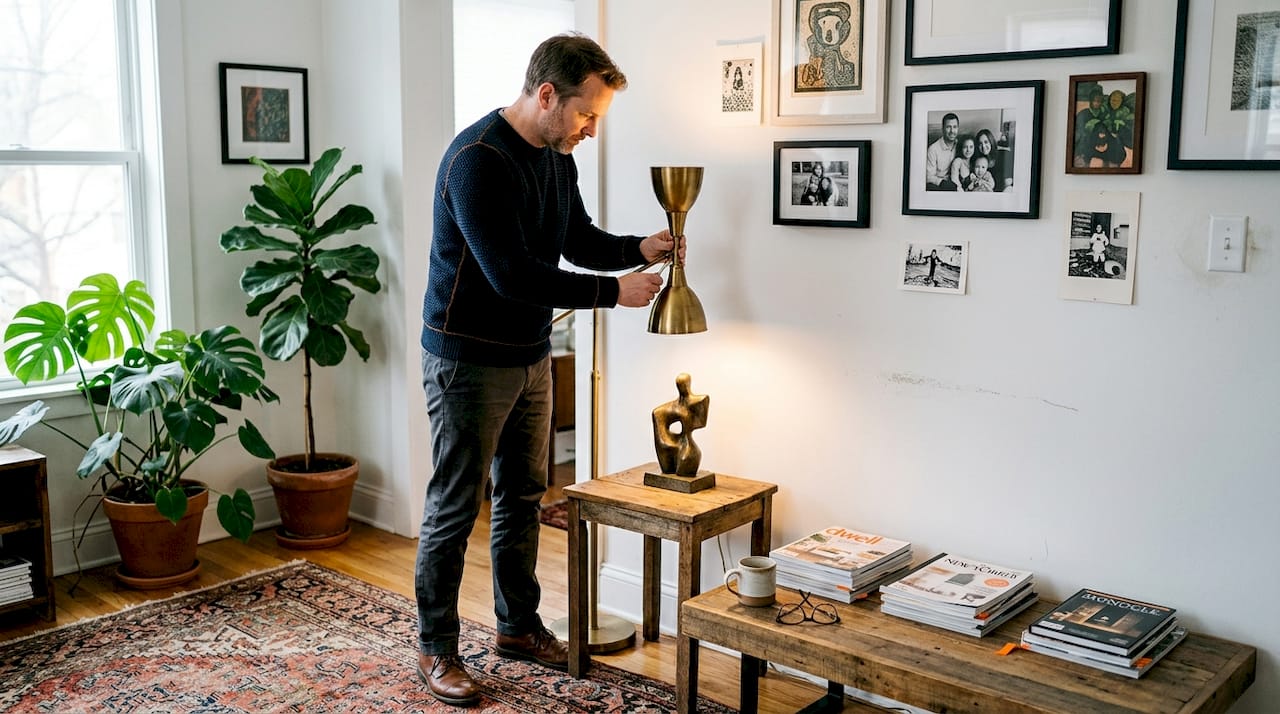
Here is a quick comparison of how the three layers work together:
| Layer | Primary purpose | Common fixtures | Typical intensity |
|---|---|---|---|
| Ambient | General illumination | Ceiling lights, recessed, pendants | High |
| Task | Activity-focused clarity | Floor lamps, table lamps, sconces | Medium to high |
| Accent | Decorative emphasis | Picture lights, LED strips, spotlights | Low to medium |
The real magic happens when all three layers operate simultaneously but at different levels. When you follow a layered lighting guide and dial ambient light down, accent lights up, and task lights off, your living room instantly transforms from a daytime functional space into an evening retreat. That flexibility is what separates a truly designed room from one that just happens to have lights in it.
“A well-layered room doesn’t just look good in photos. It feels right at every hour of the day, because the light shifts to meet the moment rather than forcing you to adapt to it.”
Key benefits of the layered approach include:
- Unmatched Mood Control: Instantly shift the atmosphere from bright and energetic to soft and intimate without changing a single fixture.
- Defined Zones: The ability to zone a large open-plan space into distinct areas for conversation, dining, or relaxation, even without physical walls.
- Reduced Eye Strain: By providing focused light for tasks and a comfortable base level, you avoid relying on one harsh overhead source that can cause glare and fatigue.
- Enhanced Aesthetics: A richer, more three-dimensional visual environment that highlights architectural features, textures, and your carefully chosen decor.
- Energy Efficiency: Only use the light you need, when you need it, by dimming or turning off unnecessary layers.
Smart Controls and Dimmers: Personalize Your Atmosphere
Once your layers are in place, the next creative opportunity is control. A brilliant fixture with no dimmer is like a sports car with only one speed. Smart controls are what turn a well-lit room into a truly personalized atmosphere, allowing you to fine-tune every nuance of your lighting experience.
Color temperature is a crucial starting point. Measured in Kelvin (K), it describes how warm or cool a light source appears. For living rooms, the sweet spot is generally between 2700K and 3000K, a range often labeled “warm white.” At these temperatures, light carries a golden, amber quality that reads as inviting, relaxing, and genuinely comfortable. This is the kind of light that makes a room feel cozy and welcoming. Higher temperatures (4000K and above) push toward a clinical, office-like brightness (often called "cool white" or "daylight") that most people find jarring in a social or relaxing space. Dimmers and smart controls are essential for adjusting brightness and, with smart bulbs, even color temperature, enabling dynamic scenes like “movie night” or “reading,” implemented via wall switches, smart bulbs, or dedicated apps. For a deeper dive into color temperature, check out this informative guide from Philips Lighting.
Here is a breakdown of common color temperature ranges and where they work best in your home:
| Temperature | Appearance | Best for |
|---|---|---|
| 2700K | Warm golden | Relaxing, entertaining, bedrooms, creating intimacy |
| 3000K | Soft white | General living, reading, dining rooms, versatile everyday use |
| 3500K | Neutral white | Transitional spaces, kitchens, bathrooms, task-oriented areas needing clarity |
| 4000K+ | Cool white / Daylight | Offices, garages, utility rooms, areas requiring high focus and visibility |
Building personalized scenes does not require a full smart home overhaul. You can start small and scale up as you get more comfortable:
- Start with a Simple Dimmer Switch: Replace a standard wall switch with a dimmer for your main ambient layer. This single change gives you immediate, tangible mood control for a relatively low cost.
- Upgrade to Smart Bulbs: Brands like Philips Hue, LIFX, and Sengled offer app-controlled bulbs that fit standard sockets. No new wiring required! These bulbs often allow you to change both brightness and color temperature.
- Create Named Scenes in Your App: This is where the magic truly begins. Set "Movie Night" to dim ambient lights to 20% and activate a warm accent strip behind your TV. Save "Reading" at 70% ambient and 100% task. Program "Morning Boost" with brighter, slightly cooler light for an energetic start.
- Add Voice Control: Connect your smart bulbs to Amazon Alexa, Google Home, or Apple HomeKit for hands-free adjustments. Imagine saying, "Alexa, activate living room chill," and watching your space transform.
- Schedule Automatic Transitions: Set lights to gradually warm and dim as the evening progresses, or to gently brighten as your alarm goes off. Your room shifts to meet your needs without you having to lift a finger, signaling to your body that it's time to transition.
Refer to this room lighting guide for tailored advice on setting scenes for other spaces in your home as well.
Pro Tip: Use your smart lighting app’s automation feature to trigger a “Wind Down” scene at a set time each evening. Lights that gradually dim and warm over 30 minutes signal to your brain that it’s time to relax, which can meaningfully improve your sleep quality and help prepare you for bed.
Stylish Fixtures and Lamps: Elevate Your Living Room’s Look
Control and layers create the technical foundation, but the fixtures themselves shape the room’s personality. A sculptural floor lamp is not just a light source; it is furniture, art, and atmosphere rolled into one form. The right combination of fixture types can make a living room feel curated, intentional, and unmistakably yours, reflecting your unique style.
A layered lighting approach depends on fixtures that operate at varying heights and intensities, which means you need pieces that serve multiple roles across your ambient, task, and accent layers. Here is what to consider when selecting each type:
- Floor Lamps: The Versatile Giants
Arc floor lamps with oversized shades push soft, diffused light upward and outward, functioning almost like a portable ambient source, perfect for illuminating a seating area. Torchiere-style designs bounce light off ceilings for a gentle, shadowless glow, great for general room illumination. For reading, a focused task floor lamp with an adjustable head is irreplaceable, providing direct light exactly where you need it. Explore what is possible with modern floor lamps in metallic finishes that add warmth and a touch of glamour even when switched off. - Table Lamps: The Functional Decorators
These are the workhorses of living room lighting, offering both task and ambient light at a comfortable mid-height. A pair of matching table lamps flanking a sofa or on console tables creates balance, symmetry, and layers task light into the seating zone. Statement table lamps with sculptural bases or unique shades function as accent objects by day, adding visual interest. Browse artistic table lamps if you want something that reads as art rather than just utility, becoming a conversation starter in itself. - Wall Sconces: The Architectural Accents
Wall sconces add a sophisticated, architectural element, providing beautiful mid-height light that fills the gap between floor lamps and ceiling sources. Plug-in sconces are a revelation for anyone who wants this elegant look without the electrician’s bill or permanent wiring. They frame fireplaces beautifully, flank entry doorways, or illuminate a gallery wall, creating visual balance and an inviting glow. - Pendant Lights: The Eye-Catching Droplets
Clustered pendants at varying drop heights above a coffee table or reading nook create a dramatic focal point that draws the eye upward, making ceilings feel taller and adding a sculptural element. A single, larger pendant can define a seating area within an open-plan space. Consider their transparency and light output – opaque shades direct light downwards, while translucent ones diffuse a softer glow.
When mixing fixtures, keep these principles in mind for a cohesive, professional look:
- Vary Heights Deliberately: Avoid the "one-level" lighting trap. Low table lamps, mid-height sconces, and ceiling pendants work together to create visual interest and prevent shadows.
- Mix Finishes Intentionally: Don't be afraid to combine materials! Brushed brass with matte black, or polished nickel with warm wood, creates visual tension that feels layered and curated rather than matchy-matchy. This adds depth and character.
- Consider Shade Style Carefully: Opaque shades direct light downward and create pools of focused light, ideal for task areas. Translucent fabric or frosted glass shades allow light to glow through for a softer, more ambient effect, perfect for general illumination.
- Think About the Lamp’s “Off” State: A fixture should look beautiful even when it’s not illuminated, since it exists as part of your decor all day long. Choose pieces that contribute to your aesthetic whether they're on or off.
Pro Tip: Mix at least two different metal finishes in your fixture selections. Designers call this “curated contrast,” and it prevents a room from looking like everything came from the same catalog. One warm metal (brass, gold, copper) paired with one cool or matte finish (black, bronze, chrome, nickel) tends to hit the sweet spot, adding richness without being chaotic. This approach adds an immediate sense of designer polish.
Renter-Friendly Lighting Ideas: No-Install Solutions That Work for Everyone
Renters face a unique frustration: the lighting in your apartment may be genuinely terrible, and you have almost no authority to change it without risking your security deposit. The default overhead "boob light" and lack of dimmers can make even a beautifully furnished space feel sterile and unwelcoming. But the creative range of no-install lighting solutions available today is extraordinary. You have far more options than most people realize to transform your space without picking up a drill or calling a landlord.
For renters, no-install solutions include a wide array of innovative products: plug-in sconces, a vast selection of floor and table lamps, adhesive LED strips, clamp lights, tension rods, rechargeable puck lights, and even stick-on smart wall lights like Poplight, which is USB-C rechargeable, app-dimmable, and removable without damage.
Here are the categories worth knowing to empower your rental lighting transformation:
- Plug-in Sconces: Instant Architectural Flair
These mount with minimal hardware (often just two small screws, adhesive strips, or even command hooks) and plug into a standard outlet. Run the cord discreetly behind furniture or inside a paintable cord cover for a clean, almost hardwired look. The effect is nearly identical to permanently installed sconces, adding sophisticated mid-height lighting. - Adhesive LED Strips: Hidden Ambiance
These versatile strips can be applied along the underside of shelving, behind a TV, along the perimeter of a ceiling cove, or even under beds for a soft glow. Look for high-quality strips that use pressure-sensitive adhesive designed for clean removal. For maximum flexibility, choose RGBW strips that include warm white alongside a spectrum of color options. - USB-Rechargeable Puck Lights and Stick-On Panels: Versatile Accents
Products like Poplight and similar smart wall lights charge via USB-C and adhere without drilling. They are often app-dimmable and easily removable, which makes them ideal for accent lighting in alcoves, inside closets, illuminating artwork on gallery walls, or adding a soft glow to bookshelves. - Clamp Lights: Targeted Task Lighting
These handy fixtures clip directly onto shelves, headboards, desk edges, or even sturdy picture frames. They are great for providing focused task lighting without needing a surface to set a lamp on, perfect for a reading nook or temporary workspace. - Battery-Operated Pendants: Designer Look, Zero Commitment
Increasingly sophisticated designs use energy-efficient LED technology and long-lasting rechargeable batteries to mimic hardwired pendants over dining tables, kitchen islands, or reading nooks. They offer a high-impact design statement with complete portability. - Tension Rod Lighting: Creative & Customizable
Mount a tension rod securely in a window frame, between two walls, or even across a large doorway. You can then hang lightweight Edison-style bulbs or pendant clusters from it using simple hooks or clips for a dramatic, industrial, or bohemian statement. When it's time to move, it comes down in minutes with no damage.
Consult this renter lighting guide for product-specific recommendations and room-by-room installation strategies. And for ideas beyond the living room, the room by room lighting ideas resource covers bedrooms, kitchens, and home offices with the same damage-free approach.
Pro Tip: For any adhesive products, always clean the mounting surface thoroughly with rubbing alcohol before application and let it dry completely. Then, apply the product and let the adhesive cure for at least 24 hours (or as recommended by the manufacturer) before applying any weight or stress. This dramatically extends adhesion life and ensures clean, damage-free removal when you leave.
What Most Designers Overlook: Lighting as Living Room Choreography
Here is the angle that most lighting articles never reach. The best-designed rooms are not just well-lit. They are choreographed. Every sofa session, every dinner party, every work-from-home afternoon, and every quiet Sunday morning calls for a completely different lighting composition, and your fixtures are the instruments you use to set it. Lighting is not a static element; it’s a dynamic, invisible force that guides your experience.
Most conventional advice focuses on choosing the right fixture. That is useful, but it stops short of the bigger insight: how you use your lighting daily is more important than what you buy. Smart controls exist precisely because no single static setting serves every moment. The homeowners who genuinely love their living rooms are the ones who have programmed scenes for real life, not just for the photos. They understand that light is a verb, not just a noun.
Think about your actual daily rhythm. Morning coffee calls for bright, neutral light that energizes and helps you wake up. A work-from-home afternoon needs directed task light without glare, keeping you focused and productive. An evening with guests deserves a warm, low ambient glow with accent lights doing the visual heavy lifting, fostering conversation and intimacy. A late-night movie requires almost no ambient light, just a gentle backlight behind the screen to reduce eye strain. Understanding layered lighting principles gives you the vocabulary to build each of these compositions intentionally, rather than just reaching for the same harsh overhead switch every time. As Architectural Digest often highlights, expert lighting design is about creating a living, breathing environment.
Lighting, at its most powerful, is not decoration. It is the invisible director of your daily experience, shaping your mood, influencing your productivity, and enhancing every moment spent in your most important space.
Discover Your Perfect Lighting with Find a Lamp
Ready to put these ideas into action and transform your living room into a masterclass of light? Find a Lamp makes the selection process genuinely exciting and incredibly easy. Our AI-powered platform analyzes photos of your actual living room and returns curated fixture recommendations tailored to your specific space, style, and lighting goals, so you are never guessing. No more endless scrolling or wondering if a lamp will actually fit your aesthetic.

Start with our themed collections for instant inspiration: explore playful living room lighting for bold, character-filled designs, discover industrial living room lighting for raw, architectural appeal, or browse traditional living room lighting for timeless elegance. Use our virtual visualization tool to see exactly how any fixture will look in your room before you commit, taking all the guesswork out of online shopping. Your ideal living room atmosphere is closer than you think, and Find a Lamp is here to light the way.
Frequently Asked Questions
What is the best color temperature for living room lighting?
For a cozy and inviting living room, aim for warm white bulbs between 2700K and 3000K. This range produces a golden, amber-toned light that feels comfortable, welcoming, and helps promote relaxation rather than a clinical brightness.
How can renters improve their living room lighting without permanent changes?
Renters can use a variety of no-install solutions, including plug-in sconces, adhesive LED strips, rechargeable puck lights, battery-operated pendants, and stick-on smart wall lights. These options provide significant lighting upgrades with zero damage to walls or ceilings.
Why is layered lighting important in living rooms?
Layered lighting is crucial because it combines ambient, task, and accent sources, giving you precise mood control, eliminating flat one-source illumination, and adding genuine visual depth, interest, and functionality to the room. It allows the space to adapt to any activity or time of day.
Which lighting products are easiest for renters to install and remove?
Renter-friendly products designed for easy installation and clean removal include plug-in sconces (often with adhesive or command strip options), adhesive LED strips, USB-rechargeable puck lights, and stick-on smart panels such as Poplight. Always ensure surfaces are clean before applying adhesive for best results.