Betreten Sie einen beliebigen Beleuchtungs-Showroom oder öffnen Sie online einen Tab für Wohnaccessoires, und die schiere Fülle an Auswahlmöglichkeiten trifft Sie wie ein Scheinwerfer ins Gesicht. Stehleuchten, Tischlampen, Bogenlampen, Deckenfluter, Schwenkarm-Wandleuchten, die fast schon als Lampen durchgehen – und das, bevor Sie sich überhaupt mit Glühbirnentypen, Schirmmaterialien und Farbtemperaturen auseinandersetzen müssen. Das ist genug, um jedem das Gefühl zu geben, einfach bei der langweiligen Deckenleuchte bleiben zu wollen! Aber hier ist die gute Nachricht: Die Auswahl der richtigen Lampe für jeden Raum muss kein Ratespiel sein. Mit einem klaren, organisierten Rahmen können Sie von „völlig überfordert“ zu „wirklich begeistert“ bei jeder Beleuchtungsentscheidung wechseln, die Sie zu Hause treffen. Machen Sie sich bereit, Ihren Raum mit Zuversicht, Komfort und viel Stil zu beleuchten!
Was Sie vor dem Lampenkauf wissen sollten: Ihre Checkliste für die perfekte Beleuchtung
Bevor Sie kopfüber in die schillernde Welt der Lampendesigns eintauchen, lassen Sie uns Ordnung schaffen. Das Geheimnis erfolgreichen Lampenkaufs liegt nicht nur darin, eine hübsche Leuchte zu entdecken; es geht darum zu verstehen, was Ihr Raum wirklich braucht. Betrachten Sie dies als Ihre unverzichtbare Checkliste vor dem Kauf, die sicherstellt, dass Ihre Beleuchtungsreise reibungslos, stilvoll und perfekt zugeschnitten ist.
Definieren Sie das Ambiente & die Funktion Ihres Zimmers
Das Wichtigste, was Sie tun können, bevor Sie eine einzige Produktseite durchsuchen, ist zu definieren, warum Sie eine Lampe in diesem speziellen Raum benötigen. Eine gemütliche Leseecke im Schlafzimmer funktioniert nach einer völlig anderen Beleuchtungslogik als ein geschäftiger Schreibtisch im Home-Office oder eine lebendige Unterhaltungsecke im Wohnzimmer. Die Kenntnis der Funktion des Raumes treibt fast jede nachfolgende Entscheidung an, von der Art der benötigten Lampe bis zur Farbtemperatur der Glühbirne darin. Wir empfehlen immer, ein Beleuchtungsprojekt mit der Frage zu beginnen: Was werde ich tatsächlich unter diesem Licht tun?
- Wohnzimmer: Ist es für Filmabende, Gästeempfang oder ruhiges Lesen? Sie benötigen wahrscheinlich eine Mischung aus Umgebungs- und Akzentbeleuchtung.
- Schlafzimmer: Hauptsächlich zur Entspannung, zum Lesen im Bett und zur Schaffung einer ruhigen Atmosphäre. Arbeitsbeleuchtung zum Lesen, warmes Umgebungslicht.
- Home-Office: Fokussierte Arbeitsbeleuchtung zur Reduzierung der Augenbelastung, oft kühlere Temperaturen zur Konzentration.
- Esszimmer: Ambiente für Mahlzeiten, vielleicht ein Dimmer für Stimmungswechsel.
Größe ist alles: Lassen Sie Ihre Lampe nicht Verstecken spielen!
Eine zarte Tischlampe, die auf einem Katalogfoto charmant aussieht, kann neben einem großen Ecksofa völlig verschwinden, während eine überdimensionierte Stehlampe ein kompaktes Studioapartment wie einen Abstellraum wirken lassen kann. Bevor Sie sich in eine Leuchte verlieben, messen Sie die Raumabmessungen, Ihre Möbelhöhen und die Oberflächen, auf denen Lampen stehen werden. Die Breite Ihres Nachttisches oder Beistelltisches sagt Ihnen genau, wie breit ein Lampenfuß realistisch sein kann. Berücksichtigen Sie bei Stehleuchten die Deckenhöhe und wie sie mit anderen Möbeln interagieren wird. Sie möchten, dass Ihre Lampe ein ausgewogener Teil des Raumes ist, kein unbeholfener Riese oder ein winziges vergessenes Detail.
Lichtspezifikationen verstehen: Die Geheimsprache Ihrer Glühbirne
Hier kann es etwas technisch werden, aber vertrauen Sie uns, es ist entscheidend! Das Verständnis dieser Begriffe bedeutet, dass Sie nie wieder von einer Lampe überrascht werden, die zu grell, zu dunkel ist oder Ihre Wände kränklich grün aussehen lässt.
| Spezifikation | Bedeutung | Bester Anwendungsfall |
|---|---|---|
| Farbtemperatur (Kelvin) | Wärme oder Kühle des Lichts. Niedriger K-Wert = wärmer, höherer K-Wert = kühler. | 2700-3000K für Schlaf- und Wohnzimmer (gemütlich, einladend); 4000K+ für Küchen, Büros und Arbeitsbereiche (klar, belebend). |
| CRI (Farbwiedergabeindex) | Wie genau das Licht Farben wiedergibt, auf einer Skala von 0-100. | CRI 90+ für Make-up-Bereiche, Kunststudios, Fotografie oder überall dort, wo Farbgenauigkeit wichtig ist (z. B. um echte Kleiderfarben zu sehen). |
| Wattage / Lumen | Helligkeit der Glühbirne. Wattage gibt den Energieverbrauch an; Lumen die tatsächliche Lichtleistung. Konzentrieren Sie sich auf Lumen! | Höhere Lumen (800-1600) für Arbeitsbeleuchtung; niedrigere (400-800) für Umgebungs- oder Stimmungsbeleuchtung. Überprüfen Sie immer die maximale Wattage-Angabe der Lampe. |
| Glühbirnensockeltyp | Die Fassung, in die die Glühbirne geschraubt wird (z. B. E26, E12, GU10). | E26 (Standardschraubsockel) ist in den USA am gebräuchlichsten; immer vor dem Kauf einer Ersatz- oder Spezialglühbirne bestätigen. |
Der warme Bereich von 2700-3000K schafft ein gemütliches, einladendes Gefühl, das ideal für Schlaf- und Wohnzimmer ist und Ihnen hilft, sich zu entspannen und zur Ruhe zu kommen. Alles über 4000K erzeugt eine klarere, belebendere Ausgabe, die für arbeitsintensive Räume wie Küchen, Home-Offices oder Bastelzimmer geeignet ist. Wenn Ihnen Farbgenauigkeit wichtig ist (denken Sie an: Make-up auftragen, Malen oder Kleidung stylen), sorgt ein CRI von 90 oder höher dafür, dass das, was Sie unter der Lampe sehen, dem entspricht, was Sie bei natürlichem Tageslicht sehen würden. Vergessen Sie die Dimmbarkeit nicht! Eine dimmbare Glühbirne mit einem kompatiblen Dimmschalter verleiht jeder Lampe unglaubliche Vielseitigkeit.
Budgetplanung: Klug investieren, nicht nur billig
Die Budgetplanung ist ein weiterer Schritt, den die meisten Leute überspringen, und das kostet sie später. Eine billige Lampe, die alle paar Monate Glühbirnen verbraucht, heiß wird oder nach einem Jahr abgenutzt aussieht, ist am Ende teurer als eine hochwertige Mittelklasse-Leuchte. Berücksichtigen Sie Lebensdauerkosten und Energieeffizienz bei der Festlegung Ihrer Zahl. LED-Lampen beispielsweise verbrauchen etwa 75 % weniger Energie als Glühlampenalternativen und halten deutlich länger, oft jahrelang. Besonders für Mieter bieten Smart Lamps oder Smart Plugs Kontrolle und Anpassung, ohne dass eine dauerhafte Installation oder die Zustimmung des Vermieters erforderlich ist, was sie zu einer fantastischen, flexiblen Investition macht.
Ihre ultimative Pre-Shopping-Checkliste:
Bevor Sie das Haus verlassen (oder den Browser-Tab schließen), sammeln Sie diese Dinge:
- Raumabmessungen und Deckenhöhe (nehmen Sie ein Maßband!)
- Oberflächenmaße (Tischbreite, -tiefe, verfügbare Bodenfläche für Stehleuchten)
- Bestehende Glühbirnentypen oder Wattage-Grenzen für Leuchten, die Sie aufrüsten
- Ein Foto des Raumes, das die aktuellen Möbel, Wandfarben und den Gesamtstil zeigt
- Ihr beabsichtigter Budgetrahmen, einschließlich eines Puffers für Glühbirnen und Smart-Zubehör
Profi-Tipp: Machen Sie vor dem Einkauf ein Foto Ihres Zimmers aus mehreren Blickwinkeln mit Ihrem Handy. Wenn Sie in einem Geschäft stehen oder online scrollen, ist dieses Foto Ihr mächtigstes Referenzwerkzeug für Maßstab und Stilkompatibilität. Sie können es sogar mit Visualisierungstools für Lampen in Ihrem Raum (wie unserem bei Find a Lamp!) verwenden, um Leuchten vor dem Kauf zu begutachten. Das erspart endlose Wege und Rücksendungen!
Kennen Sie schließlich die Rückgaberichtlinien, bevor Sie kaufen. Beleuchtung ist notorisch schwer vom Bildschirm aus zu beurteilen, und was auf Fotos als warmes Bernsteinleuchten erscheint, kann in Ihrem tatsächlichen Raum ein grelles Gelb sein. Ein flexibles Rückgabezeitfenster gibt Ihnen die Freiheit, unter realen Bedingungen zu testen, anstatt auf Fotos zu spekulieren.
Schritt-für-Schritt-Prozess für den Lampenkauf: Ihr Weg zum Beleuchtungserfolg
Sobald Sie Ihren Raum vorbereitet und sich mit Maßen und Wissen bewaffnet haben, können Sie den eigentlichen Einkaufsprozess Schritt für Schritt angehen. Dieser systematische Ansatz stellt sicher, dass Sie alle Grundlagen abdecken und fundierte Entscheidungen treffen.
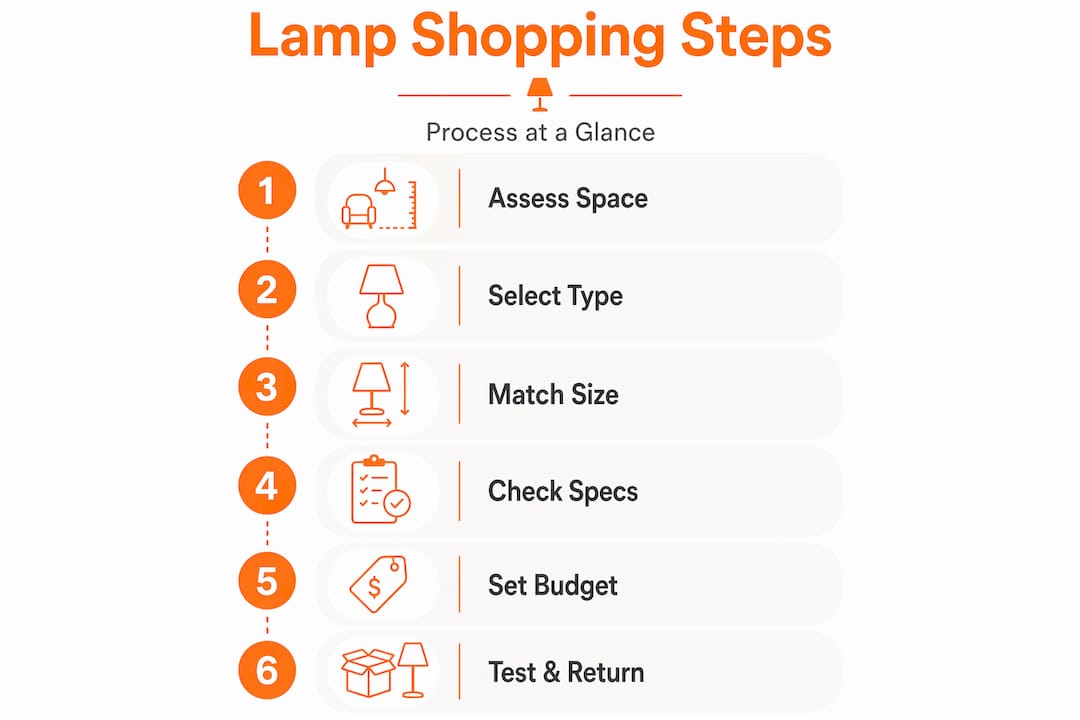
Schritt 1: Bewerten Sie den Raum und die vorhandenen Lichtverhältnisse
Bevor Sie überhaupt ans Kaufen denken, werden Sie zum Lichtdetektiv in Ihrem eigenen Zuhause. Stellen Sie sich zu verschiedenen Tageszeiten – morgens, mittags und abends – in Ihr Zimmer. Wie viel natürliches Licht erhält es? Wo sind die tiefsten Schatten? Was deckt die Deckenbeleuchtung (falls vorhanden) tatsächlich ab, und welche Bereiche lässt sie dunkel oder ungemütlich? Diese Bewertung verrät Ihnen sofort, ob Sie Umgebungslicht benötigen, um Düsternis zu vertreiben, gezielte Arbeitsbeleuchtung für bestimmte Aktivitäten oder ein skulpturales Akzentstück, das visuelle Wärme statt roher Helligkeit hinzufügt. Achten Sie auch darauf, wie Farben unter dem vorhandenen Licht aussehen!

Schritt 2: Bestimmen Sie, welche Art(en) von Lampen Sie tatsächlich benötigen – Nutzen Sie geschichtete Beleuchtung!
Hier wird geschichtetes Lichtdesign zu Ihrer besten Strategie. Laut Designprofis schichten die effektivsten Räume verschiedene Arten von Licht, um Tiefe, Vielseitigkeit und Komfort zu schaffen. Sich auf eine einzige Deckenleuchte zu verlassen, ist eines der häufigsten Beleuchtungsbedauern, das wir von Hausbesitzern hören. Hier ist die Aufschlüsselung:
- Umgebungslicht (Ambient Light): Die allgemeine Beleuchtung eines Raumes. Denken Sie an Stehleuchten, die Wände beleuchten, Licht von Decken reflektieren oder Tischlampen mit durchscheinenden Schirmen. Es schafft die Gesamtstimmung.
- Arbeitslicht (Task Light): Fokussiertes Licht für bestimmte Aktivitäten. Schreibtischlampen zum Arbeiten, Nachttischlampen zum Lesen oder Unterbauleuchten in der Küche zum Kochen. Dieses Licht sollte hell und gerichtet sein.
- Akzentlicht (Accent Light): Dekorative Quellen, die Kunstwerke, Regale, architektonische Merkmale hervorheben oder einfach visuelles Interesse wecken. Stellen Sie sich eine kleine Bilderleuchte, einen gerichteten Spot auf eine Pflanze oder eine schöne, skulpturale Lampe vor, die auch als Kunstwerk dient.
Streben Sie in Ihren Hauptwohnbereichen mindestens zwei, vorzugsweise drei Schichten an.
Schritt 3: Messen und abstimmen von Größe und Stil
Ihre Lampe muss so aussehen, als gehöre sie dorthin, nicht als wäre sie aus einer anderen Postleitzahl hereingewandert. Für Tischlampen gilt im Allgemeinen: Die Gesamthöhe der Lampe (Sockel plus Schirm) sollte ungefähr das 1,5-fache der Höhe der Oberfläche betragen, auf der sie steht. Der breiteste Punkt des Schirms sollte auch nicht breiter sein als der Tisch, auf dem er steht. Bei Stehleuchten sollte der Schirm die Augenhöhe im Sitzen freigeben (normalerweise etwa 100-120 cm vom Boden), damit er keine direkte Blendung verursacht. Stilistisch berücksichtigen Sie die Architektur und Materialpalette Ihrer bestehenden Einrichtung. Passende Metalle, sich wiederholende Kurven oder Winkel und das Aufgreifen von Texturen sind allesamt Möglichkeiten, eine Lampe bewusst und kohärent in Ihrem Raum wirken zu lassen. Scheuen Sie sich nicht zu mischen, aber stellen Sie immer sicher, dass es einen roten Faden gibt.
Schritt 4: Glühbirnen-Spezifikationen recherchieren und Kompatibilität bestätigen
Überprüfen Sie vor dem Kauf die maximale Wattage-Angabe der Lampe und den erforderlichen Glühbirnensockeltyp. Eine Lampe zu kaufen und dann festzustellen, dass sie eine Spezialbirne benötigt, die vor Ort schwer zu beschaffen ist, oder dass Ihre Lieblings-LED-Birne nicht passt, ist eine frustrierende Erfahrung, die wir alle gerne vermeiden würden. Stellen Sie sicher, dass Ihre bevorzugte Glühbirne (idealerweise LED, für Energieeffizienz und Langlebigkeit) sowohl zum Sockeltyp als auch zur Wattage-Grenze passt. Das Ignorieren dieses Schrittes ist einer der häufigsten Fehler beim Lampenkauf, neben der Wahl einer Lampe, die nicht zum Raum passt oder rein dekorativ ist, wenn eine aufgabenorientierte Lösung benötigt wurde. Suchen Sie nach Lampen, die Flexibilität bei der Glühbirnenwahl bieten.
Schritt 5: Ein realistisches Budget festlegen und bei seriösen Quellen einkaufen
Qualität zählt in jeder Preisklasse, aber auch das Wissen, was man bekommt. Legen Sie einen Budgetrahmen fest, seien Sie aber flexibel genug, um etwas mehr für ein Stück zu investieren, das Ihren Raum wirklich aufwertet und lange hält. Erkunden Sie eine Vielzahl von Quellen: spezialisierte Beleuchtungsgeschäfte für Expertenrat, große Einrichtungshäuser für Vielfalt, unabhängige Boutiquen für einzigartige Funde und Online-Plattformen für Bequemlichkeit und Vergleich. Für Anleitungen zur Auswahl von Lampen nach Einrichtungsstil sparen kuratierte Ressourcen viel Zeit und helfen Ihnen, die endlosen Optionen einzugrenzen.
Schritt 6: In Ihrem Raum testen und Rückgaberichtlinien bestätigen
Dieser Schritt ist nicht verhandelbar! Sobald Ihre neue Lampe ankommt, stellen Sie sie an ihren vorgesehenen Platz. Leben Sie 24 bis 48 Stunden damit zu verschiedenen Tages- und Nachtzeiten. Eine Lampe, die Sie an einem gemütlichen Dienstagabend begeistert, könnte an einem hellen Mittwochmorgen völlig falsch wirken. Beobachten Sie, wie das Licht mit Ihren Wänden, Möbeln und sogar Ihrer Stimmung interagiert. Verursacht es Blendung? Gibt es immer noch dunkle Ecken? Streut das Schirmmaterial das Licht wie erwartet? Stellen Sie sicher, dass Sie die Rückgaberichtlinien des Händlers verstehen, um diese entscheidende Testphase zu ermöglichen. Es ist besser, eine Lampe zurückzugeben, als mit einer zu leben, die Sie nicht lieben.
Lampenkauf im Geschäft vs. Online: Was ist das Richtige für Sie?
| Faktor | Im Geschäft | Online |
|---|---|---|
| Wahrnehmung der Größe | Leichter, wahre Größe, Materialien und Finish persönlich einzuschätzen. | Schwerer ohne Maße zur Hand; stark abhängig von Produktfotos und Beschreibungen. |
| Vielfalt | Begrenzt auf lokales Inventar; kuratierte Auswahl. | Riesige, globale Auswahl; Nischenstile und unabhängige Hersteller. |
| Sofortige Verfügbarkeit | Am selben Tag mit nach Hause nehmen (falls auf Lager). | Lieferverzögerungen möglich; sofortige Befriedigung ist selten. |
| Preis | Oft höher aufgrund von Gemeinkosten; weniger vergleichsfreundlich vor Ort. | Wettbewerbsfähiger; einfacher, Preise bei mehreren Händlern zu vergleichen. |
| Rückgabeerfahrung | Typischerweise nahtlos; einfache Rückgabe an das physische Geschäft. | Erfordert Verpackung und Versand; kann bei großen Artikeln umständlich sein. |
| Visualisierungstools | Keine; erfordert Vorstellungskraft oder das Mitbringen von Fotos. | KI-Tools (wie die von Find a Lamp!) können mithilfe von AR eine Vorschau in Ihrem Raum erstellen. |
Profi-Tipp: Verwenden Sie die Vergleichstabelle oben, um zu entscheiden, welche Einkaufsmethode zu Ihrem Zeitplan und Komfortlevel passt. Wenn Sie ein Statement-Stück oder eine entscheidende Arbeitsleuchte kaufen, sollten Sie beides kombinieren: Stöbern Sie online zur Inspiration und Vielfalt, besuchen Sie dann einen lokalen Showroom, um Größe und Qualität zu überprüfen, bevor Sie sich festlegen. Oder nutzen Sie die Visualisierungstools von Find a Lamp, um die Lücke zwischen Online-Browsing und persönlicher Bewertung zu schließen.
Wie man häufige Fehler beim Lampenkauf vermeidet: Lernen Sie aus den Fehlern anderer!
Nachdem Sie gelernt haben, wie man Schritt für Schritt einkauft, ist es hilfreich zu verstehen, wo Käufer am häufigsten Fehler machen und wie man diese Fallstricke gänzlich vermeidet. Vertrauen Sie uns, wir haben alles gesehen, und ein wenig Weitsicht kann Ihnen viel Kopfzerbrechen (und Geld!) ersparen.
Die Todsünde: Nur nach Aussehen kaufen
Der schädlichste Fehler ist, nur nach dem Aussehen zu kaufen und Maßstab und Funktion zu ignorieren. Eine Lampe, die auf Fotos wunderschön aussieht, aber für einen Nachttisch zu hoch ist, blendet Sie direkt in die Augen, jedes Mal, wenn Sie versuchen zu lesen. Eine Lampe, die für einen Beistelltisch im Wohnzimmer zu kurz ist, verschwindet optisch und trägt kaum nutzbares Licht zum Raum bei. Vor allem anderen muss die Funktion im Vordergrund stehen. Fragen Sie sich: "Welches Problem löst diese Lampe?"
Die größten Fehler beim Lampenkauf, die es zu vermeiden gilt:
- Falscher Maßstab: Eine Lampe, die im Verhältnis zu ihrer Oberfläche und den umgebenden Möbeln zu hoch oder zu kurz ist, stört das gesamte visuelle Gleichgewicht eines Raumes. Stellen Sie sich eine winzige Lampe neben einem großen Sofa vor oder eine hoch aufragende Stehlampe, die einen kleinen Sessel in den Schatten stellt. Es fühlt sich einfach... falsch an.
- Trends vor persönlichen Bedürfnissen priorisieren: Trends ändern sich schneller, als man "Hygge" sagen kann. Eine Lampe, die Sie nur kaufen, weil sie überall in den sozialen Medien zu sehen ist, kann innerhalb von zwei Jahren veraltet wirken, während ein gut gewähltes Klassiker, das Ihrem Lebensstil und Ihrer Ästhetik wirklich dient, auf unbestimmte Zeit relevant bleibt. Investieren Sie in zeitlose Stücke oder erschwingliche Trendstücke, deren Austausch Ihnen nichts ausmacht.
- Glühbirnenforschung überspringen: Das Übersehen von Wattage-Grenzen, Sockeltypen oder Farbtemperaturkompatibilität führt zu frustrierenden Korrekturen nach dem Kauf. Sie möchten keine schöne Lampe kaufen, nur um festzustellen, dass sie nur eine seltene, teure Glühbirne benötigt oder dass sie für Ihre Bedürfnisse zu dunkel ist.
- Kaufen ohne zu messen: Selbst erfahrene Dekorateure machen diesen Fehler. Bringen Sie immer Maße Ihres Raumes, Ihrer Tische und sogar der Höhe Ihrer Sofalehne oder Ihres Bettrahmens mit. Immer. Keine Ausnahmen.
- Lichtrichtung ignorieren: Ein nach oben gerichteter Deckenfluter erzeugt Umgebungslicht, hilft Ihnen aber nicht beim Lesen. Ein nach unten gerichteter Schirm fokussiert das Licht für Aufgaben. Ein Trommelschirm streut Licht ringsum. Wissen Sie, welchen Effekt Sie benötigen, bevor Sie kaufen, sonst enden Sie mit Licht dort, wo Sie es nicht brauchen, und Dunkelheit dort, wo Sie es brauchen.
- Kabel und Platzierung vergessen: Sie haben eine wunderschöne Lampe gefunden, aber es gibt keinen logischen Platz dafür, weil das Kabel keine Steckdose erreicht oder einen stark frequentierten Bereich kreuzt und eine Stolperfalle darstellt. Planen Sie den Stromzugang!
„Die erfolgreichsten Beleuchtungskonzepte, die ich gesehen habe, sind diejenigen, bei denen der Hausbesitzer zuerst an die Funktion gedacht hat und dann den Stil auf dieser Grundlage folgen ließ. Eine Lampe ist nicht nur Dekoration; sie ist ein Werkzeug, das Ihre Umgebung formt.“ — Prinzip des Innenbeleuchtungsdesigns, das von Fachleuten auf diesem Gebiet weithin geteilt wird.
Sicherer Umgang mit Vintage- und Secondhand-Lampen
Wenn es um Vintage- oder Secondhand-Lampen geht (eine wirklich aufregende Kategorie für einzigartige Funde!), sind vertrauenswürdige Plattformen und UL-Zertifizierung nicht verhandelbar. Seiten wie 1stDibs und Etsy beherbergen verifizierte Verkäufer mit seriösen Rückgabebedingungen und bieten oft Details zur Neuverkabelung. Achten Sie bei jeder Vintage-Leuchte auf das UL-Zeichen (Underwriters Laboratories), das bestätigt, dass sie auf die Einhaltung von Sicherheitsstandards geprüft wurde. Neu verkabelte Vintage-Lampen von seriösen Händlern sind im Allgemeinen sicher; anonyme Flohmarktfunde mit ausgefransten Kabeln, freiliegenden Drähten oder verdächtigen Steckern sind eine ganz andere Geschichte und sollten vor der Verwendung immer von einem qualifizierten Elektriker überprüft (und wahrscheinlich neu verkabelt) werden. Sicherheit geht vor!
Für maßgeschneiderte Anleitungen zur Auswahl von Lampen für jeden Raum eliminieren raumspezifische Empfehlungen viele der Unsicherheiten bezüglich Größe, Typ und Platzierung und helfen Ihnen, häufige Fallstricke zu vermeiden.
Ihre Lampe zum Strahlen bringen: Einrichtung, Test und fortlaufende Tipps für tägliche Freude
Die richtige Lampe zu finden ist nur ein Teil des Prozesses. Die richtige Einrichtung und eine durchdachte Nutzung machen den entscheidenden Unterschied für das tägliche Vergnügen und die langfristige Zufriedenheit. Eine perfekt ausgewählte Lampe kann flach wirken, wenn ihre Platzierung falsch ist oder die falsche Glühbirne verwendet wird. Lassen Sie uns sicherstellen, dass Ihre neue Beleuchtung wirklich glänzt!
Optimale Platzierung: Wohin gehört Ihre Lampe?
Die Platzierung ist die erste Variable, die es zu bestimmen gilt. Bei Nachttischlampen gilt als Faustregel, dass der untere Rand des Schirms auf Augenhöhe sein sollte, wenn Sie sitzen oder im Bett liegen. Dies verhindert, dass Sie beim Entspannen für die Nacht direkt geblendet werden, und stellt sicher, dass das Licht dorthin gerichtet ist, wo Sie es zum Lesen benötigen. Bei Schreibtisch- und Arbeitslampen positionieren Sie die Lichtquelle auf Ihrer nicht-dominanten Seite, um Schatten auf Ihrer Arbeitsfläche zu minimieren (z. B. wenn Sie Rechtshänder sind, platzieren Sie die Lampe links). Bei Stehleuchten, die als Umgebungslichtquellen verwendet werden, kann die Platzierung in Raumecken oder hinter Möbeln das Licht gleichzeitig von zwei Wänden reflektieren, wodurch ein weicheres, diffuseres Licht entsteht, das harte Schatten eliminiert und den Raum größer und einladender wirken lässt.
Praktische Einrichtungs- und Nutzungstipps für maximale Wirkung:
- Schirmpositionierung: Wie bereits erwähnt, sollte bei aufgabenorientierten Lampen (Nachttisch, Schreibtisch) die Unterkante des Schirms ungefähr auf Augenhöhe im Sitzen sein. Bei Umgebungsleuchten haben Sie mehr Flexibilität, sollten aber immer noch direkten Blickkontakt mit der Glühbirne vermeiden.
- Die Wahl der Glühbirne ist entscheidend: Verwenden Sie warm-dimmende LEDs (Glühbirnen, die beim Dimmen zu einer wärmeren Farbtemperatur wechseln und das Verhalten von Glühlampen imitieren) für Wohn- und Schlafbereiche, in denen Stimmung und Entspannung entscheidend sind. Für Arbeitsbereiche könnte ein helleres, neutraleres Weiß (3500-4000K) bevorzugt werden.
- Schirme sauber halten: Angesammelter Staub auf einem Schirm kann die Lichtleistung im Laufe der Zeit merklich reduzieren und das Licht trüb erscheinen lassen. Ein kurzes Abwischen alle paar Wochen kann einen großen Unterschied machen!
- Testen, testen, testen: Testen Sie Ihre Lampe immer bei Tages- und Nachtbedingungen sowie bei verschiedenen Aktivitäten, bevor Sie entscheiden, ob sie die richtige Wahl ist. Wie fühlt es sich beim Lesen an? Beim Fernsehen? Beim einfachen Entspannen?
- Dimmer nutzen: Für Wohnzimmer, Essbereiche und sogar Schlafzimmer sollten Sie Dimmer für Lampen in Betracht ziehen. Selbst preiswerte Steckdosen-Dimmeradapter können die Bandbreite der Atmosphäre erweitern, die eine einzelne Lampe erzeugen kann, und ermöglichen Ihnen einen einfachen Übergang von heller Arbeitsbeleuchtung zu sanfter Stimmungsbeleuchtung.
- Kabelmanagement: Lassen Sie unschöne Kabel Ihren sorgfältig gestalteten Raum nicht ruinieren. Verwenden Sie Kabelbinder, Kabelkanäle oder platzieren Sie Möbel strategisch, um Kabel zu verstecken.
Smart Lighting für Mieter: Ihr flexibler Freund
Für Mieter sind intelligente Lampen und intelligente Steckdosen wirklich eine Überlegung wert. Ein intelligenter Stecker verwandelt jede Standardlampe in eine sprachgesteuerte oder per App planbare Leuchte, ohne eine einzige Schraube in die Wand zu bohren. Das bedeutet, Sie können Ihre Wohnzimmer-Stehlampe so programmieren, dass sie bei Sonnenuntergang langsam angeht und um 22 Uhr gedimmt wird, alles von Ihrem Telefon oder Smart Assistant aus, wodurch ein beeindruckendes Ambiente ohne dauerhafte Änderungen entsteht. Es ist die ultimative flexible Hausautomation.
Ein oft übersehener Tipp: Überprüfen Sie immer das Rückgabezeitfenster, bevor Sie eine neue Lampe