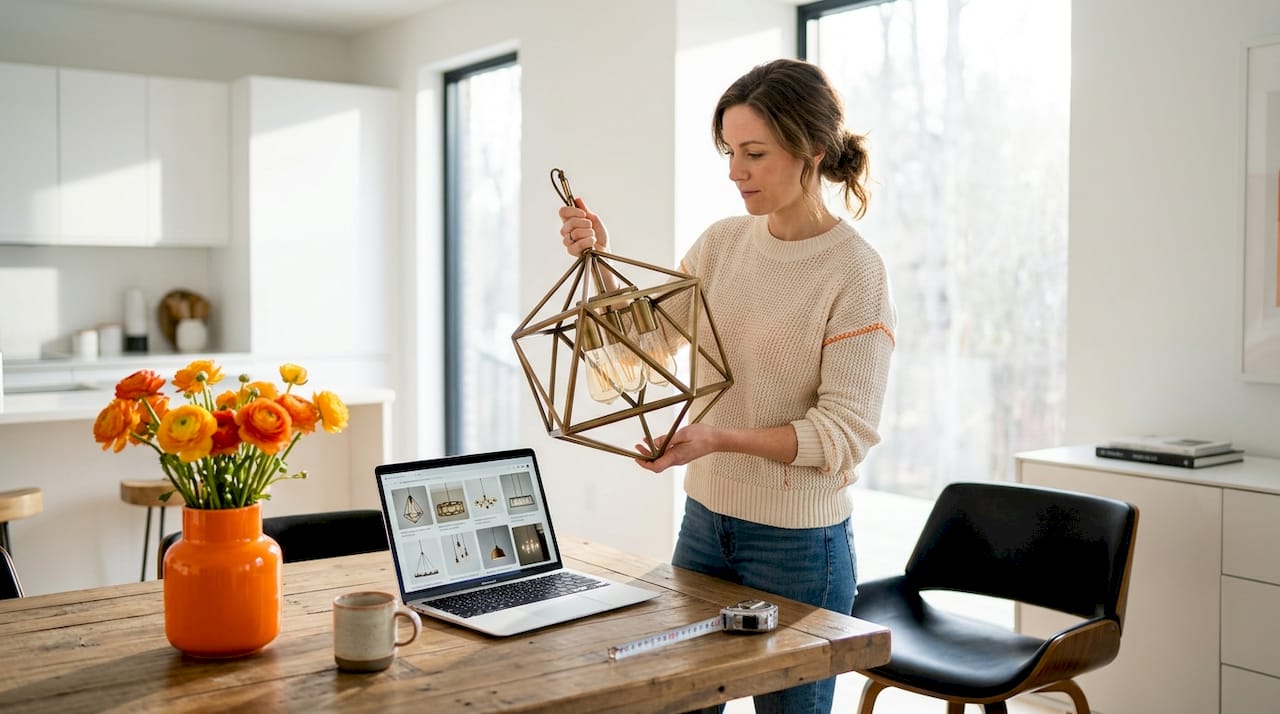
Ooit een kamer binnengelopen waar alles gewoon klopt? De meubels zijn uitnodigend, de kleuren zingen en er is een onmiskenbare warmte die je gewoon doet verlangen om je te nestelen. Grote kans dat de verlichting geen bijzaak was; het was een meesterwerk in harmonie. Omgekeerd hebben de meeste huiseigenaren het tegenovergestelde ervaren: een kamer die er op papier goed uitziet, de meubels zijn perfect, het kleurenpalet is weloverwogen en intentioneel, en toch voelt er iets… niet helemaal goed. Dat ongrijpbare "iets" is bijna altijd de verlichting.
Begrijpen wat verlichtingsstijlmatching is, is het ontbrekende stuk in veel interieurontwerpconversaties, en het is veel belangrijker dan simpelweg een armatuur kiezen dat “er mooi uitziet.” Het gaat erom lichtbronnen te selecteren waarvan de vorm, afwerking en het materiaal aanvoelen als natuurlijke bewoners van je kamer, niet als visuele indringers. Dit gaat niet over rigide regels of het creëren van een steriele showroomlook. Het gaat over het creëren van een ruimte die samenhangend, intentioneel en, het allerbelangrijkste, aanvoelt als *jou*. Klaar om het ware potentieel van je huis te verlichten? Deze gids vertelt je precies hoe je dat bereikt.
Inhoudsopgave
- Verlichtingsstijlmatching begrijpen en de rol ervan in interieurontwerp
- Nuances van verlichtingsstijlmatching: Vorm, afwerking en materiaalbalans
- Hoe lichtdiffusie de sfeer en stijlcohesie beïnvloedt
- Praktische stappen om verlichtingsstijl aan te passen aan je huis, kamer voor kamer
- Veelvoorkomende valkuilen en experttips voor succesvolle verlichtingsstijlmatching
- Waarom verlichtingsstijlmatching gaat over harmonie, niet over exacte replicatie
- Ontdek verlichtingscollecties die passen bij de stijl van je huis
- Veelgestelde vragen
Belangrijkste inzichten
| Punt | Details |
|---|---|
| Verlichting definieert sfeer | De juiste verlichtingsstijl creëert sfeer en voltooit het verhaal van je kamer, verder dan enkel helderheid. |
| Match stijl, niet klonen | Kies armaturen die passen bij je interieurstijl zonder elk detail exact te kopiëren. |
| Lichtdiffusie is belangrijk | Zacht, diffuus licht verbetert het gevoel in de kamer en vult je stijl beter aan dan harde, directe verlichting. |
| Balanceer vorm en textuur | Evenwichtige vormen, materialen en afwerkingen zorgen ervoor dat je verlichting natuurlijk opgaat in de kamer. |
| Praktische bruikbaarheid telt | Verlichting moet functioneel en op de juiste schaal zijn voor elke kamer, niet alleen stijlvol. |
Verlichtingsstijlmatching begrijpen en de rol ervan in interieurontwerp
Verlichtingsstijlmatching is de kunst van het kiezen van armaturen die de algehele decorstijl van je kamer weerspiegelen, in plaats van ermee te botsen. Zie het minder als een winkeloefening en meer als een verfijnd ontwerpgesprek tussen je meubels, je muren en je lichtbronnen. Een armatuur dat past, spreekt dezelfde visuele taal als al het andere in de kamer. Een armatuur dat niet past, laat zelfs het meest doordachte decor onvolledig aanvoelen, waardoor een subtiele discordantie ontstaat die moeilijk te plaatsen, maar onmogelijk te negeren is.
Dit concept gaat dieper dan alleen het matchen van kleuren. Het begrijpen van verlichtingsstijlen betekent erkennen dat elk armatuur een persoonlijkheid heeft die geworteld is in zijn silhouet, materiaal en schaal. Een strakke, geborsteld messing kooihanglamp brengt een totaal andere energie in een kamer dan een matte bolhanglamp, zelfs als beide vergelijkbaar licht uitstralen. De kamer voelt dat verschil onmiddellijk, wat alles beïnvloedt, van de waargenomen warmte tot de algehele functionaliteit.
Het praktische startpunt, zoals verlichting voor interieurontwerpstijlen suggereert, is om eerst de designstijl van je kamer te identificeren. Dit biedt een creatief kader, dat je keuzes stuurt zonder je unieke flair te onderdrukken. Je kopieert niet elk detail van de stijl; je volgt de dominante ideeën en esthetische principes. Hier zijn enkele veelvoorkomende stijlen en hoe verlichting een cruciale rol speelt:
- Minimalistisch: Deze stijl omarmt "less is more." Verlichting hier kenmerkt zich door strakke lijnen, eenvoudige geometrische vormen en ingetogen afwerkingen zoals mat wit, geborsteld nikkel of zwart. Geïntegreerde verlichting, verborgen LED-strips en armaturen die naadloos opgaan in de architectuur zijn essentieel. De focus ligt op functie en opgeruimde elegantie.
- Industrieel: Ruw, stoer en functioneel, industriële verlichting toont vaak zichtbare hardware, metalen kooien, Edison-lampen en afwerkingen zoals verweerd staal, beton of mat zwart. Denk aan fabrieksgeïnspireerde hanglampen, railverlichting en utilitaire wandlampen die de schoonheid van ruwe materialen vieren.
- Scandinavisch: Scandinavische verlichting omarmt warmte, eenvoud en natuurlijk licht, en kenmerkt zich vaak door organische vormen, lichte houttinten, zachte stoffen en gedempte kleuren. Matglas, papieren kappen en minimalistische ontwerpen die de lichtdiffusie maximaliseren, zijn kenmerkend en creëren die begeerde "hygge"-sfeer.
- Bohemien: Gelaagde texturen, warme amberkleuren en wereldwijd geïnspireerde vormen definiëren boho chic. Rotan- of macramé-hanglampen, Marokkaanse lantaarns en armaturen met ingewikkelde patronen of natuurlijke vezels voegen een ontspannen, eclectische sfeer toe. Het gaat om het creëren van een gezellige, bereisde uitstraling.
- Rustiek: Geïnspireerd door de natuur en het platteland, geeft rustieke verlichting de voorkeur aan smeedijzer, verweerd hout, lantaarnachtige armaturen en aardse paletten. Het gaat om het vieren van handgemaakte elementen en een gevoel van geschiedenis, vaak met texturen zoals gehamerd metaal of natuurlijk touw.
- Mid-Century Modern: Iconisch en tijdloos, deze stijl wordt gekenmerkt door taps toelopende poten (vaak vertaald naar lampstelen), walnoten basissen, gesponnen aluminium kappen en retro-geïnspireerde kleuraccenten. Denk aan Sputnik-kroonluchters, boogvloerlampen en bolhanglampen die een sculpturaal statement maken.
- Hedendaags: Deze stijl draait helemaal om wat actueel en vooruitstrevend is. Het kenmerkt zich vaak door strakke, innovatieve ontwerpen, ongebruikelijke materialen en een mix van andere moderne stijlen. Hedendaagse verlichting is vaak sculpturaal, speelt met negatieve ruimte en geavanceerde LED-technologie.
- Transitional: Voor degenen die niet netjes in één hokje passen, combineert de transitional stijl traditionele elegantie met moderne strakke lijnen. Verlichting hier kan klassieke silhouetten bevatten die zijn bijgewerkt met eigentijdse afwerkingen zoals geborsteld nikkel of gepolijst chroom, of eenvoudige vormen met ingewikkelde details.
Zodra je identificeert waar je kamer zich op dat spectrum bevindt, heb je een krachtige creatieve routekaart. Je kopieert niet elk detail van de stijl; je volgt de dominante ideeën en vult ze aan met je persoonlijke touch.
Nuances van verlichtingsstijlmatching: Vorm, afwerking en materiaalbalans
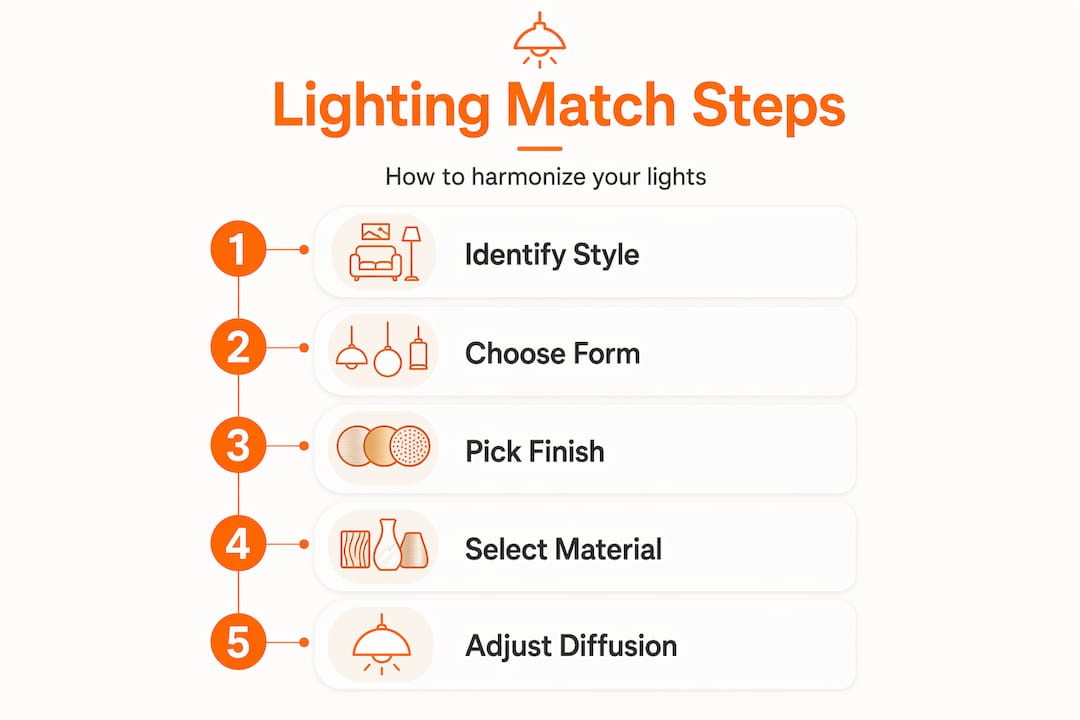
Nu we het kernidee begrijpen, laten we specifiek worden. Want goede verlichtingsstijlmatching zit in de details, en de details zijn waar de meeste huiseigenaren stilletjes de mist in gaan.
Armatuurschaal is waarschijnlijk de meest onderschatte factor. Een klein keramisch tafellampje op een oversized hoekbank verdwijnt. Een enorme boogvloerlamp in een compact studio-appartement overheerst. De schaal moet proportioneel aanvoelen, niet alleen ten opzichte van de kamer, maar ook ten opzichte van de meubels in de buurt en de algehele plafondhoogte. Een kroonluchter boven een eettafel moet bijvoorbeeld over het algemeen ongeveer de helft tot twee derde van de breedte van de tafel zijn, en 28 tot 34 inch (71-86 cm) boven het oppervlak hangen. Bij een bedlampje moet de onderkant van de kap ongeveer ter hoogte van je ooglijn zijn wanneer je tegen het hoofdeinde zit, om comfortabel leeslicht zonder verblinding te garanderen.
Zoals een expert het stelt, hoeft de beste lamp niet elk detail in de kamer te kopiëren. Hij hoeft alleen maar het gevoel te geven dat hij erbij hoort. Matchen gaat over cohesie, niet over klonen. Deze herformulering is bevrijdend. Je bent niet op zoek naar een exacte replica van de pootafwerking van je bank in lampvorm. Je zoekt een armatuur dat het emotionele register, de architectonische lijnen of de dominante texturen van de kamer deelt.
Afwerkingen mixen, mits bewust gedaan, voegt echte diepte en karakter toe. Messing en matzwart werken bijvoorbeeld prachtig samen in een mid-century of eclectische ruimte, omdat ze tonale warmte delen en tegelijkertijd contrast bieden. De gouden gloed van messing kan worden geaard door de moderne rand van matzwart. De belangrijkste regel is om één afwerking dominant te houden en andere als accenten te behandelen. Als al je hardware in een kamer matzwart is, wordt een enkele messing lamp als intentioneel gelezen. Drie verschillende afwerkingen zonder duidelijke hiërarchie worden echter als besluiteloosheid gelezen. Voor meer informatie over hoe je succesvol metalen kunt mixen, biedt deze Architectural Digest gids over het mixen van metalen uitstekend advies.
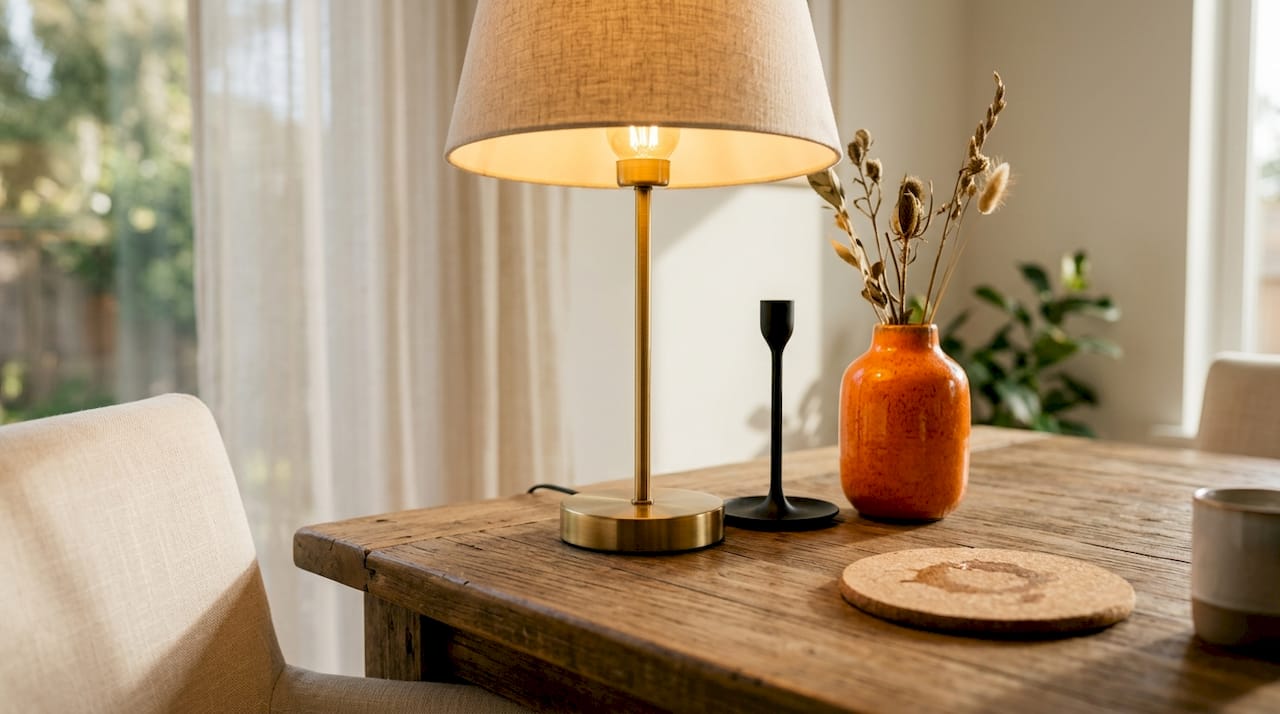
Materiaalbalans is even belangrijk. Een kamer die wordt verankerd door zachte texturen zoals een linnen bank, wollen vloerkleed en ruwe houten salontafel, vraagt om een lamp met tactiel contrast. Gepolijst glas of gehamerd messing biedt dat contrast zonder de stijl te verstoren. Omgekeerd kan een strakke, moderne kamer met veel glas en metaal baat hebben bij een lamp met een stoffen kap of een natuurlijke houten voet om warmte en zachtheid te introduceren. Overweeg de soorten binnenverlichting en materialen die resoneren met je kamer voordat je een beslissing neemt.
Veelvoorkomende valkuilen om te vermijden:
- Een lamp puur kiezen op basis van uiterlijk zonder te testen hoe deze eruitziet naast je eigen meubels en bestaande afwerkingen.
- Het negeren van textuurbalans, wat resulteert in een kamer die visueel vlak of overdreven industrieel aanvoelt.
- Armaturen selecteren die stilistisch interessant zijn, maar functioneel nutteloos in de ruimte waar ze geplaatst worden (bijv. een mooie maar zwakke hanglamp boven een kookeiland).
- Een kamer overvol maken met te veel lamptypes of statement-stukken die om aandacht strijden.
Pro Tip: Neem een staaltje van je dominante bekledingsstof of een verfstaal mee wanneer je een lampenkap koopt. Het materiaal en de kleur van de kap hebben een verrassend effect op hoe licht terugkaatst in de kamer en hoe het armatuur eruitziet tegen je bank of gordijnen. Zoek naar kappen die aanvullen, niet alleen matchen.
Hoe lichtdiffusie de sfeer en stijlcohesie beïnvloedt
Hier is iets wat de meeste gidsen voor verlichtingsstijlen volledig overslaan, en wij denken dat het eigenlijk de belangrijkste variabele in de kamer is: hoe licht wordt verspreid. Diffusie, wat betekent hoe licht zich verspreidt of verzacht als het het armatuur verlaat, vormt de hele emotionele kwaliteit van een ruimte veel meer dan alleen de lichttemperatuur of het wattage.
Ontwerpers maken vaak keuzes over het optisch gedrag van armaturen, waarbij ze de voorkeur geven aan ondoorzichtige of getinte kappen boven helder glas om licht te verzachten en te verspreiden. De reden is direct: diffuus licht flatteert de kleuren en texturen van een kamer. Het laat muren warmer aanvoelen, bekleding rijker lijken en mensen zich comfortabeler voelen. Heldere glazen kappen en blote Edison-lampen, hoewel prachtig als designobjecten, produceren puntbronlicht dat harde, onflatteuze schaduwen werpt en als hard wordt ervaren in de meeste woonruimtes. Dit wil niet zeggen dat helder glas of blootliggende lampen "slecht" zijn – ze hebben hun plaats, vaak als accentverlichting of in specifieke industriële/minimalistische contexten, maar zelden als de enige of primaire lichtbron.
“Het kiezen van ondoorzichtige of getinte kappen in plaats van helder glas om licht te verzachten en te verspreiden, verandert hoe de kamer en de kleuren worden ervaren.” Interieurontwerpers over lichtdiffusie
De diffusievraag hangt direct samen met hoe goed verlichting past bij de stijl van je kamer. Een prachtig gekozen minimalistische hanglamp van geborsteld beton, stilistisch perfect voor een Scandinavisch-industriële ruimte, kan toch de sfeer van de kamer verpesten als deze een hard, onvergeeflijk neerwaarts licht werpt. Het armatuur past visueel, maar faalt atmosferisch, waardoor een kloof ontstaat tussen hoe de kamer eruitziet en hoe deze aanvoelt.
De oplossing is om je verlichting in lagen aan te brengen in plaats van te vertrouwen op één enkel statement-stuk. Tips voor verlichtingsontwerp benadrukken consequent drie cruciale lagen:
- Omgevingslicht (Ambient light): De algemene, algehele verlichting van een kamer, vaak van inbouwspots, plafondarmaturen of grote vloerlampen met diffuse kappen. Het bepaalt de basisstemming.
- Taakverlichting (Task light): Gerichte verlichting voor specifieke activiteiten zoals lezen, koken of werken. Denk aan bureaulampen, onderkastverlichting of verstelbare vloerlampen.
- Accentverlichting (Accent light): Gericht licht dat architectonische kenmerken, kunstwerken of texturen benadrukt, waardoor diepte en drama worden toegevoegd. Schilderijverlichting, spotlights of wallwashers vallen in deze categorie.
Deze gelaagdheid zorgt ervoor dat geen enkel armatuur al het werk doet, wat het probleem van de harde enkelvoudige bron voorkomt en een dynamische diepte creëert die zowel goed op foto's overkomt als prettig aanvoelt om in te leven. Voor een diepere duik in de wetenschap en kunst van lichtdiffusie biedt deze bron van de Illuminating Engineering Society professionele perspectieven op lichtkwaliteit.
Pro Tip: Als je bestaande armatuur hard licht produceert, kan het vervangen van de lamp door een warmwitte (2700K tot 3000K) en het toevoegen van een matte lampenkap of een dimmer de diffusie dramatisch verzachten en de sfeer verbeteren zonder het armatuur volledig te vervangen. Soms kan een eenvoudige kapwissel wonderen doen!
Praktische stappen om verlichtingsstijl aan te passen aan je huis, kamer voor kamer
Theorie is nuttig. Toepassing is waar het werkelijkheid wordt. Hier is een kamer-voor-kamer aanpak voor het matchen van verlichting met je specifieke ruimtes, van eerste ingeving tot definitief armatuur.
-
Definieer eerst het doel en de sfeer van de kamer. Voordat je een armatuur overweegt, vraag je af wat je eigenlijk nodig hebt van deze kamer op verschillende momenten van de dag. Een woonkamer heeft flexibiliteit nodig voor gesprekken, tv kijken en lezen, wat impliceert dat dimbaar omgevingslicht, taakverlichting en misschien accentverlichting nodig zijn. Een thuiskantoor heeft gericht taaklicht nodig dat oogvermoeidheid voorkomt. Een eetkamer heeft drama en intimiteit nodig voor maaltijden. Dit voorafgaand aan de stijl definiëren, beperkt je zoektocht onmiddellijk en zorgt voor functionaliteit.
-
Identificeer je designstijlanker. Kijk naar je bestaande meubels, textiel en oppervlakken. Wat is het dominante materiaal (hout, metaal, stof)? Wat is het overheersende afwerkingspalet (warm messing, koel chroom, matzwart)? Welke architectonische elementen zijn prominent aanwezig? Dat is je startpunt voor het matchen van lichtarmaturen met de visuele wereld van je kamer. Als je stijl eclectisch is, zoek dan naar gemeenschappelijke draden zoals een gedeelde kleurenfamilie of een terugkerende vorm.
-
Breng je verlichting intentioneel in lagen aan. Begin met omgevingslicht, voeg waar nodig taakverlichting toe en eindig met accentverlichting. De kamerverlichtingsgids biedt advies op maat voor elke ruimte. Verlichting moet de toon van de kamer weerspiegelen en zijn functie vervullen: een zachte, warme gloed dient een slaapkamer, terwijl helder, schaduwvrij taaklicht essentieel is in een keuken.
-
Overweeg schaal vóór stijl. De meest stilistisch perfecte hanglamp betekent niets als deze de verkeerde maat heeft voor je plafondhoogte of tafelvoetafdruk. Gebruik een meetlint! Voor een standaard plafond van 2,4 meter moet een hanglamp of kroonluchter ongeveer 50-75 cm in diameter zijn, toenemend met de plafondhoogte. Vloerlampen moeten boven ooghoogte reiken wanneer je staat, en tafellampen moeten proportioneel zijn aan hun oppervlak.
-
Test voordat je je vastlegt. Gebruik virtuele visualisatietools (zoals die aangeboden door Find a Lamp!) of houd een lamp gewoon naast je meubels voordat je koopt. Zelfs het meenemen van een lampenkap om te zien hoe het materiaal en de kleur ervan interageren met je ruimte kan ongelooflijk inzichtelijk zijn. Perceptie in een showroom en perceptie in je eigen kamer zijn zeer verschillende ervaringen.
| Kamer | Primaire behoefte | Aanbevolen stijl & kenmerken | Prioriteit lichttype |
|---|---|---|---|
| Slaapkamer | Zachte, ontspannen sfeer; lezen | Warme tinten, stoffen kappen, dimbaar; wandlampen, bedlampjes | Omgevings- en accent (met wat taak) |
| Keuken | Functionele taakverlichting; heldere werkruimte | Strakke vormen, helder of mat glas, metalen afwerkingen; inbouwspots, onderkastverlichting, hanglampen | Taak- en omgevingslicht |
| Woonkamer | Flexibele sfeer en ambiance; diverse activiteiten | Gemengde stijlen, dimbaar, gelaagd; vloerlampen, tafellampen, plafondarmaturen, accentverlichting | Alle drie in lagen |
| Thuiskantoor | Gerichte, verblindingsvrije verlichting | Minimalistisch, gericht, verstelbaar; bureaulampen, taakvloerlampen, bovenhoofds omgevingslicht | Taak-dominant (met omgevingsondersteuning) |
| Eetkamer | Drama en intimiteit; entertainment | Statement hanglampen of kroonluchters, dimbaar; wandlampen of kaarsen voor accent | Omgevings- en accent |
| Entree/Hal | Gastvrije verlichting; veiligheid | Plafond opbouwspots, semi-opbouwspots, console tafellampen, wandlampen | Omgevings- en accent |
Veelvoorkomende valkuilen en experttips voor succesvolle verlichtingsstijlmatching
Zelfs met een solide begrip van de principes duiken dezelfde fouten steeds weer op. Ze van tevoren kennen is een van de meest nuttige dingen die we kunnen bieden om ervoor te zorgen dat je verlichtingsreis soepel en succesvol verloopt.
De grootste verrassing voor veel huiseigenaren is dat het matchen van de stijl alleen kamers die hard of onflatteus aanvoelen niet zal oplossen. Visuele cohesie en atmosferische kwaliteit zijn twee afzonderlijke problemen, en beide moeten worden opgelost. Een stilistisch passend armatuur met slechte diffusie zal de kamer nog steeds ongemakkelijk laten aanvoelen, harde schaduwen werpen en kleuren er vreemd uit laten zien. Het is alsof je een mooie auto hebt die op slechte brandstof rijdt – hij ziet er geweldig uit, maar de ervaring is ondermaats.
Veelvoorkomende valkuilen om op te letten:
- Dimmers negeren: Dit is een doodzonde! Een prachtig gestyled armatuur dat alleen op volle sterkte aan of uit kan, beperkt de flexibiliteit en het sfeerbepalende potentieel van een kamer ernstig.
- Gloeilamptemperatuur vergeten: De "kleur" van je licht (gemeten in Kelvin, K) is cruciaal. Een koele, blauwgetinte lamp (4000K+) kan een warme, rustieke kamer steriel laten aanvoelen, terwijl een zeer warme, gele lamp (2200K) mogelijk niet voldoende helderheid biedt voor een moderne keuken. Blijf bij 2700K-3000K voor de meeste woonruimtes voor een warme, uitnodigende gloed.
- Over-matchen: Het kopen van elke lamp uit dezelfde collectie kan een kamer generiek en ongeïnspireerd laten aanvoelen. Een samengestelde look omarmt doordachte variëteit.
- Onderverlichting: Vertrouwen op één enkele bovenlichtbron is bijna altijd een fout. Het creëert een vlakke, onwelkome omgeving met harde schaduwen.
- Lichtpatroon niet overwegen: Verschillende kappen werpen verschillende patronen. Een trommelkap werpt licht omhoog en omlaag, terwijl een geperforeerde metalen kap ingewikkelde schaduwen werpt. Denk na over het visuele effect op je muren en plafond.
Door experts ondersteunde tips voor succesvolle verlichtingsmatching:
- Koop nooit een armatuur zonder het materiaal van de kap te controleren. Een helderglazen kap en een linnen kap zijn niet uitwisselbaar, ondanks dat ze hetzelfde stijlvolle silhouet hebben. De lichtkwaliteit zal dramatisch verschillen.
- Weersta de drang om elk armatuur in huis uit dezelfde familie te matchen. Bewust contrast tussen kamers creëert een huis dat samengesteld aanvoelt, niet massaproductie. Elke kamer kan zijn eigen persoonlijkheid hebben, terwijl het toch harmonieus aanvoelt.
- Gebruik de juiste lamp kiezen als referentiepunt voor kamerspecifieke begeleiding wanneer je onzeker bent over schaal of stijlrichting.
- Wanneer je armatuur stijlen mixt binnen één kamer, anker ze dan met een gedeeld materiaal of afwerking. Twee totaal verschillende lampen, verenigd door hun messing details, voelen intentioneel aan. Zonder die draad voelen ze toevallig aan.
- Geef altijd prioriteit aan functie binnen stijl. Een prachtig armatuur dat niet daadwerkelijk verlicht wat je nodig hebt, heeft gefaald in zijn meest fundamentele taak. Een stijlvolle bureaulamp die schaduwen werpt op je toetsenbord is slechts decoratie, geen functionele verlichting.
- Omarm slimme verlichting. Dimbare lampen, kleurveranderende opties en slimme schakelaars bieden ongekende flexibiliteit, waardoor je je lichtdiffusie en sfeer met gemak kunt verfijnen. Bekijk deze Smart Lighting Guide van CNET voor een overzicht van de opties.
Pro Tip: Voordat je een statement-armatuur koopt, fotografeer je kamer en simuleer het armatuur digitaal met behulp van een eenvoudige foto-editor. Het zien van het armatuur in context in plaats van geïsoleerd kan je perceptie dramatisch verschuiven en kostbare fouten voorkomen.
Waarom verlichtingsstijlmatching gaat over harmonie, niet over exacte replicatie
Hier is het perspectief dat we te weinig zien in de beste verlichtingsstijlgidsen, en het is degene die verandert hoe je over het hele proces denkt. Verlichtingsstijlmatching is geen kopiëren-en-plakken-oefening. Het lijkt meer op compositie in muziek, waar instrumenten niet allemaal dezelfde noot spelen, maar elk bijdraagt aan een algehele harmonie die onvermijdelijk en juist aanvoelt. Het gaat over het creëren van een symfonie van licht en vorm.
De meest voorkomende misvatting is dat een goed passend armatuur eruit moet zien alsof het *voor* de kamer is ontworpen. Dat hoeft niet. Het moet het gevoel geven dat het *erbij hoort*. Dat zijn subtiel maar belangrijk verschillende dingen. Een armatuur dat letterlijk voor de kamer is ontworpen, voelt vaak statisch aan, bijna te voor de hand liggend, en mist een zekere vonk. Een armatuur dat er gewoon bij hoort, brengt iets van zijn eigen karakter mee, terwijl het de bestaande persoonlijkheid van de kamer respecteert, waardoor een dynamische spanning ont