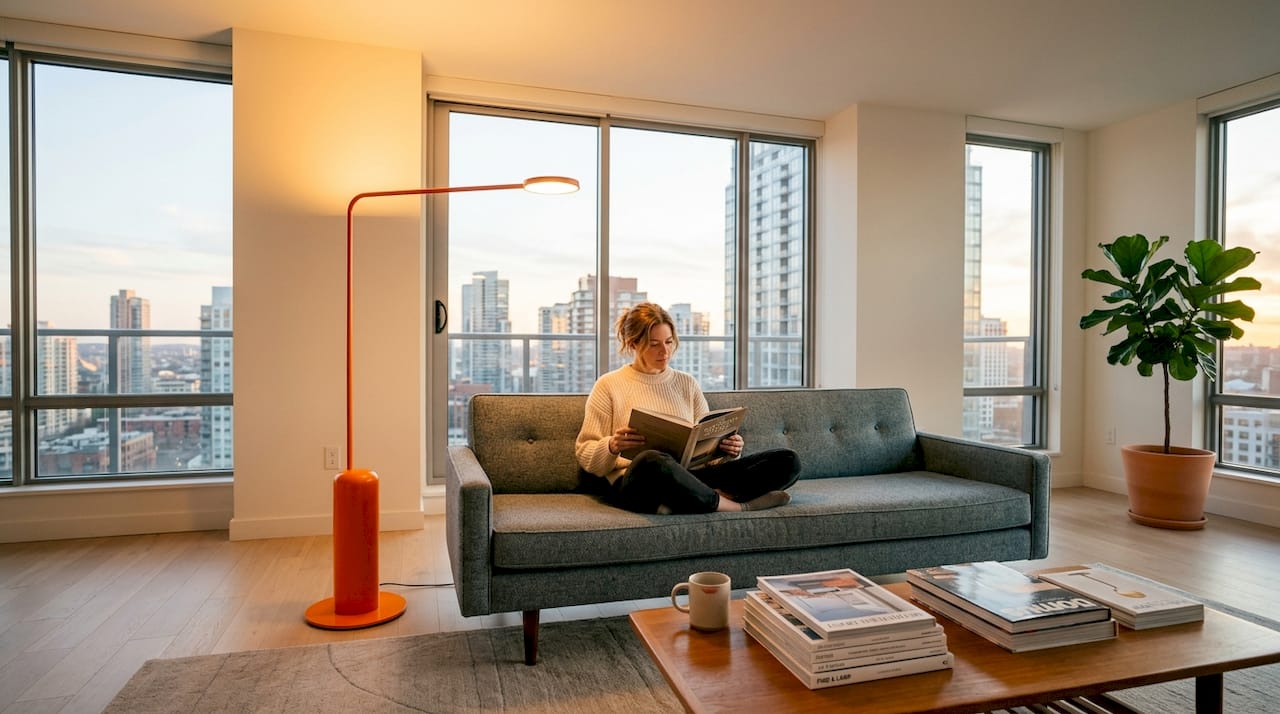
Ever walked into a room and just felt... right? Or, conversely, felt an inexplicable sense of unease, even if the furniture was chic and the paint fresh? Chances are, you were experiencing the subtle, yet profound, power of lighting. Most of us treat lighting as an afterthought, something we finalize after the furniture is arranged and the paint is dry. Yet, lighting is arguably the single most powerful lever we have for shaping how a space feels and functions every single day. It’s the invisible architecture, dictating not just what you see, but how you feel, how well you sleep, and even how productive you are.
Here’s the part that genuinely surprises people: neither purely direct nor purely indirect lighting wins for comfort and perceived brightness. The science points to a specific balance, and almost no home is getting it right. In the sections ahead, we unpack that research, translate it into actionable room-by-room strategies, and show you how to create spaces that genuinely support your wellbeing, whether you're a homeowner ready for a full overhaul or a renter looking for deposit-safe upgrades. Get ready to illuminate your world!
Table of Contents
- How Lighting Defines the Function and Feeling of Your Space
- The Science Behind Light Ratios: Direct vs. Indirect Lighting
- Lighting for Wellbeing: Mood, Sleep, and Circadian Rhythms
- Flexible Lighting Solutions for Homeowners and Renters
- What Most Guides Miss About Lighting and Space Function
- Find Innovative Lighting Solutions for Every Space
- Frequently Asked Questions
Key Takeaways
| Point | Details |
|---|---|
| Balanced lighting delivers comfort | A mix of indirect and direct lighting (ideally 35-65% indirect) maximizes perceived brightness and space acceptance. |
| Lighting affects wellbeing | Tunable LED and circadian-based solutions improve sleep quality, enhance mood, and support natural body rhythms. |
| Renter-friendly upgrades exist | Plug-in sconces, smart bulbs, and LED strips offer effective lighting without permanent alterations. |
| Vertical surfaces change impression | Illuminating walls or ceilings creates a more spacious, comfortable, and preferred environment, often overlooked. |
| Personalized solutions are accessible | AI tools and curated collections make customizing lighting simple for any living situation and design aesthetic. |
How Lighting Defines the Function and Feeling of Your Space
Think of lighting as the invisible architect of your home. While walls and floors define what a space is, lighting defines what it feels like to be inside it. It’s the difference between a stark, sterile environment and a cozy, inviting sanctuary. A kitchen flooded with a single, harsh overhead downlight feels clinical and efficient, prompting you to get in and out quickly. That same kitchen, with a warm pendant centered over the island, soft under-cabinet strips, and subtle uplighting bouncing off the ceiling? It instantly becomes inviting, a place where you linger over coffee, share stories, and genuinely enjoy meal prep.
Lighting operates on two distinct levels simultaneously. The first is functional: it helps you see clearly for specific tasks like chopping vegetables, reading a book, or applying makeup. This is about visibility and safety. The second is emotional: it sets the mood, signals transitions from active work to relaxed rest, and even influences how expansive or intimate a room feels spatially. Good lighting analysis for each room treats both levels with equal seriousness, which is precisely why a one-size-fits-all ceiling fixture rarely satisfies either.
“The way a room is lit communicates as much as the furniture inside it. Lighting isn’t decoration; it’s the atmosphere itself, influencing every interaction and emotion within that space.”
Where most homes go wrong comes down to two persistent habits. First, relying almost exclusively on overhead direct lighting, which flattens a room visually, creates harsh shadows on faces (hello, unflattering selfies!), and can lead to eye strain. Second, ignoring vertical surfaces entirely, even though research shows walls and ceilings are critical for the way we perceive space and comfort. Studies emphasize vertical surface illuminance for spatial impression and preference, while most installation standards still focus almost exclusively on horizontal illuminance at desk or floor level. This means we're often designing for a meter, not for human experience.
Here’s a quick breakdown of what different rooms typically need:
- Living Rooms: Benefit from layered lighting with a mix of ambient (indirect), accent, and task sources to support multiple activities, from movie watching to reading to entertaining guests. Think floor lamps, table lamps, and perhaps dimmable recessed lights.
- Bedrooms: Demand warmer, dimmer options in the evening to support natural sleep cues and melatonin production. Soft bedside lamps and gentle ambient light are key, avoiding bright overheads before bed.
- Kitchens: Require strong, shadow-free task lighting over prep surfaces (e.g., under-cabinet lighting, focused pendants). However, they benefit enormously from softer ambient lighting (e.g., dimmable recessed lights, decorative pendants) to prevent that clinical, over-lit feel when not actively cooking.
- Home Offices: Need balanced lighting that minimizes screen glare while maintaining alertness during working hours. A good desk lamp combined with ambient light that illuminates the walls can reduce eye fatigue.
- Dining Rooms: Often feature a statement pendant over the table for direct light, but combining it with wall sconces or dimmable recessed lights creates a more intimate and adaptable atmosphere for various occasions.
Understanding lighting’s impact on interior design starts with recognizing that every fixture choice either contributes to or detracts from both the function and the emotional tone of a space. Nothing in your home is neutral when it comes to light.
The Science Behind Light Ratios: Direct vs. Indirect Lighting
Let’s get specific, because the research here is genuinely fascinating and often counterintuitive. Direct lighting sends light downward or toward a specific target surface. Think recessed cans, directional pendants, spot lights, and desk lamps. It’s precise, efficient for tasks, and creates crisp shadows. Indirect lighting, on the other hand, bounces light off ceilings and walls before it reaches you, creating a softer, more diffused glow that fills a room without harsh shadows or glare. Examples include uplighters, wall sconces that cast light upwards, and pendants with opaque shades that direct light primarily up or down, allowing the ceiling to reflect light into the room.
For years, the assumption in many design circles was that more direct light meant better lighting. Brighter equals better, right? Not quite. While direct light is crucial for tasks, relying solely on it can lead to visual fatigue and a flat, uninviting space. The sweet spot, according to scientific studies, lies in a balanced indirect/direct ratio. Specifically, ratios around 35 to 65 percent indirect light are preferred for perceived brightness, visual comfort, and overall acceptance over purely direct or purely indirect setups.
That finding is worth sitting with for a moment. A room where 65% of its light is bouncing off the ceiling and walls actually feels brighter and more comfortable to the people inside it than a room hammered with direct downlights. Why? Because indirect light distributes luminance (the brightness your eye actually perceives) far more evenly across your entire visual field. This reduces the harsh contrasts and glare that direct-only setups cause, making the space feel more open, softer, and less taxing on your eyes. It’s like the difference between staring at a spotlight and being bathed in natural daylight from a large window.
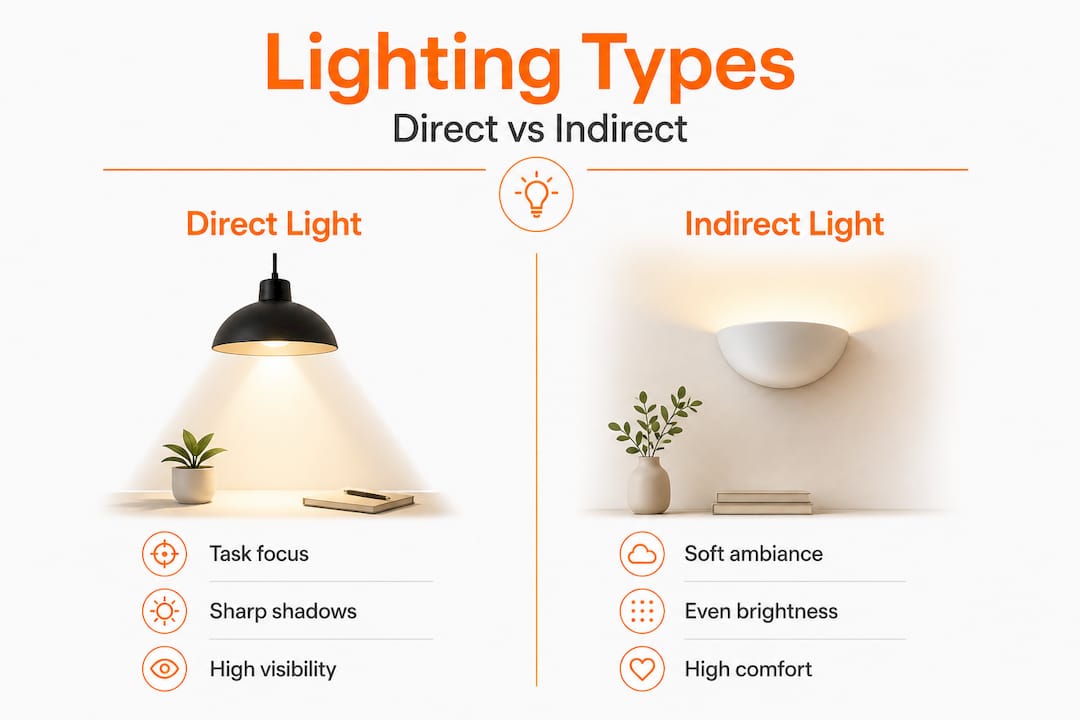
| Lighting type | Key benefit | Main drawback | Best use |
|---|---|---|---|
| Direct only | High task visibility, energy efficient for specific zones | Harsh shadows, visual fatigue, flat appearance | Work surfaces, reading nooks, accenting specific objects |
| Indirect only | Soft, glare-free ambiance, reduces shadows, expands space | Can feel flat or insufficient for detailed tasks without layering | Ambient general lighting, mood setting, illuminating vertical surfaces |
| Mixed (35-65% indirect) | Optimal comfort and perceived brightness, versatile, dynamic | Requires thoughtful planning and multiple fixture types | Living rooms, bedrooms, kitchens, home offices – adaptable to all spaces |
How you adjust this ratio depends on how you actually use a room and the time of day. Think about room layout and lighting together: a long, narrow room benefits from wall sconces that push light outward to widen the perceived space, while a low-ceilinged room benefits from uplighting that makes the ceiling feel taller. For more technical insights into lighting design principles, the Illuminating Engineering Society (IES) provides comprehensive guidelines often referenced by professionals.
Pro Tip: Match your light ratio to the activity. During focused tasks like reading, cooking, or working at a desk, shift toward a more balanced 50% direct, 50% indirect. When relaxing, entertaining, or winding down in the evening, push that ratio toward 65 to 70% indirect. A simple dimmer on your overhead fixture, combined with a plug-in floor lamp featuring an upward-facing bowl shade or wall-washing sconces, can give you that range without any complex rewiring.
Lighting for Wellbeing: Mood, Sleep, and Circadian Rhythms
Here’s where lighting stops being purely about aesthetics and starts being about your health, productivity, and overall quality of life. Your body runs on a circadian rhythm, an approximately 24-hour internal clock that governs sleep, energy levels, mood, hormone production, and even appetite. Light is the most powerful external signal that sets and resets this internal clock every single day. Exposure to bright, cool-toned light in the morning tells your body to wake up and be alert, while the absence of such light and the presence of warm, dim light in the evening signals it's time to wind down and prepare for sleep.
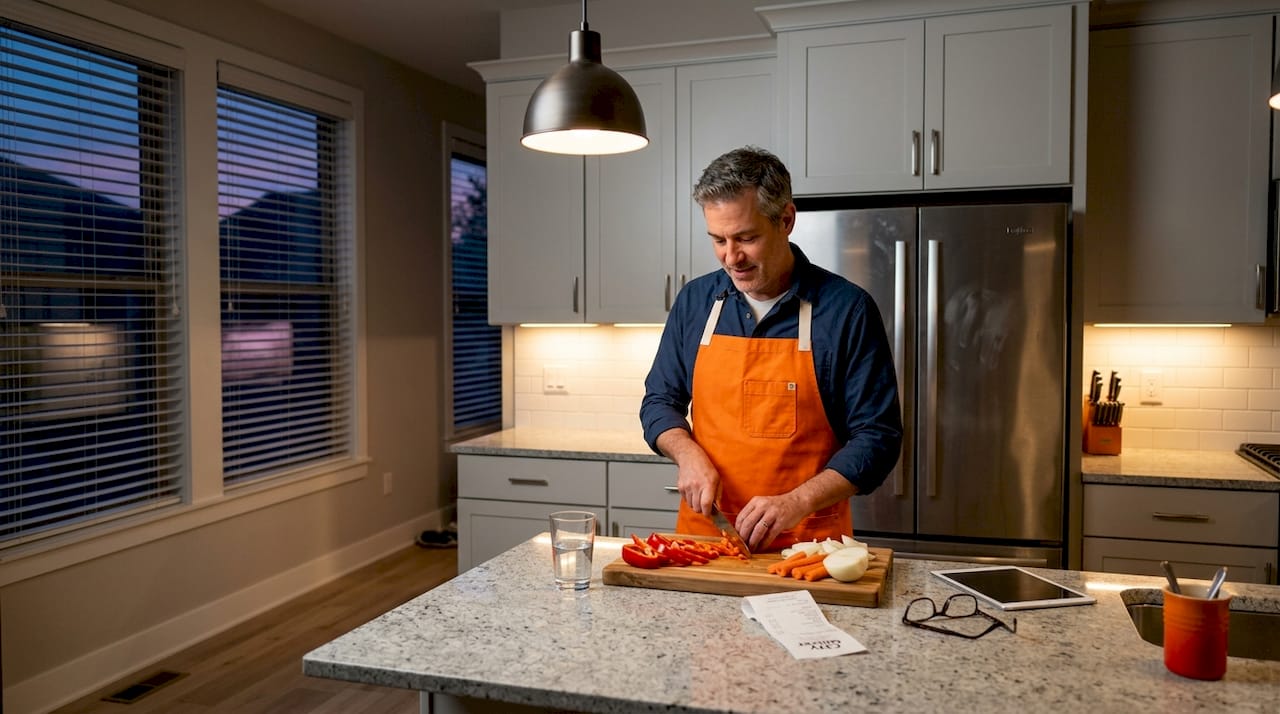
The problem? Most homes deliver the same quality and intensity of light at 8 a.m. and 8 p.m., essentially confusing the body’s timekeeping system. This constant, unchanging light can disrupt sleep cycles, contribute to daytime fatigue, and even exacerbate mood disorders. The fix isn't complicated, but it does require intention and a little knowledge about color temperature.
Studies show that LED lighting improves sleep quality and reduces daytime dysfunction compared to fluorescent lights, particularly in spaces with limited access to natural daylight. This is significant for basement apartments, north-facing rooms, and offices without windows. The key advantage of LEDs is their tunability – their color temperature can be precisely controlled in a way that fluorescent and traditional incandescent sources simply aren’t, allowing them to mimic natural light shifts.
Circadian lighting setups that mimic natural daylight shifts (bright and cool-toned in the morning, gradually warming and dimming by evening) measurably reduce symptoms of depression, enhance focus, and elevate overall mood. Think of it as giving your home’s lighting a daily rhythm that moves in sync with the sun, even when the sun isn’t visible from your window. This approach optimizes your body's natural processes, leading to better sleep, improved concentration, and a greater sense of wellbeing.
| Lighting Type | Color Temperature (Kelvin) | Circadian Effect | Best Time of Day / Use Case |
|---|---|---|---|
| Cool White LED | 5000-6500K (Daylight blue-white) | Boosts alertness, suppresses melatonin, enhances focus | Morning to early afternoon, task lighting in kitchens/offices |
| Neutral White LED | 3500-4000K (Balanced, clean white) | Moderate alertness, neutral mood, good for general tasks | Midday to late afternoon, general ambient lighting |
| Warm White LED | 2700-3000K (Amber-warm, traditional incandescent feel) | Promotes relaxation, supports melatonin production | Evening and night, living rooms, bedrooms, dining areas |
| Dim Warm Incandescent/LED | 2200K or lower (Candlelight glow) | Strong melatonin support, deeply calming, signals sleep | Bedtime routines, relaxation zones, very late evening |
Here’s a simple, actionable sequence to implement mood-enhancing, circadian-friendly lighting in your home:
- Audit Your Current Fixtures: Identify which lights you use at each time of day and whether they’re warm or cool toned. Note areas where you need more alertness (mornings) versus relaxation (evenings).
- Replace Morning-Use Bulbs: In areas like kitchens, bathrooms, and home offices, replace bulbs with bright, cool-to-neutral LEDs in the 4000 to 5000K range for morning and early afternoon use. These will give you that "wake up" signal.
- Add Warm-Toned Lamps for Evening: Introduce warm-toned lamps (table lamps, floor lamps) to living areas and bedrooms for use after sunset, keeping them in the 2700 to 3000K range. These should be your primary light sources as evening progresses.
- Install Dimmers Wherever Possible: Even simple plug-in dimmer adapters for lamps can make a huge difference, allowing brightness to drop as the evening progresses. Dimming is crucial for melatonin production.
- Use Smart Bulbs with Scheduling: Invest in smart bulbs that offer tunable white capabilities (shifting from cool to warm color temperatures) and scheduling features. Automate the color and brightness shift so the transition happens without you having to think about it. Many models can even connect to sunrise/sunset data for your location.
- Create a Dedicated Low-Light Ritual Zone: In your bedroom, use a bedside lamp with a very warm bulb (2200K or lower) that you switch to at least an hour before sleep. This signals to your body that it's time to prepare for rest.
Following a room-by-room lighting guide helps you sequence these changes systematically rather than retrofitting everything at once. For more on the science of light and its impact on health, you might explore resources from institutions like the Sleep Foundation.
Pro Tip: Smart bulbs that support tunable white (the ability to shift from cool to warm color temperature on a schedule) are the single highest-impact upgrade for circadian wellbeing. Many models now connect to sunrise and sunset data automatically, adjusting your home’s lighting in real time based on the actual time of day at your location. It’s like having a personal lighting designer built into your fixtures!
Flexible Lighting Solutions for Homeowners and Renters
One of the biggest lighting myths we encounter is that meaningful upgrades require an electrician, tearing down walls, or breaking the bank. For homeowners with overhead wiring and the freedom to modify fixtures, permanent upgrades like installing recessed lighting, adding dimmer switches on existing circuits, or hardwiring new pendant fixtures are absolutely available. But what about renters, or those in older properties without overhead lighting in every room? You have more effective and stylish options than you might think, and they’re definitely more impactful than just buying another floor lamp.
Renter-friendly lighting solutions like plug-in sconces, arc floor lamps, smart bulbs, and LED light strips solve the no-overhead-wiring problem elegantly and, crucially, preserve your security deposit since no permanent alterations are required. The key is knowing which products to reach for and how to deploy them strategically to create layers of light.
Here’s a practical list of renter-friendly lighting upgrades that deliver big impact:
- Plug-in Wall Sconces: These deliver the sophisticated look and focused function of hardwired sconces with a discreet cord that runs along the wall or behind furniture. Perfect for flanking a bed, sofa, or artwork, they add a crucial vertical light layer.
- Arc Floor Lamps: Tall, swooping lamps that position a shade above a seating area, mimicking the feel of overhead lighting without any ceiling attachment. They provide excellent ambient light and can define zones in an open-concept space.
- LED Strip Lights: Adhesive LED strips applied behind furniture, under shelves, along ceiling perimeters, or inside cabinets create beautiful indirect ambient glow. They are fully removable without damage and often come with remote controls for color and brightness.
- Clip-on and Clamp Lamps: Highly adjustable task lighting that attaches to shelves, headboards, or desks without tools or wall anchors. Ideal for reading nooks, workspaces, or even highlighting decorative objects.
- Smart Bulbs in Existing Sockets: The simplest and often most impactful upgrade. By replacing existing lamp bulbs with smart bulbs, you transform a single fixture into a dynamic, app-controlled or voice-controlled lighting system, allowing for tunable white, color changes, and scheduling.
- Battery-Powered Puck Lights: Small, motion-activated LED pucks are perfect for closets, pantries, display shelves, or under stair nosings where no electrical access exists. They provide convenient task lighting without any wiring.
For homeowners, the landscape opens up considerably. Rewiring for recessed lighting offers a clean, architectural look for ambient light. Adding dimmer switches on existing circuits is a must for flexibility. Installing ceiling medallions with new pendant fixtures can create stunning focal points. And integrating whole-home smart lighting systems (like Lutron Caseta, Philips Hue, or Casambi) provides unparalleled control, automation, and energy efficiency across your entire living space. The best inspiring lighting examples consistently combine permanent ambient fixtures with flexible, layered accent and task lighting for maximum adaptability and visual interest.
Pro Tip: Even if you own your home and could hardwire anything, maintaining flexibility through plug-in and modular solutions is often smarter. Life changes, furniture moves, and tastes evolve. A lighting system built on adaptable components means you can redesign your space without touching a single wire, saving time and money in the long run. For more creative ideas, check out design blogs like Apartment Therapy which often feature innovative lighting setups for diverse living situations.
What Most Guides Miss About Lighting and Space Function
Here’s our honest, somewhat contrarian take: the overwhelming majority of lighting guides, and even professional standards, focus almost exclusively on horizontal illuminance and task lighting, while ignoring the spatial dimension of light almost entirely. They’ll tell you how many lumens you need over a kitchen counter or a desk, but say nothing about how bouncing light off your walls or ceiling will make that same kitchen feel twice as large and three times as warm.
The research is unambiguous on this. While standard building codes and illumination guidelines obsess over horizontal illuminance metrics (how much light hits a flat surface like a tabletop), the studies that actually measure human preference, comfort, and spatial impression consistently find that vertical surfaces (walls and ceilings) are where the perceptual magic happens. A room where the walls glow with soft, reflected light feels expansive, secure, and lived-in. A room where only the floor plane is lit, or where light is merely cast downwards, feels hollow, cold, and often smaller than it actually is, regardless of how technically “bright” it reads on a light meter. This phenomenon is often referred to as "cave effect" or "spotlight effect."
What this means practically: before you buy another ceiling fixture or desk lamp, look at your walls. Are they lit? Is light reaching your ceiling and bouncing back down? If the answer is no, you’re likely experiencing a form of spatial compression – a subtle sense that the room is smaller, less comfortable, and less inviting than it could be, without being able to name why. You're missing out on the power of "wall washing" or "ceiling grazing," techniques that dramatically enhance perceived space.
Wall sconces, picture lights, uplighting torchieres (floor lamps that direct light upwards), and LED cove lighting above kitchen cabinets or crown molding are all powerful tools that address vertical surfaces directly. Used in combination with your existing overhead and task sources, they create the layered, spatially expansive interiors that feel designed rather than merely assembled. Consider the impact of illuminating a textured wall or a piece of artwork – it adds depth and visual interest that direct overhead light simply cannot achieve. For a deeper dive into how architects use light to define space, resources like Architectural Digest frequently showcase homes with exemplary lighting design.
The uncomfortable truth is that a $40 plug-in uplighter pointed at a white ceiling does more for a room’s feeling of comfort and quality than a $400 statement pendant aimed downward. We’re not saying skip the statement piece – those are crucial for style and focal points. We’re saying: don’t skip the ceiling and the walls. They are your largest canvases for light, and when properly illuminated, they transform a room from merely functional to truly spectacular.
Find Innovative Lighting Solutions for Every Space
Knowing the science, understanding the principles, and even having a clear vision for your space is energizing. But finding the exact right fixture to bring these principles to life in your specific space? That’s where the process can become overwhelming. The sheer volume of options, styles, and technical specifications can make choosing the perfect lamp feel like a daunting task. We built Find a Lamp precisely to close that gap, transforming the complex into the simple and enjoyable.

Forget endless scrolling and guesswork. With Find a Lamp, you simply upload a photo of your room, and our advanced AI analyzes the existing light quality, current style, spatial characteristics (like ceiling height and room size), and even the mood you're trying to achieve. It then surfaces curated fixture recommendations that match both your aesthetic preferences and your functional needs. Whether you’re outfitting a moody, industrial living room lighting scheme with exposed Edison pendants and directional sconces, searching for the perfect table lamp selection to add that essential warm indirect layer to a cozy bedroom corner, or seeking a complete circadian lighting solution for your home office, our extensive catalog and intelligent AI tools do the searching for you. We empower you to transform your space with intention, not guesswork, making expert lighting design accessible to everyone. Visit Find a Lamp today and discover how easy it can be to illuminate your life.
Frequently Asked Questions
What is the ideal mix of direct and indirect lighting for a living room?
Research suggests a 35-65% indirect lighting ratio provides optimal perceived brightness and comfort. This means most of your light should bounce off ceilings and walls (indirect) rather than shining directly downward (direct), creating a