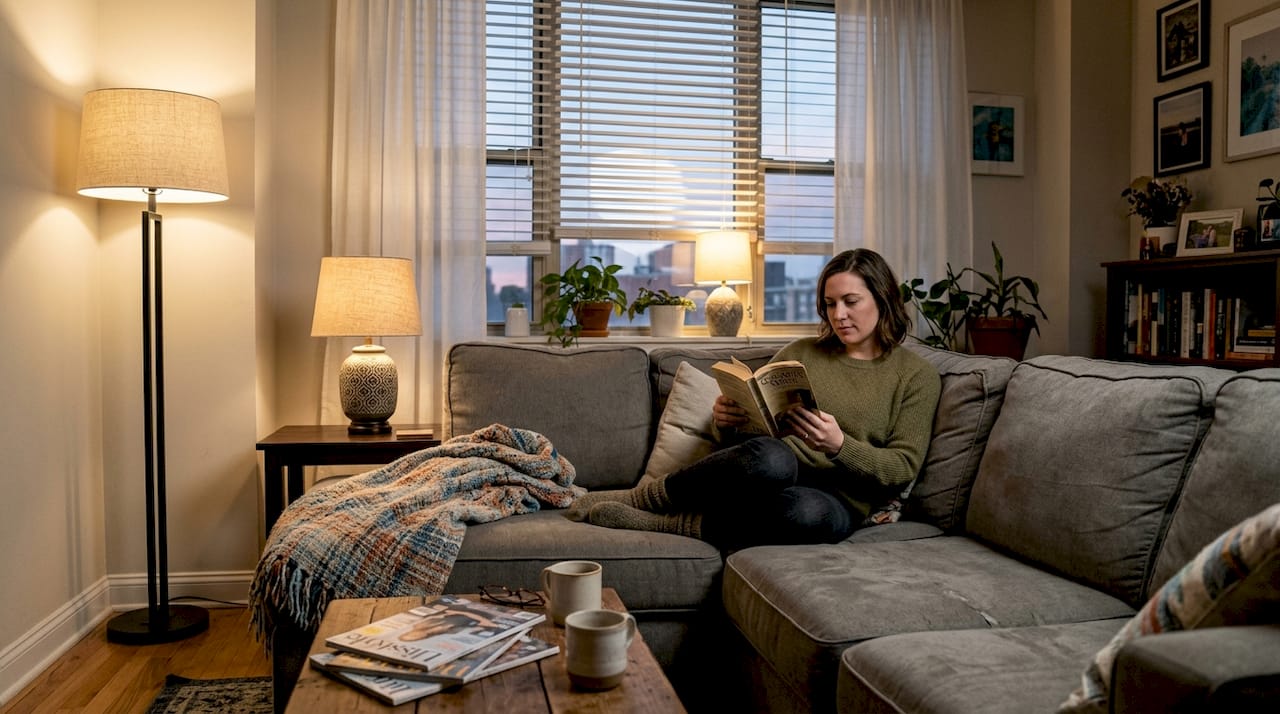
Ever walked into a room and instantly felt a shift in your mood? Perhaps it was a cozy, inviting glow that made you want to curl up with a book, or a bright, energizing light that spurred you to get things done. That’s not magic; that’s the power of lighting. It’s the one design element most homeowners choose last but should absolutely choose first. You might spend weeks picking the perfect sofa or the right wall color, yet a single poorly placed light fixture can make all of that effort fall flat. Research consistently shows that lighting affects mood, sleep quality, and how colors and textures actually read in a room. This guide walks you through why lighting matters so deeply, how to layer it effectively, and how to use both natural and artificial light to create spaces that look beautiful and feel genuinely good to live in.
Table of Contents
- Why Lighting Isn't Just an Afterthought: The Foundational Role of Illumination
- Mastering the Glow: The Three Layers of Lighting (Ambient, Task, & Accent)
- Harnessing the Sun & Smartening Your Bulbs: Natural vs. Artificial Light
- The Secret Language of Light: Colors, Mood, and Spatial Perception
- Our Perspective: Why Lighting is the Unsung Hero of Home Design
- Ready to Illuminate Your World? Find the Perfect Lighting for Your Space
- Frequently Asked Questions
Key Takeaways
| Point | Details |
|---|---|
| Lighting transforms spaces | The right lighting makes any room more functional, comfortable, and visually striking, acting as the foundation for all other design elements. |
| Layer your lighting | Combining ambient, task, and accent lights achieves depth, flexibility, and dynamic control for every activity and mood. |
| Natural light boosts well-being | Maximizing daylight supports health, happiness, and energy efficiency, while smart artificial choices fill any gaps. |
| Color impacts mood | Choosing the right light color temperature and intensity can calm, energize, or create a cozy, intimate atmosphere. |
Why Lighting Isn't Just an Afterthought: The Foundational Role of Illumination
Lighting does far more than help you see. It sets the emotional tone of a room before a single piece of furniture is noticed. Walk into a space bathed in warm, even light and you feel relaxed, invited, and at ease. Step into one lit by a single harsh overhead bulb and you feel tense, exposed, and perhaps even a little sad—even if the furniture is identical. That emotional response is not accidental. It is a direct result of how light interacts with color, texture, and space, fundamentally shaping our perception and experience of a room.
Think of lighting as the invisible architect of your home’s atmosphere. It’s the silent storyteller, dictating how every carefully chosen detail—from your reclaimed wood coffee table to your vibrant throw pillows—is perceived. Without proper lighting, even the most expensive finishes can fall flat, and the most thoughtful layouts can feel uninviting. It’s truly the secret ingredient that pulls a whole room together.
The Magic of Color Rendering (CRI)
One of the clearest examples of lighting’s power is its effect on color rendering. Have you ever painted a swatch on your wall, loved it, then bought the whole can, only to find it looks completely different once it’s up? The culprit is often your lighting. The same paint color can look warm and inviting under incandescent light, then shift to something flat and gray under cool fluorescent light. This phenomenon is measured by the Color Rendering Index (CRI), which indicates how accurately a light source reveals the true colors of objects compared to natural light. A high CRI (90+) means your reds will look truly red, your blues truly blue, and your skin tones healthy and vibrant.
Textures follow the same rule. Raking light from a side angle reveals the rich grain of wood, the intricate weave of a fabric, or the subtle variations in a stone fireplace. Flat, diffuse overhead light, by contrast, can erase those details entirely, making surfaces appear one-dimensional and uninteresting. Understanding lighting for interior design styles helps you match the right light source and CRI to the aesthetic you are building, ensuring your design vision truly comes to life.
Health, Happiness, and the Power of Light
Beyond aesthetics, light has a profound impact on our physical and mental well-being. Natural daylight is often considered the gold standard. Studies confirm that satisfaction with daylighting is strongly influenced by uniformity and light level, meaning rooms with consistent, well-distributed natural light feel more comfortable, livable, and can even boost productivity and mood. When daylight is limited, the choice of artificial light becomes critical. Poor lighting can lead to eye strain, headaches, and even disrupt our circadian rhythms, impacting sleep and overall health.
“The quality of light in a room is not a luxury. It is a basic condition for comfort, health, and the success of every other design decision you make.”
For artificial lighting, the technology you choose matters more than most people realize. Modern LEDs offer incredible flexibility and efficiency. For example, research indicates that LED task lighting improves sleep quality and daytime function compared to fluorescent in windowless environments. That finding has real implications for home offices, basements, and bathrooms where natural light is scarce, underscoring the importance of thoughtful fixture selection.
Here is a quick breakdown of what good lighting actually does for a room:
- Sets mood and atmosphere before any other element registers, creating an immediate emotional response.
- Reveals or conceals color and texture, enhancing or diminishing visual interest depending on direction and temperature.
- Supports the function of a space, from precise task work like cooking or reading to deep relaxation and entertaining.
- Affects health and sleep through its influence on circadian rhythms, impacting energy levels and overall well-being.
- Makes spaces feel larger or smaller, taller or wider, through strategic placement and intensity, manipulating spatial perception.
The bottom line is simple: no other single design choice has this much influence over how a room feels, functions, and ultimately, how you live within it.
Mastering the Glow: The Three Layers of Lighting (Ambient, Task, & Accent)
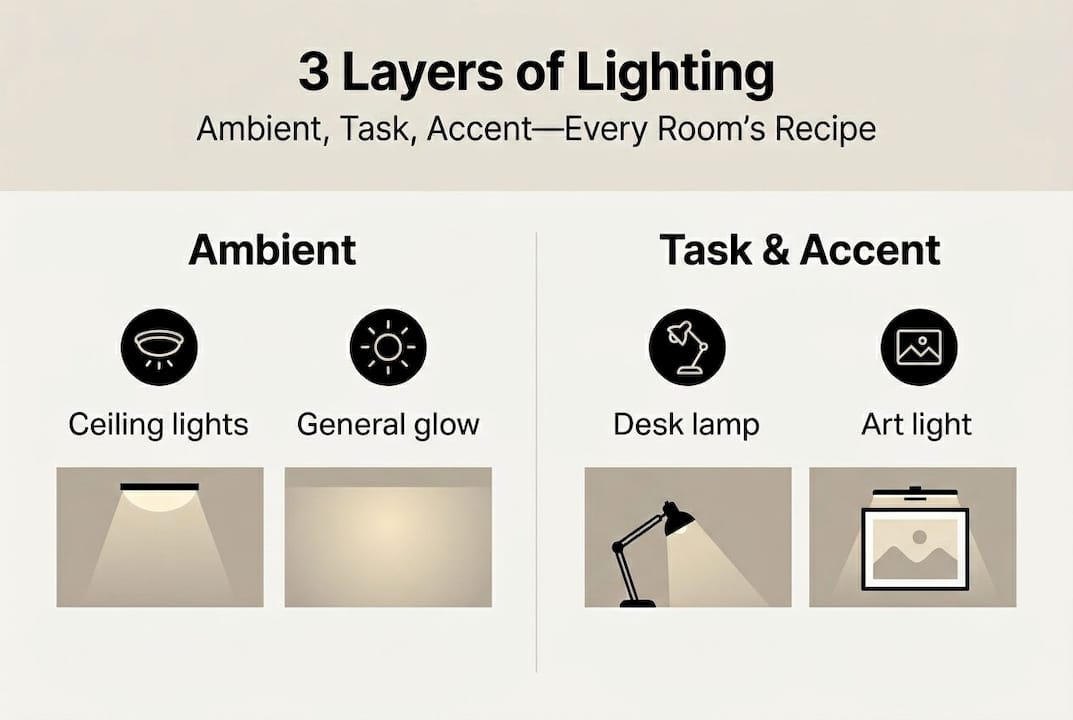
Professional designers rarely think about a single light source. They think in layers. The layered lighting approach combines three distinct types of light, each serving a different purpose, to create rooms that are both functional and visually rich. It’s like composing a symphony, where each instrument plays its part to create a harmonious whole.
1. Ambient Lighting: The Foundation of Illumination
Ambient lighting is the foundation of any good lighting plan. It provides the overall, general illumination that allows you to move through and use a room safely and comfortably. Think of it as the base layer, preventing dark spots and ensuring a uniform level of light. Without a solid ambient layer, everything else falls apart, leaving a room feeling dim, shadowy, or uninviting.
- Purpose: General illumination, safety, overall brightness.
- Common Fixtures: Ceiling-mounted fixtures (flush mounts, semi-flush mounts), recessed downlights, track lighting, chandeliers, large pendants, cove lighting (indirect light from a hidden source).
- Placement Tip: Aim for even distribution. Recessed lights should be spaced to avoid "scalloping" on walls. Chandeliers work best as a central decorative element in dining rooms or entryways, supplemented by other ambient sources.
2. Task Lighting: Light Where You Need It Most
Task lighting is focused and purposeful, designed to illuminate specific activities and prevent eye strain. It targets areas where you read, cook, work, or engage in hobbies. This layer is crucial for functionality and comfort, ensuring you have adequate brightness directly on your workspace without creating glare in other areas of the room.
- Purpose: Activity-specific focus, preventing eye strain, enhancing productivity.
- Common Fixtures: Desk lamps, under-cabinet strip lights (kitchens), reading lamps (floor lamps or table lamps next to a chair), pendant lights over kitchen islands, vanity lights in bathrooms.
- Placement Tip: Position task lights to shine directly on the work surface, not into your eyes or creating shadows from your hand. For reading, a lamp should be slightly behind or to the side of you.
3. Accent Lighting: The Art of Drama and Depth
Accent lighting is the layer that adds drama, depth, and visual interest to a space. It highlights architectural features, artwork, plants, or decorative objects, drawing the eye and creating focal points. This is where you can truly express your style and create a dynamic, curated look. It's the jewelry of your lighting plan!
- Purpose: Highlighting features, creating visual interest, adding drama and ambiance.
- Common Fixtures: Picture