Why lighting analysis matters for every room at home
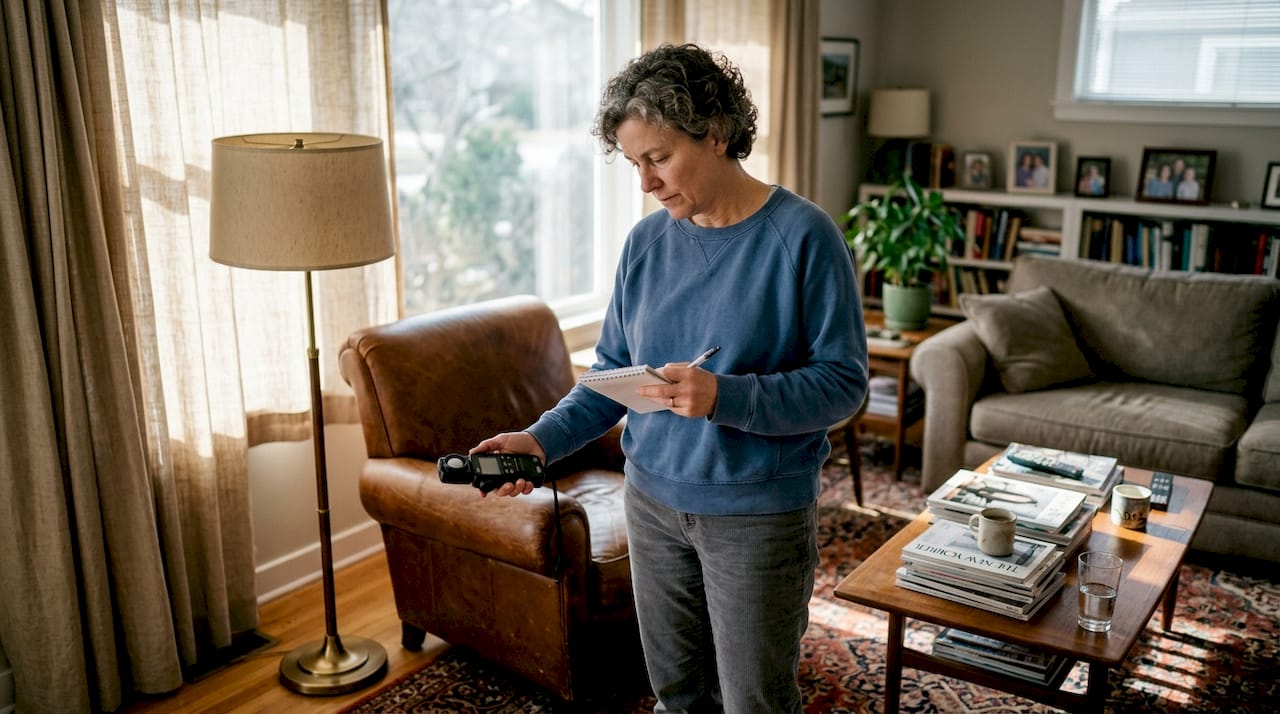
Most homeowners spend hours comparing lamp styles online, debating wattage, and measuring shade diameters. Yet the single step that determines whether a room actually feels right gets skipped almost every time: lighting analysis. Proper analysis goes far beyond swapping bulbs or matching finishes to furniture. It reveals how your space is actually used, where shadows fall, and whether your current fixtures support or undermine your daily life. This guide breaks down what lighting analysis really means, why it produces results that guesswork never will, and how you can apply it room by room to improve both the look and function of your home.
Table of Contents
- What is lighting analysis and why does it matter?
- How lighting analysis transforms home function and mood
- Room-by-room examples: Practical lighting analysis in action
- Choosing the right lighting: Analysis-driven product recommendations
- Our take: Why skipping lighting analysis is a costly design mistake
- Find your perfect lighting with personalized recommendations
- Frequently asked questions
Key Takeaways
| Point | Details |
|---|---|
| Layered lighting is essential | Combining ambient, task, and accent lighting transforms both mood and function in every room. |
| Personalized analysis drives better choices | Matching fixtures to your home’s needs maximizes comfort, style, and efficiency. |
| Analysis prevents costly mistakes | Skipping a lighting assessment often leads to wasted budget and disappointing results. |
| Modern tools empower homeowners | Digital visualization and AI make professional-level analysis and recommendations accessible to everyone. |
What is lighting analysis and why does it matter?
Lighting analysis is a structured assessment of how light behaves in a space. It looks at illumination levels, fixture placement, light source types, and how well current lighting supports the activities happening in each room. Think of it as a health check for your home’s atmosphere.
Most people assume a room is well-lit if they can see clearly. That assumption misses a lot. A kitchen can feel bright enough for casual meals but leave countertops too dim for safe chopping. A living room can have a beautiful floor lamp and still produce eye strain during long reading sessions. Lighting gaps that simple bulb swaps overlook often stay invisible until a proper analysis brings them to the surface.
Here is a snapshot of how common these issues really are:
| Lighting issue | Estimated % of rooms affected |
|---|---|
| Insufficient task lighting | 65% |
| Wrong color temperature for use | 58% |
| Poor fixture placement | 47% |
| Missing accent layer | 72% |
| Over-reliance on single overhead source | 81% |
These numbers are not rare edge cases. They are the norm in most homes.
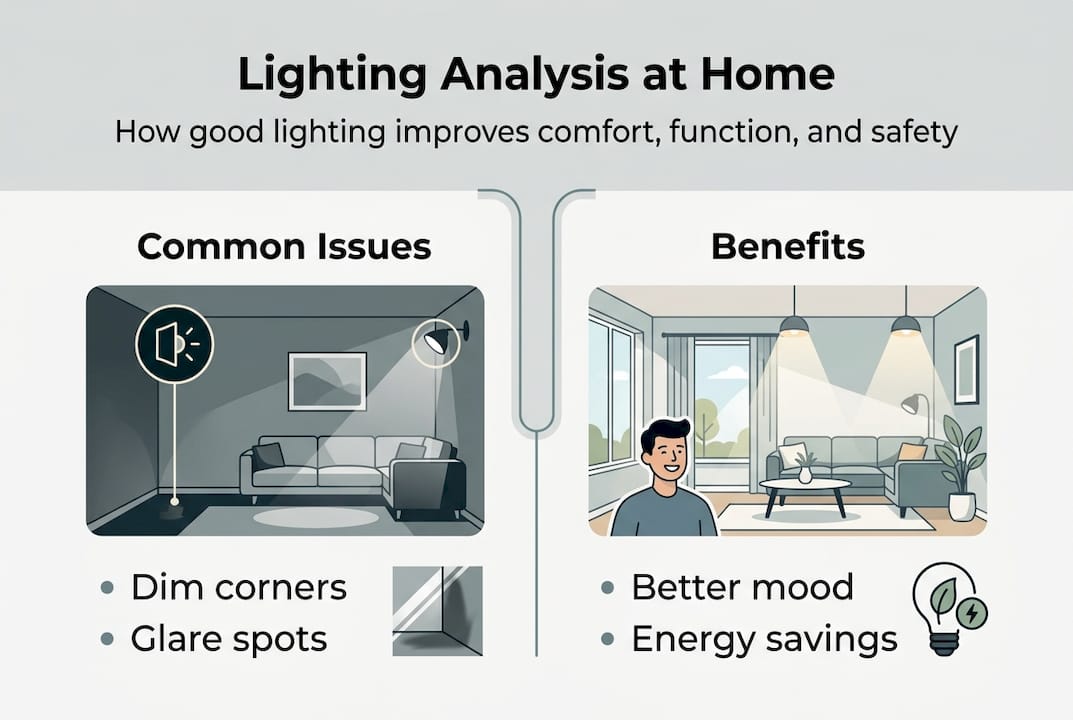
Beyond comfort, good analysis connects to energy savings and safety. Outdoor areas benefit too. For example, pool lighting for ambiance shows how thoughtful placement reduces hazards while creating a welcoming environment. The same principle applies indoors: well-analyzed lighting reduces accidents in hallways, staircases, and kitchens.
The most effective approach is layering. Layered lighting means combining three types: ambient (general illumination), task (focused light for specific activities), and accent (decorative highlights for depth and interest). When all three work together, a room feels balanced without being designed by formula.
Key benefits of proper lighting analysis include:
- Improved visual comfort for daily tasks
- Reduced energy waste from over-lit or under-lit zones
- A stronger sense of style and intentional design
- Better support for shifting moods throughout the day
Pro Tip: Before buying anything, walk through each room at different times of day and night. Note where you squint, where shadows pool, and where you feel most relaxed. That walk is the beginning of your lighting analysis.
“Good lighting does not announce itself. It simply makes everything else look better.”
How lighting analysis transforms home function and mood
Here is a fact that surprises most people: up to 60% of lighting-related complaints in homes come from mood mismatch, not raw brightness. People are not necessarily living in dark rooms. They are living in rooms where the light feels wrong for what they are doing.
This is where analysis goes beyond lux levels and wattage charts. It asks a different question: does this light match how this space is used and how the person using it wants to feel?
Lighting also shapes perception of space. Cool, bright light makes rooms feel larger and more focused. Warm, dimmer light creates intimacy and signals rest. A small bedroom flooded with cool white light at night disrupts sleep cues and makes the room feel clinical rather than cozy. The same room fitted with warm, dimmable sources after analysis feels completely different, even with identical furniture.
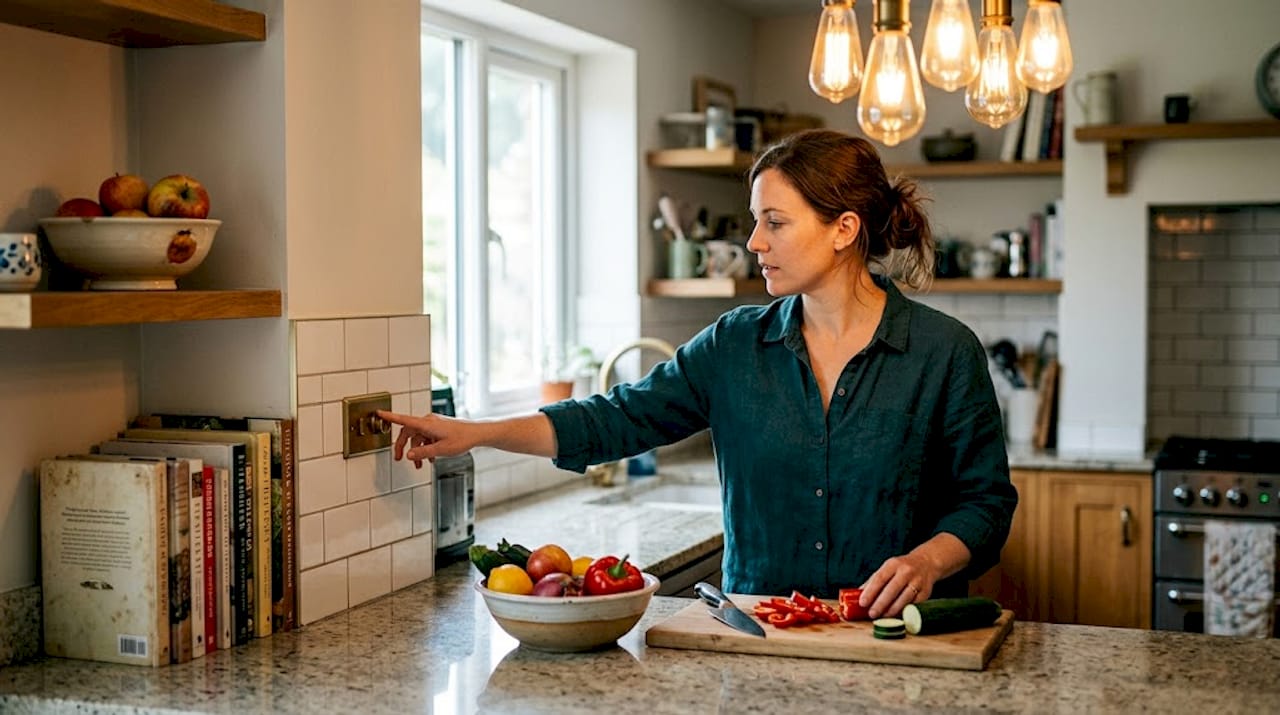
The ambient lighting effects principle applies equally well indoors. Thoughtful placement and color temperature choices reshape how a space reads emotionally, not just physically.
Lighting for productivity looks nothing like lighting for dinner parties. Analysis separates these needs clearly. A home office needs high color rendering and focused task sources to minimize eye strain. A dining room thrives on warm tones, a statement pendant overhead, and side sources that flatter faces rather than washing them out from above.
Impactful changes that analysis typically identifies:
- Switch to dimmable bulbs in multipurpose rooms to shift from energized to relaxed modes
- Adjust color temperature from cool (5000K+) for work to warm (2700K to 3000K) for relaxation
- Add under-cabinet lighting in kitchens to eliminate task shadows
- Introduce accent lighting on shelves or artwork to add visual depth
- Redirect floor lamps away from walls to broaden light spread in small spaces
Small, targeted changes identified through analysis can transform how a room feels within an afternoon, without renovating or replacing major fixtures.
Room-by-room examples: Practical lighting analysis in action
Lighting needs vary by room use, ceiling height, and daylight sources. What works in a sunlit kitchen fails in a basement home office. Analysis translates those variables into specific, actionable recommendations.
Here is how analysis-driven recommendations differ across three key spaces:
| Room | Common problem | Analysis recommendation |
|---|---|---|
| Living room | Single overhead fixture, flat light | Layer: floor lamp + table lamp + accent spots |
| Kitchen | Bright overhead, dark counters | Add under-cabinet task lighting, adjust overhead to 4000K |
| Home office | Glare on screens, fatigue by midday | Bias lighting behind monitor, add side task lamp at 3500K |
These are not guesses. They are conclusions drawn from understanding how each room is used and where the current setup falls short.
To see the difference analysis makes in practice, consider two hallway scenarios:
- Before analysis: A single flush ceiling fixture in the middle of a hallway. Walls are dark. The far end feels uninviting. Items stored near the floor are hard to see at night. The space feels like a passage, not a part of the home.
- After analysis: Wall sconces added at two points along the hallway. Warmer bulbs replace the cool white overhead. A small accent light near artwork near the entrance creates visual pull and depth. The hallway now feels like a considered, welcoming transition between rooms.
The fixtures did not cost a fortune. The difference came from knowing where to put them and why.
For style-specific decisions, lighting for interior design styles offers guidance on matching fixture aesthetics to your overall design direction, whether that is modern minimalist, mid-century, farmhouse, or industrial.
Pro Tip: In bedrooms, always prioritize dimmable options. A 2700K dimmable bedside lamp supports both late-night reading and the gradual wind-down your body needs before sleep. One fixture, two functions, zero compromise.
Choosing the right lighting: Analysis-driven product recommendations
Once you understand what a space needs, shopping becomes much more focused. Analysis removes the guesswork from product selection. Instead of browsing based on looks alone, you shop with a clear checklist shaped by your actual room requirements.
The key factors analysis surfaces for product selection are:
- Style alignment with existing decor (not just what looks good in a catalog)
- Room dimensions and ceiling height (a statement pendant needs proportional clearance)
- Use case flexibility (does this fixture handle both focused work and ambient mood?)
- Dimming compatibility with your existing switches or smart home system
- Energy efficiency, especially in fixtures that run for long hours each day
When evaluating specific fixtures, look beyond the initial price and style. A lamp that cannot dim, uses proprietary bulbs, or clashes with your room’s color temperature range will disappoint regardless of how it looks in a product photo.
Features worth prioritizing based on lighting analysis:
- Adjustable color temperature (tunable white or multi-mode options)
- Smart integration for app or voice control, especially in multipurpose rooms
- Replaceable bulb compatibility so you are not locked into one brightness or tone
- Shade diffusion quality to avoid harsh glare spots
- Cord or mounting flexibility for placement that matches your analysis findings
AI-powered tools now help match products to specific room needs based on analysis inputs, making the jump from insight to purchase faster and more accurate than ever.
Pro Tip: Take a photo of your room before you shop. A real image of your space, with its actual colors, furniture, and natural light, tells you more about what a fixture will look like than any showroom demo.
Our take: Why skipping lighting analysis is a costly design mistake
We have seen beautifully furnished rooms that feel completely wrong. Expensive sofas, carefully chosen art, and curated shelving that somehow falls flat. Almost every time, the culprit is lighting that was never properly analyzed.
The instinct is to treat lighting as a finishing touch, the last item on the renovation checklist. That instinct costs money and results. When lighting is planned after everything else, fixtures get selected to fill visual gaps rather than solve functional ones. You end up with beautiful lamps that light the wrong things.
The most striking interiors we see are always planned with lighting at their design heart. Not as decoration. As architecture. Lighting analysis is not a nice-to-have step for design enthusiasts with extra time. It is the step that makes every other design decision land the way it was intended. Skip it, and you are leaving the best version of your home unbuilt.
Find your perfect lighting with personalized recommendations
Ready to move from analysis to action? Find a Lamp uses AI-driven tools to turn your room photos and style preferences into curated lighting recommendations that actually fit your space.

Whether you are redesigning a living room, setting up a home office, or refreshing a child’s space, the platform offers categorized collections tailored to every design direction. Explore modern kids room lighting for playful yet functional options, or browse industrial living room lighting for bold, structured style. You can also find the right lamp for any room using the visual search and virtual visualization tools, so you see how each fixture looks in your actual space before you commit.
Frequently asked questions
How do I start a lighting analysis in my home?
Begin by assessing how you use each room and noting areas that feel too dark, too harsh, or simply uncomfortable. Identify which activities happen in each space and whether your current fixtures support them.
What are common mistakes people make with home lighting?
Most people rely on one ceiling fixture per room and ignore color temperature entirely. Layered lighting addresses gaps that a single overhead source simply cannot solve, no matter how bright the bulb.
Can smart lighting really improve my home’s ambiance?
Absolutely. Smart lighting enhances comfort by giving you real-time control over brightness and color temperature to match any activity or mood without changing a bulb.
Does lighting analysis help save energy?
Yes. Analysis links fixtures to specific use cases, which means you stop over-lighting areas that do not need it and start using dimmable or zoned controls that reduce waste throughout the day.