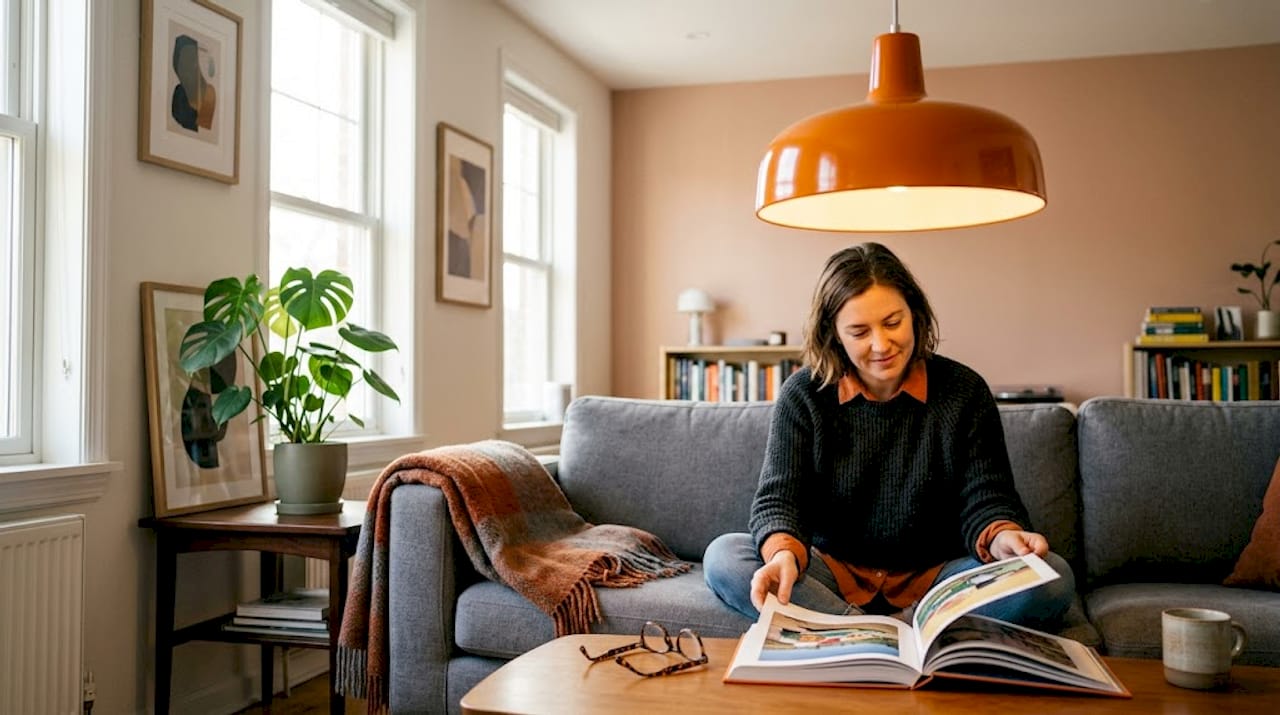
Ben je ooit een kamer binnengelopen en voelde je direct een connectie, een gevoel van zorgvuldig gekozen elegantie, of een knusse, uitnodigende omhelzing? De kans is groot dat het niet alleen de meubels of de verfkleur waren die al het zware werk deden. Het was de verlichting. En niet zomaar 'meer' licht, maar doelbewust licht. De meeste huiseigenaren benaderen verlichting op dezelfde manier als het kopen van boodschappen: meer voelt veiliger. Meer inbouwspots, meer lampen, meer helderheid. Maar een kamer overspoelen met uniform licht is eigenlijk een van de snelste manieren om het zijn persoonlijkheid en ziel te ontnemen.
Het echte geheim van een kamer die zorgvuldig gekozen, gelaagd en levendig aanvoelt, ligt in strategische accentverlichting, die het oog naar specifieke kenmerken trekt en visuele hiërarchie en diepte creëert. Dit gaat niet alleen over het verlichten van een ruimte; het gaat over het beeldhouwen ervan, het vertellen van een verhaal en het leiden van het oog. Die verschuiving, van kwantiteit naar intentie, is wat een vergeetbare kamer onderscheidt van een kamer die je doet stoppen, vreugde opwekt en gesprekken inspireert.
Bij Find a Lamp geloven we dat verlichting de onbezongen held van interieurdesign is. Het heeft de kracht om saaie ruimtes te transformeren in levendige toevluchtsoorden, simpelweg door te weten waar en hoe je moet schijnen. Laten we diep duiken in de magie van verlichtingsfocalpoints en het volledige potentieel van jouw kamer ontsluiten.
Inhoudsopgave
- Wat zijn verlichtingsfocalpoints?
- Belangrijke verlichtingstechnieken voor het creëren van focalpoints
- Focalpoints aanpassen voor kleine en flexibele ruimtes
- Veelvoorkomende fouten en hoe je ze kunt vermijden
- Een frisse kijk op verlichtingsfocalpoints
- Vind de perfecte verlichting voor jouw focalpoint
- Veelgestelde vragen
Belangrijkste inzichten
| Punt | Details |
|---|---|
| Creëert visuele interesse | Verlichtingsfocalpoints helpen benadrukken wat het belangrijkst is en voegen diepte toe aan je kamers. |
| Gebruik op bewijs gebaseerde plaatsingen | Waar je downlights, wandlampen of pendels plaatst, bepaalt hun impact. |
| Aanpasbaar voor elke kamer | Of je nu een kleine ruimte of een multifunctionele ruimte hebt, je kunt verlichtingsfocalpoints met veel effect gebruiken. |
| Vermijd veelvoorkomende fouten | Door oververlichting of verkeerde plaatsing van armaturen te vermijden, ontstaat een betere sfeer en design. |
Wat zijn verlichtingsfocalpoints?
Laten we dieper ingaan en uiteenzetten wat verlichtingsfocalpoints nu precies zijn en waarom ze zo cruciaal zijn voor het creëren van dynamische, boeiende interieurs.
Een verlichtingsfocalpoint is elk gebied in een kamer waar licht opzettelijk wordt geconcentreerd om de aandacht te trekken, diepte te creëren of een visueel anker te vestigen. Zie het als het hoofdpersonage van de kamer, het element waaromheen al het andere draait. Het kan een sculpturale pendellamp boven een eettafel zijn, een schilderijlamp die een groot canvas belicht, of een paar wandlampen die een open haard flankeren. Het armatuur of kenmerk zelf wordt de bestemming waar je oog als eerste naartoe reist. Het gaat erom een "visuele hiërarchie" binnen een ruimte te creëren, het oog te vertellen waar het moet kijken en wat het eerst moet waarderen. Architectural Digest toont vaak huizen waar dit principe meesterlijk wordt toegepast, en demonstreert hoe licht zelfs de eenvoudigste elementen kan transformeren in adembenemende kenmerken.
Verlichtingsfocalpoints verwijzen naar het strategisch gebruik van accentverlichting om de aandacht te vestigen op specifieke architectonische kenmerken, kunstwerken, meubels of statement armaturen, waardoor visuele hiërarchie en diepte in interieurruimtes worden gecreëerd. Die definitie is het waard om even bij stil te staan, omdat het iets belangrijks onthult: focalpoint verlichting gaat niet over helderheid. Het gaat over contrast, richting en intentie. Het gaat over het creëren van zakjes van verlichte interesse die je de kamer intrekken en je doen willen verkennen.
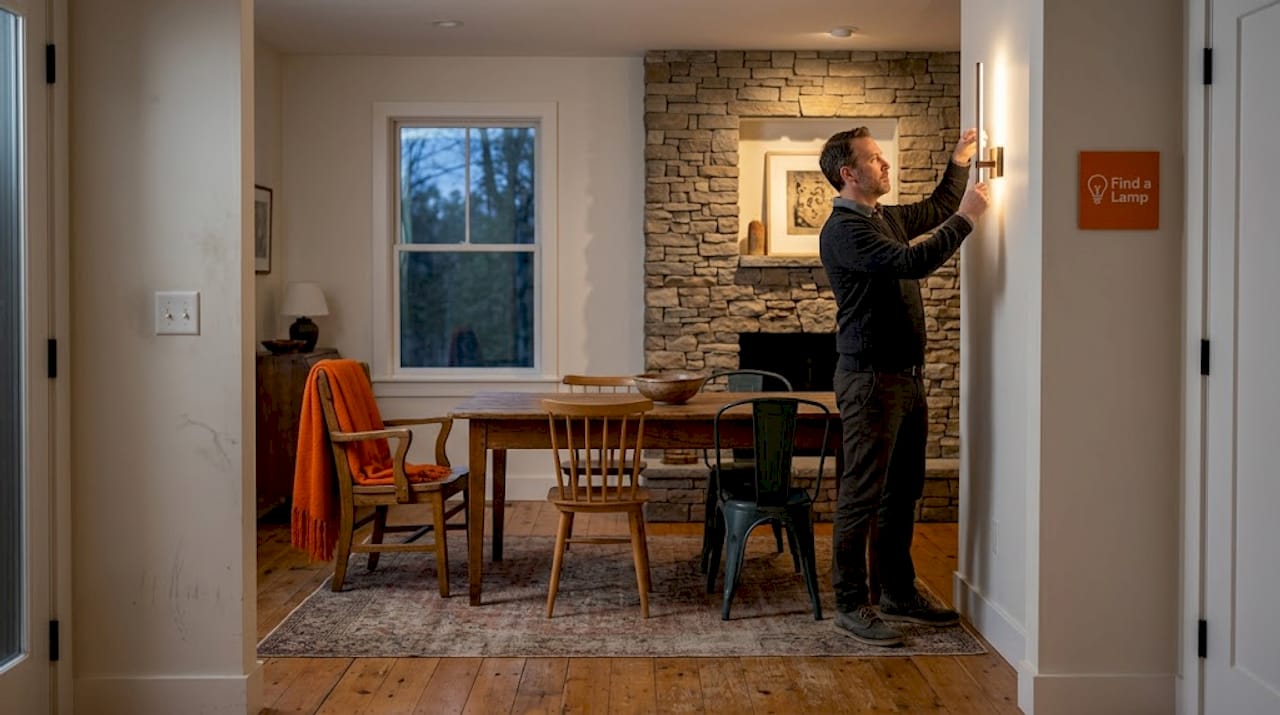
Het verschil tussen focalpoint verlichting en basisprincipes van omgevingsverlichting is significant. Omgevingslicht vult een kamer gelijkmatig, vermindert schaduwen en laat ruimtes veilig en navigeerbaar aanvoelen. Het is de fundamentele laag. Focalpoint verlichting daarentegen introduceert schaduw, contrast en drama. Het vertelt een verhaal, voegt intrige toe en laat een ruimte levendig aanvoelen. Zonder dit kan zelfs de mooist ingerichte kamer vlak aanvoelen, als een podium zonder spotlight, of een schilderij zonder duidelijk onderwerp.
Hier is een snelle blik op hoe focalpoint verlichting werkt in verschillende kamertypes:
| Kamer | Gebruikelijk focalpoint | Beste armatuurtype |
|---|---|---|
| Woonkamer | Open haard of groot kunstwerk | Schilderijlamp, wandlampen, accent spotlights |
| Eetkamer | Tafelstuk | Pendellamp of kroonluchter, soms wandlampen |
| Slaapkamer | Hoofdbordmuur | Wandlampen, leeslampen, subtiele uplighting |
| Hal | Consolletafel, spiegel, architectonische boog | Pendellamp, statement lamp, inbouw accentverlichting |
| Thuiswerkplek | Planken, bureau, inspirerend kunstwerk | Verstelbare bureaulamp, lineaire schapverlichting |
| Keuken | Eiland, open planken, specifiek kunstwerk | Pendellampen, onderkastverlichting, railverlichting |
Enkele van de meest boeiende focalpoints in een huis zijn:
- Architectonische kenmerken zoals zichtbare bakstenen muren, cassetteplafonds, boogdeuren of getextureerde wandpanelen.
- Opvallende meubelstukken zoals een levendige fluwelen bank, een sculpturale boekenkast of een antieke kast.
- Kunstcollecties of een enkel, groot canvas dat aandacht vraagt.
- Schoorsteenmantels, nissen en ingebouwde kasten die natuurlijke uitsparingen bieden voor lichtspel.
- Decoratieve spiegels die licht reflecteren en versterken, waardoor mogelijk een secundair focalpoint ontstaat.
- Binnenplanten of verticale tuinen, die dramatisch kunnen worden verlicht om hun organische vormen te benadrukken.
Onze kamerverlichtingsgids gaat dieper in op hoe elke kamer profiteert van zijn eigen focalpointstrategie, want wat werkt in een keuken is heel anders dan wat werkt in een sfeervolle leeshoek. Het begrijpen van deze nuances is essentieel voor het beheersen van de kunst van lichtontwerp.
“Een kamer zonder focalpoint is als een zin zonder onderwerp. Het oog weet niet waar het moet landen, dus het landt nergens.”
Dat instinct, om het oog ergens naartoe te leiden, is wat kamers die ontworpen aanvoelen onderscheidt van kamers die simpelweg gemeubileerd aanvoelen. Het gaat over het creëren van een gesprek tussen het licht en de ruimte, dat je uitnodigt om de schoonheid ervan te ervaren.
Belangrijke verlichtingstechnieken voor het creëren van focalpoints
Nu de basis is gelegd, is het tijd om de meest effectieve technieken te schetsen die door ontwerpers worden gebruikt om gewone ruimtes om te toveren tot buitengewone ervaringen. Dit gaat niet alleen over het kiezen van een mooie lamp; het gaat over het begrijpen hoe licht interacteert met jouw ruimte.
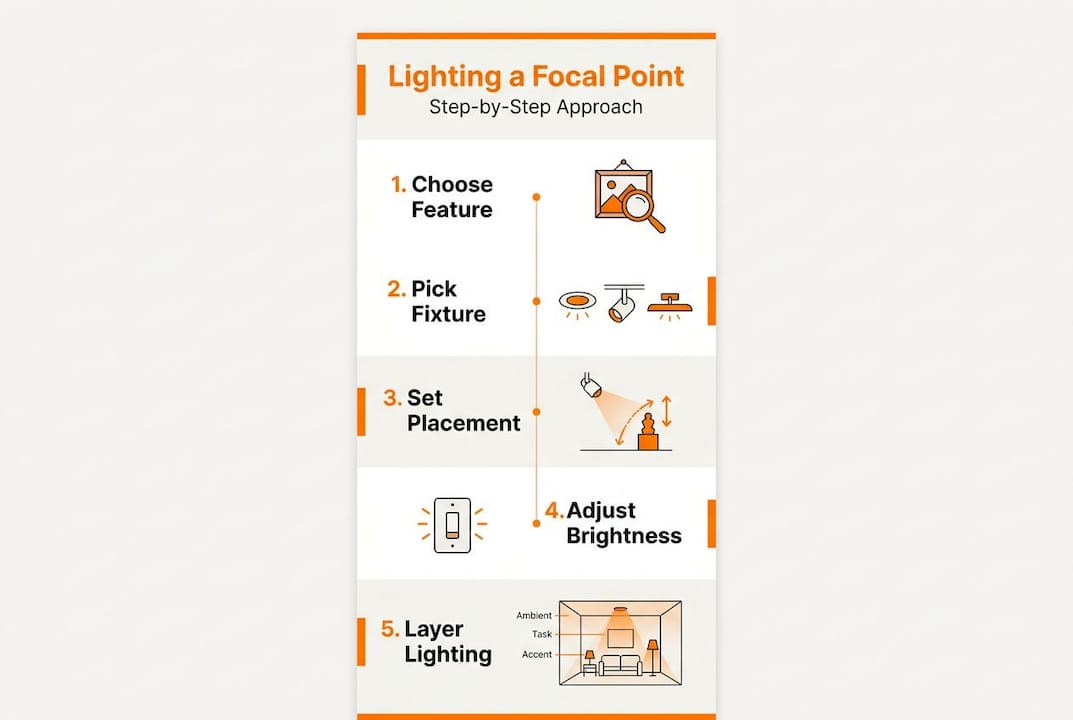
De meest impactvolle focalpoints worden zelden met één enkel armatuur gecreëerd. Ze worden opgebouwd door gelaagdheid, een weloverwogen combinatie van omgevings-, taak- en accentverlichting die een kamer zowel functie als sfeer geeft. Zie het als schilderen met licht, waarbij je lagen toevoegt om diepte en dimensie te creëren. Experts bij Lightology benadrukken vaak het belang van gelaagdheid om een werkelijk verfijnd verlichtingsplan te realiseren.
Hier is hoe je het systematisch kunt aanpakken:
-
Begin met je anker. Identificeer het ene kenmerk dat je wilt vieren, of het nu een gekoesterd kunstwerk is, een prachtige open haard, een dramatisch meubelstuk, of zelfs een adembenemend uitzicht vanuit een raam. Al het andere moet het ondersteunen, er niet mee concurreren. Dit anker zal het type en de intensiteit van het licht bepalen dat je gebruikt.
-
Kies het juiste armatuur voor de taak. Verschillende armaturen zijn ontworpen voor verschillende effecten:
- Inbouw downlights: Werken prachtig wanneer ze 30-45 cm van muren worden geplaatst, met een smalle stralingshoek (bijv. 20-30 graden) om een dramatisch strijklichteffect te creëren dat textuur en diepte benadrukt, waardoor muren getextureerd en levendig aanvoelen.
- Wandlampen: Horen op ooghoogte, ongeveer 150-180 cm van de vloer, zodat ze een kenmerk omlijsten zonder er bovenuit te torenen. Ze zorgen voor een zachte, omgevingsgloed die warmte toevoegt en architectonische details kan benadrukken of een spiegel prachtig kan flankeren.
- Pendellampen en kroonluchters: Boven eettafels moeten ze 75-90 cm boven het oppervlak hangen, dichtbij genoeg om intiem aan te voelen, hoog genoeg om conversatie over de tafel mogelijk te maken. In entrees creëren ze een groots statement en trekken ze het oog omhoog.
- Schilderijlampen: Speciaal gebouwd voor kunst, gemonteerd boven het canvas, werpen ze een warme gloed die kleur en textuur naar voren brengt zonder verblinding. Ze zijn essentieel voor elke kunstverzamelaar.
- Vloerlampen: Bieden veelzijdige accent- en taakverlichting. Een boogvloerlamp kan een sculpturaal focalpoint creëren boven een zithoek, terwijl een slanke kolomlamp een donkere hoek kan verlichten, wat een zachte gloed toevoegt.
- Tafellampen: Voegen intieme poelen van licht toe, perfect voor het benadrukken van decoratieve vignetten op consoletafels of het bieden van taakverlichting voor lezen.
-
Laag je bronnen. Een enkel plafondarmatuur, hoe mooi ook, creëert eendimensionaal licht. Combineer het met vloerlampen, tafellampen of wandlampen om diepte en visuele interesse op te bouwen. Zie het zoals een fotograaf denkt over het belichten van een portret: hoofdlicht (je focalpoint), invullicht (omgevingslicht) en randlicht (accent) werken samen om een rijk, veelzijdig beeld te creëren.
-
Controleer je kleurtemperatuur. Dit is cruciaal voor de sfeer. Warmere tinten (2700K-3000K) voelen intiem, gezellig en flatterend aan, ideaal voor woonkamers, slaapkamers en eetruimtes. Koelere tinten (3500K-4000K) voelen helder, gefocust en energiek aan, beter voor kantoren, keukens of badkamers waar taakverlichting van het grootste belang is. Het mengen van temperaturen binnen één kamer kan storend aanvoelen en de harmonie verstoren, dus kies een consistent palet voor je primaire lagen.
-
Gebruik dimmen strategisch. Dit is je geheime wapen voor sfeer! Een dimbaar armatuur transformeert een focalpoint van overdag functioneel naar avond sfeervol met één druk op de knop. Voorbeelden van statement verlichting laten zien hoe dezelfde kroonluchter totaal anders kan aanvoelen bij 100% versus 40% helderheid, waardoor je de sfeer kunt aanpassen voor elke gelegenheid.
Hier is een snelle vergelijking van de meest voorkomende focalpoint armaturen:
| Armatuurtype | Beste plaatsing | Visueel effect | Ideaal voor |
|---|---|---|---|
| Inbouw downlight | 30-45 cm van de muur, smalle straal | Strijklicht, textuuraccent | Architectonische kenmerken, getextureerde muren, kunst |
| Wandlamp | 150-180 cm hoog | Omlijsting, warmte, omgevingsgloed | Schoorsteenmantels, hoofdborden, gangen, spiegels flankeren |
| Pendel/kroonluchter | 75-90 cm boven tafel, variabele hoogte voor entrees | Drama, intimiteit, statementstuk | Eetkamers, entrees, keukeneilanden |
| Schilderijlamp | Gemonteerd boven kunstwerk | Kleur, textuuraccent, verblindingsvrije kunstverlichting | Kunstmuren, galerijen, gekoesterde foto's |
| Vloerlamp | Hoek of naast meubilair (bijv. bank, fauteuil) | Zachtheid, gelaagdheid, sculpturaal element | Woonkamers, leeshoeken, zones definiëren |
| Tafellamp | Consol, bijzettafel, bureau | Intieme gloed, taakverlichting, decoratief accent | Nachtkastjes, woonkamervignetten, bureaus |
Pro Tip: Begin bij het gelaagd aanbrengen van verlichting in een woonkamer met je statementstuk (een sculpturale pendellamp of een boogvloerlamp) en bouw van daaruit verder. Overweeg hoe licht zal vallen op verschillende oppervlakken en objecten. Bekijk onze samengestelde collectie artistieke woonkamerverlichting voor armaturen die zijn ontworpen om een ruimte te ankeren met echte visuele autoriteit. Je kunt ook verlichtingsopstellingen voor elke kamer verkennen om te zien hoe gelaagdheid werkt in verschillende contexten, zodat elke hoek van je huis opzettelijk ontworpen aanvoelt.
Focalpoints aanpassen voor kleine en flexibele ruimtes
Maar wat als je kamer geen blanco canvas is, of je moet werken met beperkte ruimte? Vrees niet, bewoners van kleine ruimtes! De principes van focalpoint verlichting zijn zelfs nog krachtiger in compacte of multifunctionele ruimtes.
Kleine kamers en multifunctionele ruimtes vormen een wezenlijk andere uitdaging. Het instinct is vaak om de helderheid te maximaliseren, om de kleinheid met licht te bestrijden. Maar die aanpak werkt bijna altijd averechts. Uniforme, hoog-intensieve verlichting in een kleine kamer laat het aanvoelen als een ziekenhuisgang, niet als een huis. Het vlakt oppervlakken af en elimineert elk gevoel van gezelligheid. De oplossing is contra-intuïtief: gebruik minder, sterkere focalpoints, en geef prioriteit aan flexibiliteit.
In kleine kamers of multifunctionele ruimtes worden verstelbare en slimme verlichting essentieel. Overmatig vertrouwen op inbouwverlichting vlakt de ruimte juist af in plaats van deze te openen. Asymmetrische plaatsing kan daarentegen unieke kenmerken verbeteren die anders onopgemerkt zouden blijven, wat karakter toevoegt zonder rommel. Het doel is om de ruimte groter en dynamischer te laten aanvoelen, niet alleen helderder.
Hier zijn de strategieën die we aanbevelen voor compacte of flexibele ruimtes:
- Geef prioriteit aan verticaal licht. Uplighting of hoge, slanke vloerlampen trekken het oog omhoog, waardoor plafonds hoger en kamers groter aanvoelen. Wandlampen met een opwaartse lichtbundel zijn ook uitstekend voor dit effect, waardoor waardevolle vloerruimte vrijkomt.
- Gebruik één sterk focalpoint in plaats van meerdere concurrerende. In een studio-appartement doet een enkele dramatische pendellamp boven de eethoek meer voor de kamer dan drie verschillende accentlampen die om aandacht vechten. Deze enkelvoudige focus creëert een duidelijke bestemming voor het oog, waardoor visuele chaos wordt voorkomen.
- Omarm verstelbare armaturen. Railverlichting met richtbare koppen, draaibare wandlampen of lampen met verstelbare armen laten je licht omleiden naarmate je meubelopstelling verandert, wat van onschatbare waarde is in kamers die gedurende de dag meerdere doelen dienen. Moet je overdag je werkplek benadrukken en 's avonds een gezellige leeshoek? Verstelbare armaturen zijn je vrienden.
- Vermijd alles te centreren. Vooral in kleine ruimtes kan perfecte symmetrie stijf en krap aanvoelen. Asymmetrische plaatsing – een lamp aan één kant van een bank in plaats van er perfect naast, of een enkele statement wandlamp – creëert een dynamischer en interessanter geheel, waardoor de ruimte zorgvuldiger samengesteld en minder 'ingesloten' aanvoelt.
- Laag met draagbare lampen. Tafellampen en vloerlampen zijn je beste vrienden in een kleine ruimte omdat ze verplaatsbaar, dimbaar en direct transformerend zijn. Ze stellen je in staat om verschillende "zones" van licht te creëren voor verschillende activiteiten zonder permanente installaties.
- Maak gebruik van reflecterende oppervlakken. Strategisch geplaatste spiegels kunnen licht van je focalpoints reflecteren, waardoor hun effect wordt versterkt en de kamer groter en helderder aanvoelt zonder meer armaturen toe te voegen.
Onze collectie moderne dimbare vloerlampen is specifiek samengesteld voor ruimtes waar flexibiliteit net zo belangrijk is als esthetiek. En als jouw ruimte een speelse, eclectische persoonlijkheid heeft, biedt de collectie speelse woonkamerverlichting armaturen die focalpoints creëren met persoonlijkheid in plaats van formaliteit, wat bewijst dat klein niet saai hoeft te betekenen.
Slimme verlichting speelt hier ook een groeiende rol. Slimme lichtaanpassing stelt je in staat om scènes te programmeren die het focalpoint van een kamer verschuiven afhankelijk van het tijdstip van de dag of activiteit. Je thuiskantoorhoek wordt het focalpoint om 9 uur 's ochtends met helder, gericht licht, en om 7 uur 's avonds neemt de warme gloed bij de bank het over voor ontspanning. Dat soort opzettelijke flexibiliteit is wat modern wonen vereist, vooral in stedelijke omgevingen.
Pro Tip: In een multifunctionele ruimte, probeer twee of drie verschillende "scènes" uit te stippelen voordat je armaturen koopt. Weten dat je ruimte moet functioneren als werkplek, eethoek en ontspanningszone, helpt je bij het kiezen van verstelbare armaturen en slimme bedieningselementen die elke scène kunnen bedienen zonder dat je iets opnieuw hoeft te bedraden. Bronnen over verlichting in kleine huizen kunnen je helpen deze aanpak te visualiseren voordat je je eraan verbindt, zodat elke vierkante meter maximaal wordt benut.
Veelvoorkomende fouten en hoe je ze kunt vermijden
Zelfs met de beste intenties kunnen verschillende veelvoorkomende fouten het gewenste effect verminderen en je kamer minder dan spectaculair laten aanvoelen. Het begrijpen van deze valkuilen is de eerste stap om focalpoint verlichting echt onder de knie te krijgen.
De meest voorkomende fout die we zien, is het overmatig vertrouwen op inbouwverlichting. Inbouwlampen zijn praktisch, strak en ongelooflijk populair, maar een plafond vol ermee creëert wat ontwerpers "vlak licht" noemen. Deze schaduwloze, dimensieloze gloed laat zelfs een prachtig ingerichte kamer aanvoelen als een showroom of een kantoorwachtruimte, volledig verstoken van diepte of warmte. Overmatige inbouwverlichting vlakt ruimtes af en elimineert het cruciale contrast dat een kamer rijk en gelaagd doet aanvoelen.
Hier is hoe je de meest voorkomende focalpoint-fouten kunt corrigeren en je verlichtingsspel naar een hoger niveau kunt tillen:
-
Te veel inbouwspots, of ze gebruiken als enige lichtbron. Dit is de hoofdzonde van moderne verlichting. Vervang of vul aan met wandlampen, pendels, vloerlampen en tafellampen. Als je bestaande inbouwarmaturen niet kunt verwijderen, dim ze dan op zijn minst aanzienlijk en laat accentverlichting het zware werk doen. Het doel is contrast en drama, niet uniforme dekking. Zie inbouwspots als ondersteunende spelers, niet als de sterren van de show.
-
Armaturen op de verkeerde hoogte of hoek. Plaatsing is alles! Een wandlamp die te hoog is gemonteerd, voelt losgekoppeld van het meubilair eronder. Een pendellamp die te laag hangt, wordt een visuele verstoring en een gevaar, waardoor zichtlijnen worden onderbroken. Meet altijd voordat je monteert, en gebruik de bovenstaande richtlijnen (150-180 cm voor wandlampen, 75-90 cm boven tafels voor pendels) als je basislijn. Experimenteer voor accentspots met stralingshoeken en afstanden om de perfecte gloed of wassing op je focalpoint te bereiken.
-
Asymmetrie negeren. Perfecte symmetrie in verlichting kan stijf, formeel en zelfs een beetje zakelijk aanvoelen. Hoewel het zijn plaats heeft, voelt het omarmen van asymmetrie vaak natuurlijker, dynamischer en interessanter aan. Een enkele wandlamp in plaats van twee, een vloerlamp aan één kant van een leesstoel, of een cluster van pendels op verschillende hoogtes kan een meer organische en uitnodigende compositie creëren. Onze gids voor verlichtingsfouten per kamer beschrijft dit met specifieke voorbeelden voor elke ruimte.
-
Armaturen alleen kiezen op basis van uiterlijk, waarbij de functie wordt verwaarloosd. Een prachtige sculpturale pendellamp die licht in de verkeerde richting werpt, of een mooie tafellamp met een kap die meer licht blokkeert dan het verspreidt, is een ontwerpfout. Controleer altijd het lichtdistributiepatroon, de compatibiliteit van de lamp en het materiaal van de kap voordat je koopt. Een armatuur moet zowel de esthetiek als de functie van je focalpoint verbeteren.
-
De schakelaar vergeten. Dit is een praktische maar vaak over het hoofd geziene fout. Als je focalpoint-armatuur is bedraad naar dezelfde schakelaar als je plafondverlichting, verlies je de mogelijkheid om deze onafhankelijk te gebruiken. Plaats accent- en focalpoint-armaturen waar mogelijk op afzonderlijke circuits, of gebruik slimme stekkers en slimme lampen om jezelf onafhankelijke scènecontrole te geven. Dimmers zijn een niet-onderhandelbare vereiste voor accentverlichting.
-
Natuurlijk licht negeren. Hoewel we ons richten op kunstmatige verlichting, vergeet niet hoe natuurlijk licht interacteert met je ruimte. Plaats je focalpoints zo dat ze zowel overdag als 's nachts even prachtig zijn. Gebruik raambekleding om natuurlijk licht te regelen en verblinding te voorkomen die de impact van je kunstmatige focalpoints overdag kan verminderen.
“De meest voorkomende verlichtingsfout is niet het kiezen van het verkeerde armatuur. Het is het niet hebben van een plan voor wat je wilt dat het licht doet voordat je begint met winkelen.”
Dat citaat vangt iets op waar we diep in geloven. Verlichtingsbeslissingen die zonder een ruimtelijke strategie worden genomen, resulteren bijna altijd in kamers die onafgewerkt aanvoelen, hoe mooi de individuele armaturen ook zijn. Neem de tijd om de sfeer, het drama en het doel van je licht voor ogen te houden voordat je zelfs maar naar armaturen zoekt.
Een frisse kijk op verlichtingsfocalpoints
Na het leren van de 'hoe-dan', is het de moeite waard om te onderzoeken wat de meeste gidsen missen: de kunst en intuïtie achter werkelijk boeiende verlichting.
De meeste verlichtingsgidsen, inclusief veel uitstekende, richten zich op het technische: de juiste hoogtes, de juiste kleurtemperaturen, de juiste armatuurtypes. Die kennis is oprecht nuttig, een solide basis. Maar het kan ook een soort ontwerpparalyse creëren, waarbij huiseigenaren zo gefocust zijn op het volgen van de regels dat ze vergeten te vragen hoe ze de kamer eigenlijk willen voelen. Verlichting gaat niet alleen over verlichting; het gaat over emotie, sfeer en persoonlijke expressie. Houzz publiceert vaak artikelen die dieper ingaan op de subjectieve, emotionele impact van verlichting, en huiseigenaren aanmoedigen om hun instincten te vertrouwen.
Hier is onze eerlijke mening: de beste focalpoints die we ooit hebben gezien, komen niet uit leerboeken. Ze komen van iemand die opmerkte dat het middaglicht een bepaalde hoek van hun woonkamer raakt op een manier die alles doet gloeien, en vervolgens een verlichtingsplan opbouwde dat dat gevoel om 21.00 uur op een dinsdag nabootst. Dat is de emotionele intelligentie van goede verlichting, en het wordt zelden in een stapsgewijze gids geleerd.
Asymmetrie en imperfectie, twee dingen die de meeste ontwerpgidsen stilletjes ontmoedigen, zijn vaak wat een kamer werkelijk levendig en persoonlijk maakt. Een enkele vloerlamp die iets uit het midden is geplaatst, een wandlamp die een ruwe pleistermuur benadrukt in plaats van een perfect gladde, deze keuzes voelen menselijk aan op een manier die perfect uitgebalanceerde, symmetrische schema's vaak niet doen. Wees niet bang