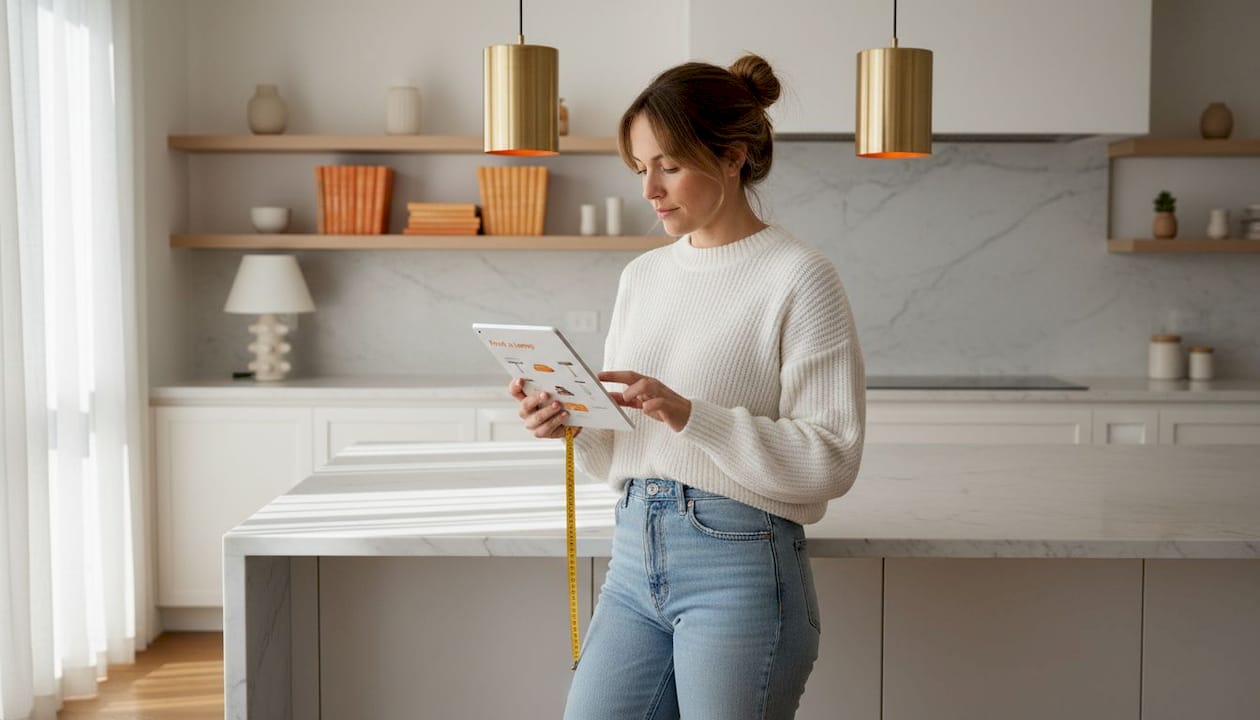
Walk into any lighting showroom or open any home decor tab online, and the sheer volume of choices hits you like a spotlight to the face. Floor lamps, table lamps, arc lamps, torchieres, swing-arm sconces that almost count as lamps — and that’s before you even start wrestling with bulb types, shade materials, and color temperatures. It’s enough to make anyone want to just stick with the boring overhead light! But here’s the good news: selecting the right lamp for any room doesn’t have to be a guessing game. With a clear, organized framework, you can move from “completely overwhelmed” to “genuinely excited” about every lighting decision you make at home. Get ready to illuminate your space with confidence, comfort, and a whole lot of style!
What to Know Before You Shop for Lamps: Your Pre-Flight Checklist for Perfect Lighting
Before you dive headfirst into the dazzling world of lamp designs, let’s get organized. The secret to successful lamp shopping isn't just about spotting a pretty fixture; it's about understanding what your space truly needs. Think of this as your essential pre-flight checklist, ensuring your lighting journey is smooth, stylish, and perfectly tailored.
Define Your Room's Vibe & Function
The single most important thing you can do before browsing a single product page is define why you need a lamp in that specific room. A cozy reading nook in a bedroom operates on entirely different lighting logic than a bustling home office desk or a vibrant living room entertainment corner. Knowing the room’s function drives almost every decision that follows, from the type of lamp you need to the color temperature of the bulb inside it. We always recommend starting a lighting project by asking: what will I actually be doing under this light?
- Living Room: Is it for movie nights, entertaining guests, or quiet reading? You'll likely need a mix of ambient and accent lighting.
- Bedroom: Primarily for relaxation, reading in bed, and creating a serene atmosphere. Task lighting for reading, warm ambient light.
- Home Office: Focused task lighting to reduce eye strain, often cooler temperatures for concentration.
- Dining Room: Ambiance for meals, perhaps a dimmer for mood changes.
Scale is Everything: Don't Let Your Lamp Play Hide-and-Seek!
A delicate table lamp that looks charming in a catalog photo can disappear completely when placed beside a large sectional sofa, while an oversized floor lamp can make a compact studio apartment feel like a storage unit. Before you fall in love with any fixture, measure your room dimensions, your furniture heights, and the surface areas where lamps will sit. Knowing the width of your nightstand or side table tells you exactly how wide a lamp base can realistically be. For floor lamps, consider ceiling height and how it will interact with other furniture. You want your lamp to be a balanced part of the room, not an awkward giant or a tiny forgotten detail.
Understanding Light Specs: Your Bulb's Secret Language
This is where things can get a little technical, but trust us, it’s crucial! Understanding these terms means you’ll never again be surprised by a lamp that’s too harsh, too dim, or makes your walls look sickly green.
| Spec | What it means | Best use case |
|---|---|---|
| Color temperature (Kelvin) | Warmth or coolness of the light. Lower K = warmer, higher K = cooler. | 2700-3000K for bedrooms and living rooms (cozy, inviting); 4000K+ for kitchens, offices, and task areas (crisp, energizing). |
| CRI (Color Rendering Index) | How accurately the light shows colors, on a scale of 0-100. | CRI 90+ for makeup areas, art studios, photography, or anywhere color accuracy matters (e.g., seeing true clothing colors). |
| Wattage / Lumens | Brightness of the bulb. Wattage indicates energy consumption; lumens indicate actual light output. Focus on lumens! | Higher lumens (800-1600) for task lighting; lower (400-800) for ambient or mood settings. Always check the lamp's max wattage rating. |
| Bulb base type | The fitting the bulb screws into (e.g., E26, E12, GU10). | E26 (standard screw-in) is the most common in the U.S.; always confirm before buying a replacement or specialty bulb. |
The warm 2700-3000K range creates a cozy, inviting feel that’s ideal for bedrooms and living rooms, helping you relax and unwind. Anything 4000K and above produces a crisper, more energizing output suited to task-heavy spaces like kitchens, home offices, or craft rooms. If color accuracy matters to you (think: applying makeup, painting, or styling clothing), a CRI of 90 or above ensures what you see under the lamp is close to what you’d see in natural daylight. Don't forget dimmability! A dimmable bulb with a compatible dimmer switch adds incredible versatility to any lamp.
Budget Planning: Invest Smart, Not Just Cheap
Budget planning is another step most people skip, and it costs them later. A cheap lamp that burns through bulbs every few months, runs hot, or starts looking worn after a year ends up being more expensive than a quality mid-range fixture. Consider lifetime cost and energy efficiency when setting your number. LED bulbs, for example, consume roughly 75% less energy than incandescent alternatives and last significantly longer, often for years. For renters especially, smart lamps or smart plugs add control and customization without requiring any permanent installation or landlord approval, making them a fantastic, flexible investment.
Your Ultimate Pre-Shopping Checklist:
Before you leave the house (or close the browser tab), gather these:
- Room dimensions and ceiling height (grab a tape measure!)
- Surface measurements (table width, depth, floor space available for floor lamps)
- Existing bulb types or wattage limits for fixtures you’re upgrading
- A photo of the room showing current furniture, wall colors, and overall style
- Your intended budget range, including a buffer for bulbs and smart accessories
Pro Tip: Take a photo of your room from multiple angles on your phone before shopping. When you’re standing in a store or scrolling online, that photo is your most powerful reference tool for scale and style compatibility. You can even use it with visualizing lamps in your space tools (like ours at Find a Lamp!) to preview fixtures before committing. This saves endless trips and returns!
Finally, know the return policy before you buy. Lighting is notoriously hard to judge from a screen, and what photographs as a warm amber glow can read as a harsh yellow in your actual space. A flexible return window gives you the freedom to test in real conditions rather than gambling on photos.
Step-by-Step Lamp Shopping Process: Your Path to Lighting Success
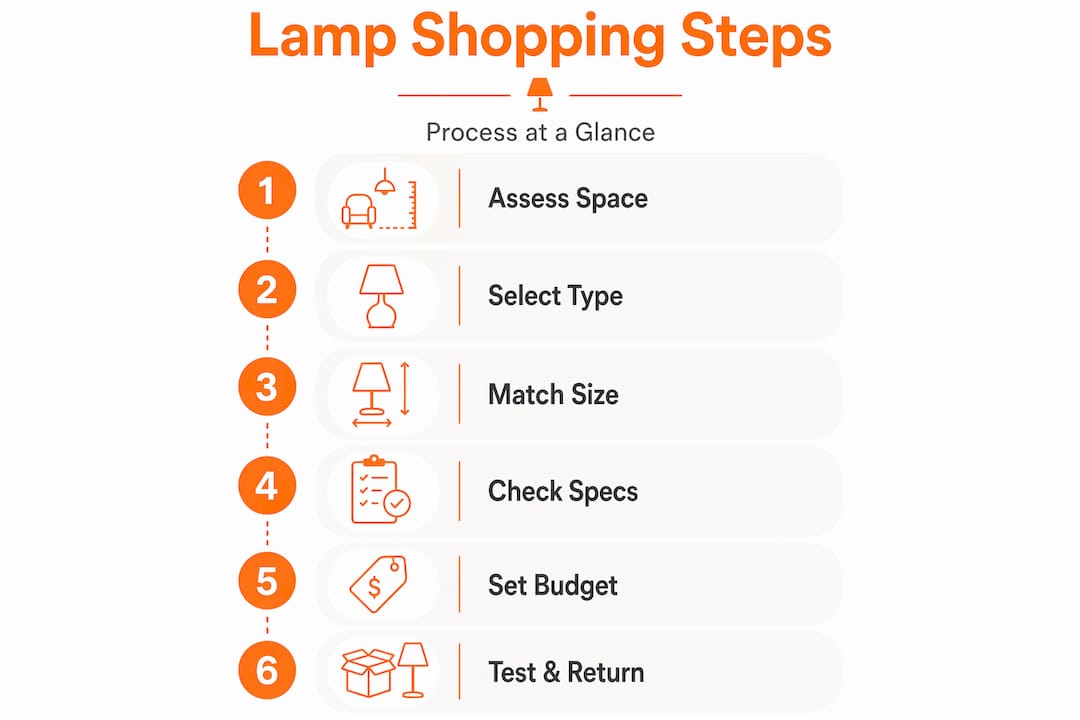
Once you’ve prepared your space and armed yourself with measurements and knowledge, you’re ready to take on the actual shopping process, step by step. This systematic approach ensures you cover all bases and make informed decisions.
Step 1: Assess the Space and Existing Light Conditions
Before you even think about buying, become a lighting detective in your own home. Stand in your room at different times of day – morning, noon, and night. How much natural light does it receive? Where are the deepest shadows? What does the overhead lighting (if any) actually cover, and what areas does it leave dim or uninviting? This assessment tells you immediately whether you need ambient fill light to banish gloom, targeted task illumination for specific activities, or a sculptural accent piece that adds visual warmth rather than raw brightness. Pay attention to how colors look under existing light, too!

Step 2: Determine Which Type(s) of Lamp You Actually Need – Embrace Layered Lighting!
This is where layered lighting design becomes your best strategy. According to design professionals, the most effective rooms layer different types of light to create depth, versatility, and comfort. Relying on a single overhead fixture is one of the most common lighting regrets we hear from homeowners. Here’s the breakdown:
- Ambient Light: The general illumination of a room. Think floor lamps that wash walls, bounce light off ceilings, or table lamps with translucent shades. It sets the overall mood.
- Task Light: Focused light for specific activities. Desk lamps for working, bedside lamps for reading, or kitchen under-cabinet lights for cooking. This light should be bright and directed.
- Accent Light: Decorative sources that highlight art, shelves, architectural features, or simply add visual interest. Picture a small picture light, a directional spotlight on a plant, or a beautiful, sculptural lamp that doubles as art.
Aim for at least two, preferably three, layers in your main living spaces.
Step 3: Measure and Match Scale and Style
Your lamp needs to look like it belongs, not like it wandered in from another zip code. For table lamps, a general rule is that the lamp’s total height (base plus shade) should be roughly 1.5 times the height of the surface it sits on. The shade's widest point should also be no wider than the table it rests on. For floor lamps, the shade should clear seated eye level (usually around 40-48 inches from the floor) so it doesn’t create direct glare. Style-wise, consider the architecture and material palette of your existing decor. Matching metals, repeating curves or angles, and echoing textures are all ways to make a lamp feel intentional and cohesive within your space. Don't be afraid to mix, but always ensure there's a common thread.
Step 4: Research Bulb Specs and Confirm Compatibility
Before purchasing, verify the lamp’s maximum wattage rating and the required bulb base type. Buying a lamp only to discover it requires a specialty bulb that’s difficult to source locally, or that your favorite LED bulb won't fit, is a frustrating experience we’d all like to avoid. Check that your preferred bulb (LED, ideally, for energy efficiency and longevity) fits both the base type and wattage limit. Ignoring this step is one of the most common lamp buying mistakes, alongside choosing a lamp that’s out of scale with the room or purely decorative when a task-focused solution was needed. Look for lamps that offer flexibility in bulb choice.
Step 5: Set a Realistic Budget and Shop Reputable Sources
Quality matters at every price point, but so does knowing what you’re getting. Decide on a budget range, but be flexible enough to invest a little more for a piece that truly elevates your space and will last. Explore a variety of sources: dedicated lighting stores for expert advice, large home decor retailers for variety, independent boutiques for unique finds, and online platforms for convenience and comparison. For guidance on choosing lamps by interior style, curated resources save significant time and help you narrow down the endless options.
Step 6: Test in Your Space and Confirm the Return Policy
This step is non-negotiable! Once your new lamp arrives, place it in its intended spot. Live with it for 24 to 48 hours across different times of day and night. A lamp that delights you on a cozy Tuesday evening might feel completely wrong on a bright Wednesday morning. Observe how the light interacts with your walls, furniture, and even your mood. Does it create glare? Are there still dark corners? Does the shade material diffuse the light as you expected? Ensure you understand the retailer's return policy to allow for this crucial testing phase. It's better to return a lamp than to live with one you don't love.
In-store vs. Online Lamp Shopping: Which is Right for You?
| Factor | In-store | Online |
|---|---|---|
| Scale perception | Easier to gauge true size, materials, and finish in person. | Harder without measurements in hand; relies heavily on product photos and descriptions. |
| Variety | Limited to local inventory; curated selection. | Vast, global selection; niche styles and independent makers. |
| Immediate availability | Take it home that day (if in stock). | Shipping delays possible; instant gratification is rare. |
| Price | Often higher due to overhead; less comparison-friendly on the spot. | More competitive; easier to compare prices across multiple retailers. |
| Return experience | Typically seamless; easy to return to the physical store. | Requires packaging and shipping; can be a hassle for large items. |
| Visualization tools | None; requires imagination or bringing photos. | AI tools (like Find a Lamp's!) can preview in your room using AR. |
Pro Tip: Use the comparison table above to decide which shopping method fits your timeline and comfort level. If you’re buying a statement piece or a critical task light, consider combining both: browse online for inspiration and variety, then visit a local showroom to verify scale and quality before committing. Or, leverage Find a Lamp's visualization tools to bridge the gap between online browsing and in-person assessment.
How to Avoid Common Lamp Shopping Mistakes: Learn from Others' Blunders!
After learning how to shop step by step, it’s helpful to understand where shoppers most often go wrong, and how to avoid these pitfalls entirely. Trust us, we’ve seen it all, and a little foresight can save you a lot of headache (and money!).
The Cardinal Sin: Buying for Looks Alone
The most damaging mistake is buying for looks alone and ignoring scale and function. A lamp that photographs beautifully but sits too tall for a bedside table creates glare directly in your eyes every time you try to read. A lamp that’s too short for a living room end table disappears visually and contributes almost no usable light to the space. Before anything else, function must lead. Ask yourself: "What problem is this lamp solving?"
The Biggest Lamp Shopping Mistakes to Avoid:
- Wrong scale: A lamp that’s too tall or too short relative to its surface and the surrounding furniture throws off the entire visual balance of a room. Imagine a tiny lamp next to a grand sofa, or a towering floor lamp dwarfing a small armchair. It just feels... off.
- Prioritizing trends over personal need: Trends shift faster than you can say "hygge." A lamp you buy purely because it’s everywhere on social media may feel dated within two years, while a well-chosen classic that truly serves your lifestyle and aesthetic remains relevant indefinitely. Invest in timeless pieces, or affordable trendy ones that you won't mind replacing.
- Skipping bulb research: Overlooking wattage limits, base types, or color temperature compatibility leads to frustrating post-purchase fixes. You don't want to buy a beautiful lamp only to realize it only takes a rare, expensive bulb, or that it's too dim for your needs.
- Buying without measuring: Even experienced decorators make this mistake. Always bring measurements of your space, tables, and even the height of your sofa arm or bed frame. Always. No exceptions.
- Ignoring light direction: An upward-facing torchiere creates ambient fill but won’t help you read. A downward-facing shade focuses light for tasks. A drum shade diffuses light all around. Know which effect you need before you buy, or you'll end up with light where you don't need it, and darkness where you do.
- Forgetting about cords and placement: You found a beautiful lamp, but there's nowhere logical to place it because the cord won't reach an outlet, or it will cross a high-traffic zone, creating a tripping hazard. Plan for power access!
“The most successful lighting schemes I’ve seen are the ones where the homeowner thought about function first, then let style follow from that foundation. A lamp isn't just decor; it's a tool that shapes your environment.” — Interior lighting design principle, widely echoed by professionals in the field.
Navigating Vintage and Secondhand Lamps Safely
When it comes to vintage or secondhand lamps (a genuinely exciting category for unique finds!), trusted platforms and UL certification are non-negotiable. Sites like 1stDibs and Etsy host verified sellers with reputable return policies and often provide details on rewiring. Look for the UL (Underwriters Laboratories) mark on any vintage fixture, which confirms it has been tested to meet safety standards. Rewired vintage lamps from reputable dealers are generally safe; anonymous thrift store finds with fraying cords, exposed wires, or suspect plugs are a different story entirely and should always be inspected (and likely rewired) by a qualified electrician before use. Safety first!
For tailored guidance on choosing lamps for each room, room-specific recommendations eliminate a lot of the guesswork about scale, type, and placement, helping you avoid common pitfalls.
Making Your Lamp Work: Setup, Testing, and Ongoing Tips for Daily Delight
Finding the right lamp is only part of the process. Proper setup and thoughtful use make all the difference for daily enjoyment and long-term satisfaction. A perfectly chosen lamp can fall flat if its placement is off, or if the wrong bulb is used. Let's make sure your new illumination truly shines!
Optimal Placement: Where Does Your Lamp Belong?
Placement is the first variable to nail down. For bedside lamps, a good rule of thumb is to ensure the shade bottom is at eye level when you’re seated or lying in bed. This prevents glare from hitting you directly as you wind down for the night and ensures the light is focused where you need it for reading. For desk and task lamps, position the light source to your non-dominant side to minimize shadow cast across your work surface (e.g., if you're right-handed, place the lamp on your left). For floor lamps used as ambient sources, placing them in room corners or behind furniture can bounce light off two walls simultaneously, creating a softer, more diffused fill that eliminates harsh shadows and makes the room feel larger and more inviting.
Practical Setup and Use Tips for Maximum Impact:
- Shade Positioning: As mentioned, for task-oriented lamps (bedside, desk), the bottom edge of the shade should be roughly at seated eye level. For ambient lamps, you have more flexibility, but still avoid direct line of sight into the bulb.
- Bulb Choice Matters: Use warm-dimming LEDs (bulbs that shift to a warmer color temperature as they dim, mimicking incandescent behavior) for living and bedroom spaces where mood and relaxation are key. For task areas, a brighter, more neutral white (3500-4000K) might be preferred.
- Keep Shades Clean: Accumulated dust on a shade can reduce light output noticeably over time and make the light appear dull. A quick wipe down every few weeks can make a big difference!
- Test, Test, Test: Always test your lamp during both day and night conditions, and during different activities, before deciding it’s the right fit. How does it feel while reading? Watching TV? Just relaxing?
- Embrace Dimmers: For living rooms, dining areas, and even bedrooms, consider placing lamps on dimmers. Even inexpensive plug-in dimmer adapters can expand the range of atmosphere a single lamp can create, allowing you to transition from bright task lighting to soft mood lighting with ease.
- Cable Management: Don't let unsightly cords ruin your carefully designed space. Use cable ties, cord covers, or strategically place furniture to hide wires.
Smart Lighting for Renters: Your Flexible Friend
For renters, smart lamps and smart plugs are genuinely worth considering. A smart plug turns any standard lamp into a voice-controlled or app-scheduled fixture, without drilling a single screw into a wall. This means you can program your living room floor lamp to ease on at sunset and dim down by 10 PM, all from your phone or smart assistant, creating impressive ambiance without permanent changes. It's the ultimate in flexible home automation.
One often-overlooked tip: always check the return window before using a new lamp in a way that makes it unsellable (think: cutting a cord to length or painting a shade). Live with it intact for the return period. If it still delights you after two weeks, it’s a keeper. For more ideas about how different lamp placements transform a room’s atmosphere, room lighting inspiration from real spaces can spark ideas you won’t find on a product page, showing you the magic of proper placement.
A Smarter Way to Shop for Lamps: What Most Advice Misses
Before you set out to shop for lamps, consider this often-overlooked approach that can dramatically change your results. It's about shifting your perspective from individual lamps to the overall lighting experience.
Beyond the Lamp: The Lighting Ecosystem
Most lamp shopping advice focuses intensely on the lamp itself: the right size, the right style, the right finish. What gets far less attention is the lighting ecosystem of the room. We see it constantly. Someone invests in a spectacular statement floor lamp, places it in the corner of their living room, and then wonders why the space still feels flat and uninviting. The lamp is beautiful. The room is under-layered, relying on that one lamp to do too much. The uncomfortable truth is that one great lamp, even a genuinely stunning one, rarely transforms a space on its own. What transforms a space is layering your lighting so that no single source has to carry the entire room. Two modest lamps working together — one ambient and one task-focused — will outperform one expensive lamp placed in isolation almost every time. Think of your lamps as a team, each playing a crucial role.
Value Over Price Anchors
There’s also a tendency to shop by price anchors: either chasing bargains relentlessly or assuming that a high price tag automatically guarantees a great result. Neither is a reliable strategy. We’ve seen a $60 rattan table lamp from an independent maker completely elevate a bedroom that a $400 showroom piece had left feeling cold and uninspired. The differentiator wasn’t the price. It was how well the lamp’s color temperature, shade diffusion, and scale served that specific room's needs and aesthetic. Value comes from suitability and impact, not just cost.
The Power of Iteration: Start Small, Observe, Expand
Our best advice? Be willing to start with less. Instead of trying to buy every lamp for every room at once, buy one well-chosen lamp for a specific need, live with it, and then build the layer from there. Observe how that one lamp changes the room. Does it highlight something new? Does it create an unexpected shadow? This iterative process allows you to learn about your own space and preferences in a practical, low-pressure way. Flexibility and observation will serve you far better than rigidly copying a finished Pinterest board or following a trend without questioning whether it truly fits your actual life and space. Your home's lighting should evolve with you.
Explore Unique Lamps and Expert Advice
With your lamp shopping knowledge firmly in place, you’re now equipped to put your new skills to work and discover the perfect pieces to bring your vision to life. No more guesswork, just confident choices!
Improve your room
Explore lamps tailored to your home with our AI driven recommendations.
Find Lamps