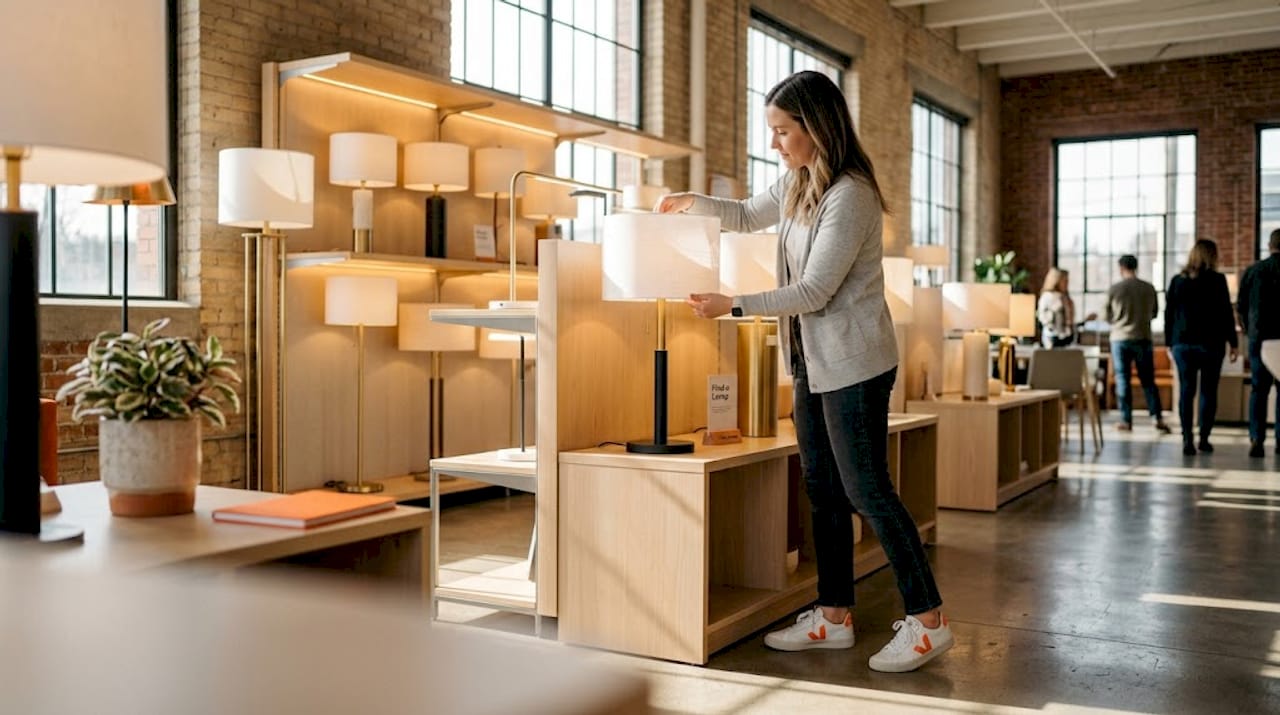
Ever walked into a showroom where the lamps just... sing? Where each piece feels like a discovery, its textures pop, and its design truly comes to life? That's not magic; it's masterful lamp styling. On the flip side, we've all experienced the drab, poorly lit display where even the most exquisite lamps fall flat, leaving you utterly uninspired. The truth is, knowing how to style lamps in showrooms isn't just about showing off products; it's about creating an experience, telling a story, and ultimately, inviting customers to imagine those beautiful lights in their own homes.
At Find a Lamp, we believe every lamp has a personality waiting to shine. This guide is your backstage pass to understanding the art and science behind truly captivating lamp displays. We're diving deep into foundational lighting concepts, precision placement, spatial styling, and the subtle mistakes that can dim even the brightest collections. Get ready to transform your approach and make every lamp a star!
Table of Contents
- The Three Pillars of Light: Unveiling Showroom Lighting Layers
- Precision Placement and the Science of Shine: Lighting Specifications
- Mastering the Spotlight: Techniques to Highlight Lamp Features
- Beyond the Bulb: Styling Lamps with Design Elements and Spatial Arrangements
- The Silent Saboteurs: Common Mistakes and How to Avoid Them
- The Power of Less: The Art of Subtlety in Showroom Lamp Styling
- Your Home, Your Showroom: Explore Stylish Lamps with Find a Lamp
- Frequently Asked Questions
Key Takeaways
| Point | Details |
|---|---|
| Layered lighting is king | Combine ambient, accent, and connecting light to create depth, focus, and a comfortable atmosphere. |
| High CRI is non-negotiable | Use light sources with a Color Rendering Index (CRI) of 90+ to reveal true colors and textures. |
| Neutral is your best friend | Opt for soft gray or warm white backgrounds to let lamps pop without visual competition. |
| Beat the glare monster | Strategic beam angles, diffusers, and careful placement prevent harsh glare and reflections. |
| Tell a story with vignettes | Integrate lamps into lifestyle settings using props, varying heights, and thoughtful spatial arrangements. |
| Less is often more | Focus on curated, intentional illumination over simply "more light" to create lasting impressions. |
The Three Pillars of Light: Unveiling Showroom Lighting Layers
To truly elevate your lamp displays, you need to think like a lighting designer. This means understanding that lighting isn't a single, flat entity, but a symphony of distinct layers working in harmony. Imagine it as building a house: you need a solid foundation, then structural walls, and finally, decorative elements. Lighting works the same way.
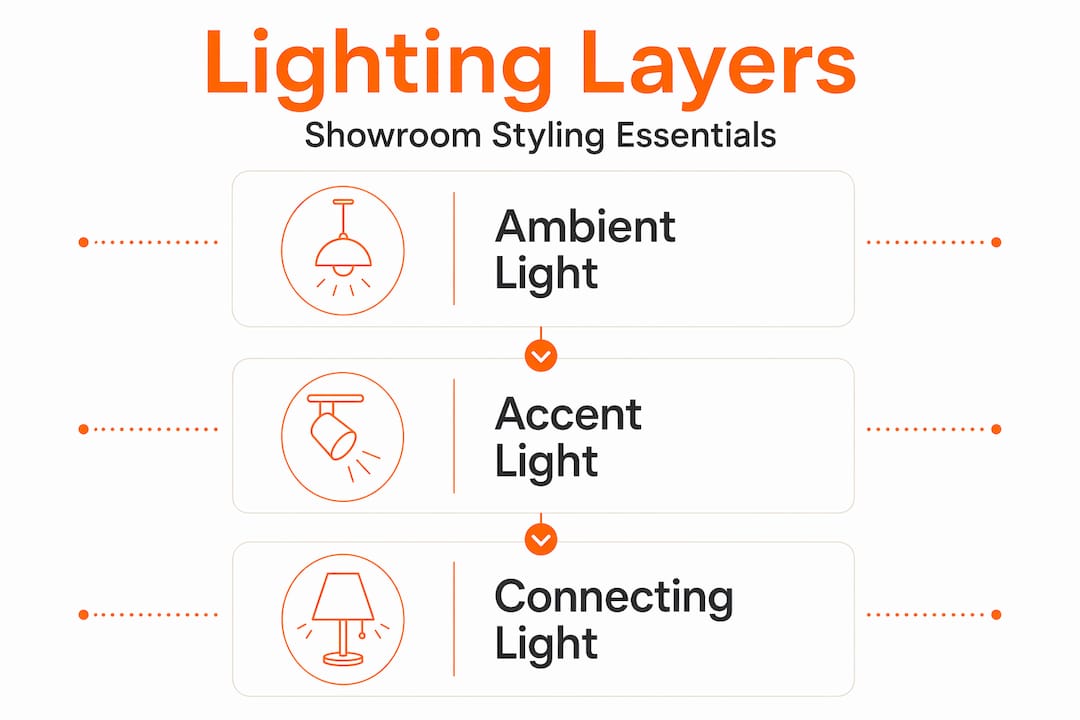
Studio De Schutter’s comprehensive showroom planning guide emphasizes the critical role of layering light into ambient, accent, and connecting light. Each layer serves a unique purpose, contributing to an inviting and visually dynamic space. Neglect even one, and your display risks feeling incomplete or uninspired.
- Ambient Light: The Welcoming Embrace
This is your foundational, general illumination, providing a comfortable, uniform brightness across the entire showroom. Think of it as the overall "mood" lighting. It ensures visitors can navigate the space easily, without harsh shadows or blinding spots. For a lamp showroom, ambient light should be soft, diffused, and consistent, setting a pleasant stage without overpowering the individual stars of the show. It's often achieved with recessed lighting, cove lighting, or evenly spaced ceiling fixtures. - Accent Light: The Spotlight Stealer
Now we're talking drama! Accent lighting is precisely targeted illumination designed to highlight specific lamps or display vignettes. This is where you draw the eye, create focal points, and emphasize the unique features of each lamp. A narrow-beam spotlight on a sculptural base, or a carefully angled track light illuminating the texture of a shade, can transform a lamp from a simple object into a work of art. This layer creates visual hierarchy, guiding your customer's gaze to your most important or visually striking pieces. - Connecting Light: The Unsung Hero
Often overlooked, connecting light adds crucial depth and cohesion to your showroom. It illuminates vertical surfaces like walls, architectural features, and transitional zones between different display areas. Without it, your showroom can feel like a series of isolated islands under spotlights, lacking flow and warmth. Wall washers, uplights, or even softly lit shelving can create a sense of spaciousness, make the entire environment feel more integrated, and prevent those awkward dark corners. It literally connects the dots, pulling the whole design together.
When these three layers are expertly balanced, the result is more than just a well-lit space; it's an immersive experience. Shoppers aren't just looking at lamps; they're imagining them in their own homes, a concept we explore further in our layered lighting guide for residential spaces. It's about creating an atmosphere where every lamp feels like it belongs, even before it's purchased.
Precision Placement and the Science of Shine: Lighting Specifications
Once you've mastered the art of layering, it's time to get specific. The right lamp placement and technical lighting specifications are crucial for ensuring your lamps not only grab attention but also appear true to life. This is where the magic of design meets the science of light.
One of the most critical specifications is the Color Rendering Index (CRI). CRI measures how accurately a light source reveals the true colors of objects compared to natural daylight. Think of it this way: a low CRI light can make a vibrant red look dull, or a rich wood tone appear flat. For lamps, where material, finish, and shade color are paramount, a high CRI is absolutely non-negotiable.
Falcon Group’s 2025 retail lighting guide strongly advocates for a CRI of 90 or higher. With a CRI of 90+, the subtle variations in a ceramic glaze, the intricate weave of a linen shade, or the brushed finish of a metal base will all be rendered with stunning accuracy. This builds trust with your customers and significantly reduces the likelihood of returns due to perceived color discrepancies.
Next up: Illuminance Levels (Lux). This refers to the amount of light falling on a surface. You don't want to blast every lamp with the same intensity. Different lamps and display types require varying lux levels to truly shine without being over-lit or under-lit.
- Large Floor Lamps or Statement Pieces: 300 to 500 lux. These pieces command attention through their size and form, requiring enough light to define their silhouette without overpowering them.
- Detailed Table Lamps or Intricate Designs: 600 to 1,000 lux. For lamps with delicate craftsmanship, unique textures, or fine details, higher lux levels help bring those nuances to the forefront.
- Pendant or Hanging Lamps: 400 to 700 lux. Here, the light needs to highlight the fixture itself while also demonstrating the quality of light it casts.
And let's not forget the power of backgrounds. Rocky Mountain Hardware advises using neutral backgrounds with layered lighting and lifestyle vignettes to ensure lamps stand out. A soft, matte gray, a warm off-white, or even a textured plaster wall provides a perfect canvas that won't compete with the lamp's design. Avoid busy patterns or overly saturated colors that can distract the eye.
| Lamp Type | Recommended Lux | CRI Minimum | Background Suggestion | Color Temperature |
|---|---|---|---|---|
| Large Floor Lamps | 300 to 500 lux | 90+ | Warm white or light gray | 2700K - 3000K |
| Table Lamps with Detail | 600 to 1,000 lux | 92+ | Soft gray or matte neutral | 2700K - 3000K |
| Pendant or Hanging Lamps | 400 to 700 lux | 90+ | Dark contrast wall or wood panel | 2700K - 3500K |
| Arc or Statement Lamps | 300 to 500 lux | 90+ | Open white space or textured plaster | 2700K - 3000K |
Pro Tip: When positioning lamps, consider placing them a few inches forward from the wall. This subtle gap allows accent light to graze the wall behind, creating a beautiful halo effect that adds depth and perceived value. It's a small detail that makes a big impact!
Remember, shoppers aren't just buying a lamp; they're buying a vision for their home. By meticulously controlling CRI, lux levels, and backgrounds, you're not just displaying a product – you're selling a dream. Use our lamp style matching guide to help pair specific lamp aesthetics with the perfect showroom context.
Mastering the Spotlight: Techniques to Highlight Lamp Features
Now that we understand the layers and the specs, let's talk technique. It's about how you manipulate light to reveal the true beauty of each lamp, making its unique features sing. A thoughtful approach to lighting technique is what truly separates a memorable display from a mundane one.
Alcon Lighting emphasizes the importance of balancing ambient, accent, and task layers with versatile track lighting and varying brightness levels. Uniform, flat illumination is the enemy of texture and detail. It strips away the character of a lamp, making a hand-blown glass base look no different from a mass-produced one.
Here's how to implement strong showroom lighting techniques:
- Embrace Adjustability: Invest in adjustable recessed and track lights. Your displays will evolve, and fixed lighting will quickly become a limitation. The ability to redirect beams, change lenses, and adjust intensity is paramount for dynamic styling.
- Vary Brightness with Intention: Not every lamp needs the same amount of light. Create a visual journey by having a brighter accent on a hero lamp, then softer surrounding light for complementary pieces. This guides the eye and prevents visual fatigue.
- Angle is Everything: Avoid placing spotlights directly overhead or at the same height as the lamp shade. Instead, light from slightly above (think 30-45 degrees off-vertical) and at a slight angle to the lamp. This creates subtle shadows and highlights that reveal the texture of shades (linen, rattan, silk) and the finish of bases (brushed metal, polished ceramic, carved wood).
- Uplight for Drama: For floor lamps with interesting bases or sculptural elements, consider discreet uplights placed at the base. This technique traces the lamp's silhouette upwards, adding a dramatic flair and emphasizing its form. It works wonders for lamps made from unique materials like marble, poured resin, or hammered copper.
- Combat Glare with Grace: Glare is a customer repellant. Frosted glass diffusers, honeycomb louvers on spotlights, and careful fixture placement are your best friends. Diffused light sources scatter light softly, providing even coverage on a lamp shade without harsh reflections that can blind shoppers or distract from the product. Ensure that light sources are hidden or well-shielded from typical viewing angles.
When selecting your light sources, consider these technical details:
- Beam Angle: For accent lighting, a beam angle of 24 to 36 degrees is often ideal, providing a focused yet soft pool of light. Wider beams (40-60 degrees) are better for broader accenting or connecting light.
- Color Temperature (CCT): For most residential lamp collections, a warm white LED in the 2,700K to 3,000K range is perfect. This mimics the cozy glow of incandescent bulbs and feels inviting. Cooler temperatures (3500K+) can make a space feel more sterile, which is generally not desirable for a home-focused product like lamps.
- Dimming Capabilities: Install dimmers on every circuit. This allows you to adapt the mood for different times of day, special events, or even to demonstrate the dimming capabilities of the lamps themselves.
Want to test these techniques virtually? Our tools at Find a Lamp let you visualize lamps before buying, helping you perfect placement and effect without moving a single fixture!
Beyond the Bulb: Styling Lamps with Design Elements and Spatial Arrangements
Lamps don't exist in a vacuum. To truly engage shoppers, you need to integrate them into compelling narratives and inviting spaces. Thoughtful spatial styling creates an immersive experience that resonates deeply, allowing customers to envision the lamps in their own lives.
Yellow Architects' 2025 showroom design beautifully illustrates this principle, using multi-height platforms, maze-like partitions, and "experience rooms" that mimic real home settings. This transforms the showroom from a mere display space into a series of inspiring vignettes, each telling a distinct story and evoking a different desire.
Here's how to build that same spatial drama in your own display:
- Vary Platform Heights: Avoid a monotonous, flat display. Use risers, plinths, and tables of varying heights to create visual rhythm and hierarchy. A tall floor lamp on a low platform, a compact table lamp on a mid-height console, and a pendant hanging above create dynamic movement for the eye.
- Carve Out Zones with Partitions: Use frosted glass, slatted wood, or even fabric panels to create semi-private "rooms" or intimate zones. These partitions isolate lamp clusters, allowing them to glow like contained scenes, fostering a sense of discovery as shoppers move through the space.
- Create Lifestyle Vignettes: This is where lamps truly come alive. Pair a mid-century table lamp with a stack of curated art books, a comfortable armchair, and a small potted plant. Display a rustic floor lamp beside a textured throw blanket and a wooden side table. These vignettes tell a story, demonstrating how the lamp fits into a desired lifestyle, making it instantly more appealing and relatable.
- Group by Aesthetic, Not Just Category: Instead of grouping all table lamps together, then all floor lamps, try grouping by style. Showcase industrial-style lamps with raw metal props, exposed brick backdrops, and minimalist furniture. Pair soft, organic-shaped lamps with natural materials, warm tones, and cozy textiles. This helps customers connect with a specific aesthetic they might be seeking.
- Utilize Vertical Space: Don't forget the ceiling! Hanging pendants at varying heights, creating a cascading effect, adds drama and draws the eye upwards, making the entire space feel taller and more expansive. This is particularly effective for showcasing collections of chandeliers or unique pendant designs.
- Keep Backgrounds Thoughtful: As mentioned before, neutral, matte backgrounds are key. However, you can add subtle texture with plaster finishes, wood panels, or even a deep, moody accent wall in a specific zone to amplify a lamp's character without overpowering it.
| Spatial Element | Effect on Lamp Display | Best Use Case |
|---|---|---|
| Multi-height platforms | Creates visual rhythm, hierarchy, and perceived value. | Mixed collections, individual hero pieces. |
| Maze partitions / Zoning | Isolates displays, creates intimate scenes, fosters discovery. | Lifestyle vignettes, brand-specific collections. |
| Vertical pendant arrangement | Adds drama, utilizes ceiling space, creates movement. | Pendant and chandelier displays, entryways. |
| Lifestyle vignettes | Contextualizes lamps in real settings, inspires imagination. | Table and floor lamp displays, demonstrating versatility. |
| Curated Props | Enhances aesthetic, tells a story, adds character. | All lamp types, especially for thematic displays. |
By thoughtfully arranging lamps within a well-designed space, you transform a simple shopping trip into an inspiring design journey. For deeper inspiration on matching spatial arrangements to design styles, explore our guide on lighting for interior design styles.
The Silent Saboteurs: Common Mistakes and How to Avoid Them
Even with the best intentions, a few common missteps can quietly undermine your beautiful lamp displays. Understanding these pitfalls and knowing how to verify your setup is crucial for consistently delivering a positive, confidence-building experience for your buyers.
The Falcon Group’s 2025 guide succinctly warns against several critical errors that can diminish product clarity and customer experience:
- Excessive Brightness: More light isn't always better. Over-lighting can wash out colors, create harsh shadows, and make a space feel overwhelming rather than inviting. It also makes lamps appear less special.
- Mixing Color Temperatures (CCT): This is a big one. Placing a warm white (2700K) lamp next to a cool white (4000K) spotlight creates visual dissonance. Colors will look inconsistent, and the entire display will feel disjointed and untrustworthy. Stick to a consistent CCT within a single display zone.
- Vertical Spotlights Directly Above Products: This creates unflattering, stark downward shadows on lamp shades and bases, making them look flat and unappealing. It also often leads to glare. Light from an angle to reveal form and texture.
- Ignoring Wall Illumination: As discussed with connecting light, neglecting vertical surfaces flattens the entire composition. Walls that fade into darkness behind your lamps make the space feel smaller and less refined.
- Over-Lighting Ceilings: While ambient light is important, flooding the ceiling with bright, uniform light can detract from the lamps themselves and create an uninspired, institutional feel. Focus light on the products and the customer's journey.
Before unveiling a new display, conduct a thorough verification. Think of it as a pre-flight checklist:
- Walk the Customer's Path: Physically move through the showroom as a customer would. Check for any direct glare from exposed bulbs or light sources. Are there any distracting reflections on glossy lamp surfaces? A ceramic base should show a soft, controlled highlight, not a harsh reflection of the ceiling grid.
- Color Consistency Check: Hold up a white card or a swatch of fabric under different lights in the same zone. Do the colors appear consistent? Are any lamps looking oddly yellow, blue, or green? Studio De Schutter meticulously tests reflections, glare, and viewing angles on-site to ensure a cohesive lighting hierarchy.
- Shadow Play: Observe the shadows. Are they soft and enhancing, or harsh and distracting? Good lighting creates intentional shadows that define form and texture.
- Background Engagement: Are the walls behind your lamps adequately illuminated? Do they complement the display or recede into dullness?
- Adaptability Test: If you have dimmers, test different lighting scenes. How does the display look at "morning light" intensity versus "evening ambiance"? This ensures versatility for different times of day or special events.
“True radiance in a showroom is not about flooding every corner with light. It emerges from a clear spatial dramaturgy, where each layer of illumination plays its role with intention.” – Studio De Schutter
By actively avoiding these common pitfalls and rigorously verifying your setups, you ensure that every lamp in your showroom is presented in its best light, building customer confidence and enhancing their overall experience. For more on matching the right lamp to the right setting, consult our lamp and fixture types guide.
The Power of Less: The Art of Subtlety in Showroom Lamp Styling
If there's one overarching principle that defines truly exceptional lamp showrooms, it's this: less is often more. The most memorable displays don't necessarily use the most light; they use the right light, in the right places, with a clarity of intention that borders on architectural precision. It's the art of subtlety.
The common instinct when styling a lamp showroom is to maximize brightness, add more spotlights, and ensure every square inch is illuminated. But as Sabine De Schutter so eloquently states, "Radiance in a showroom is not about flooding every corner with light. It emerges from a clear spatial dramaturgy, where each layer of illumination plays its role with intention." This distinction is profound: radiance is a quality of *structure and intention*, not merely a *quantity of lumens*.
When lighting is haphazard, it creates visual noise. Shoppers might feel overwhelmed or confused, leading them to rush through the space without truly engaging with the products. This lack of clear visual guidance can erode confidence and make a collection feel less curated. In contrast, a structured lighting hierarchy does the opposite. It slows people down. It guides the eye from a captivating hero piece, to a thoughtfully arranged supporting display, then to an inspiring lifestyle vignette, and finally, to the architectural details that frame the space. This intentional journey encourages longer engagement, deeper appreciation, and fosters a sense of trust in the quality and design of the lamps.
Our perspective, informed by observing how people genuinely respond to different showroom environments, is that the most successful lamp displays feel meticulously curated, not simply stocked. Imagine a single, beautifully lit floor lamp showcased within a perfectly composed vignette – it will consistently outsell a wall of lamps that are uniformly, but uninspiringly, lit. This level of restraint requires courage, a willingness to let certain areas breathe and allow the chosen pieces to truly shine. But the rewards are immense: increased buyer confidence, a heightened perception of product value, and the creation of lasting impressions that draw customers back again and again.
Ultimately, the goal isn't just to sell a lamp, but to sell the feeling, the atmosphere, and the elevated lifestyle that lamp represents. By embracing the power of subtle, intentional illumination, you transform your showroom into a gallery, a source of inspiration, and a true destination for exceptional lighting. Explore our layered lighting perspective for a deeper dive into how this philosophy translates seamlessly into creating stunning home environments.
Your Home, Your Showroom: Explore Stylish Lamps with Find a Lamp
The expert principles you've just discovered aren't confined to grand showrooms. They are the very same principles that can transform your own home lighting into something truly considered, warm, and beautifully composed. Now, it's time to bring those principles to life in your specific space!
At Find a Lamp, we curate collections designed to embody the styling depth and quality described in this guide. Whether you're drawn to the rugged elegance of industrial living room lighting, the atmospheric charm of industrial bedroom lighting, or the sleek functionality of industrial office lighting, you'll discover lamps meticulously selected and specified to elevate any room. Our innovative AI-powered tools go a step further, allowing you to visualize how each piece looks in your actual space before you make a commitment. Let Find a Lamp help you light up your world, beautifully and confidently.
Frequently Asked Questions
What is the ideal Color Rendering Index (CRI) for showroom lamp lighting?
A CRI of 90 or higher is considered ideal. This ensures that the true colors and textures of lamps, including their shades, bases, and finishes, are accurately revealed. High CRI lighting minimizes color mismatch, enhancing buyer confidence and reducing returns.
How does layering ambient, accent, and connecting light improve lamp displays?
Layering these three types of light creates a dynamic visual hierarchy and essential depth. Ambient light provides a comfortable overall illumination, accent light highlights specific lamps as focal points, and connecting light ties the space together by illuminating vertical surfaces. This approach guides the eye, enhances texture, and creates an immersive, engaging showroom experience.
What background colors work best for styling lamps in showrooms?
Neutral backgrounds, such as soft grays, warm whites, or matte off-whites, work best. These colors provide a subtle contrast that allows the lamps to stand out without competing for visual attention. They act as a clean canvas, amplifying the lamp's design and material quality.
How can unwanted glare be minimized when styling lamps in showrooms?
To minimize glare, angle light beams away from typical customer viewing angles, use frosted glass diffusers or honeycomb louvers on spotlights, and avoid placing spotlights directly overhead of glossy surfaces. Strategic fixture placement and diffused light sources create comfortable, flattering illumination that keeps the lamp as the primary visual focus.
Recommended
- How to Visualize Lamps in Your Space Before You Buy - Find a Lamp
- Lighting for Your Style: Modern, Industrial, Rustic & More - Find a Lamp
- The Ultimate Guide to Layered Lighting: Transform Your Home - Find a Lamp
-
Improve your room
Explore lamps tailored to your home with our AI driven recommendations.
Find Lamps