Enhance Open Spaces: Lighting Strategies for Comfort and Style
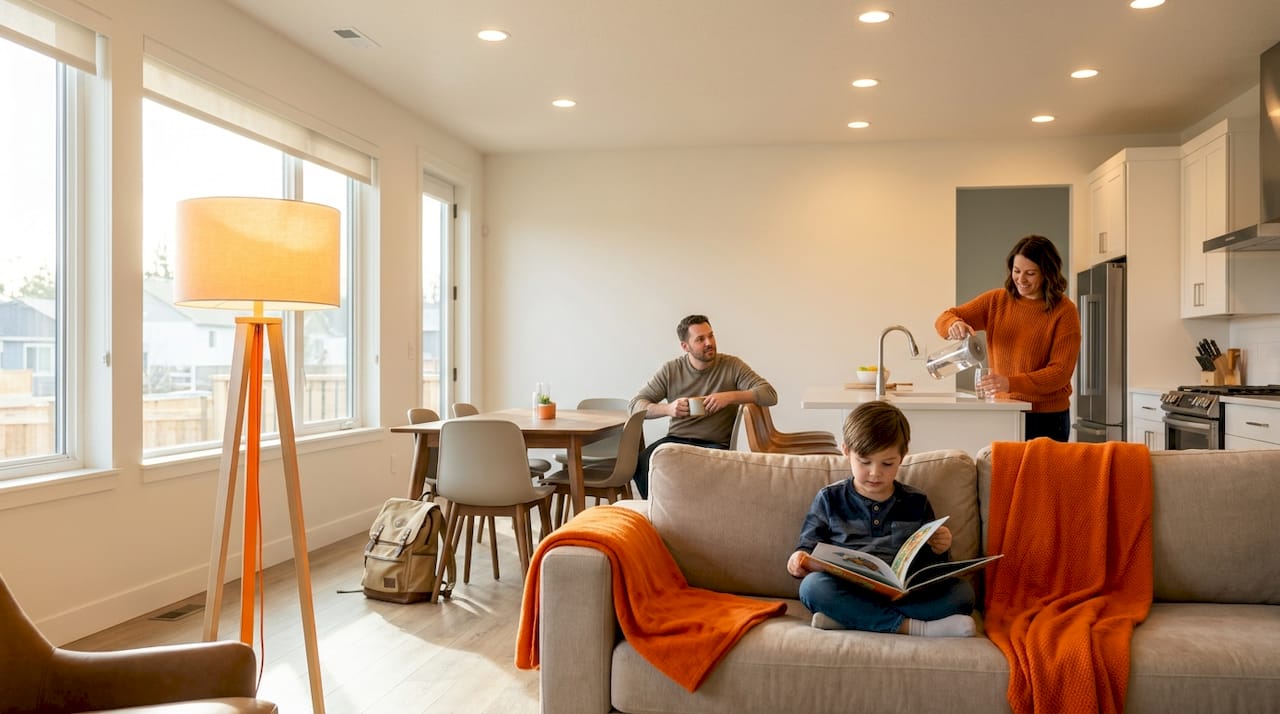
Ever walked into a beautifully designed open-concept home, only to find it feels… off? Maybe it’s too bright, too dim, or just uniformly bland? You’re not alone! Many open-plan homeowners discover, often too late, that simply adding more light doesn't always mean better light. In fact, a grid of recessed cans can transform a gorgeous, airy room into something resembling a fluorescent-lit office lobby. Yikes!
Open-plan living is a dream for modern aesthetics and seamless flow, but it demands a fundamentally different approach to lighting. Instead of just illuminating, we need light to define, soften, and animate these sprawling spaces, turning them into places that genuinely feel like home at every hour of the day. This isn't just about picking pretty fixtures; it's about understanding how light shapes your experience. In this comprehensive guide, we'll dive deep into the layered strategies, smart controls, and material choices that will transform your open space from merely functional to truly magical.
Table of Contents
- Why Lighting is Crucial in Open Spaces
- Layered Lighting: The Foundational Framework
- Managing Glare and Contrast for Comfort
- Adapting Lighting to Activities and Moods
- What Most Homeowners Get Wrong About Open Space Lighting
- Find the Perfect Lighting for Your Open Space
- Frequently Asked Questions
Key Takeaways
| Point | Details |
|---|---|
| Layered lighting is essential | Using multiple light layers adds comfort and dimension to open-plan areas, creating distinct zones and moods. |
| Control glare and contrast | Address discomfort by minimizing harsh glare and balancing brightness across the room for optimal visual comfort. |
| Adjust lighting for activities | Flexible controls, dimmers, and color temperature changes make open spaces adaptable for various tasks and moods throughout the day. |
| Prioritize comfort over brightness | Comfort, versatility, and precise control matter more than simply increasing light levels; strategic lighting enhances well-being. |
Why Lighting is Crucial in Open Spaces
Open spaces are architecturally thrilling! Walls come down, sight lines open up, and natural light pours through unobstructed, creating an expansive, airy feel. But this very freedom creates a serious lighting challenge. Without physical boundaries to contain and direct light, the entire environment can feel flat, disorienting, or even clinical if your fixtures aren't chosen and placed with real intention.
Think of it like this: In a traditional room, the walls, ceiling, and doorways naturally create a cozy containment. Light bounces, pools, and builds its own rhythm without much help. In an open plan, however, light simply dissipates into the expanse. You often end up with a uniform wash that reads as sterile rather than welcoming. As interior lighting design experts often emphasize, "Open plan layouts require a strategic lighting approach to avoid uniformity that feels clinical rather than inviting."
In an open-concept layout, your lighting system has to do several critical jobs at once:
- Define Zones Without Walls: Since there are no physical walls, light becomes your invisible architect. A pendant cluster over a kitchen island clearly delineates the cooking zone. A warm floor lamp next to a plush armchair quietly signals, "this is your reading retreat." Without this spatial definition, the entire area can feel like one large, undifferentiated box.
- Support Multiple Activities Simultaneously: This is the hallmark of open living! One person might be cooking dinner, another working on a laptop, and a third watching TV – all within the same visual field. Each activity needs its own specific quality and intensity of light. The bright, focused light for chopping vegetables would be too harsh for a cozy movie night, and vice-versa.
- Shift Mood and Energy Across the Day: Your open space needs to adapt. Mornings call for energizing brightness to kickstart the day. Afternoons might need focused task lighting for work or homework. Evenings demand warmth and softness for relaxation and socializing. Open plans without flexible lighting are stuck at one emotional register all day, which can feel draining or uninviting.
Research on lighting and mood consistently confirms that the quality, direction, and color of light profoundly shape how we feel in a space, often before we even consciously register it. It impacts our circadian rhythm, productivity, and overall sense of well-being. For ideas on how to bring this thinking into practice, our guide to creative living room lighting strategies offers a useful starting point.
“Lighting is the single most powerful tool for controlling the emotional register of a space. Architecture sets the stage; lighting plays the scene.”
Layered Lighting: The Foundational Framework
Once you understand why lighting matters so profoundly in open spaces, the methodology becomes clear. The answer, my friends, is layering! Layered lighting, the practice of combining ambient, task, and accent sources, is the gold standard precisely because it replicates the way natural light works: with depth, variation, and purpose. It's like painting with light, adding highlights, shadows, and subtle washes to create a dynamic, inviting picture.
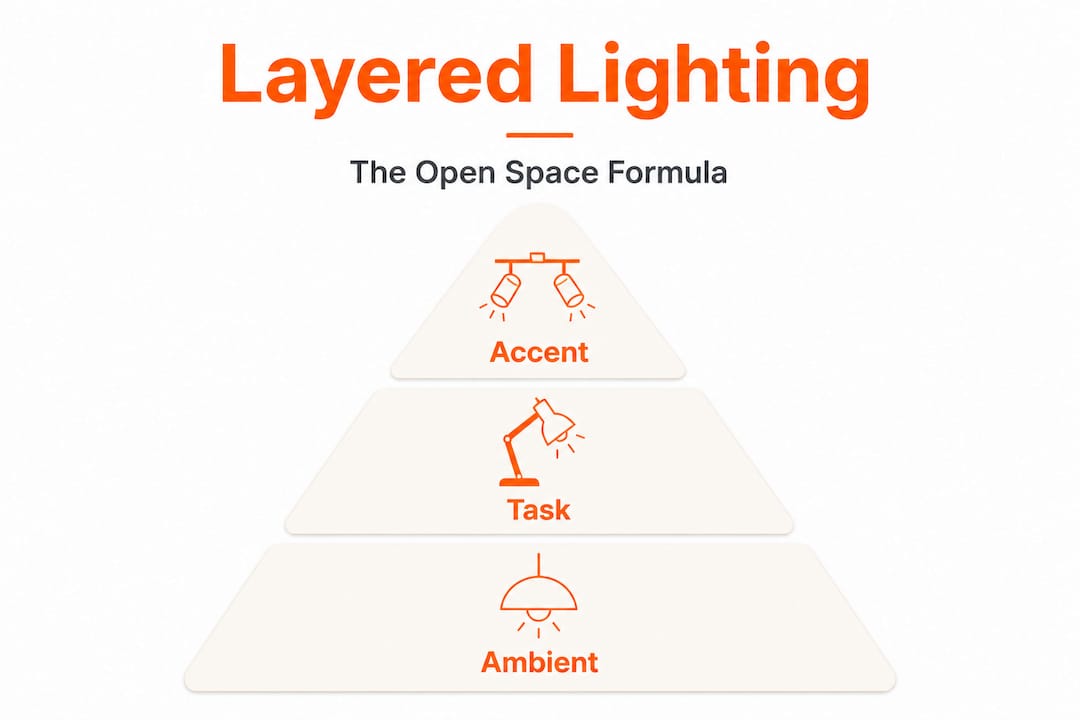
Let's break down the three essential layers and how they work together:
| Layer | Purpose | Best Fixtures for Open Plans | Examples in an Open Space |
|---|---|---|---|
| Ambient (General) | Provides overall illumination, prevents dark corners, ensures safe navigation. It's the "fill light." | Recessed downlights (with diffusers!), large diffused pendants, flush mounts, cove lighting, track lighting with wide flood beams. | Ceiling-mounted fixtures providing a soft, even glow across the entire open area. |
| Task (Functional) | Targeted, brighter light for specific activities, protecting your eyes from strain. | Under-cabinet strips, desk lamps, floor lamps for reading, directional pendants over a kitchen island or dining table. | Bright, focused light directly over a kitchen counter for meal prep, or a dedicated desk lamp in a home office nook. |
| Accent (Decorative/Dramatic) | Creates visual interest, highlights architectural features, artwork, or textures, adding depth and personality. | Wall sconces, track lighting with narrow spot beams, LED strips for shelving, picture lights, uplights for plants. | Spotlighting a piece of art, washing a textured stone wall with light, or illuminating a bookshelf to draw the eye. |
Each layer works independently but creates something genuinely alive and comfortable when they interact. Ambient light prevents your space from feeling cavernous. Task light ensures you can cook, read, or work comfortably. Accent light adds drama, draws attention to beautiful objects, and creates the visual hierarchy that makes a large space feel intentional rather than empty.
Building a layered scheme from scratch:
- Start with Ambient: Map out the square footage of your open space and identify your primary general light sources. This could be a series of well-placed recessed LEDs, a large, diffused chandelier, or even cove lighting that washes the ceiling. The goal here is an even baseline illumination without harsh shadows.
- Layer in Task Lighting: Walk through your space (mentally or physically!) and identify every activity zone. Where will you chop vegetables? Read a book? Work on your laptop? Eat dinner? Each zone needs its own dedicated, brighter source. Think under-cabinet lights in the kitchen, a stylish floor lamp by your sofa, or a pendant over your dining table.
- Add Accent Lighting Last: Now, look at what's worth celebrating! A textured wall, a cherished painting, a stunning piece of furniture, or architectural beams. Accent these deliberately. This layer is what gives your space its unique personality and makes it truly "yours."
- Connect Everything to a Control System: Whether it's a traditional dimmer switch, a smart home app, or a voice assistant, you absolutely want every layer to be independently adjustable. This is non-negotiable for open-plan success!
Pro Tip: Install dimmers on every single circuit from the start. Seriously, every one! Retrofitting them later is both costly and disruptive. Even a basic rotary dimmer transforms a fixed, one-note space into a room that can whisper or shout, depending on what you need.
Our comprehensive layered lighting guide at Find a Lamp walks through this methodology with specific product pairings and room configurations, making the whole process much more concrete.
Managing Glare and Contrast for Comfort
Here’s something that surprises most homeowners: a brightly lit space can still feel deeply uncomfortable. The culprit is almost always glare and poorly managed contrast. Once your layered scheme is in place, this is the next crucial dimension to refine for true comfort and livability.

What exactly is glare? In practical terms, glare occurs when a light source (or its reflection) is significantly brighter than the surrounding visual field. Your eyes are constantly recalibrating, and a harsh bright spot against a darker background forces them to work overtime. This constant adjustment is exhausting, leading to eye strain, headaches, and general fatigue, even if you can’t pinpoint why you feel tired after spending time in a beautifully designed room.
Open-concept spaces are especially vulnerable to glare due to their expansive scale and abundance of reflective surfaces: polished concrete floors, glossy kitchen cabinetry, large windows, and glass tabletops all bounce light unpredictably. Research consistently confirms the severity of this problem: a study on glare and discomfort in open spaces found that nearly half of survey respondents rated glare as uncomfortable in their environments.
Common discomfort sources and practical solutions:
| Discomfort Source | Practical Fix |
|---|---|
| Bare bulbs visible in pendant or chandelier | Switch to fixtures with frosted glass, fabric shades, or internal diffusers; use softer, lower-wattage bulbs. |
| Recessed downlights aimed directly at reflective floors | Adjust aim angle; use fixtures with baffled trims or deeper set bulbs to reduce direct visibility; consider wider beam angles to spread light more evenly. |
| Pendant fixture positioned at eye level over a table | Raise the fixture height so the light source is above direct sightlines; choose fixtures with opaque shades that direct light downwards. |
| Track lights aimed at polished surfaces (e.g., stainless steel appliances, glass) | Redirect the beam to a non-reflective surface; introduce matte area rugs or textural elements to absorb light; use narrower beam angles to control spread. |
| High-contrast wall washing (bright spot on wall, dark surroundings) | Add fill light on the opposite wall or use general ambient lighting to balance brightness; choose fixtures that provide a softer, more even wash. |
Practical strategies for managing glare include:
- Choose Diffused Light Sources: Opt for fixtures with frosted glass, fabric shades, or indirect upward bounce. These diffuse the light, spreading it gently and reducing harsh spots.
- Introduce Matte or Textural Finishes: On large surfaces like walls, floors, and cabinetry, matte finishes absorb light rather than reflecting it intensely. Think matte plaster, natural wood, or a cozy area rug.
- Consider Viewing Angles: Before installing, think about where people will sit or stand. A recessed light directly above a sofa can shine straight into the eyes of someone reclining. Position fixtures so the light source isn’t directly visible from common viewing positions.
- Layer Lower-Intensity Sources: Instead of one very intense overhead light, use multiple lower-intensity sources. Distributed light creates far less contrast and fewer harsh bright spots.
Pro Tip: Before you commit to a permanent fixture layout, test with portable floor lamps and table lamps to see where pools of light naturally want to land and where glare might be an issue. It's a lot easier to move a lamp than to relocate a ceiling junction box!
Mapping your light layout transformation thoughtfully from the beginning prevents most glare problems before they even start, ensuring your open space is as comfortable as it is beautiful.
Adapting Lighting to Activities and Moods
With glare managed and layers in place, the final dimension of a truly extraordinary open-space lighting plan is adaptability. This is where color temperature and smart controls take center stage, allowing your home to transform its personality with the flick of a switch (or a voice command!).
Color Temperature in Plain Terms: Measured in Kelvin (K), color temperature describes whether a light source reads as warm (more yellowish, like candlelight at around 2700K) or cool (more bluish, like overcast daylight at 5000K or above). The difference is not subtle; it profoundly impacts the psychological and physiological feel of a space. Warm, softer light promotes a sense of comfort, relaxation, and intimacy, while cooler, brighter light can promote alertness and focus, but feel institutional or clinical if misused.
For open-plan spaces, a practical approach is to use:
- 2700K to 3000K: Ideal for living and dining zones where relaxation, conversation, and connection are the goals. This warm glow mimics incandescent bulbs and creates a cozy, inviting atmosphere.
- 3500K to 4000K: Best for kitchen work surfaces, home office corners, or areas requiring clarity and focus. This "neutral white" light offers good color rendering and alertness without being overly blue.
- Tunable White Fixtures: These are game-changers for multipurpose zones! Tunable white LEDs can shift across the entire spectrum (e.g., from 2700K to 5000K), allowing you to adjust the color temperature to match the time of day or the activity. Imagine bright, cool light for morning coffee and warm, soft light for evening cocktails in the same space.
Smart Lighting Features Worth the Investment:
This is where your lighting system truly becomes intelligent, serving your lifestyle rather than dictating it. Investing in smart controls is investing in your daily comfort and flexibility.
- Dimming Controls: We can't say it enough – dimmers on every layer are paramount! The ability to dial down ambient light from 100% to 30% completely changes the emotional tone of a room, allowing it to transition from bright and energetic to soft and intimate.
- Scene Presets: This is the magic touch! Program specific combinations of brightness and color temperature for different activities. With a single tap, your space transforms for "Dinner Party," "Movie Night," "Sunday Morning Brunch," or "Workout Zone." No more fumbling with multiple switches.
- Voice and App Control: Effortless adjustments are key. Control your lights with a simple voice command or via an app on your phone, perfect for when your hands are full of groceries or you're already cozied up on the sofa.
- Motion Sensors: Strategically placed motion sensors tied to ambient layers can gently brighten a specific zone (like the kitchen path) when someone walks in at midnight, without flooding the entire open plan with light. This adds convenience and saves energy.
- Circadian Rhythm Programs: Advanced smart systems can mimic natural daylight, gradually shifting color temperature from energizing cool in the morning to warm, sleep-supporting amber by evening. This supports your body's natural rhythms, improving sleep quality and overall well-being. For more on this, check out resources on human-centric lighting from the IES (Illuminating Engineering Society).
It’s also worth calling out the home office lighting challenge specifically. When a home office occupies a corner of an open plan, the lighting tension is real. The work zone needs cooler, focused light, while the surrounding living area wants warmth. Smart zone controls solve this elegantly, allowing the two areas to coexist without either one compromising the other.
Nearly half of occupants in open-plan environments report discomfort from poorly managed lighting. That statistic, drawn from objective survey data, should be treated as a design imperative: get the controls right, or the space will consistently underdeliver no matter how beautiful the fixtures are.
What Most Homeowners Get Wrong About Open Space Lighting
We’ve seen it again and again: a homeowner invests in stunning architecture, beautiful furniture, and then, tragically, under-invests in lighting strategy. They choose their fixtures based purely on aesthetics (which, to be fair, is understandable – there are so many gorgeous options!) and then spend years wondering why the room never quite feels the way it looked in those glossy design inspiration photos.
Here are the most common pitfalls we observe:
- The "More Brightness Equals Better Light" Fallacy: This is the absolute king of lighting mistakes. If the room feels flat or dull, the instinct is to add more light. But more light, applied without strategy, just makes the flatness more visible at higher wattage. What the space actually needs is variety: variation in intensity, direction, and warmth. Overlighting creates a sterile, often glary, environment that lacks depth and character. It's like trying to fix a bad painting by just adding more paint – you need nuance!
- Treating Smart Controls and Dimming as Optional Upgrades: In an open-plan space, flexible controls are not a luxury; they are essential infrastructure. Without the ability to dim individual layers or recall specific scenes, your lighting system is operating at a fraction of its potential. We would argue that investing in workspace lighting optimization through proper controls delivers more daily value and comfort than spending the same money on a statement chandelier that can only be on or off.
- Form Over Function (The "Pretty But Problematic" Fixture): It’s easy to fall in love with a visually stunning fixture – a gorgeous exposed-bulb pendant, a minimalist track light with harsh spots. But if that fixture introduces glare, creates unflattering shadows, or offers no diffusion, it will actively detract from your comfort and the overall ambiance. A matte ceramic pendant that diffuses light softly will outperform a stunning sculptural piece with exposed bulbs every single day in terms of livability. Beauty and function are not opposites, but function has to be part of the conversation from the start.
- Ignoring Natural Light Integration: Many homeowners treat artificial lighting and natural daylight as separate entities. In an open space, they are intrinsically linked. Over-relying on artificial light during the day or failing to consider how natural light interacts with surfaces (and creates glare!) is a major oversight. Smart lighting systems can even adjust artificial light levels based on the amount of natural light entering the room, ensuring a harmonious and energy-efficient balance.
Our recommendation: Resist the urge to finalize any fixture selection before you have mapped out your full layered scheme, identified your glare risks, and decided on your control strategy. Let the strategy drive the fixture choice, not the other way around. The result is a space that feels as good as it looks, and that continues to delight you months and years after the renovation dust settles.
Find the Perfect Lighting for Your Open Space
Knowing the strategy is one thing. Finding the right fixtures to execute it – fixtures that match your aesthetic vision, your functional needs, and your room's unique challenges – is where things get genuinely exciting (and sometimes a little overwhelming!).

At Find a Lamp, we've built our platform specifically to bridge that gap. We understand that selecting the perfect lighting for a complex open space can feel like a daunting task. That's why our AI-powered recommendation engine is designed to simplify the process, helping you avoid those common pitfalls and achieve a truly comfortable and stylish environment.
Whether you're drawn to the raw, sculptural quality of industrial living room lighting, envision a statement piece in the form of a grand chandelier, or are looking for a refined focal point with modern table lamps, our technology is here to guide you. Simply upload a photo of your space, tell us about your style preferences, and let our AI analyze your layout, existing light conditions, and functional requirements. It will then deliver curated suggestions that make sense for your specific situation, helping you find fixtures that not only look fantastic but also perform perfectly within your layered lighting scheme. No more endless scrolling through thousands of options hoping something clicks – just smart, personalized recommendations to light up your life.
Frequently Asked Questions
What is the layered lighting approach and why is it important in open spaces?
The layered lighting approach combines ambient (general), task (functional), and accent (decorative) light sources. It's crucial in open spaces because it helps define distinct zones without physical walls, supports multiple activities, and allows you to shift the mood and energy of the space throughout the day. This creates visual hierarchy, comfort, and flexibility, effectively managing the complexity of large, multi-use open areas.
How can I reduce glare in an open-concept living room?
To reduce glare, opt for indirect or diffused fixtures (e.g., those with frosted shades or uplighting). Introduce matte finishes on reflective surfaces like floors or glossy cabinets. Crucially, reposition any downlights that aim directly at polished surfaces or into seated eye lines. Using multiple lower-intensity light sources instead of one very bright one can also significantly reduce harsh contrasts and discomfort.
Does color temperature really affect the feel of my space?
Absolutely! Color temperature, measured in Kelvin (K), profoundly impacts the psychological and physiological feel of your space. Warmer tones (2700K-3000K) encourage relaxation, coziness, and intimacy, while cooler tones (3500K-5000K) promote alertness and focus. Selecting the right color temperature for different zones and activities is a core design decision that shapes how you experience your home.
Should I use smart bulbs or dimmers for open plans?
Ideally, you should use both! Dimmers on every circuit are foundational for adjusting brightness and mood. Smart bulbs, when paired with dimming controls (either via a smart dimmer switch or the bulb's own dimming capabilities), give you advanced functionality like creating scene presets, shifting color temperature on a schedule (tunable white), and controlling individual zones independently. This combination provides the ultimate flexibility and adaptability that an open-plan space demands.