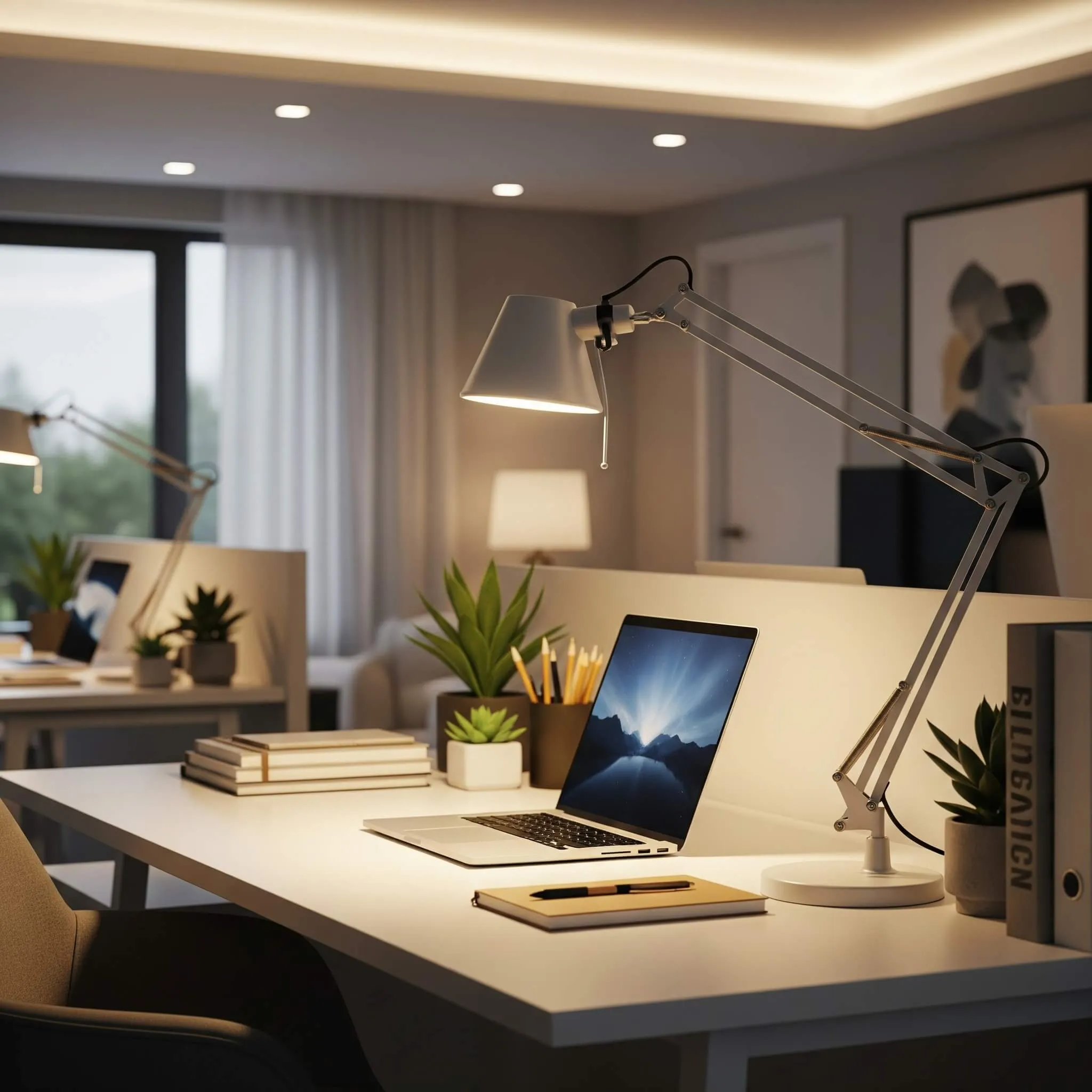
Work Smarter: The Ultimate Guide to Home Office Lighting
Welcome to the modern home office, where productivity meets personal style! But let's face it, working from home can be tough, and poor lighting can make it even harder. Strained eyes, headaches, and that dreaded afternoon slump? Often, the culprit is your lighting setup. But don't worry, Find a Lamp is here to illuminate the path to a brighter, more productive workspace. This guide will walk you through creating a home office lighting scheme that not only looks great but also helps you work smarter, feel better, and even look fantastic on those all-important video calls. Get ready to transform your space from a dimly lit dungeon to a beacon of brilliance!
The Three Pillars of Home Office Lighting: Ambient, Task, and Accent
Before diving into specifics, let's establish the three key types of lighting you'll need to consider for a well-rounded home office setup:
- Ambient Lighting (General Lighting): This provides overall illumination for the entire room. Think of it as the foundation upon which your lighting scheme is built. It creates a comfortable and balanced environment, minimizing harsh shadows and reducing eye strain.
- Task Lighting: This is focused light designed to illuminate specific work areas, such as your desk, reading nook, or craft station. It provides the bright, direct light you need for detailed tasks like reading, writing, and computer work.
- Accent Lighting (Decorative Lighting): This adds visual interest and personality to your space. It can be used to highlight artwork, architectural features, or plants, creating a more inviting and stimulating environment. While not strictly necessary for productivity, accent lighting can significantly enhance the overall mood and feel of your office.
By thoughtfully incorporating all three types of lighting, you can create a home office that is both functional and aesthetically pleasing.
The Foundation: Ambient Light – Setting the Stage for Success
Think of ambient light as the foundation upon which your entire home office lighting scheme is built. It's the general, overall illumination that fills the room, creating a comfortable and balanced environment. Relying solely on a bright desk lamp is a recipe for disaster. Imagine sitting in a spotlight while the rest of your room fades into darkness. This creates high contrast, forcing your eyes to constantly readjust and leading to eye strain, fatigue, and even headaches. A well-lit room minimizes this strain, making it easier to focus and concentrate for longer periods.
So, how do you achieve optimal ambient light? Here are a few key strategies:
- Overhead Lighting is Key: Start with an overhead ceiling fixture that provides soft, diffuse light throughout the space. Options include:
- Flush Mount Fixtures: These are a great choice for rooms with lower ceilings, providing even light distribution without taking up too much vertical space.
- Recessed Lights: Create a clean, modern look with recessed lights. They offer excellent ambient lighting and can be strategically placed to highlight specific areas of the room. Consider using dimmable recessed lights to adjust the brightness throughout the day.
- Chandeliers or Pendant Lights: If your office has higher ceilings, consider a chandelier or pendant light for a more dramatic and stylish statement. Just be sure the light is diffused and doesn't create harsh shadows. A drum shade pendant light is a popular choice for its even light distribution.
- Harness the Power of Natural Daylight: Whenever possible, position your desk to take advantage of natural daylight. Natural light is proven to boost mood, alertness, and overall well-being. Studies have even shown that exposure to natural light can improve sleep quality! Aim to position your desk perpendicular to a window, rather than directly facing it, to minimize glare.
- Window Treatments are Your Friend: While natural light is fantastic, too much direct sunlight can cause glare and discomfort. Invest in window treatments like blinds, shades, or curtains to control the amount of light entering the room. Sheer curtains are a great option for diffusing light while still allowing some natural light to filter through. Blackout curtains are useful for days when you need to completely block out the light, such as for presentations or sensitive work.
- Light Bulbs Matter: Choose light bulbs with a color temperature that complements your natural light and creates a comfortable ambiance. Warmer color temperatures (around 2700K-3000K) are ideal for creating a cozy and inviting atmosphere, while cooler color temperatures (around 3500K-4000K) can promote alertness and focus. Consider using smart bulbs that allow you to adjust the color temperature and brightness throughout the day.
Remember, the goal of ambient light is to create a comfortable and balanced environment that supports your productivity. It's the silent workhorse of your home office lighting scheme, working behind the scenes to keep you feeling energized and focused.
The Hero: Task Lighting – Your Productivity Powerhouse
Now we get to the star of the show: task lighting! This is your most important tool for productivity, providing focused light exactly where you need it for reading documents, writing, working on a computer, or any other detailed task. A high-quality, adjustable desk lamp is non-negotiable for any serious workspace. Think of it as your personal spotlight, illuminating your work and helping you stay focused and alert.
Here's how to choose the perfect task lamp for your home office:
- Position is Key: To avoid casting shadows, place your desk lamp on the opposite side of your writing hand. For example, if you're right-handed, position the lamp on the left side of your desk. This will ensure that the light falls directly on your work surface without creating annoying shadows. If you have a large monitor, consider a task lamp that can be positioned behind the monitor to minimize glare.
- Aim for Adjustability: Choose a lamp with a flexible or articulating arm so you can direct the light precisely where you need it. This is crucial for adapting to different tasks and preventing eye strain. Look for lamps with adjustable height, angle, and even dimmer settings for maximum flexibility. Gooseneck lamps are a classic choice for their adjustability, while architect lamps offer a more modern and streamlined look.
- Cooler Tones for Focus: A cooler color temperature (around 4000K-5000K) is known to promote concentration and alertness, making it ideal for a desk lamp. These cooler tones mimic natural daylight, helping to suppress melatonin production and keep you feeling awake and energized. However, if you find cooler tones too harsh, experiment with a slightly warmer color temperature (around 3500K) to find what works best for you.
- LED is the Way to Go: LED bulbs are energy-efficient, long-lasting, and produce very little heat, making them the perfect choice for task lighting. They also come in a wide range of color temperatures, allowing you to customize your lighting to your specific needs. Look for LED lamps with a high CRI (Color Rendering Index) to ensure accurate color representation, especially if you work with graphics or design.
- Consider the Lamp's Style: While functionality is paramount, don't forget about aesthetics! Choose a desk lamp that complements your overall office décor and reflects your personal style. A stylish lamp can add a touch of personality to your workspace and make it a more enjoyable place to be. Consider the material, finish, and overall design of the lamp to ensure it blends seamlessly with your existing furniture and décor.
Beyond the traditional desk lamp, consider other task lighting options like clip-on lamps for bookshelves or floor lamps with adjustable arms for reading in a comfortable chair. The key is to provide focused light wherever you need it, minimizing eye strain and maximizing productivity. For example, if you have a separate reading area in your office, a floor lamp with a flexible arm can provide targeted light for reading without disturbing others.
The Supporting Cast: Accent Lighting - Adding Personality and Depth
Accent lighting is where you can really let your personality shine! While not essential for pure functionality, accent lighting can elevate your home office from a purely utilitarian space to a stylish and inspiring environment. Think of it as the jewelry of your office, adding sparkle and visual interest.
Here are some ideas for incorporating accent lighting into your home office:
- Highlight Artwork: Use track lighting or picture lights to showcase your favorite paintings, prints, or photographs. This will not only add visual interest to your walls but also create a more sophisticated and gallery-like atmosphere.
- Illuminate Shelves: Add LED strip lights or small spotlights to your bookshelves to highlight your favorite books and decorative objects. This will create a warm and inviting glow and make your shelves a focal point of the room.
- Spotlight Architectural Features: If your office has interesting architectural details, such as a fireplace or a unique window, use accent lighting to draw attention to them. This will add depth and character to your space.
- Create a Mood with Table Lamps: A small table lamp on a side table or bookshelf can provide a soft and ambient glow, creating a more relaxed and inviting atmosphere. Choose a lamp with a decorative shade to add a touch of personality to your space.
- Use Plants to Your Advantage: Uplight a tall plant to create a dramatic silhouette and add a touch of nature to your office. This will not only enhance the visual appeal of your space but also improve air quality.
When choosing accent lighting, consider the color temperature and brightness of the light source. Warmer color temperatures (around 2700K-3000K) are ideal for creating a cozy and inviting atmosphere, while cooler color temperatures (around 3500K-4000K) can add a more modern and energetic feel.
Mastering Glare & Video Calls: Lighting for the Modern Professional
In today's digital world, two of the biggest challenges in a home office are screen glare and looking good on video calls. Fortunately, your lighting can solve both of these problems, helping you stay productive and presentable.
Taming the Glare Beast:
Glare is the enemy of productivity, causing eye strain, headaches, and even blurred vision. Here's how to conquer it:
- Monitor Placement is Crucial: Position your monitor so that windows are to the side of it, not directly in front or behind. This will minimize reflections and reduce glare. Experiment with different monitor positions to find the optimal angle that minimizes glare from all light sources.
- Matte is Your Mantra: Use matte screen protectors to diffuse light and reduce reflections on your monitor. Also, choose matte paint finishes for your walls to prevent light from bouncing around the room and creating glare. Avoid glossy surfaces on your desk and other furniture, as these can also contribute to glare.
- Diffuse, Don't Dazzle: Ensure your ambient light is diffuse and doesn't create bright reflections on your screen. Avoid using lamps with exposed bulbs or placing lamps directly in front of your monitor. Consider using lamps with diffusers or shades to soften the light.
- Consider Anti-Glare Glasses: If you spend a lot of time staring at a screen, consider investing in anti-glare glasses. These glasses can significantly reduce eye strain and improve visual clarity. Talk to your eye doctor to determine if anti-glare glasses are right for you.
Shine On: Video Call Lighting Secrets:
Let's be honest, looking good on video calls is essential for making a positive impression and staying connected with colleagues and clients. The right lighting can make all the difference between looking like a shadowy figure and appearing confident and professional.
Here are the golden rules of on-camera lighting:
- Front and Center: The golden rule of on-camera lighting is to have your primary light source in front of you, not behind you. Backlighting will make you look like a silhouette, which is never a good look. Position your light source slightly above eye level to minimize shadows under your eyes.
- Soft and Flattering: A desk lamp with an adjustable head or a dedicated ring light positioned to illuminate your face will prevent you from looking like a silhouette. Opt for soft, diffused light that minimizes shadows and creates a flattering glow. Experiment with different diffusers, such as a softbox or a piece of tissue paper, to soften the light even further.
- The Ring Light Revolution: Ring lights are specifically designed for video calls and provide even, diffused light that eliminates shadows and makes your skin look smooth and radiant. They're a relatively inexpensive and easy way to instantly improve your on-camera appearance. Look for ring lights with adjustable brightness and color temperature to customize the lighting to your skin tone and environment.
- Experiment with Placement: Play around with the placement of your light source to find the most flattering angle. A slightly elevated light source can help to eliminate shadows under your eyes and chin. Avoid placing the light source too far to one side, as this can create uneven shadows.
- Avoid Harsh Shadows: Be mindful of shadows that can be cast by your lighting. Experiment with different angles and positions to minimize harsh shadows and create a more balanced and flattering look. Consider using a reflector to bounce light back onto your face and fill in any shadows.
- Use Natural Light to Your Advantage: If possible, position yourself near a window to take advantage of natural light. Natural light is generally the most flattering and can help to brighten up your face. However, be mindful of glare and direct sunlight, which can be unflattering.
By mastering these simple lighting techniques, you can confidently conquer your next video call and make a lasting impression. Remember to test your lighting setup before each call to ensure you look your best!
Finding the Perfect Lamp for Your Home Office
Now that you understand the principles of home office lighting, it's time to find the perfect lamps to bring your vision to life! At Find a Lamp, our AI-powered recommendation engine can help you discover the ideal lighting solutions for your specific needs and style. Simply answer a few questions about your office space, your lighting preferences, and your budget, and we'll provide you with a personalized selection of lamps that are guaranteed to brighten up your workspace and boost your productivity.
Here are some helpful resources as you continue your lighting journey:
- Architectural Digest: How to Choose the Right Lighting for Every Room
- Illuminating Engineering Society (IES): Standards and best practices for lighting design.
- Decorilla: Home Office Lighting Ideas
- MyDomaine: Home Office Lighting Ideas for a Productive Workspace
- The Spruce: How to Plan Home Office Lighting
Ready to transform your home office into a bright, productive, and stylish workspace? Let Find a Lamp be your guide!