Ambient Lighting: Your Home's Secret Weapon for Coziness and Comfort
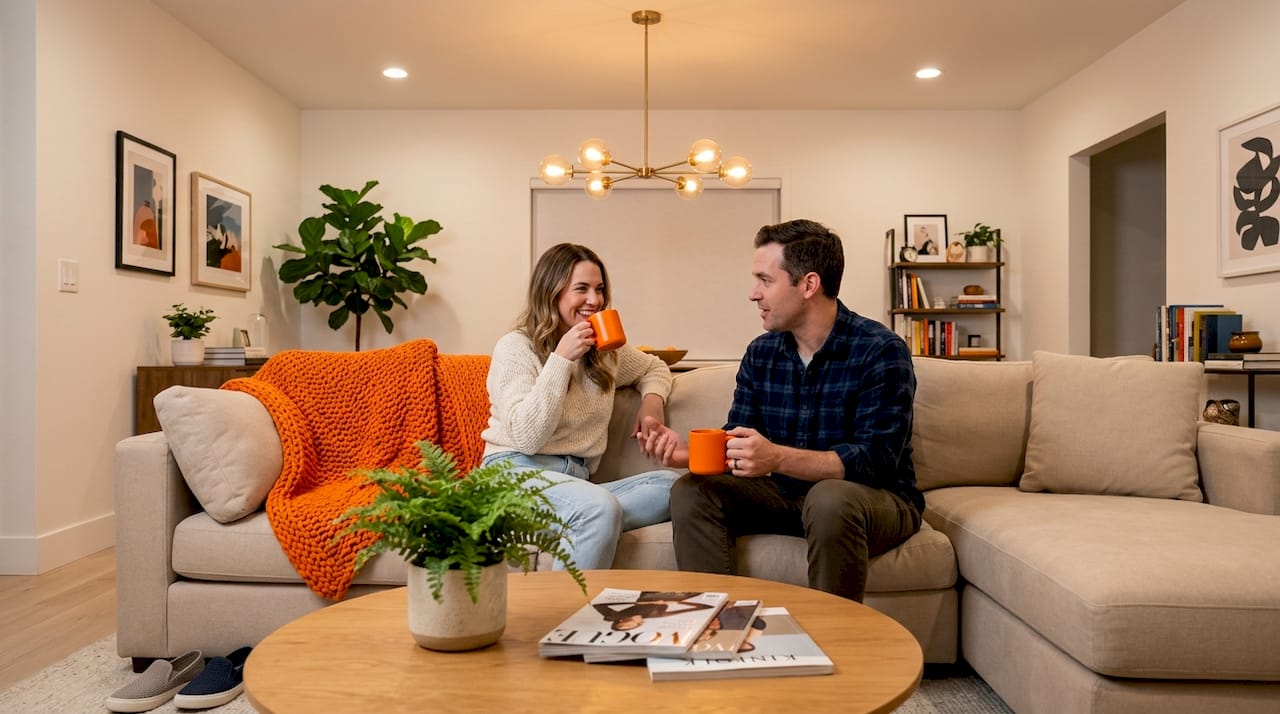
Ever walked into a room and immediately felt... right? Like a warm hug, a soft whisper, or a perfectly brewed cup of tea? Chances are, you weren't just admiring the furniture or the paint color. You were experiencing the magic of exceptional ambient lighting. It's the unsung hero of interior design, the foundational glow that dictates how a space feels, how inviting it is, and ultimately, how much you love being in it.
Most homeowners instinctively know when a room feels “off” without being able to name why. Nine times out of ten, ambient lighting is the culprit. Ambient lighting examples range from the sculptural drama of a chandelier to the subtle glow of LED strips tucked behind a bookcase, and every choice shapes how a room feels to live in. Getting it right means understanding a few key principles before you ever buy a fixture. This comprehensive guide walks you through exactly that, covering the criteria, the real-world examples, and the decisions that separate a beautifully lit home from one that just has lights in it. Get ready to transform your space from merely functional to truly fabulous!
Table of Contents
- Key Criteria for Choosing Ambient Lighting: Your Foundation for Glow
- Ambient Lighting Example 1: Recessed & Flush-Mount Ceiling Lights – The Invisible Workhorses
- Ambient Lighting Example 2: Chandeliers & Pendant Lights – Statement Makers with Substance
- Ambient Lighting Example 3: Indirect Light with Cove & LED Strip Lighting – The Master of Mood
- Comparing Ambient Lighting Options: Brightness, Installation, and Style
- How to Choose the Right Ambient Lighting for Your Space: A Step-by-Step Guide
- The Uncomfortable Truth About Ambient Lighting Decisions
- Explore Ambient Lighting Solutions Tailored for Your Home
- Frequently Asked Questions
Key Takeaways for Your Lighting Journey
| Point | Details |
|---|---|
| Consider room size | Room dimensions and ceiling height determine how many ambient fixtures you need for even light. Large rooms demand more sources; low ceilings prefer flush-mounts. |
| Embrace warm light | Choose bulbs below 3000K Kelvin (ideally 2700K) to create truly cozy, inviting ambient lighting that makes your home feel like a sanctuary. |
| Layer ambient sources | Multiple light points are crucial! They prevent harsh shadows, eliminate dark corners, and make rooms feel noticeably larger and more balanced. |
| Dimmers are essential | Non-negotiable for flexibility! Adjust brightness easily to fit different times of day, activities, and moods – from bright mornings to intimate evenings. |
| Renters have options | Plug-in lamps, strategic floor uplights, and clever LED strips offer incredible ambient lighting solutions without any permanent wiring. |
Key Criteria for Choosing Ambient Lighting: Your Foundation for Glow
Before diving into dazzling fixtures, let's lay the groundwork. Think of ambient lighting as the base coat of paint for your room – it sets the overall tone before you add any accent colors. The fixtures you choose should serve the room, not the other way around. Here are the core factors worth evaluating to ensure your ambient light is always on point:
- Room Size and Ceiling Height: The Grand Scale of Light
This is your starting point. A sprawling open-concept living area will have vastly different needs than a snug reading nook. Larger rooms need more fixture points to distribute light evenly and prevent gloomy corners. For instance, a 15x20 foot living room (300 sq ft) might need 4-6 recessed lights or a combination of a central pendant with strategic floor lamps, whereas a 10x10 bedroom (100 sq ft) might be perfectly happy with one flush-mount and a couple of bedside lamps. Low ceilings (8 feet or less) favor sleek, unobtrusive flush-mount or semi-flush styles, while higher ceilings (9+ feet) open up a world of possibilities for dramatic hanging fixtures, grand chandeliers, and elegant cove installations. - Color Temperature: The Warmth Factor
This is where "cozy" truly comes into play. Color temperature, measured in Kelvin (K), dictates whether your light feels warm and inviting or cool and clinical. For ambient light in relaxing spaces like bedrooms, living rooms, and dining areas, you absolutely want to stay below 3000 Kelvin. Aim for 2700K – it mimics the warm, golden glow of traditional incandescent bulbs and candlelight, making everything (and everyone!) look better and feel more relaxed. Going above 3000K, especially into the 4000K+ range, can make a space feel harsh, sterile, and unwelcoming. Architectural Digest consistently highlights the importance of warm light for creating an inviting mood. - Layering Strategy: The Power of Three
A single overhead source is the cardinal sin of lighting design. It creates a harsh "pool" of light directly below, casting unflattering shadows and leaving the rest of the room feeling dim and neglected. A layered lighting approach is your secret weapon. This means combining ambient (general illumination), task (for specific activities like reading or cooking), and accent (to highlight art or architectural features) sources. For ambient specifically, combining ceiling fixtures with indirect light sources (like cove lighting) and perhaps a floor lamp or two distributes warmth evenly, eliminates shadows, and makes rooms feel noticeably larger and more sophisticated. - Dimmers: Your Mood Maestro
These are non-negotiable. Seriously. A space that needs to work for bright morning coffee, focused afternoon work, and intimate Saturday night dinner parties simply cannot rely on a fixed lighting setting. Dimmers allow you to adjust the brightness to suit any time of day, activity, or mood. They transform a one-note room into a dynamic, adaptable environment. Imagine dimming your overhead lights to 30% for movie night, or brightening them to 80% for cleaning – that's the power of dimmers.
Lighting is not merely decorative. Lighting accounts for 20 to 30% of a room’s overall design impact, which means the fixture decisions you make carry real weight in how your space reads to everyone who enters it.
Pro Tip: When estimating how many fixtures a room needs for ambient light, a good rule of thumb is to aim for roughly 20 lumens per square foot. So, a 200 sq ft living room would need about 4000 lumens of ambient light. If your fixtures each provide 500 lumens, you'd need 8 fixtures. Adjust this based on ceiling color (darker ceilings absorb more light and require more sources) and personal preference.
Now that you understand the key considerations, let us explore the most common and effective ambient lighting options.
Ambient Lighting Example 1: Recessed & Flush-Mount Ceiling Lights – The Invisible Workhorses
Recessed lights (often called can lights or pot lights) and flush-mount ceiling fixtures are the unsung heroes, the quiet workhorses of ambient illumination. They sit quietly, take up zero visual space, and cast a broad, even wash of light that covers an entire room without demanding attention. They are the ultimate in minimalist function, providing light without distracting from your decor.
What makes them particularly effective for living rooms, bedrooms, and even kitchens:
- Even, Seamless Coverage: Four to six recessed lights, strategically spaced across a 200 to 400 square foot ceiling, deliver the kind of balanced ambient evenness that a single pendant simply cannot replicate. They wash the room in a gentle glow, eliminating dark corners and creating a sense of spaciousness.
- Comfortable Lumen Output: For ambient purposes, target 300 to 500 lumens per fixture. This range supports safe movement and comfortable vision without the harshness of task lighting, making it perfect for general illumination. Look for fixtures with a wide beam spread (e.g., 60 degrees or more) to maximize coverage.
- Design Neutrality: Because they are essentially invisible (or at least very discreet), recessed lights work in virtually any interior style. From sleek Scandinavian minimalism to cozy modern farmhouse or warm maximalism, they blend in seamlessly, allowing your furniture and art to take center stage.
- Dimmer Compatibility: Pairing them with dimmers is paramount. This allows you to transition effortlessly from bright, energized mornings to soft, intimate evenings, or even just a subtle glow for a movie night, all without changing a single bulb.
The one design trap to avoid: do not rely on a single central fixture. One overhead light in the center of a room creates a bright pool directly below and dark, unflattering corners everywhere else. Distributing sources across the ceiling eliminates this problem entirely, creating a much more comfortable and inviting atmosphere.
For renters who cannot install recessed lighting, a cluster of stylish flush-mount or semi-flush mount pendants at varying heights can mimic the effect of distributed light, adding visual interest while being fully removable. For those who can renovate, check out even ceiling lighting tips for spacing and placement guidance to achieve optimal uniformity.
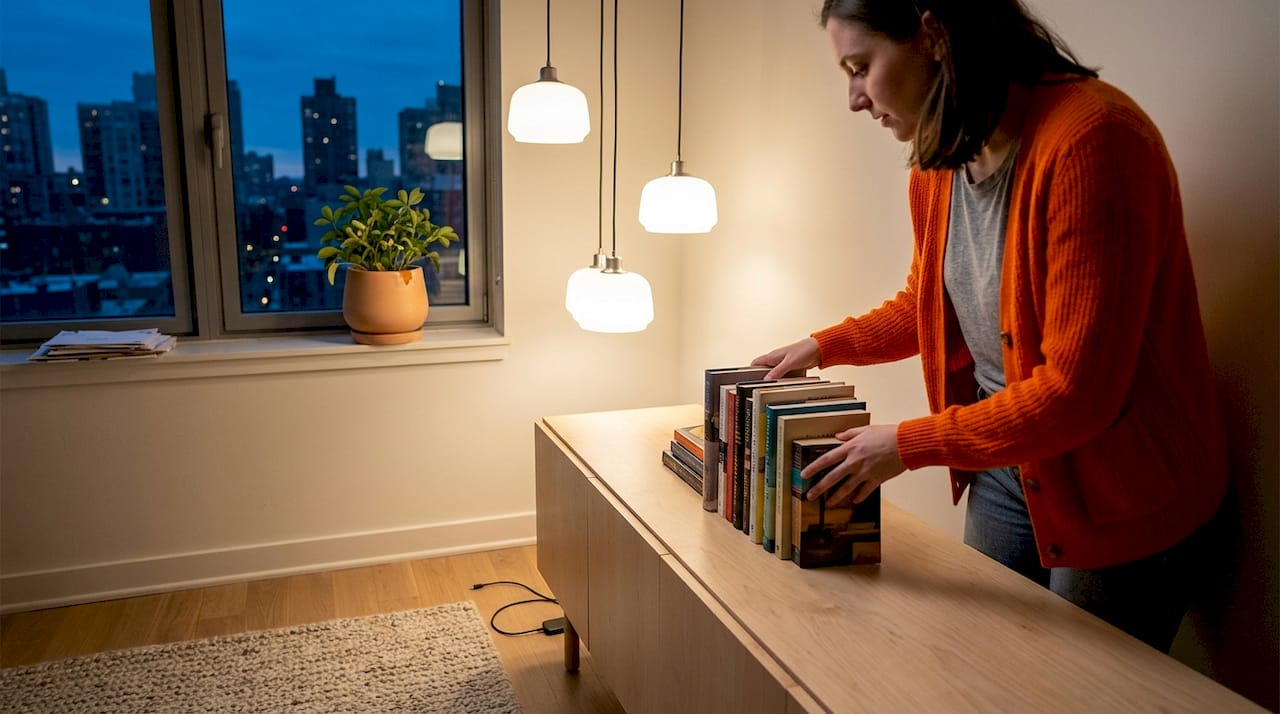
Pro Tip: Use "warm-dimming" LED bulbs in recessed fixtures. These are magical bulbs that shift toward a warmer, amber tone as they dim, mimicking the natural behavior of incandescent light. This creates an instinctively cozier atmosphere at lower brightness levels, making your evenings truly special.
Beyond ceiling fixtures, ambient lighting can also come from decorative statement pieces that add personality and flair.
Ambient Lighting Example 2: Chandeliers & Pendant Lights – Statement Makers with Substance
A chandelier does something a recessed fixture never can: it occupies the room as a presence, a focal point that pulls the eye upward and anchors the entire space with a kind of quiet authority. When chosen correctly and paired with the right dimmer and bulb temperature, it also delivers genuinely beautiful ambient illumination, becoming both a functional light source and a piece of art.
Key considerations when choosing chandeliers or pendants for ambient purposes:
- Ceiling Height & Scale: This is crucial. Chandeliers and large pendants need at least 9 feet of clearance to hang properly without overwhelming the space or becoming a head-knocking hazard. For dining rooms, the bottom of the fixture should typically be 30-36 inches above the tabletop. In rooms with 8-foot ceilings, consider semi-flush versions or smaller, more streamlined pendants that preserve visual drama with less hang distance. Oversized fixtures can make a large room feel grand, while a too-small fixture will look lost.
- Material Choices & Light Diffusion: Glass and metal combinations offer lasting aesthetic versatility, pairing naturally with both contemporary and traditional interiors. Look for fixtures with translucent glass diffusers or fabric shades, which are especially effective at softening the light source and eliminating harsh glare, ensuring a comfortable ambient glow rather than a blinding spotlight. Frosted or etched glass is excellent for soft, even distribution.
- Coverage & Architectural Highlight: While often focused on a specific area (like a dining table), a wide-canopy chandelier or a cluster of pendants can serve as a statement ambient lighting source that softly highlights architectural features around it, not just the area directly underneath. Its distributed light helps fill the upper volume of a room, adding depth.
- Dimmer Integration: This is where chandeliers truly earn their full value. At 100% brightness during a lively dinner party, they create vibrant energy. Dimmed to 30% for a romantic meal or a quiet evening, they produce the kind of golden warmth that makes a room feel inhabited and alive, shifting the mood instantly.
For dining rooms specifically, a chandelier hung 30 to 36 inches above the tabletop delivers ambient and soft task light simultaneously, perfectly illuminating your meal and guests. In living rooms, an oversized pendant or a clustered multi-light installation over the seating area anchors the furniture grouping the way a great rug does at floor level, drawing the eye and defining the space.
Explore our selection of chandeliers and pendants to see how different fixture scales work across room sizes and styles.
“Ambient chandelier lighting adds comfortable brightness without glare. Pair with dimmers and glass-metal mixes for a timeless aesthetic that transitions from bright and social to dim and intimate without changing a single element.” — Architectural Digest Mood Lighting Guide
If overhead fixtures do not suit your space, or you're looking to add another layer of magic, consider indirect options that create ambient glow without harsh beams.
Ambient Lighting Example 3: Indirect Light with Cove & LED Strip Lighting – The Master of Mood
Indirect ambient lighting is possibly the most underrated tool in home design. Rather than casting light downward from a visible source, it bounces light off a ceiling or wall so that the glow feels as though it emanates from the room itself. The effect is immersive, remarkably flattering, and incredibly calming – think of a soft sunset glow rather than a spotlight.
Why indirect lighting belongs in almost every home:
- Spatial Expansion & Illusion: Cove lighting and LED strips bouncing light off ceilings or walls can make a space feel 20 to 30% larger, especially if the walls or ceiling are a light color. By illuminating the perimeter or the upper reaches of a room, it draws the eye outwards and upwards, creating an expansive feel – a genuine asset for rooms under 250 square feet.
- Zero Glare, Maximum Comfort: Because the light source is completely hidden and the illumination is reflected, there are no visible bright points to cause squinting or discomfort. This is why indirect lighting is so popular in home theaters, bedrooms, and bathrooms – it provides ample light without any harshness, perfect for relaxation.
- Architectural Enhancement & Drama: A strip of warm LED tucked into a ceiling cove, behind a floating shelf, along the base of a kitchen island, or under a bathroom vanity draws attention to the room’s bones and features without screaming for attention. It creates subtle highlights and dramatic shadows, adding depth and sophistication.
- Renter-Friendly Flexibility: This is a huge win! Plug-in floor uplights (torchiere lamps) and adhesive LED strips behind TVs, monitors, shelves, or even artwork add significant ambient fill without a single wire being touched in the wall. You get instant mood lighting without the landlord's permission or a contractor's bill.
The indirect ambient lighting ideas available today extend well beyond simple LED tape. Neon-style diffused flex strips offer continuous, dot-free lines of light. Color-tunable RGBW systems allow you to change the color and warmth of your light with an app. Battery-powered adhesive puck lights can be tucked into cabinets or under shelves for quick, easy ambiance, requiring zero professional installation.
Pro Tip: When placing LED strips for ambient effect, aim to hide the strip itself completely. If you can see the actual diodes from a seated or standing position, the strip is too exposed and will create glare instead of soft ambiance. A simple aluminum channel with a diffuser, a recessed ledge in millwork, or strategic placement behind a lip solves this in most installations.
To understand which ambient options suit your space best, consider this comparative summary.
Comparing Ambient Lighting Options: Brightness, Installation, and Style
Choosing between lighting types is easier when you can see the tradeoffs side by side. Here is how the main options stack up across the factors that matter most for creating that perfect cozy glow.
| Fixture type | Brightness output | Installation complexity | Style impact | Best room fit |
|---|---|---|---|---|
| Recessed lights | High (300-500 lm each), even wash | Moderate (requires wiring, ceiling cuts) | Minimal, modern, disappears | Living rooms, kitchens, hallways, bathrooms – any room needing seamless general light. |
| Flush-mount ceiling | Moderate to high, direct downward | Low to moderate (basic wiring) | Subtle to decorative, depending on fixture | Bedrooms, entryways, smaller rooms, low ceilings. |
| Chandeliers | Moderate to high, often diffuse | High (professional wiring, ceiling support) | Strong, statement-making focal point | Dining rooms, living rooms, foyers, large bedrooms. |
| Pendant clusters | Moderate, can be focused or diffuse | Moderate (wiring, careful spacing) | Bold, architectural, defines zones | Open-plan living, kitchen islands, stairwells, entryways. |
| Cove lighting | Soft, diffuse, seamless wash | High (requires built-in architectural detail) | Sophisticated, seamless, dramatic | Bedrooms, media rooms, master baths, high-end living rooms. |
| LED strip lights | Soft, indirect, customizable | Very low (plug-in, adhesive options) | Subtle enhancement, modern edge | Any room, renters, accent-focused, under cabinets, behind TVs. |
| Floor uplights (Torchiere) | Soft, indirect, customizable | Very low (plug-in, portable) | Warm, atmospheric, flexible | Living rooms, reading corners, bedrooms, dining rooms (for reflection). |
Key takeaways from the comparison:
- Energy efficiency is a genuine differentiator in today's world. LED fixtures reduce energy costs by up to 75% compared to older incandescent bulbs, making them the smart, eco-friendly, and cost-effective long-term choice across every category.
- Recessed lights suit modern, minimalist interiors where the light should be felt rather than seen, providing a clean, uncluttered aesthetic.
- Chandeliers earn their place in rooms where the fixture itself is an integral part of the design story, a conversation starter, and a piece of art.
- Indirect sources are perfect for renters, DIY enthusiasts, and anyone who wants ambient enhancement without a contractor, offering incredible flexibility and mood-setting capabilities.
With this comparison in mind, let us explore how to decide based on your specific room and lifestyle needs.
How to Choose the Right Ambient Lighting for Your Space: A Step-by-Step Guide
Knowing the types of ambient lighting is useful. Knowing which one fits your room is where decisions actually get made. Here is a practical, step-by-step process for narrowing it down and ensuring you create the perfect cozy ambiance:
- Measure Your Room and Ceiling Height, Then Calculate Needs: Start with the basics. For a 100 to 200 square foot space, four to six ambient sources such as recessed downlights or cove installations maintain shadow-free lighting adjustable for day and evening moods. Rooms over 300 square feet may need six or more points plus supplementary floor or wall sources. Consider how the ceiling height impacts fixture choice – lower ceilings mean flush mounts, higher ceilings open up possibilities for grander pendants.
- Choose Your Color Temperature Intentionally: This is a mood-maker. Always opt for warm light. 2700K for bedrooms and living rooms (for ultimate coziness). Up to 3000K for home offices or kitchens where visibility matters slightly more than pure coziness but you still want warmth. Avoid anything higher unless it's for a very specific task area like a laundry room.
- Plan Your Layers Before Buying a Single Fixture: Ambient lighting is the essential base layer, but it's not the whole story. Before you commit to any ambient fixture, decide early how task lighting (e.g., reading lamps, under-cabinet lights, desk lamps) and accent lighting (e.g., picture lights, shelf lighting, wall sconces) will coexist with your ambient sources. A well-designed room uses all three layers in harmony.
- Assess Your Renter or Owner Status (and Budget!): This dictates your options. Owners can invest in permanent solutions like recessed lighting, custom cove installations, or hardwired chandeliers. Renters should look at plug-in torchiere lamps, strategically placed LED strips, and other choosing ambient lighting options that require no permanent changes or significant electrical work.
- Buy Dimmable From the Start (and Get the Right Dimmer): This cannot be stressed enough. Retrofitting dimmer compatibility later is frustrating, often expensive, and sometimes impossible. If a fixture does not support dimming, reconsider before purchasing. Also, ensure you purchase the correct type of dimmer for your bulbs (e.g., LED-compatible dimmers for LED bulbs). This small investment pays huge dividends in daily comfort and flexibility.
Pro Tip: Before committing to any fixture, photograph your room in its current state at three different times of day (morning, midday, and evening). The natural light variation will reveal where artificial ambient sources are most needed and what color temperature will complement rather than fight the existing light. You can even try holding up a temporary light source (like a portable LED panel set to 2700K) to visualize the effect.
The Uncomfortable Truth About Ambient Lighting Decisions
Here is what most guides will not tell you, but we, as lighting enthusiasts, see constantly. The single biggest mistake homeowners make is treating ambient lighting as a one-and-done decision, choosing one statement fixture (often a single overhead light) and considering the room finished. We see it constantly, and it almost always results in a room that looks beautiful in photographs but feels flat, poorly lit, and slightly uncomfortable to actually live in.
Avoiding a single central fixture is not just a stylistic preference; it's a fundamental principle of good lighting. Distributing ambient light across several points creates genuine uniformity, eliminates harsh shadows, and profoundly changes how spacious and welcoming a room actually feels. Think of it like painting a wall – you wouldn't just paint one spot and call it a day, right? Light needs to be spread and blended.
The second truth is about dimmers. Separately controlling dimmers for ambient and accent lighting, rather than running everything on a single switch, is what enables genuine daily mood adaptability. It is the difference between a home that feels thoughtfully designed for living and one that merely has furniture and lights in the same room. Imagine having your recessed lights on one dimmer for general glow, and a floor lamp on another for a focused soft pool – that's nuanced control.
The third truth is specifically for renters and DIY enthusiasts: the best ambient upgrade you can make right now probably costs under $50 and requires no tools. A plug-in torchiere floor lamp aimed at a white ceiling, or a reel of warm LED strip tucked behind your TV unit or under a bed frame, adds more perceivable warmth and comfort than swapping out a single ceiling fixture ever could. Indirect, reflected light is neurologically soothing in a way that direct overhead sources simply are not. We lean into layered lighting best practices not because it is fashionable but because it genuinely works to enhance well-being.
Finally, flexibility matters more than fixture style. A room whose lighting can transition seamlessly from 7 AM productivity to 9 PM relaxation without a single light being replaced or adjusted by swapping bulbs is a room designed for how people actually live. Prioritize adaptability, and your home will thank you.
Explore Ambient Lighting Solutions Tailored for Your Home
Finding the right ambient fixture is so much easier when you can see how it actually looks in a space like yours. Gone are the days of endless browsing and guesswork!

At Find a Lamp, our AI-powered platform lets you upload a photo of your room and receive curated fixture recommendations matched to your