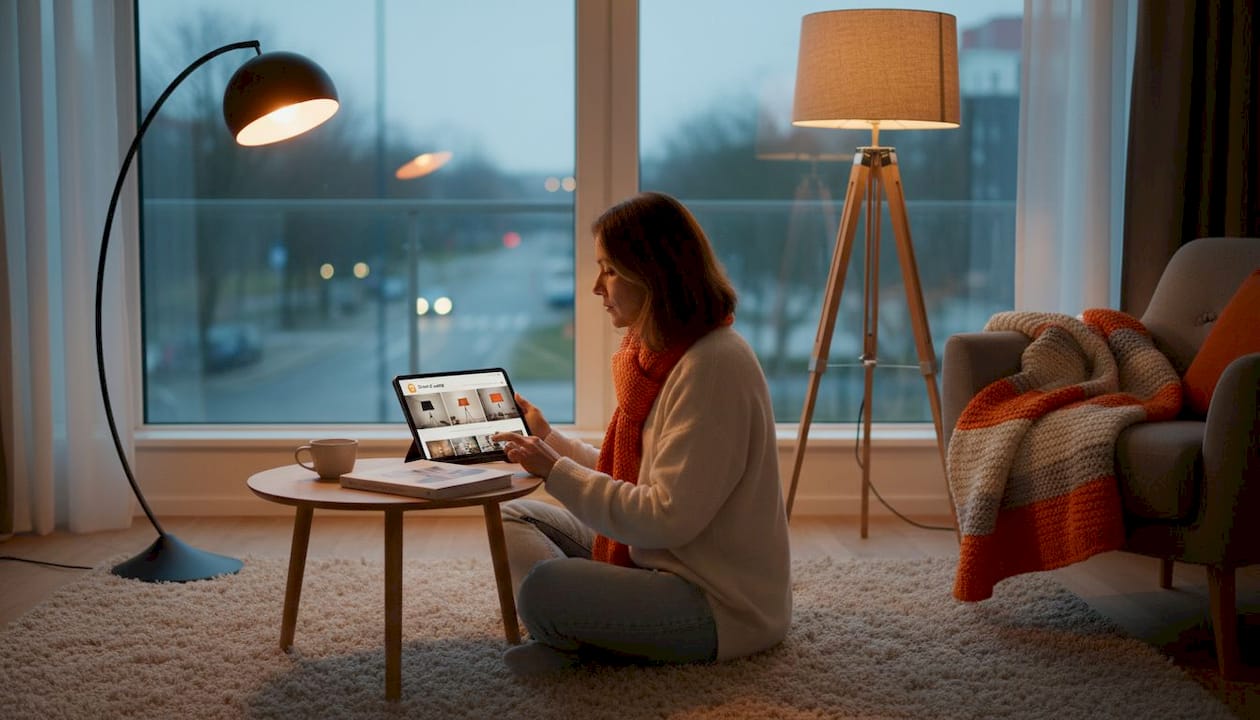
Ooit een kamer binnengelopen en een onmiddellijk gevoel van "wow" ervaren? De kans is groot dat het niet alleen de bank of de verfkleur was die al het zware werk deed. Vaker wel dan niet is het het magische samenspel van licht, specifiek door zorgvuldig gekozen lampen, dat een ruimte verheft van simpelweg gedecoreerd tot werkelijk ontworpen. De meeste huiseigenaren behandelen het winkelen voor lampen als een matchoefening, op zoek naar een 'set' die coördineert op kleur, merk of tijdperk. Maar dat instinct, hoe goedbedoeld ook, is precies wat kamers vlak en vergeetbaar laat aanvoelen. Echte, gecureerde lampenselectie gaat minder over identieke paren en meer over intentionele orkestratie, het lagen van verschillende hoogtes, afwerkingen en silhouetten om een ruimte te creëren die gecomponeerd aanvoelt in plaats van samengesteld.
Wanneer we curatie bekijken zoals een galeriedirecteur een tentoonstelling, houdt verlichting op een bijzaak te zijn en wordt het het kenmerkende detail dat elke kamer onmiskenbaar de jouwe maakt. Het gaat over het creëren van een verhaal, waarbij elke lamp bijdraagt aan het geheel, momenten van drama, intimiteit en functionaliteit creëert. En met AI-gestuurde tools die de manier waarop we winkelen en visualiseren hervormen, is dat niveau van personalisatie en verfijning eindelijk binnen handbereik voor elke huiseigenaar, waardoor je de mogelijkheid krijgt om ruimtes te creëren die echt jouw unieke stijl weerspiegelen, zonder giswerk.
Gecureerde Lampenselectie Begrijpen: Voorbij het "Matchy-Matchy"
Nu de misvatting is weerlegd, laten we verduidelijken wat gecureerde lampenselectie werkelijk betekent en hoe het er in de praktijk uitziet. Stel je een perfect gestileerde boekenplank voor: het zijn niet zomaar rijen identieke boeken. In plaats daarvan zie je een mix van hardcovers en paperbacks, variërende hoogtes, misschien een paar decoratieve objecten of foto's ertussen, die allemaal bijdragen aan een rijke, interessante display. Gecureerde lampenselectie werkt grotendeels op dezelfde manier.
In de kern is gecureerde lampenselectie een intentionele ontwerpbeslissing. In plaats van een bijpassende lampenset te kopen omdat het handig of "veilig" is, maak je weloverwogen keuzes over schaal, materiaal, silhouet en lichtkwaliteit. Elke keuze is verankerd aan het specifieke karakter en de behoeften van je kamer, waarbij elke lamp wordt behandeld als een sculpturale deelnemer aan een groter visueel gesprek. Het gaat om het bereiken van harmonie, niet door uniformiteit, maar door doordacht contrast en balans.
Een van de meest bevrijdende ideeën in modern interieurontwerp is dat gecureerde kamers "matchy-matchy" vermijden ten gunste van harmonie bereikt door contrast, textuurvervaging en proportie. Vertaling: je nachtkastlampjes hoeven geen tweelingen te zijn. Sterker nog, een drumkap van ruw linnen op een stevige keramische voet, gecombineerd met een slanke, gepolijste messing tafellamp met een strakke stoffen kap, kan veel verfijnder en verzamelder aanvoelen dan twee identieke stukken uit dezelfde collectie. De magie zit in de dialoog tussen hen, de subtiele knipoogjes en interessante verschillen.
Wat houdt intentionele curatie eigenlijk in? Overweeg deze kernprincipes:
- Contrast in Textuur: Juxtaposeer verschillende tastbare kwaliteiten. Denk aan een strakke, matzwarte metalen voet tegen een zachte, geplooide zijden kap, of een ruw terracotta lamp gepaard met een gladde, gepolijste chromen booglamp. Dit creëert visuele interesse en diepte, en nodigt het oog uit om te blijven hangen.
- Harmonie in Proportie en Schaal: Lampen moeten altijd gerelateerd zijn aan het meubilair eronder en de totale kamergrootte. Een hoge buffetlamp die een lage dressoir overweldigt, ondermijnt de compositie, terwijl een kleine lamp op een grote console verloren lijkt. Streef naar lampen die proportioneel zijn aan hun omgeving en bijdragen aan het visuele gewicht en de balans van de opstelling.
- Afwerking Blending: In plaats van te matchen, blend. Het herhalen van één metaalafwerking over verschillende lampstijlen (bijv. geborsteld messing in een vloerlamp en een tafellamp met verschillende ontwerpen) verbindt een kamer zonder uniformiteit af te dwingen. Het combineren van warme metalen (messing, koper) met koele metalen (chroom, nikkel) of natuurlijke materialen (hout, rotan) kan een dynamisch maar samenhangend gevoel creëren.
- Kleurverhaal Afstemming: Zelfs als lampvormen en materialen sterk variëren, kan een gedeeld warmgetint palet of een consistente accentkleur het visuele verhaal samenhangend houden. Lampen kunnen subtiele kleuraccenten introduceren of een bestaand schema versterken door hun voeten of kappen.
- Lagen van Lichttijden: Echte curatie omvat het begrijpen van de drie hoofdtypen verlichting: omgevingslicht (algemene verlichting), taaklicht (gericht licht voor activiteiten) en accentlicht (functies benadrukken). Een goed gecureerde kamer maakt gebruik van een mix van lampen om alle drie te bieden, wat zowel functionaliteit als sfeer garandeert.
“Het doel is niet symmetrie omwille van symmetrie – het is een kamer die aanvoelt alsof deze met intentie is samengesteld, waar elk stuk zijn plaats verdient door relatie, niet door herhaling.”
Het verkennen van harmoniërende lampstijlen over verschillende ontwerpstromingen kan verrassende combinaties onthullen die je nooit alleen van een cataloguspagina had overwogen. Het gaat om het omarmen van individualiteit binnen een doordacht kader.
Waarom lampenselectie sfeer en balans vormt: Meer dan alleen verlichting
Nu we de principes achter gecureerde lampenselectie kennen, laten we eens kijken waarom deze keuzes zo'n diepgaande invloed hebben op de sfeer en compositie van je kamer. Een lamp is nooit zomaar een lichtbron. Wanneer zorgvuldig gekozen, functioneert het tegelijkertijd als een sculpturaal accent, een architectonisch anker en een sfeermachine. De manier waarop een diep geplooide linnen kap licht verspreidt, versus de manier waarop een open-kooi Edison-lamp het projecteert, creëert geheel verschillende emotionele temperaturen in dezelfde fysieke ruimte. Dit is de kracht van intentioneel lichtontwerp.
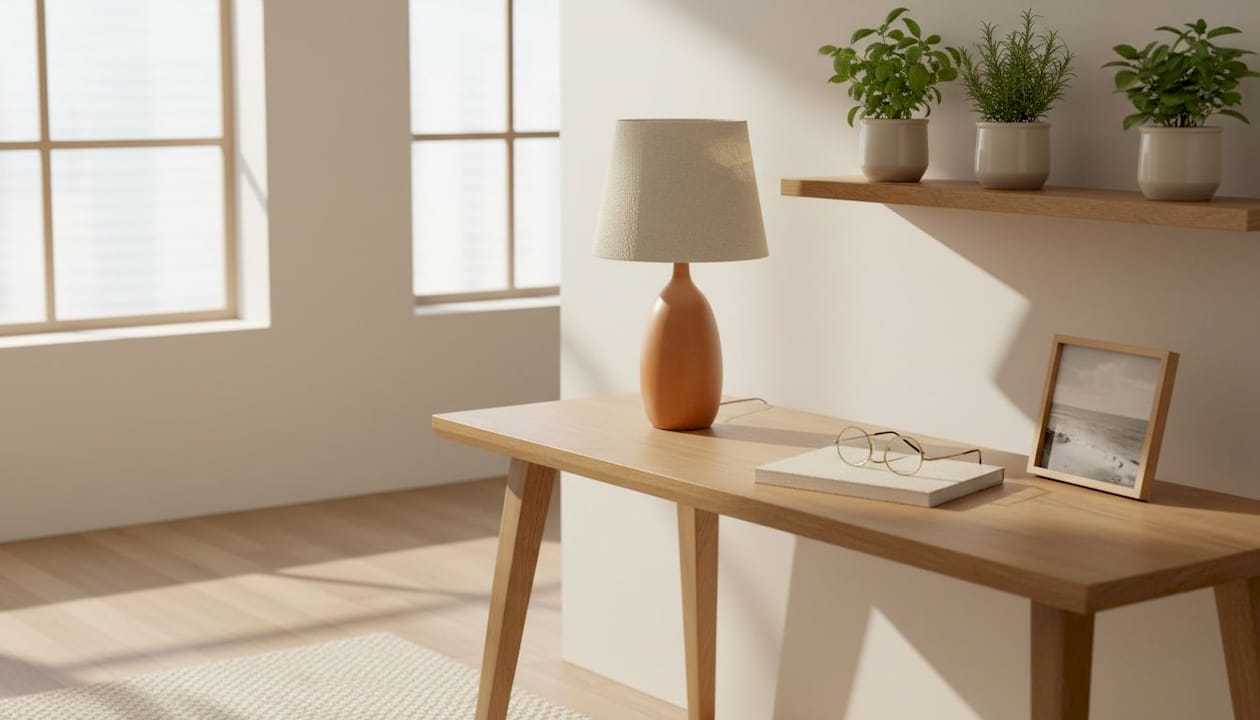
De lampenselectie wordt vaak beoordeeld op hoe het de sfeer vormt en visueel evenwicht, specifiek door het gebruik van lampen als sculpturale en architecturale accenten en het zorgen dat de schaal past bij de kamer. Schaal, in het bijzonder, is de variabele die de meeste huiseigenaren onderschatten. Een lamp die te klein is voor een salontafel ondermijnt stilzwijgend de hele zithoek; een vloerlamp die boven een leesstoel uittorent, transformeert die hoek in een duidelijke bestemming, soms ten goede, soms ten kwade als er niet zorgvuldig over nagedacht is.
Hier is een snelle referentie voor het begrijpen van lampenschaal en kamertype, samen met aanvullende overwegingen:
| Kamerruimte/Doel | Aanbevolen Lamphoogte | Ideale Voetstijl | Richtlijn Kapbreedte | Belangrijkste Sfeerfactor |
|---|---|---|---|---|
| Woonkamer Salontafel | 66–76 cm | Substantieel, sculpturaal, of slank en elegant | 40–50 cm breed (proportioneel aan tafel) | Zacht, diffuus omgevingslicht |
| Slaapkamer Nachtkastje | 61–69 cm (onderkant kap op schouderhoogte zittend) | Slank, organisch, of compact voor kleinere ruimtes | 30–40 cm breed (voorkom overweldiging nachtkastje) | Zacht taaklicht voor lezen, warme gloed |
| Bureau Kantoor | 46–56 cm (verstelbaar voor taakfocus) | Gelede arm, industrieel, of minimalistisch ontwerp | Gerichte straal voorkeur, vaak ondoorzichtige kap | Directe, niet-verblindende taakverlichting |
| Hal Console | 76–86 cm (vaak hoger voor visuele impact) | Dikke, statement voet, eventueel een paar voor symmetrie | 45–55 cm breed (imponerende aanwezigheid) | Welkom omgevingslicht, visueel anker |
| Leeshoek | 147–165 cm (vloerlamp), of 61-71 cm (tafellamp op bijzettafel) | Gebogen, verstelbaar, of substantieel voor vloer; knus voor tafel | Naar beneden gerichte kap voor vloer; diffuus voor tafel | Warm, gericht taaklicht voor comfort |
Om dit in de praktijk te brengen met echte kamers, doorloop je deze stappen:
- Breng je Lichtlagen in Kaart: Voordat je naar één enkele lamp kijkt, identificeer je welke gebieden omgevingslicht nodig hebben voor algemene verlichting, taaklicht voor specifieke activiteiten (lezen, koken, werken) en accentlicht om kunst of architectonische kenmerken te benadrukken. Deze strategische mapping zorgt ervoor dat elke lamp een doel dient dat verder gaat dan alleen mooi zijn.
- Veranker aan een Brandpunt: Elke kamer profiteert van één lamp die de aandacht trekt, meestal het grootste, meest sculpturale of uniek ontworpen stuk. Deze ankerlamp zet de toon voor het hele verlichtingsschema.
- Bouw Relaties Op: Kies volgende lampen die één element (afwerking, kleurenfamilie, materiaal of ontwerptijdperk) van de brandpuntlamp weerspiegelen zonder het volledige ontwerp te dupliceren. Dit creëert een subtiele visuele draad die de verschillende stukken met elkaar verbindt.
- Test de Schaal op Papier (of Digitaal!): Voordat je koopt, gebruik je een fysieke uitsnede of, nog beter, een AI-visualisatietool (hierover later meer!) om te zien hoe het silhouet en de hoogte van een lamp er daadwerkelijk in je ruimte uit zullen zien. Dit klinkt ouderwets, maar het is nog steeds een van de meest accurate realitychecks die beschikbaar zijn, waardoor je dure retouren bespaart.
- Overweeg het Uitgestraalde Licht: Een lamp die er prachtig uitziet, maar hard, naar beneden gericht licht in een zithoek werpt, werkt tegen de sfeer die je probeert te creëren. Let op het kapmateriaal, de vorm en het type lamp. Creëert het een zachte gloed, een gerichte straal of een opwaartse wassing? Elk heeft een ander effect op de stemming en functionaliteit van de ruimte.
Pro Tip: Fotografeer je kamer bij natuurlijk daglicht en 's avonds opnieuw met alleen je huidige verlichting aan. Het contrast tussen die twee beelden zal onmiddellijk onthullen waar het licht dun aanvoelt, te warm of uit balans, waardoor je een precieze briefing krijgt voor je volgende lampenselectie. Deze eenvoudige oefening kan ongelooflijk verhelderend zijn!
Deze oefening combineren met een lampenselectiegids afgestemd op specifieke kamers zal je instincten aanzienlijk verscherpen. En voor een breder beeld van hoe verschillende types binnenverlichting op elkaar inwerken, wordt het gelaagd aanbrengen van je gecureerde lampen met plafond- en inbouwspots een rijker, meer genuanceerd gesprek, wat een werkelijk dynamisch en functioneel verlichtingsschema creëert.
De rol van AI in gepersonaliseerde lampencuratie: jouw slimme designassistent
Terwijl we zoeken naar praktische manieren om gecureerde lampharmonie te bereiken, laten we eens onderzoeken hoe AI gepersonaliseerde selectie slimmer en toegankelijker dan ooit maakt. Handmatige lampenselectie, hoe geïnspireerd ook, heeft echte beperkingen. Je bladert door eindeloze pagina's met opties, probeert mentale beelden van je kamer in je hoofd te houden en kiest vaak voor veilige opties omdat het risico om het verkeerd te doen te hoog aanvoelt. AI-gestuurde curatie herschrijft die vergelijking volledig en transformeert een ontmoedigende taak in een plezierige, zelfverzekerde reis.
Hier is hoe AI-curatie zich verhoudt tot de traditionele aanpak, waarbij de transformerende kracht ervan wordt benadrukt:
| Criteria | Traditionele Selectie (Handmatig) | AI-gestuurde Curatie (Slim) |
|---|---|---|
| Stijlmatching | Handmatig browsen per categorie, gissen wat "past" | Visuele analyse van kamerfoto, identificeren van bestaand stijlvocabulaire (bijv. Mid-Century Modern, Coastal Organic, Industrieel) |
| Proportionele Pasvorm | Giswerk op basis van metingen, vaak leidend tot schaalfouten | Schaalbeoordeling ten opzichte van meubilair en kamerdimensies, aanbevelen van geschikte maten |
| Afwerkingscoördinatie | Op geheugen gebaseerde of fysieke staalvergelijking, gevoelig voor fouten | Algoritmische kleur- en materiaalmatching, suggereren van complementaire afwerkingen |
| Visualisatie | In je hoofd verbeeld, hopend dat het er in werkelijkheid goed uitziet | Virtuele plaatsing van lampen in je daadwerkelijke ruimte via augmented reality |
| Ontdekkingsbereik | Beperkt door zoektermen en persoonlijke voorkeur, vaak missen van verborgen pareltjes | Verbreed door visuele zoekopdrachten en intelligente aanbevelingen op basis van gewenst effect |
| Tijdsinvestering | Urenlang browsen, beslissingsmoeheid, potentiële retouren | Minuten aan begeleide aanbevelingen, gestroomlijnde besluitvorming, hogere tevredenheid |
| Ontwerpparalyse Overwinnen | Hoog risico op analyseparalyse, terugvallen op veilige/saaie keuzes | Biedt zelfverzekerde, op gegevens gebaseerde suggesties, stimuleert gedurfde maar harmonieuze keuzes |
Het belangrijkste voordeel is dat AI de wrijving wegneemt tussen het hebben van goede smaak en ernaar handelen. Wanneer je een foto van je woonkamer uploadt, analyseert een AI-systeem het bestaande kleurenpalet, de proporties van je meubilair, het stijlvocabulaire van je ruimte (of het nu mid-century modern, kust organisch of industrieel eclectisch is), en filtert vervolgens duizenden lampopties tot een gecureerde shortlist die past bij jouw daadwerkelijke kamer, niet bij een hypothetische. Het is alsof je een interieurontwerper hebt met een encyclopedische kennis van lampen, 24/7 beschikbaar.
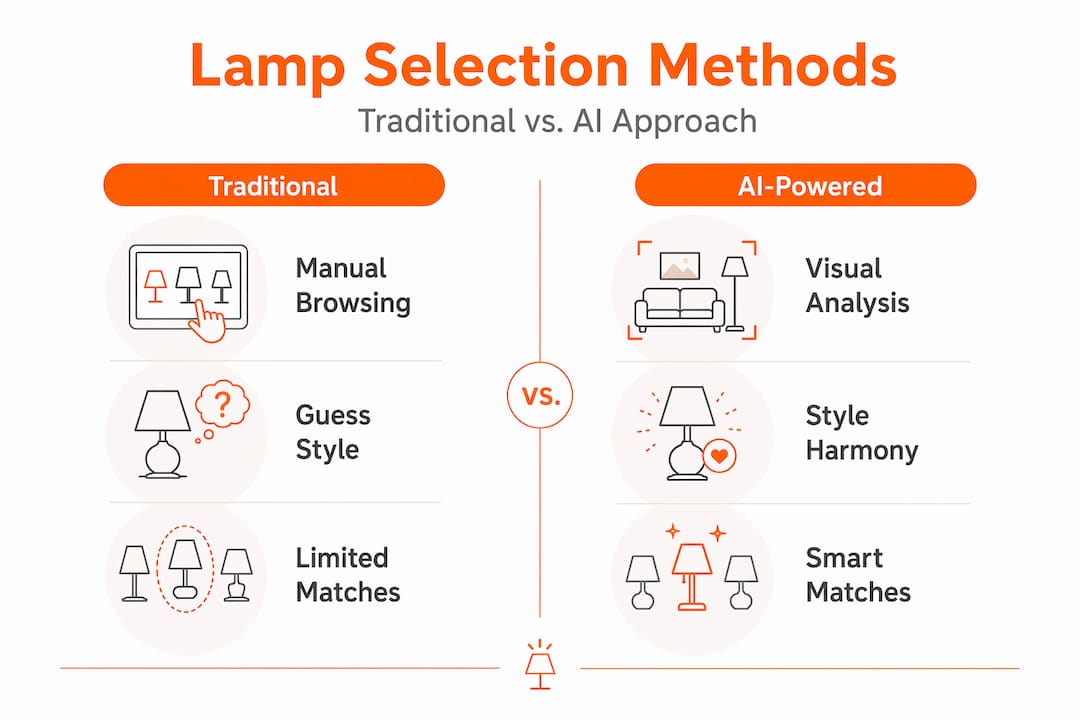
Aangezien gecureerde interieurs contrast en proportie verkiezen boven bijpassende sets, is AI uniek uitgerust om die contrasterende elementen te identificeren die visueel nog steeds samenhangen. Het kan aangeven dat een met rotan omwikkelde vloerlamp en een rookglazen tafellamp voldoende warmte in hun toonpalet delen om als één geheel aan te voelen, zelfs als hun materialen mijlenver uit elkaar liggen. Het begrijpt de nuances van "visueel gewicht" en hoe verschillende vormen binnen een ruimte op elkaar inwerken, en suggereert combinaties die een menselijk oog zou kunnen missen of aarzelen om te proberen.
De sfeer en visuele balans die topontwerpers prioriteren, die ongrijpbare kwaliteiten van schaal en sculpturale aanwezigheid, kunnen nu algoritmisch worden ontsloten. Het resultaat is niet alleen snelheid. Het is vertrouwen. Je gokt niet; je werkt met een systeem dat duizenden succesvolle kamercomposities heeft geanalyseerd en die principes direct op jouw huis heeft toegepast.
AI blinkt ook uit in visueel zoeken. Een lamp gespot in een designmagazine of op sociale media waar je dol op bent? Upload die afbeelding en AI-tools kunnen vergelijkbare items vinden binnen een gecureerde catalogus, waardoor de kloof tussen inspiratie en aankoop wordt overbrugd. Verken de gids voor verlichtingsstijlen om te begrijpen hoe verschillende ontwerpstromingen zich vertalen naar specifieke lampvormen en afwerkingsfamilies, een vocabulaire dat AI gebruikt als zijn referentiebibliotheek, om jouw esthetische voorkeuren te vertalen naar tastbare opties.
Een opvallende realiteit: huiseigenaren die AI-visualisatietools gebruiken voordat ze een aankoop doen, melden aanzienlijk hogere tevredenheid met hun keuzes, voornamelijk omdat ze het giswerk hebben geëlimineerd over hoe een lamp er daadwerkelijk in situ uit zal zien. Een warm-amber keramische tafellamp zien gloeien in je eigen virtuele woonkamerhoek is een totaal andere ervaring dan vertrouwen op een productfoto. Het stelt je in staat weloverwogen beslissingen te nemen en je ruimte echt te personaliseren.
Gecureerde Lampenselectie Toepassen: Praktische Tips voor Thuis
Uitgerust met inzicht in gecureerde lampenselectie en de kracht van AI, is het tijd om deze principes om te zetten in praktische strategieën voor je huis. De eerste stap is het weerstaan van de neiging naar bijpassende sets. Wanneer je een meubelzaak binnenloopt en een gecoördineerde lampencollectie ziet, doet dat gemak het ontwerpdinkwerk voor je. Gebruik in plaats daarvan de lampenselectiegids om je keuzes te verankeren aan de werkelijke behoeften van je ruimte in plaats van aan een esthetisch pakket van een fabrikant.
Hier zijn de strategieën die we aanbevelen voor effectieve gecureerde selectie, ontworpen om je huis die begeerde designer-touch te geven:
- Begin met één Ankerlamp: Kies eerst je belangrijkste lamp, meestal een vloerlamp of een prominente tafellamp in je belangrijkste leefruimte (bijv. naast de bank, in een leeshoek). Deze 'heldenlamp' moet een statementstuk zijn dat je inspireert. Elke volgende keuze moet reageren op dit ene stuk in termen van schaal, warmte of afwerking, waardoor een harmonieuze dialoog ontstaat.
- Beperk je Afwerkingspalet tot Twee of Drie: Hoewel het mengen van afwerkingen wordt aangemoedigd, kan het overdrijven leiden tot visuele chaos. Een sterk triadisch palet zou matzwart, warm messing en natuurlijke materialen (hout, rotan, keramiek) kunnen zijn. Meer dan drie verschillende, dominante afwerkingen creëert visuele ruis in plaats van rijkdom. Subtiele variaties binnen een afwerking (bijv. antiek messing en gepolijst messing) zijn prima.
- Meng Kapmaterialen Bewust: De kap is cruciaal voor lichtverspreiding en esthetiek. Een linnen kap verzacht en verspreidt licht prachtig; een metalen kap verscherpt en richt het. Gebruik kapmateriaal als een afstemknop voor de sfeer in elke zone van de kamer. Overweeg drumkappen voor een moderne uitstraling, empirekappen voor een klassieke touch, of zelfs sculpturale, opengewerkte kappen voor textuurinteresse.
- Gebruik AI-Visualisatie Voordat je Toezegt: Dit is aantoonbaar de meest impactvolle tip. Upload je kamerfoto en test virtueel verschillende lampopties in je daadwerkelijke ruimte. Deze ene stap elimineert de meest voorkomende spijt bij het kopen van lampen: de schaalverrassing, de kleurafwijking, of het "het voelt gewoon niet goed"-dilemma.
- Winkel Over Verschillende Ontwerp Tijdperken Heen: Laat je niet beperken door één stijl. Een sculpturale, jaren '70-geïnspireerde keramische lamp naast een slank, eigentijds messing stuk is precies het soort spanning dat een gecureerd interieur verzameld aanvoelt in plaats van gekocht. Deze juxtapositie creëert diepte en persoonlijkheid, en vertelt een verhaal van evoluerende smaak.
- Let op Lamp Temperatur en Helderheid: Zelfs perfect gekozen lampen kunnen de sfeer ondermijnen als de ene op 2700K (warm amber, gezellig) draait en de andere op 4000K (koel wit, taakgericht). Streef naar een consistente kleurtemperatuur over alle lampen in één kamer voor een samenhangend gevoel. Overweeg bovendien dimmers voor flexibiliteit in helderheid, zodat je de stemming direct kunt aanpassen. Inzicht in de basisprincipes van lampen kan een enorm verschil maken.
- Overweeg Kabelbeheer: Hoewel vaak over het hoofd gezien, kunnen zichtbare, verwarde kabels afbreuk doen aan zelfs de mooiste lamp. Plan voor stopcontacten, of overweeg creatieve manieren om kabels te verbergen of te integreren in je ontwerp, vooral voor vloerlampen.
Deskundige ontwerpers beoordelen lampkeuzes net zozeer op hun sculpturale aanwezigheid als op hun lichtopbrengst. Dat betekent dat een lamp die je kiest voor een leeshoek interessant moet aanvoelen, zelfs wanneer deze uitgeschakeld is. Het moet eruitzien als iets dat thuishoort in die specifieke hoek van die specifieke kamer, een stuk dat karakter en diepte toevoegt.
Pro Tip: Maak een screenshot van een lamp die je esthetisch aanspreekt, zelfs als deze stilistisch niet bij je kamer lijkt te passen, en gebruik vervolgens een AI visuele zoektool om vergelijkbare items te vinden tegen verschillende prijspunten en in afwerkingen die beter bij je bestaande palet passen. Soms leidt de lamp waar je verliefd op wordt in de verkeerde afwerking je direct naar de juiste, of inspireert het een creatieve mix die je nog niet had overwogen.
Waarom de meeste lampencuratiegidsen de plank misslaan: de valkuilen van voorgeschreven stijl
De meeste lampencuratiegidsen maken een fundamentele fout: ze organiseren hun advies rond rigide stijlcategorieën. "Als je huis modern is, kies dan deze lampen. Als het traditioneel is, kies dan die." Dit kader klinkt logisch, maar het leidt tot kamers die aanvoelen als moodboards in plaats van huizen – esthetisch correct, misschien, maar zonder ziel en echte persoonlijkheid.
Echt design is rommeliger en veel interessanter dan dat. De meest boeiende interieurs die we tegenkomen, zijn bijna nooit stilistisch puur. Ze zijn het product van geaccumuleerde beslissingen, sommige gepland, sommige intuïtief, die een gelaagde omgeving met echte persoonlijkheid creëren. Een mid-century bank verplicht je niet tot een mid-century lamp. Sterker nog, het gesprek tussen een kronkelende organische lampvoet en een geometrische bank kan veel meer visuele interesse en diepte genereren dan een kamer waar alles voldoet aan hetzelfde esthetische memo. Dit soort doordachte juxtapositie is het kenmerk van een werkelijk gecureerde ruimte, die een geleefd leven en in de loop der tijd verworven smaken weerspiegelt.
De andere grote mislukking in conventionele gidsen is de behandeling van lampenselectie als een finishing touch, iets wat je doet nadat de "echte" ontwerpbeslissingen zijn genomen. Wij geloven dat dit precies omgekeerd is. Omdat types binnenverlichting en hun plaatsing bepalen hoe elk ander element in de kamer wordt waargenomen – van de kleur van je muren tot de textuur van je vloerkleed – verdient verlichting deel uit te maken van het fundamentele ontwerpgesprek, niet de nabeschouwing. Het dicteert de sfeer, benadrukt architectonische kenmerken, definieert zones en zorgt ervoor dat een ruimte gastvrij of sober aanvoelt. Het relegereert het naar de laatste stap is het missen van zijn immense kracht.
Dit is precies waar AI-tools het spel echt veranderen. Ze leggen geen stijl categorie op aan je kamer. Ze lezen de kamer zoals die werkelijk bestaat – de kleuren, texturen, proporties en bestaande ontwerpelementen – en presenteren opties die reageren op zijn specifieke visuele karakter. Het resultaat is curatie die persoonlijk, authentiek en geëvolueerd aanvoelt in plaats van voorgeschreven of generiek. AI begrijpt dat je huis een weerspiegeling is van jou, niet van een showroom.
De gecureerde kamer vermijdt "matchy-matchy" door contrast en proportie te omarmen als het ware bindweefsel. AI codeert dat principe en maakt het uitvoerbaar voor huiseigenaren die misschien geen jarenlange ontwerptraining hebben, maar absoluut een duidelijk gevoel hebben van wat goed voelt in hun eigen ruimte. Vertrouw op dat instinct en laat intelligente tools je helpen er met vertrouwen naar te handelen, waardoor je visie wordt omgezet in een prachtig verlichte realiteit.
Vind jouw perfecte lamp met AI-curatie: jouw ontwerpreis begint hier
Je hebt de principes. Je begrijpt de kracht van intentionele curatie en