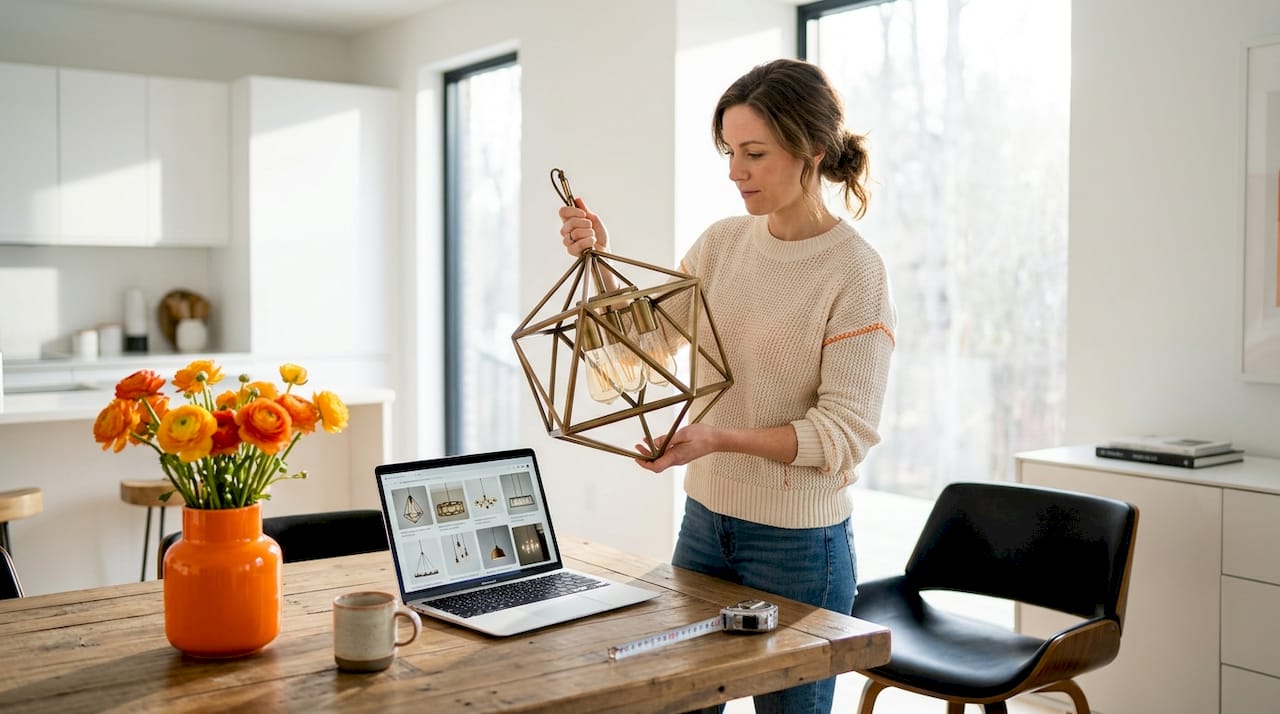
Ever walked into a room where everything feels just right? The furniture is inviting, the colors sing, and there’s an undeniable warmth that just makes you want to settle in. Chances are, the lighting isn't just an afterthought; it’s a masterclass in harmony. Conversely, most homeowners have felt the opposite: a room that looks good on paper, the furniture is just right, the color palette is considered and intentional, and yet something feels… off. That elusive "something" is almost always the lighting.
Understanding what is lighting style matching is the missing piece in many interior design conversations, and it matters far more than simply choosing a fixture that “looks nice.” It's about selecting light sources whose form, finish, and material feel like natural inhabitants of your room, not visual intruders. This isn't about rigid rules or creating a sterile, showroom look. It’s about crafting a space that feels cohesive, intentional, and, most importantly, feels like *you*. Ready to illuminate your home’s true potential? This guide walks you through exactly how to get there.
Table of Contents
- Understanding Lighting Style Matching and Its Role in Interior Design
- Nuances of Lighting Style Matching: Form, Finish, and Material Balance
- How Light Diffusion Affects Mood and Style Cohesion
- Practical Steps to Match Lighting Style to Your Home, Room by Room
- Common Pitfalls and Expert Tips for Successful Lighting Style Matching
- Why Matching Lighting Style is About Harmony, Not Exact Replication
- Explore Lighting Collections to Match Your Home’s Style
- Frequently Asked Questions
Key Takeaways
| Point | Details |
|---|---|
| Lighting defines mood | The right lighting style creates atmosphere and completes your room’s story beyond simple brightness. |
| Match style not clone | Choose fixtures that belong with your decor style without copying every detail exactly. |
| Light diffusion matters | Soft, diffused light improves room feel and complements your style better than harsh direct lighting. |
| Balance form and texture | Balanced shapes, materials, and finishes help your lighting blend naturally with the room. |
| Practicality counts | Lighting must be functional and scaled properly for each room, not just stylish. |
Understanding Lighting Style Matching and Its Role in Interior Design
Lighting style matching is the art of choosing fixtures that reflect your room’s overall decor style rather than fighting against it. Think of it less as a shopping exercise and more as a sophisticated design conversation between your furniture, your walls, and your light sources. A fixture that fits speaks the same visual language as everything else in the room. One that doesn’t makes even the most thoughtful decor feel incomplete, creating a subtle discord that’s hard to pinpoint but impossible to ignore.
This concept goes deeper than merely matching colors. Understanding lighting styles means recognizing that every fixture carries a personality rooted in its silhouette, material, and scale. A sleek, brushed brass cage pendant brings entirely different energy to a room than a frosted globe pendant, even if both cast similar light. The room feels that difference immediately, influencing everything from perceived warmth to overall functionality.
The practical starting point, as lighting for interior design styles suggests, is to identify your room’s design style first. This provides a creative framework, guiding your choices without stifling your unique flair. You’re not copying every detail of the style; you’re following its dominant ideas and aesthetic principles. Here are some common styles and how lighting plays a pivotal role:
- Minimalist: This style champions "less is more." Lighting here features clean lines, simple geometric forms, and quiet finishes like matte white, brushed nickel, or black. Integrated lighting, hidden LED strips, and fixtures that blend seamlessly into the architecture are key. The focus is on function and uncluttered elegance.
- Industrial: Raw, edgy, and functional, industrial lighting often showcases exposed hardware, metal cages, Edison bulbs, and finishes like weathered steel, concrete, or matte black. Think factory-inspired pendants, track lighting, and utilitarian wall sconces that celebrate the beauty of raw materials.
- Scandinavian: Embracing warmth, simplicity, and natural light, Scandinavian lighting often features organic shapes, light wood tones, soft textiles, and muted colors. Frosted glass, paper shades, and minimalist designs that maximize light diffusion are hallmarks, creating that coveted "hygge" atmosphere.
- Bohemian: Layered textures, warm amber tones, and globally inspired forms define boho chic. Rattan or macramé pendants, Moroccan lanterns, and fixtures with intricate patterns or natural fibers add a relaxed, eclectic vibe. It’s about creating a cozy, well-traveled feel.
- Rustic: Drawing inspiration from nature and the countryside, rustic lighting favors wrought iron, distressed wood, lantern-style fixtures, and earthy palettes. It’s about celebrating handcrafted elements and a sense of history, often incorporating textures like hammered metal or natural rope.
- Mid-Century Modern: Iconic and timeless, this style is characterized by tapered legs (often translated into lamp stems), walnut bases, spun aluminum shades, and retro-inspired color accents. Think Sputnik chandeliers, arc floor lamps, and globe pendants that make a sculptural statement.
- Contemporary: This style is all about what’s current and forward-looking. It often features sleek, innovative designs, unusual materials, and a blend of other modern styles. Contemporary lighting is often sculptural, playing with negative space and cutting-edge LED technology.
- Transitional: For those who don't fit neatly into one box, transitional style blends traditional elegance with modern clean lines. Lighting here might feature classic silhouettes updated with contemporary finishes like brushed nickel or polished chrome, or simple forms with intricate detailing.
Once you identify where your room sits on that spectrum, you have a powerful creative roadmap. You’re not copying every detail of the style; you’re following its dominant ideas and infusing them with your personal touch.
Nuances of Lighting Style Matching: Form, Finish, and Material Balance
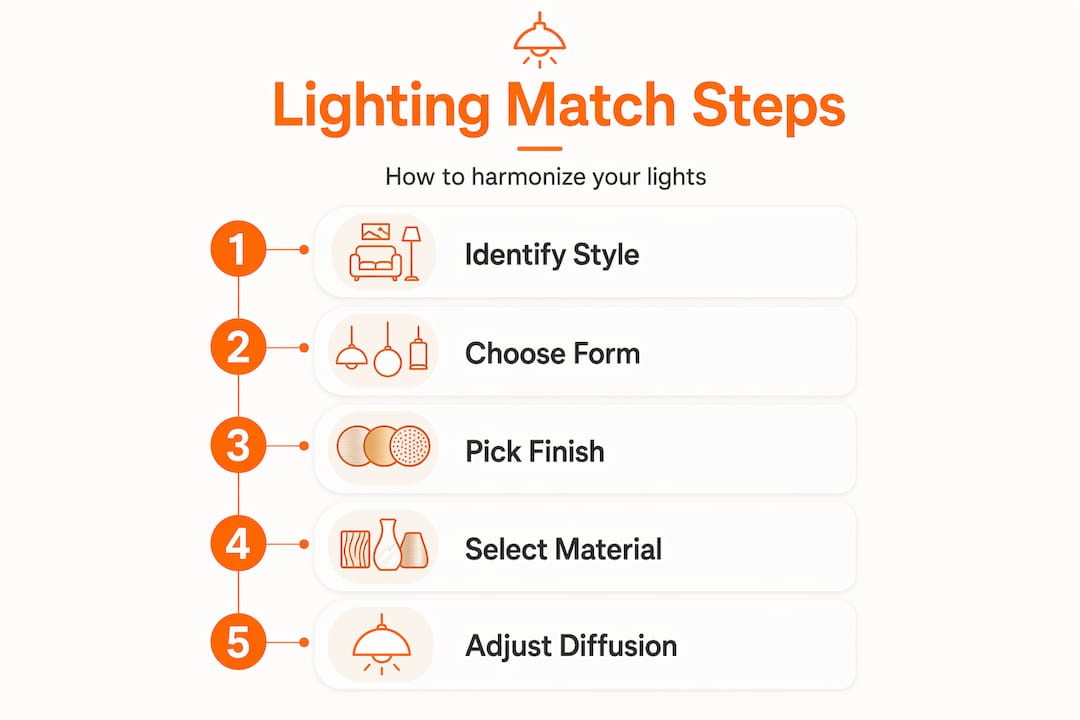
Now that we understand the core idea, let’s get specific. Because good lighting style matching lives in the details, and the details are where most homeowners quietly go wrong.
Fixture scale is arguably the most underestimated factor. A petite ceramic table lamp on an oversized sectional disappears. A massive arc floor lamp in a compact studio apartment overwhelms. Scale should feel proportional not just to the room but to the furniture it sits near and the overall ceiling height. For example, a chandelier over a dining table should generally be about half to two-thirds the width of the table, hanging 28 to 34 inches above the surface. A bedside lamp should have its shade bottom roughly level with your eye line when sitting against the headboard, ensuring comfortable reading light without glare.
As one expert insight puts it, the best lamp does not need to copy every detail in the room. It only needs to feel like it belongs. Matching is about cohesion, not cloning. This reframing is liberating. You’re not hunting for an exact replica of your sofa’s leg finish in lamp form. You’re looking for a fixture that shares the room’s emotional register, its architectural lines, or its dominant textures.
Finish mixing, when done deliberately, adds real depth and character. Brass and matte black, for instance, work beautifully together in a mid-century or eclectic space because they share tonal warmth while offering contrast. The golden glow of brass can be grounded by the modern edge of matte black. The key rule is to keep one finish dominant and treat others as accents. If your hardware throughout a room is all matte black, a single brass lamp reads as intentional. Three different finishes with no clear hierarchy, however, reads as indecision. For more on how to successfully mix metals, this Architectural Digest guide on mixing metals offers excellent advice.
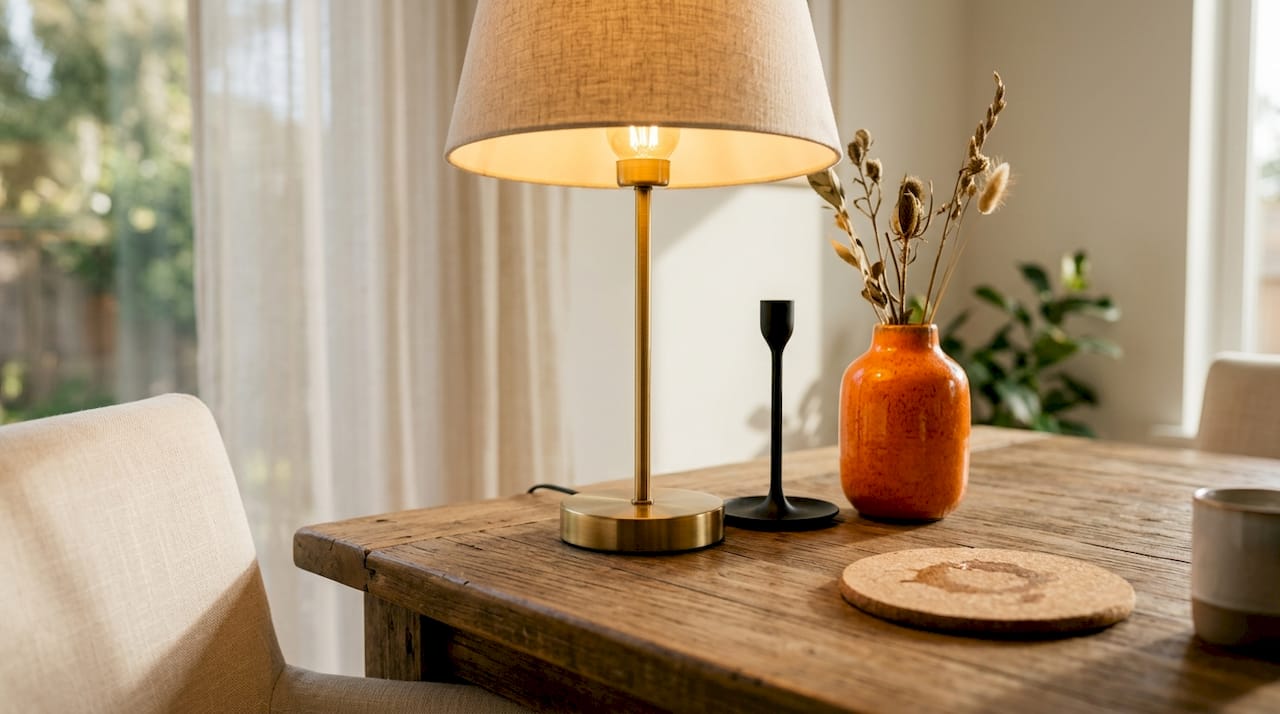
Material balance is equally important. A room anchored by soft textures like a linen sofa, wool rug, and raw wood coffee table is begging for a lamp with tactile contrast. Polished glass or hammered brass offers that contrast without disrupting the style. Conversely, a sleek, modern room with lots of glass and metal might benefit from a lamp with a fabric shade or a natural wood base to introduce warmth and softness. Consider the types of interior lighting and materials that resonate with your room before you commit.
Common pitfalls to avoid:
- Choosing a lamp purely for its appearance without testing how it reads next to your actual furniture and existing finishes.
- Ignoring texture balance, resulting in a room that feels visually flat or overly industrial.
- Selecting fixtures that are stylistically interesting but functionally useless in the space they’re placed (e.g., a beautiful but dim pendant over a kitchen island).
- Overcrowding a room with too many lamp types or statement pieces competing for attention.
Pro Tip: Bring a swatch of your dominant upholstery fabric or a paint chip when shopping for a lamp shade. The shade material and color has a surprising effect on how light bounces back into the room and how the fixture reads against your sofa or curtains. Look for shades that complement, not just match.
How Light Diffusion Affects Mood and Style Cohesion
Here is something most lighting style guides skip entirely, and we think it’s actually the most important variable in the room: how light is diffused. Diffusion, meaning how light scatters or softens as it leaves the fixture, shapes the entire emotional quality of a space far more than bulb temperature or wattage alone.
Designers frequently make choices about the optical behavior of fixtures, favoring opaque or tinted shades over clear glass to soften and diffuse light. The reason is direct: diffused light flatters a room’s colors and textures. It makes walls feel warmer, upholstery look richer, and people feel more comfortable. Clear glass shades and bare Edison bulbs, while gorgeous as design objects, produce point-source light that casts hard, unflattering shadows and reads as harsh in most living spaces. This isn't to say clear glass or exposed bulbs are "bad"—they have their place, often as accent lighting or in specific industrial/minimalist contexts, but rarely as the sole or primary light source.
“Choosing opaque or tinted shades rather than clear glass to soften and diffuse light changes how the room and its colors read.” Interior designers on lighting diffusion
The diffusion question directly connects to how well lighting matches your room’s style. A beautifully chosen minimalist pendant in brushed concrete, stylistically perfect for a Scandi-industrial space, can still ruin the room’s atmosphere if it throws a harsh, unforgiving downlight. The fixture matches visually but fails atmospherically, creating a disconnect between how the room looks and how it feels.
The solution is to layer your lighting rather than rely on a single statement piece. Lighting design tips consistently emphasize three crucial layers:
- Ambient light: The general, overall illumination of a room, often from recessed lights, ceiling fixtures, or large floor lamps with diffused shades. It sets the base mood.
- Task light: Focused illumination for specific activities like reading, cooking, or working. Think desk lamps, under-cabinet lighting, or adjustable floor lamps.
- Accent light: Directional light that highlights architectural features, artwork, or textures, adding depth and drama. Picture lights, spotlights, or wall washers fall into this category.
This layering ensures that no single fixture is doing all the work, which prevents the harsh single-source problem and creates a dynamic depth that photographs as well as it feels to live in. For a deeper dive into the science and art of light diffusion, this resource from the Illuminating Engineering Society offers professional perspectives on light quality.
Pro Tip: If your existing fixture produces harsh light, changing the bulb to a warm white (2700K to 3000K) and adding a frosted bulb cover or a dimmer switch can dramatically soften diffusion and improve mood without replacing the fixture entirely. Sometimes, a simple shade swap can work wonders!
Practical Steps to Match Lighting Style to Your Home, Room by Room
Theory is useful. Application is where it becomes real. Here is a room-by-room approach to how to match lighting to your specific spaces, from first instinct to final fixture.
-
Define the room’s purpose and mood first. Before you consider any fixture, ask what you actually need from this room at different times of day. A living room needs flexibility for conversation, TV watching, and reading, implying dimmable ambient light, task lighting, and perhaps accent lighting. A home office needs focused task light that prevents eye strain. A dining room needs drama and intimacy for meals. Defining this before style narrows your search immediately and ensures functionality.
-
Identify your design style anchor. Look at your existing furniture, textiles, and surfaces. What’s the dominant material (wood, metal, fabric)? What’s the prevailing finish palette (warm brass, cool chrome, matte black)? What architectural elements are prominent? That’s your starting point for matching light fixtures to your room’s visual world. If your style is eclectic, look for common threads like a shared color family or a recurring shape.
-
Layer your lighting intentionally. Start with ambient, add task where needed, and finish with accent lighting. The room lighting guide offers tailored advice for each space. Lighting should echo the room’s tone and fulfill its function: a soft, warm glow serves a bedroom, while bright, shadow-free task light is essential in a kitchen.
-
Consider scale before style. The most stylistically perfect pendant means nothing if it’s the wrong size for your ceiling height or table footprint. Use measuring tape! For a standard 8-foot ceiling, a pendant or chandelier should be roughly 20-30 inches in diameter, increasing with ceiling height. Floor lamps should reach above eye level when standing, and table lamps should be proportioned to their surface.
-
Test before you commit. Use virtual visualization tools (like those offered by Find a Lamp!) or simply hold a lamp next to your furniture before purchasing. Even bringing home a lampshade to see how its material and color interact with your space can be incredibly insightful. Perception in a showroom and perception in your actual room are very different experiences.
| Room | Primary Need | Recommended Style & Features | Light Type Priority |
|---|---|---|---|
| Bedroom | Soft, relaxing atmosphere; reading | Warm tones, fabric shades, dimmable; sconces, bedside lamps | Ambient and accent (with some task) |
| Kitchen | Functional task lighting; bright workspace | Clean forms, clear or frosted glass, metal finishes; recessed, under-cabinet, pendants | Task and ambient |
| Living Room | Flexible mood and ambiance; various activities | Mixed styles, dimmable, layered; floor lamps, table lamps, ceiling fixtures, accent lights | Layered all three |
| Home Office | Focused, glare-free illumination | Minimal, directional, adjustable; desk lamps, task floor lamps, overhead ambient | Task-dominant (with ambient support) |
| Dining Room | Drama and intimacy; entertaining | Statement pendants or chandeliers, dimmable; wall sconces or candles for accent | Ambient and accent |
| Entryway/Hallway | Welcoming illumination; safety | Ceiling flush mounts, semi-flush mounts, console table lamps, wall sconces | Ambient and accent |
Common Pitfalls and Expert Tips for Successful Lighting Style Matching
Even with a solid understanding of the principles, the same mistakes appear again and again. Knowing them in advance is one of the most useful things we can offer to ensure your lighting journey is smooth and successful.
The biggest surprise for many homeowners is that matching style alone won’t fix rooms that feel harsh or unflattering. Visual cohesion and atmospheric quality are two separate problems, and both need to be solved. A stylistically matched fixture with poor diffusion will still leave the room feeling uncomfortable, casting stark shadows and making colors appear off. It's like having a beautiful car that runs on bad fuel—it looks great, but the experience is subpar.
Common Pitfalls to Watch Out For:
- Ignoring Dimmers: This is a cardinal sin! A beautifully styled fixture that can only be on or off at full blast severely limits a room's flexibility and mood-setting potential.
- Forgetting Bulb Temperature: The "color" of your light (measured in Kelvin, K) is crucial. A cool, blue-toned bulb (4000K+) can make a warm, rustic room feel sterile, while a very warm, yellow bulb (2200K) might not provide enough clarity for a modern kitchen. Stick to 2700K-3000K for most living spaces for a warm, inviting glow.
- Over-Matching: Buying every lamp from the same collection can make a room feel generic and uninspired. A curated look embraces thoughtful variety.
- Under-Lighting: Relying on a single overhead light source is almost always a mistake. It creates a flat, unwelcoming environment with harsh shadows.
- Not Considering Light Pattern: Different shades cast different patterns. A drum shade casts light up and down, while a perforated metal shade casts intricate shadows. Think about the visual effect on your walls and ceiling.
Expert-backed tips for successful matching light fixtures:
- Never buy a fixture without checking its shade material. A clear glass shade and a linen shade are not interchangeable despite being the same style silhouette. The light quality will be dramatically different.
- Resist the urge to match every fixture in the house to the same family. Intentional contrast between rooms creates a home that feels curated, not mass-produced. Each room can have its own personality while still flowing harmoniously.
- Use choosing the right lamp as a reference point for room-specific guidance when you’re uncertain about scale or style direction.
- When mixing fixture styles within a single room, anchor them with a shared material or finish. Two wildly different lamps united by their brass detailing feel intentional. Without that thread, they feel accidental.
- Always prioritize function within style. A beautiful fixture that doesn’t actually light what you need it to light has failed at its most fundamental job. A stylish desk lamp that casts shadows on your keyboard is just decor, not a functional light.
- Embrace smart lighting. Dimmable bulbs, color-changing options, and smart switches offer unparalleled flexibility, allowing you to fine-tune your light diffusion and mood with ease. Check out this Smart Lighting Guide from CNET for an overview of options.
Pro Tip: Before purchasing a statement fixture, photograph your room and mock up the fixture digitally using a simple photo editor. Seeing the fixture in context rather than in isolation can dramatically shift your perception and prevent costly mistakes.
Why Matching Lighting Style is About Harmony, Not Exact Replication
Here is the perspective we don’t see enough in best lighting styles guides, and it’s the one that changes how you think about the whole process. Lighting style matching is not a copy-and-paste exercise. It’s closer to composition in music, where instruments don’t all play the same note but rather each contributes to an overall harmony that feels inevitable and right. It's about creating a symphony of light and form.
The most common misconception is that a well-matched fixture should look like it was designed *for* the room. It shouldn’t. It should feel like it *belongs*. Those are subtly but importantly different things. A fixture that was literally designed for the room tends to feel static, almost too obvious, lacking a certain spark. A fixture that simply belongs brings something of its own character while respecting the room’s existing personality, creating a dynamic tension that makes a space truly interesting.
This is why we’re so enthusiastic about approaching lighting with the same creative generosity you’d bring to art collection. A Shaker-style room with clean joinery and quiet colors might feel extraordinary with a single sculptural blown-glass pendant that has no literal Shaker reference but shares the same appreciation for restraint and craft. The lighting for interior design styles spectrum is a starting point, not a prescription. It’s a guide to help you find your unique voice.
The quality of diffusion matters just as much as visual style, and this is the insight most homeowners arrive at only after a frustrating wrong purchase. A room that feels cold despite a warm fixture palette almost always has a diffusion problem. Solving style without solving diffusion is half a solution. The rooms we remember, the ones that feel alive and layered and genuinely inhabitable, are the ones where someone thought as carefully about light quality as they did about fixture aesthetics. It's the blend of form, function, and feeling that truly elevates a space from merely decorated to exquisitely designed.
Explore Lighting Collections to Match Your Home’s Style
Putting these principles into practice starts with finding fixtures that are already curated for specific interior styles, so you’re not sorting through thousands of options to find the right match. This is where a tool like Find a Lamp truly shines, simplifying a complex design challenge into an enjoyable exploration.

Find a Lamp offers collections built specifically around popular interior aesthetics, making your journey to perfect lighting both efficient and inspiring. If your home leans toward raw textures and exposed structure, the industrial living room lighting collection brings together fixtures that balance utilitarian honesty with genuine warmth. For bedrooms that need both character and calm, industrial bedroom lighting offers options scaled and finished for that more intimate environment. And if your spaces call for cleaner, more forward-looking forms, the modern lamps lighting collection covers everything from understated Scandinavian silhouettes to sculptural statement pieces. Our AI-powered recommendation engine goes a step further: simply upload a photo of your room, and let our technology analyze your existing decor to suggest the perfect lamps that harmonize with your unique style. Browse by room, by style, or use our smart tools to find your perfect match, making your lighting dreams a bright reality.
Frequently Asked Questions
What does lighting style matching mean?
Lighting style matching means