
Ever walked into a room and felt an immediate sense of warmth, coziness, or vibrant energy? Chances are, brilliant lighting was playing a starring role. But let’s be real: navigating the world of interior lighting, especially when it comes to floor lamps, can feel a bit like trying to solve a Rubik's Cube blindfolded. Arc lamps reaching dramatically over sofas, slim tripods standing at sculptural attention, multi-arm tree lamps offering curated spreads of light across a reading nook — it’s a lot to process.
Many homeowners and design enthusiasts find themselves stuck, overwhelmed by options, unsure where to begin, and worried about making the wrong choice. Will that sleek modern lamp clash with your cozy aesthetic? Will it actually provide enough light for your late-night reading sessions? We're here to cut through that fog. This comprehensive guide will equip you with a clear framework for evaluating your needs, understanding the most popular floor lamp types, and making a confident, inspired choice that truly elevates your space. Ready to illuminate your world?
Table of Contents
- How to Evaluate & Select the Right Floor Lamp
- Unveiling the Stars: Popular Floor Lamp Types Explained
- Quick Glance: Side-by-Side Comparison of Floor Lamp Types
- Situational Spotlight: The Perfect Lamp for Every Room
- The Power of the Mix: Why Layering Floor Lamp Styles is a Game-Changer
- Find Your Perfect Floor Lamp Style at Find a Lamp
- Frequently Asked Questions
Key Takeaways
| Point | Details |
|---|---|
| Evaluate space and needs | Start by assessing your room size, existing lighting, and style preferences before choosing a lamp. |
| Understand lamp types | Common types like arc, torchiere, tripod, and task lamps each suit different uses and styles. |
| Use comparison tools | A side-by-side feature overview helps narrow your choice for each room and purpose. |
| Layer lighting for impact | Mixing multiple floor lamp styles creates flexible, visually appealing, and functional lighting. |
How to Evaluate & Select the Right Floor Lamp
Before you even start browsing gorgeous lamps (we know, it's tempting!), let's get strategic. Choosing the right lamp isn’t just a stylistic exercise — it’s a functional one, too. Lighting shapes how a room feels hour by hour, influencing mood, productivity, and even how your decor looks. The wrong choice can flatten a beautifully furnished space, while the right one can make it sing. Here’s a step-by-step approach we recommend:
-
Assess Your Space Dimensions: The Grand Tour
Start with the basics: ceiling height and available floor area. Rooms with high ceilings (nine feet and above) can handle tall torchieres or dramatic arc lamps without feeling crowded. Tighter spaces demand slimmer profiles or lamps that "disappear" visually. Imagine a wide, sweeping arc lamp in a narrow hallway – a recipe for frustration (and stubbed toes!). Measure twice, browse once! -
Define the Primary Lighting Purpose: What's the Job?
Lighting designers typically categorize light into four roles. What role will your new floor lamp play?- Ambient Lighting: Overall brightness for the room. Think general illumination, creating a welcoming glow.
- Task Lighting: Focused light for specific activities like reading, crafting, or working. It's about functionality!
- Accent Lighting: Highlighting specific features, artwork, or architectural details to add drama and interest.
- Decorative Lighting: The lamp itself is a piece of art, contributing to the room's aesthetic even when off.
A floor lamp you intend to use for late-night reading has entirely different specs than one you’re placing in a corner to add warmth during dinner parties.
-
Coordinate with Your Existing Decor Style: Speak the Same Language
Your lamp should feel like a natural extension of your room's personality. A brushed brass arc lamp in a room full of industrial steel and reclaimed wood creates interesting contrast; the same lamp in a hyper-traditional Victorian parlor might look out of place. Consider your room’s overall palette, material language (wood, metal, glass, fabric), and stylistic vocabulary (modern, farmhouse, bohemian, minimalist) before committing to a finish or silhouette. For inspiration on how different styles integrate, check out resources like Architectural Digest's guide to living room lighting ideas. -
Balance Aesthetics with Practical Features: The Nitty-Gritty Details
Dimmability, cord management, bulb type (LED versus incandescent), shade material — these matter more than most people expect before they actually live with a lamp. A translucent fabric shade diffuses light beautifully but can look dingy after a year of dust accumulation. A metal shade directs light precisely but can create harsh shadows if aimed incorrectly. Consider smart features too, like built-in USB ports or remote controls. -
Consider Thoughtful Lamp Placement Strategies: The Art of Positioning
Where the lamp physically lives in the room affects everything from traffic flow to the quality of light at reading distance. Smart lamp placement strategies account for furniture arrangement, window placement, and the way natural light shifts throughout the day. Don't just plonk it down; envision its purpose and path.
Pro Tip: Start with one standout statement lamp, then layer additional light sources around it. A single strong fixture anchors the room visually and gives you something to build against — rather than trying to plan every light source simultaneously and ending up with a flat, uniform result.
Unveiling the Stars: Popular Floor Lamp Types Explained
With your selection criteria firmly in mind, let’s explore the unique benefits of different floor lamp types. Arc, torchiere, tripod, task, and tree floor lamps are among the most popular styles in modern interiors, and each delivers a genuinely different kind of lighting experience.
Arc Lamps: The Dramatic Statement Piece
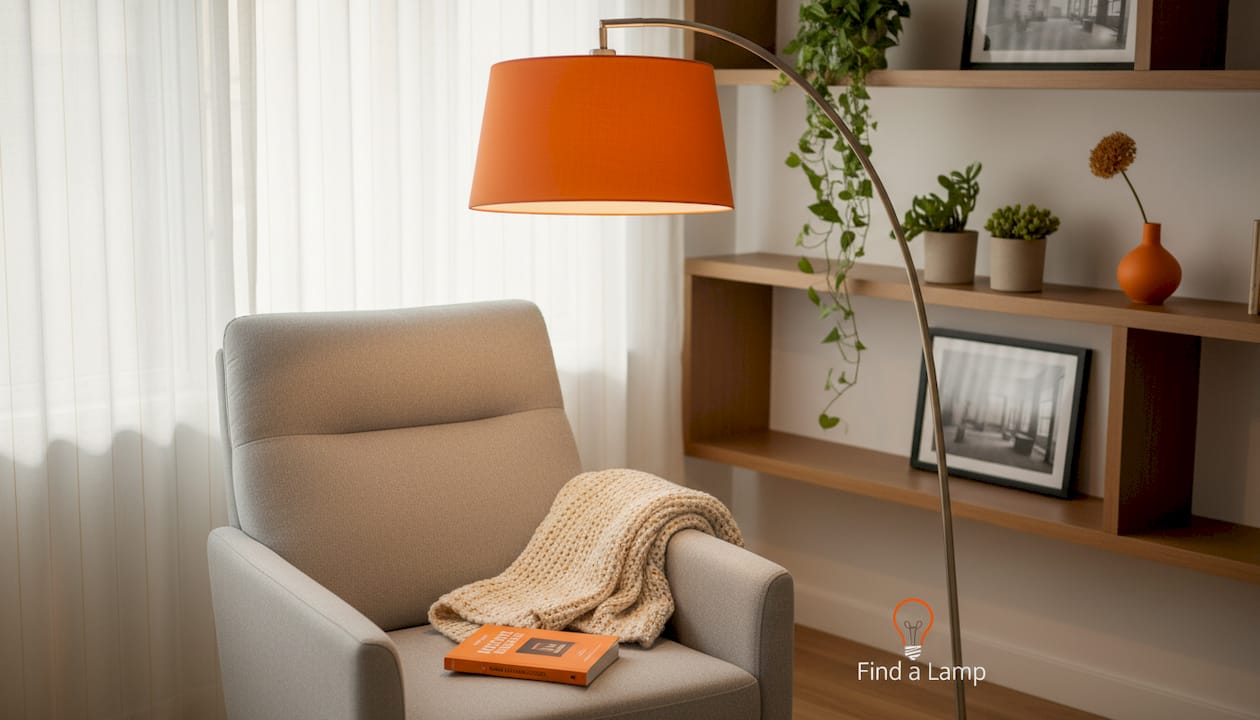
Arc lamps are perhaps the most cinematic of the bunch. Their long, sweeping arms extend outward and downward, positioning the shade directly above a sofa, bed, or reading chair. This makes them exceptional for task and ambient lighting in living rooms or as a chic bedside alternative. A well-positioned arc lamp can eliminate the need for an end table lamp entirely, freeing up valuable surface space. Look for models with weighted marble or stone bases, which counterbalance the arm and keep the fixture stable. Explore gold modern floor lamps if you want an arc lamp that doubles as jewelry for your living room.
Torchiere Lamps: The Upward Glow Giver
Torchiere lamps direct light upward, bouncing it off the ceiling and dispersing it softly throughout the room. The effect is warm, even, and immersive — almost like daylight filtered through a linen blind. They’re ideal when overhead fixtures are too harsh or when you want to add ambient brightness without introducing glare. In bedrooms, torchieres create that rare quality of light that makes every surface look its best. They're masters of creating a cozy, inviting atmosphere.
Tripod Lamps: The Sculptural Workhorse
Tripod lamps are the sculptural workhorses of contemporary design. Three angled legs support a central column and shade, creating a silhouette that reads as much as furniture as it does lighting. They add depth and visual interest to minimalist and Scandinavian-inspired rooms, and their stable footprint means they can stand confidently in open floor plans without looking precarious. Pair a tripod with a linen drum shade for a clean, gallery-adjacent look. For more on how lighting impacts a room's aesthetic, consider insights from design experts like those at Elle Decor.
Task & Reading Floor Lamps: The Focused Illuminator
These lamps feature adjustable heads, extendable arms, or pivoting mechanisms that allow you to direct light exactly where it’s needed. These are non-negotiable for home offices, reading nooks, and craft spaces. Look for models with LED warm-dimming capability, which lets you shift color temperature from a focused, energizing cool white to a relaxed warm amber as the evening progresses. Precision and adaptability are their superpowers.
Tree (Multi-Arm) Floor Lamps: The Versatile Multi-Tasker
Tree floor lamps (sometimes called multi-arm floor lamps) branch out from a central pole, offering two, three, or even five individually adjustable shades. They function almost like a small chandelier at floor level, providing directional coverage across multiple zones simultaneously. They’re especially effective in living rooms where you need light over a sofa, toward a bookcase, and across a coffee table all at once. They're the ultimate flexible lighting solution.
Explore living room floor lamps to see how all these lamp types translate into real, curated collections.
Pro Tip: Don't forget about bulb choice! The type of bulb (LED, incandescent, fluorescent), its wattage, and its color temperature (measured in Kelvin) profoundly impact the light quality. A warm white (2700K-3000K) is generally best for creating a cozy, inviting atmosphere, while cooler temperatures (3500K-5000K) are better for task lighting and concentration.
Quick Glance: Side-by-Side Comparison of Floor Lamp Types
To see these features clearly, consult this handy comparison to spot the differences at a glance. A side-by-side features comparison helps clarify the best fit for each room and purpose. Use the table below as your quick-reference guide, especially if you’re deciding between two or three finalists.
| Lamp type | Typical height | Floor footprint | Light direction | Adjustability | Best room(s) | Decor style fit |
|---|---|---|---|---|---|---|
| Arc lamp | 70–80 in | Medium (wide base) | Downward/focused | Low to medium (arm swivel) | Living room, bedroom, dining area | Modern, glam, eclectic, mid-century |
| Torchiere | 60–72 in | Small | Upward/ambient | Low (some have dimmers) | Living room, bedroom, entryway | Traditional, transitional, classic, minimalist |
| Tripod | 58–65 in | Medium (three legs) | Downward/focused (general) | Low (fixed shade) | Living room, study, large bedroom | Contemporary, Scandinavian, industrial, modern |
| Task/reading | 48–65 in | Small to medium | Directional/focused | High (articulated arm, pivoting head) | Office, reading nook, craft room, bedside | Any (depends on design) |
| Tree/multi-arm | 60–70 in | Small (single base) | Multi-directional/focused | High (individual arm adjustment) | Living room, studio, open-plan spaces | Modern, eclectic, transitional |
Understanding these distinctions lets you filter candidates quickly. If your home office has limited floor space but you need home lighting placement flexibility, a task lamp with a small footprint wins over an arc lamp every time. If your bedroom needs warm, enveloping atmosphere rather than focused light, a torchiere is the obvious front-runner.
Situational Spotlight: The Perfect Lamp for Every Room
Once you understand the comparisons, you’re ready for practical matches — here’s what works best in each setting. Different lamp types suit living rooms, bedrooms, and offices best when tailored to the room’s functional needs, and the right pairing can genuinely transform how a space feels and functions.
-
Living Rooms: The Social Hub
Living rooms are the most forgiving arena for floor lamps, and often benefit from a mix. You can go bold here! Arc lamps add drama and serve the seating area directly. Tripod lamps anchor corners with sculptural presence and provide general ambient light. Tree lamps distribute light across multiple zones, which is particularly useful in open-plan layouts. Browse traditional living room lighting if your space leans toward warm, classic finishes and layered textiles. -
Bedrooms: The Sanctuary
Bedrooms call for softer, more diffuse light sources that promote relaxation. Torchieres create that all-over warmth that a bare overhead bulb can never achieve, perfect for winding down. Slim task lamps on the reading side of the bed provide focused light for books or tablets without disturbing a sleeping partner. Look for fixtures with dimmer compatibility so you can shift intensity as your evening routine progresses. -
Home Offices: The Productivity Zone
Home offices are probably the most demanding environment for floor lamps. Focused office lighting choices directly affect productivity, eye strain, and how good your video calls look. Adjustable task lamps and articulated reading lamps let you direct light onto your workspace while keeping glare off your monitor screen. Corner floor lamps with multiple adjustable heads give you both ambient fill and task-specific reach. For guidance on creating an ergonomic workspace, resources like EHS Today offer valuable insights into ergonomic lighting. -
Dining Rooms: The Gathering Space
While often dominated by overhead fixtures, a well-placed floor lamp can enhance the dining experience. A slim torchiere in a corner can add ambient warmth that complements a chandelier, while a dramatic arc lamp can extend over a buffet or bar area, adding both light and a touch of modern flair. -
Entryways & Hallways: The First Impression
These areas are often neglected when it comes to floor lamp planning, but a well-chosen slim floor lamp in an entry can set the entire tone for your home’s interior. Multi-light floor lamps that draw the eye upward work beautifully in taller entry spaces, while narrow single-shade models are ideal for tight corridors where every inch matters, providing a welcoming glow. -
Reading Nooks & Cozy Corners: The Personal Retreat
This is the natural habitat of the task lamp. An adjustable arm, a shade that focuses light downward, and a bulb with warm color temperature (2700K to 3000K) — that’s the recipe for a reading corner you’ll actually want to spend time in.
“Always position reading lamps so the light source falls over the shoulder closest to the page, with the bottom of the shade at roughly eye level when seated. This minimizes glare and maximizes illumination exactly where you need it.”
The Power of the Mix: Why Layering Floor Lamp Styles is a Game-Changer
Most design guides focus on matching a single lamp type to a room’s style and calling it done. We think that’s an oversimplification that leaves a lot of lighting quality on the table. Real-world spaces benefit from a diversity of light sources, and the most beautifully lit rooms we encounter always involve multiple types working in concert.
Consider what happens when you place only a torchiere in a living room. The ambient ceiling bounce is lovely, but there’s no focal point, no directionality, no drama. The room feels evenly lit in a way that paradoxically reads as flat. Now add an arc lamp over the sofa and a slim tripod in the far corner. Suddenly, the room has depth, hierarchy, and a sense that light is something intentional rather than incidental. This layering approach is a hallmark of sophisticated interior design, as highlighted by various design publications including My Modern Met's overview of lighting design tips.
The insider strategy we always return to is layering light sources at different heights. Ceiling-reflected light from a torchiere operates at one level. An arc lamp works at mid-to-low height over a seating area. A table lamp or a low-set accent lamp adds yet another layer close to surface level. Together, these layers create an ambiance that shifts naturally as daylight changes outside, remaining beautiful whether it’s a bright afternoon or a candlelit evening.
There’s also a design benefit that goes beyond pure lighting function. Combining a sculptural tripod with a sleek arc lamp and a vintage-inspired torchiere adds visual tension to a room in the best possible way. It says the space evolved organically rather than being styled in a single afternoon. Artistic table lamps from collections like artistic table lamps can anchor a surface zone and complement your floor lamp arrangement, building a full ecosystem of light that inhabits the room like it’s always belonged there.
The “one-style-fits-all” myth is one worth retiring permanently. Your home isn’t a catalog page; it’s a living space with evolving needs, shifting natural light, and multiple occupants who use each room differently. Lighting that adapts to all of that diversity has to be diverse itself.
Find Your Perfect Floor Lamp Style at Find a Lamp
Ready to find your new favorite floor lamp? Our platform was built precisely for this moment — when you know what you need but want expert guidance to get there faster and with more confidence.

At Find a Lamp, our AI-powered recommendation engine analyzes your room’s style, layout, and lighting needs based on photos you upload, then surfaces curated product suggestions that actually fit your space. Whether you’re drawn to the bold geometry of industrial living room lighting or the graceful warmth of traditional living room lighting, our catalog spans every aesthetic, finish, and function. You can also use our visual search tool to upload an image of a lamp you love and find similar options instantly. Better yet, our virtual visualization feature lets you see exactly how a lamp will look in your actual room before you commit — no guesswork, no returns, no second-guessing. Let us help you illuminate your home beautifully, intelligently, and effortlessly.
Frequently Asked Questions
What is the best type of floor lamp for reading?
Task floor lamps are highly recommended for reading due to their focused, directional light and adjustable features. Look for models with articulated arms that let you position the shade precisely over your shoulder and at eye level to minimize glare and maximize illumination.
Are arc lamps suitable for small rooms?
Arc lamps can fit smaller spaces when chosen with slimmer bases and less dramatic arcs. Placing them against a wall with the arm extending inward, rather than in the center of the room, helps to keep them out of high-traffic paths and makes the most of limited square footage.
Which floor lamp is best for creating ambiance?
Torchiere lamps are excellent for enhancing ambiance. By casting light upward and bouncing it softly off the ceiling, they produce a warm, even glow that feels more like natural, diffuse daylight than a direct light source, creating a cozy and inviting atmosphere.
Can one room have more than one type of floor lamp?
Absolutely! In fact, combining different lamp styles (e.g., a torchiere for ambient light, an arc lamp for task lighting over a sofa) results in more flexible, layered lighting that adapts to different tasks and moods far better than a single fixture ever could. This approach creates depth and visual interest in your design.
How do I choose the right bulb for my floor lamp?
Consider the bulb's wattage (brightness), color temperature (measured in Kelvin – 2700K-3000K for warm ambiance, 3500K-5000K for task lighting), and energy efficiency (LEDs are generally best). Ensure the bulb's base matches your lamp's socket (e.g., E26 for standard).
Recommended
- How to choose the right lamp for every room efficiently - Find a Lamp - Find a Lamp
- How to choose the right lamp for every room efficiently - Find a Lamp - Find a Lamp
- Types of Interior Lighting: Perfect Ambience for Every Room - Find a Lamp - Find a Lamp
- Types of Interior Lighting: Perfect Ambience for Every Room - Find a Lamp - Find a Lamp