Lamp Placement That Transforms Your Home: 5 Smart Tips
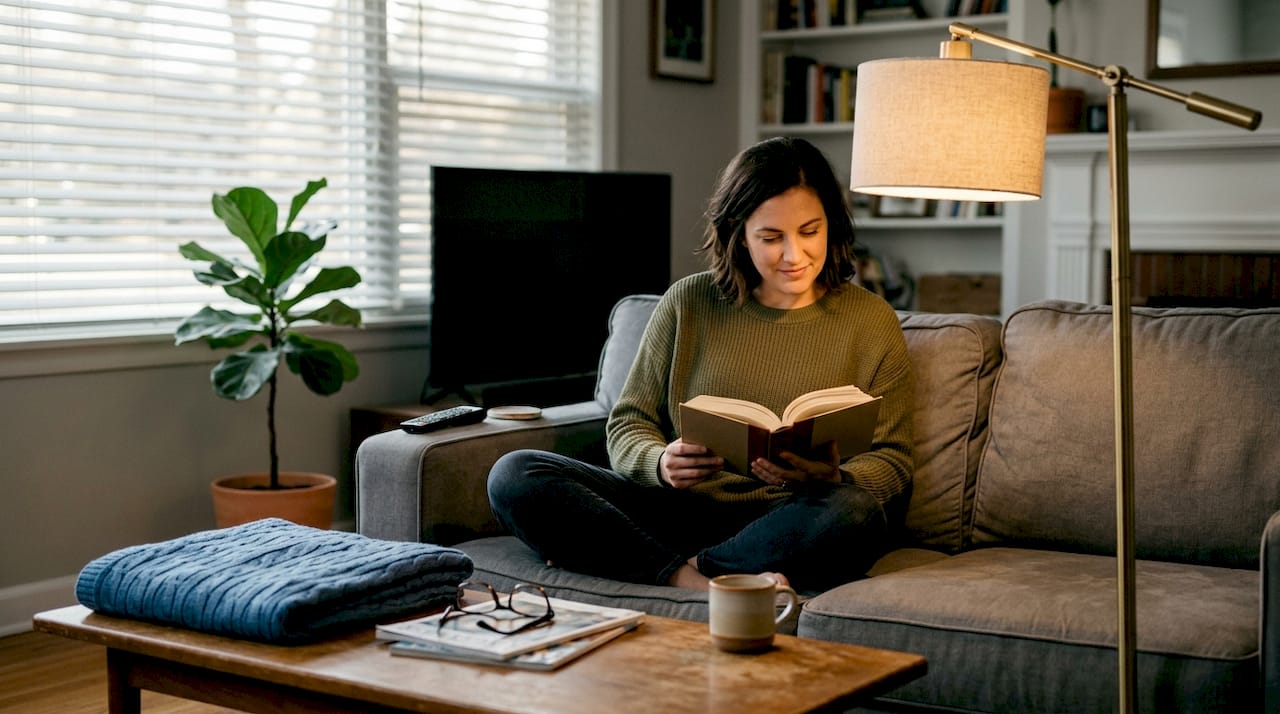
Most homeowners spend hours picking the perfect bulb or fixture, then wonder why the room still feels off. The truth is, lamp placement does more heavy lifting than any wattage rating or designer shade ever could. Get it wrong and you end up with shadows falling across your book, glare bouncing off your laptop, and a living room that feels oddly flat. Get it right and even a basic lamp can make a space feel curated, calm, and completely livable. This guide covers the most common placement mistakes, the science behind why position matters, and practical steps you can take today to transform every room.
Table of Contents
- How lamp placement affects daily life
- The science behind perfect lamp placement
- Design benefits: Balance, layers, and harmony
- Setting the mood: Layered lighting for every space
- Our take: Lamp placement is the overlooked hero of home design
- Find your perfect lamp setup with Find a Lamp
- Frequently asked questions
Key Takeaways
| Point | Details |
|---|---|
| Placement beats bulb | Where you put your lamp matters more for comfort and style than the bulb you choose. |
| Science of good light | Proper angles and heights prevent glare, reduce shadows, and boost usability for any space. |
| Design with balance | Pairing and layering lamps makes rooms feel welcoming, larger, and more beautiful. |
| Mood transformation | The right lamp placement and color warmth can lower stress and change how a room feels instantly. |
How lamp placement affects daily life
Think about the last time you got a headache while reading or had to tilt your screen away from a bright reflection. Chances are, the lamp was the problem, not the light output. Lamp placement affects functionality by preventing shadows and glare, particularly in task areas like desks and reading nooks. And according to lighting experts, poor placement causes more functional issues like shadows and glare than bulb choice ever does.
Every zone in your home has its own demands. A desk needs focused, shadow-free illumination so you can work without straining your eyes. A reading nook needs soft, directed light that falls over your shoulder rather than into your face. A living room needs layered sources at varying heights so you can shift from movie-watching to hosting a dinner without touching a single dimmer.
Here are the most common functional failures people run into:
- Shadows over a work surface because the lamp sits on the same side as your dominant hand
- Glare on screens from lamps placed directly behind or beside a monitor at eye level
- Dark corners that make rooms feel smaller and less welcoming
- Single overhead light reliance that flattens the room and eliminates any sense of warmth
- Lamps placed too high that wash out the space instead of directing light where you need it
“Lighting geometry — where you place a source relative to the task — matters far more than how many lumens you throw at a room.” This is a principle every professional lighting designer applies from day one.
A quick test: sit at your desk or favorite reading chair tonight and hold your hand over the page or keyboard. If you see a shadow, your lamp is on the wrong side or at the wrong angle. That one fix, moving the lamp, can eliminate eye strain in seconds. For anyone setting up a workspace, exploring options in traditional office lighting or reading up on home office lighting can help you identify the right style and position from the start.
The science behind perfect lamp placement
Once you see how placement affects your daily comfort, the next step is understanding the numbers behind it. Lighting science emphasizes that geometry matters more than lumens for reducing eye strain. Brightness alone does not fix shadows or glare. Angle and distance do.
For desk work, research points to a clear sweet spot: a desk lamp placed 35-50 cm above the surface, angled between 30 and 45 degrees, delivering 300-500 lux for comfortable reading. That combination keeps light on the task without bouncing back into your eyes.

Here is a quick reference for common lamp placement scenarios:
| Zone | Lamp height | Ideal angle | Target lux |
|---|---|---|---|
| Desk or workstation | 35-50 cm above surface | 30-45° | 300-500 lux |
| Reading chair | Shade bottom at shoulder height | Angled forward | 150-300 lux |
| Bedside table | 50-60 cm above mattress | Slightly downward | 100-200 lux |
| Living room floor lamp | 150-180 cm total height | Upward or ambient | 50-150 lux |
One of the most overlooked rules is dominant hand placement. Always position a desk or task lamp on the opposite side from your writing or working hand. Right-handed? Lamp goes to the left. This keeps your hand from casting a shadow across your work, which is the single most common cause of task-related eye strain at home.
The ratio between ambient light (general room light) and task light also matters. Designers typically aim for ambient levels to sit at about one-third of the task lighting level. This prevents your eyes from constantly adjusting between bright spots and dark areas, which is exactly what causes fatigue during long work or reading sessions. Tips for improving office lighting cover this ratio in practical detail.
Pro Tip: No lux meter? Use your phone camera. Aim it at the work surface. If the screen shows a bright hotspot surrounded by noticeably darker areas, your lamp is too close or too direct. Reposition until the illuminated area looks even and soft on screen.
Design benefits: Balance, layers, and harmony
Science handles function. Design handles feel. And lamp placement is where both intersect most powerfully. Pairs of lamps create symmetry and depth, avoiding the awkward look that comes from a single corner lamp trying to do everything at once.
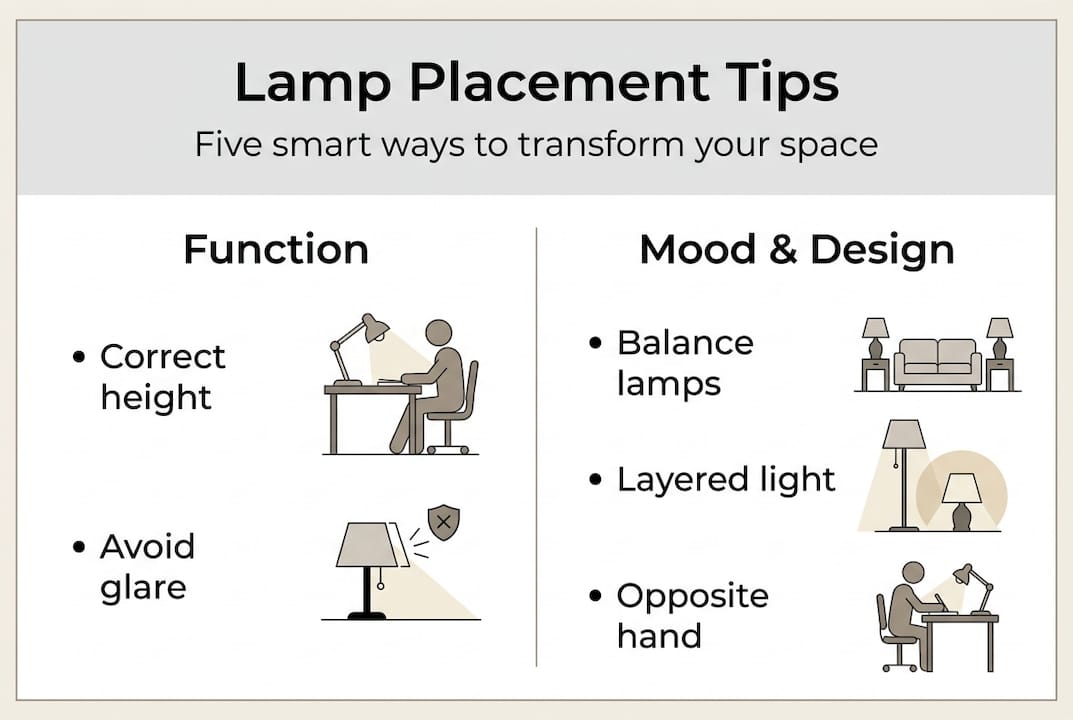
Compare these two common setups in a living room:
| Setup | Visual effect | Mood created |
|---|---|---|
| Single floor lamp in one corner | Unbalanced, one-sided, flat | Functional but cold |
| Paired table lamps flanking a sofa | Symmetrical, grounded, layered | Warm, intentional, inviting |
Eye-level placement and pairs are consistently recommended by stylists for visual harmony, and it is easy to see why. When two light sources frame a sofa or bed, the eye reads the whole arrangement as balanced. It is the same principle used in hotel lobbies and boutique showrooms.
Layering is the other big design move. Using floor lamps, table lamps, and wall-mounted sources together adds depth that a single overhead fixture simply cannot produce. Think of it like landscape photography: foreground, middle ground, and background. The same logic applies to lighting a room. Even something as simple as pool lighting ambiance tips follows this layering approach outdoors.
Avoid these common design mistakes:
- Clustering all lamps in one corner of the room
- Using identical brightness for every lamp, which erases contrast
- Ignoring height variation so all light sources sit at the same level
- Skipping accent lamps entirely, leaving walls and architectural features dark
- Choosing lamps purely for looks without thinking about where the light actually falls
Pro Tip: Try placing one lamp noticeably lower (like a small table lamp on a low console) alongside a taller floor lamp. That height contrast creates a layered, boutique-like effect that feels expensive with no additional cost. Browse living room lamp ideas or explore traditional living room lighting to see this principle in practice.
Setting the mood: Layered lighting for every space
Now that aesthetics are covered, consider how placement shapes the emotional feel of a room. Professional designers break lighting into three categories: ambient (general background light), task (focused work light), and accent (decorative or highlighting light). Using all three, placed intentionally, is what separates a room that feels designed from one that just feels lit.
Warm tones between 2700 and 3000K reduce stress and shift how spacious a room feels. Cooler tones above 4000K increase alertness, which is useful at a desk but counterproductive in a bedroom. Placement amplifies these effects. A warm-toned lamp tucked low in a corner reads as cozy. The same bulb mounted high and central reads as functional.
Here is a simple sequence for building a mood-friendly setup in any room:
- Start with ambient light. Position a floor lamp or soft overhead source to lift the base brightness of the room without harsh shadows.
- Add task lighting next. Place it specifically where you work, read, or cook. Use the height and angle guidelines from the science section.
- Layer in accent light last. A small lamp behind a plant, a strip of warm light under a shelf, or a bedside lamp angled at the wall adds depth and personality.
- Check the balance. Walk to the doorway and look in. No area should feel dramatically darker than another unless that contrast is intentional.
- Test with a dimmer. If your lamps support dimming, dial them down at night. Flexibility in brightness gives you control over mood without swapping bulbs.
For practical inspiration, modern living room ideas show exactly how this three-layer approach plays out in real spaces.
Our take: Lamp placement is the overlooked hero of home design
After seeing countless rooms before and after thoughtful placement changes, one pattern stands out clearly. People obsess over fixture design and bulb specs, but the rooms that genuinely impress are the ones where someone thought carefully about where the light lands, not just what produces it.
Conventional advice pushes you toward buying better fixtures or upgrading to smart bulbs. That is not wrong, but it skips the most accessible improvement available: moving what you already own. Shifting a floor lamp two feet to the left, raising a table lamp by adding a riser, or simply replacing a bedside lamp to the opposite side of the bed can transform a room’s feel instantly.
We have seen simple height and spacing adjustments turn flat, forgettable living rooms into spaces that guests notice and compliment. No renovation required. The insights in this guide around work-from-home lighting tips are a great place to test this for yourself, starting with the room you use most.
Placement is genuinely the easiest, cheapest design win available to any homeowner. It just rarely gets the attention it deserves.
Find your perfect lamp setup with Find a Lamp
Ready to put these placement principles into action? Find a Lamp makes it simple to move from knowing the rules to actually applying them in your home. Browse the curated desk lamp collection for task-ready options sized to the right heights and angles, or explore industrial living room styles if you are layering a bold, statement-making setup.

Find a Lamp uses AI-powered tools to analyze your room photos and recommend lamps that fit your specific layout and lighting needs. You can even visualize how a fixture will look in your actual space before buying. It is the smartest way to shop for light, and the fastest way to get placement right the first time.
Frequently asked questions
What is the ideal height for a desk lamp?
Place a desk lamp 35-50 cm above the surface, angled between 30 and 45 degrees, for comfortable, shadow-free task lighting.
How do pairs of lamps improve room design?
Pairs create symmetry and depth, making a room feel visually balanced and intentional rather than one-sided or incomplete.
Does lamp placement affect mood?
Yes. Layered warm lighting can reduce stress and shift how comfortable and spacious a room feels, purely through placement and color temperature.
What is the best way to avoid glare or shadows?
Position task lamps opposite your dominant hand and keep light sources away from direct line-of-sight with screens or reflective surfaces.
Recommended
- 2025 Lighting Trends: Smart, Sustainable & Sculptural - Find a Lamp - Find a Lamp
- Home Office Lighting for Productivity & Comfort - Find a Lamp - Find a Lamp
- Room Lighting Guide: Living Room, Kitchen, Bedroom & More - Find a Lamp - Find a Lamp
- Lighting for Your Style: Modern, Industrial, Rustic & More - Find a Lamp - Find a Lamp
- Top 5 HomeOneLights.com Alternatives 2026