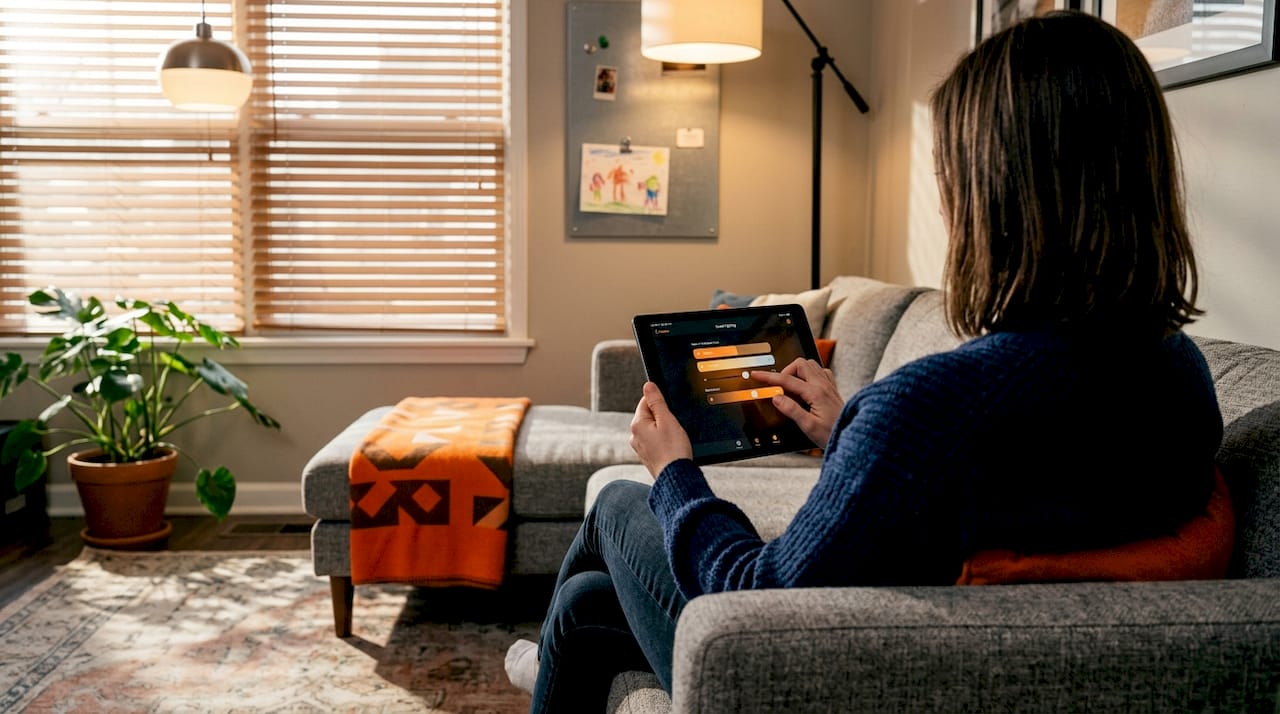
Heb je je ooit afgevraagd of het creëren van die perfect verlichte, tijdschriftwaardige kamer een geheim was dat alleen professionele ontwerpers kenden? Nou, bereid je voor op een gamechanger! Vergeet de oude aanname dat prachtige, gelaagde verlichting alleen is weggelegd voor huiseigenaren met een ontwerper op de sneltoets. AI-gestuurde verlichtingstools hebben stilletjes de regels herschreven, waardoor het voor iedereen mogelijk is om armaturen te visualiseren, aan te passen en vol vertrouwen te kiezen die echt bij hun ruimte passen.
Nooit meer raden of die hanglamp je eetkamer zal overweldigen, of dat die vloerlamp wel de juiste gloed zal geven voor je leeshoek. Nu kunstmatige intelligentie de designarena betreedt, zijn gepersonaliseerde verlichtingsoplossingen niet langer een luxe, maar een toegankelijke realiteit. In deze uitgebreide gids leiden we je stap voor stap door hoe deze tools werken, waarom de kwaliteit van de input belangrijker is dan de meeste mensen beseffen, en hoe je AI-gestuurde aanbevelingen kamer voor kamer toepast, zodat je verlichtingsupgrade weloverwogen aanvoelt in plaats van toevallig. Laten we jouw wereld verlichten!
Inhoudsopgave
- De Grondbeginselen van Verlichtingsoplossingen Begrijpen
- Hoe AI-visualisatietools Maatwerk Verlichting Vormgeven
- De Rol van Kwaliteitsinput en Menselijke Aanraking bij AI-Verlichting
- AI-Oplossingen Toepassen: Praktische Workflows voor Elke Ruimte
- Ons Perspectief: Waar AI Schittert en Waar het Struikelt
- Vind je Volgende Lamp met AI-gestuurde Aanbevelingen
- Veelgestelde Vragen
Belangrijkste Punten
| Punt | Details |
|---|---|
| AI maakt verlichting toegankelijk | Betaalbare tools stellen nu iedereen in staat om verlichting te personaliseren zonder experts in te huren. |
| Kwaliteitsinput is essentieel | Geweldige resultaten vereisen duidelijke foto's en doordachte stijlkeuzes voor je ruimtes. |
| Menselijke controle is cruciaal | Bekijk en pas AI-aanbevelingen aan om ervoor te zorgen dat ze passen bij je dagelijkse gebruik en smaak. |
| Praktische workflows besparen tijd | Door stap-voor-stap begeleiding te volgen, kun je snel nieuwe verlichtingsopstellingen voor elke kamer uitproberen. |
De Grondbeginselen van Verlichtingsoplossingen Begrijpen
Voordat we ingaan op hoe AI het proces transformeert, is het essentieel om te begrijpen wat verlichtingsoplossingen impactvol maakt en hoe klassieke benaderingen zich verhouden. Verlichting gaat niet alleen over helderheid; het gaat over het creëren van sfeer, het accentueren van kenmerken en het verbeteren van functionaliteit.
In de kern omvatten effectieve verlichtingsoplossingen drie onderling verbonden beslissingen: plaatsing (waar licht valt en vanuit welke hoek), intensiteit (hoe helder of gedimd de output is) en stijl (de visuele taal van het armatuur en de kleurtemperatuur van het licht). Als je alle drie goed doet, voelt een kamer levendig, gastvrij en perfect functioneel. Mis je er ook maar één, dan kan de meest prachtig ingerichte ruimte vlak, oncomfortabel of onpraktisch aanvoelen.
Modern verlichtingsontwerp is doorgaans gebaseerd op een concept dat 'gelaagde verlichting' wordt genoemd, waarbij drie soorten licht worden gecombineerd om een gebalanceerd en veelzijdig schema te bereiken:
- Algemene Verlichting (Ambient Lighting): Dit is je algemene, algehele verlichting. Denk aan plafondarmaturen, inbouwspots of grote hanglampen die een comfortabel lichtniveau door de hele kamer bieden. Het is de basis waarop alle andere verlichtingslagen worden gebouwd.
- Taakverlichting (Task Lighting): Gericht licht ontworpen voor specifieke activiteiten. Dit omvat bureaulampen om te werken, onderkastverlichting om te koken, of leeslampen naast een bank. Taakverlichting voorkomt vermoeide ogen en zorgt voor veiligheid.
- Accentverlichting (Accent Lighting): Wordt gebruikt om de aandacht te vestigen op specifieke kenmerken, zoals kunstwerken, architectonische details of planten. Denk aan railverlichting, schilderijverlichting of wandlampen die dramatische schaduwen en highlights creëren, wat diepte en visuele interesse toevoegt.
Traditioneel vertrouwde het bereiken van deze gelaagde aanpak bijna volledig op handmatige planning en een aanzienlijke hoeveelheid dure vallen en opstaan. Een huiseigenaar raadpleegde wellicht een catalogus, kocht een armatuur, installeerde het, en realiseerde zich pas dan dat de schaal verkeerd was, de warmte vloekte met de muurkleur, of dat het simpelweg niet genoeg licht gaf voor het beoogde doel. Professionele ontwerpers, met jarenlange ervaring en een diep begrip van lichtfysica en esthetiek, konden deze schema's ontwerpen, maar die expertise kwam met aanzienlijke kosten, waardoor het buiten bereik lag voor de meeste huurders en budgetbewuste huiseigenaren. Zij moesten het simpelweg doen met basis plafondverlichting en misschien een vloerlamp.
Wat alles veranderde, was de komst van AI-tools die getraind zijn op enorme bibliotheken met interieurdesignafbeeldingen. Deze systemen gebruiken ruimtelijke herkenning en machine learning op datasets van designafbeeldingen, prompt engineering voor stijlen, en iteratieve generatie om realistische lichtweergaven te produceren. Objectdetectie stelt de AI in staat om meubels, muurkleuren en architectonische kenmerken binnen een kamerfoto te identificeren, en vervolgens te modelleren hoe verschillende armaturen met die elementen zouden interageren. Het resultaat is een aanbevelingsengine die minder aanvoelt als gokwerk en meer als het hebben van een deskundige medewerker.
Hier is een snelle blik op wat moderne AI-verlichtingstools daadwerkelijk analyseren:
- Kamergeometrie: Plafondhoogte, muurproporties en plaatsing van ramen. De AI begrijpt hoe licht zal weerkaatsen en reflecteren binnen deze afmetingen.
- Bestaand kleurenpalet: Muurverf, vloertint, bekledingskleuren en zelfs decoratieve items. Licht interageert anders met verschillende kleuren en texturen, en AI kan dit simuleren.
- Meubelstijl: Mid-century, industrieel, Scandinavisch, maximalistisch en tientallen andere esthetieken. Dit helpt de AI om armaturen voor te stellen die passen bij je bestaande inrichting.
- Natuurlijke lichtniveaus: Geschat op basis van de grootte van ramen en de oriëntatiegegevens die je verstrekt. Dit is cruciaal om te begrijpen hoe kunstlicht het natuurlijke licht zal aanvullen of balanceren.
- Schaal van armaturen: Of een hanglamp, vloerlamp of inbouwoptie past bij de proporties van je ruimte en andere meubels.
“De verschuiving van handmatig vallen en opstaan naar AI-geïnformeerde aanbevelingen is niet zomaar een gemaksupgrade. Het is een fundamentele democratisering van ontwerpexpertise, waardoor geavanceerd verlichtingsontwerp binnen ieders bereik komt.” — Redactie Find a Lamp
Het verkennen van dimbare verlichtingsopties naast AI-aanbevelingen is een slimme vroege zet, aangezien intensiteitscontrole een van de meest onderschatte elementen is in een succesvol verlichtingsschema. En als je ruimte zich naar buiten uitstrekt, verdient artistieke buitenverlichting dezelfde AI-geïnformeerde aandacht als je interieur. Het begrijpen van essentiële tips voor verlichtingsontwerp thuis geeft je ook een breder beeld van waar de industrie naartoe gaat en hoe AI je kan helpen deze te implementeren.
Hoe AI-visualisatietools Maatwerk Verlichting Vormgeven
Nu de basis duidelijk is, gaan we kijken hoe deze nieuwe AI-tools daadwerkelijk werken en wat ze betekenen voor je thuisverlichtingsbeslissingen. Dit is waar de magie echt gebeurt, en je design dromen worden omgezet in tastbare beelden.
De visualisatieworkflow is waar het echt spannend wordt. In plaats van je voor te stellen hoe een lamp eruit zou zien in je woonkamer, kun je nu een foto van die kamer uploaden, een stijlvoorkeur selecteren (bijvoorbeeld "warm industrieel" of "zacht Scandinavisch"), en een gerenderde afbeelding ontvangen die je eigenlijke ruimte toont met nieuwe armaturen erin geplaatst. De AI regelt de perspectiefaanpassing, schaduwsimulatie en kleurentemperatuur-blending. Wat je ziet is geen generieke showroommockup; het is jouw kamer, opnieuw vormgegeven met verbazingwekkende nauwkeurigheid.

Tools zoals RoomsGPT en VisualizeAI bieden gratis versies met stijlselectoren, waardoor experimenteren op instapniveau echt toegankelijk wordt. Betaalde versies ontgrendelen doorgaans renders met hogere resolutie, meer stijlopties en de mogelijkheid om meerdere kamervarianten naast elkaar op te slaan voor vergelijking. Deze platforms maken gebruik van geavanceerde algoritmen die niet alleen bestaande elementen detecteren, maar ook voorspellen hoe licht zal interageren met verschillende materialen, texturen en afwerkingen, waardoor je een opmerkelijk realistische preview krijgt.
Hier is hoe de AI-visualisatieworkflow zich verhoudt tot de traditionele aanpak:
| Factor | Traditionele Methode | AI-Visualisatiemethode |
|---|---|---|
| Tijd tot eerste visualisatie | Dagen tot weken (wachten op ontwerpmockups, fysieke productlevering of retouren) | Minuten (uploaden, selecteren, genereren) |
| Kosten | Hoog (ontwerpkosten, dure retouren, verspilde aankopen) | Gratis tot lage kosten (voor geavanceerde functies) |
| Personalisatie | Beperkt tot catalogus browsen of portfolio van de ontwerper | Gebaseerd op je eigen kamerfoto en specifieke voorkeuren |
| Flexibiliteit bij revisie | Duur en traag, vaak vereist nieuwe aankopen of herinstallaties | Directe iteratie, eindeloze variaties met een klik op de knop |
| Nauwkeurigheid van schaal | Gokwerk, meetlinten en hopen op het beste | AI-gemodelleerde proporties, die laten zien hoe armaturen in je ruimte passen |
| Stijlaanpassing | Handmatig moodboarden, eindeloos Pinterest scrollen | Geautomatiseerde stijlanalyse, suggesties voor samenhangende looks |
| Schaduw & Lichtspel | Pure verbeelding of professionele renderings | Realistische schaduwsimulatie en lichtverdeling |
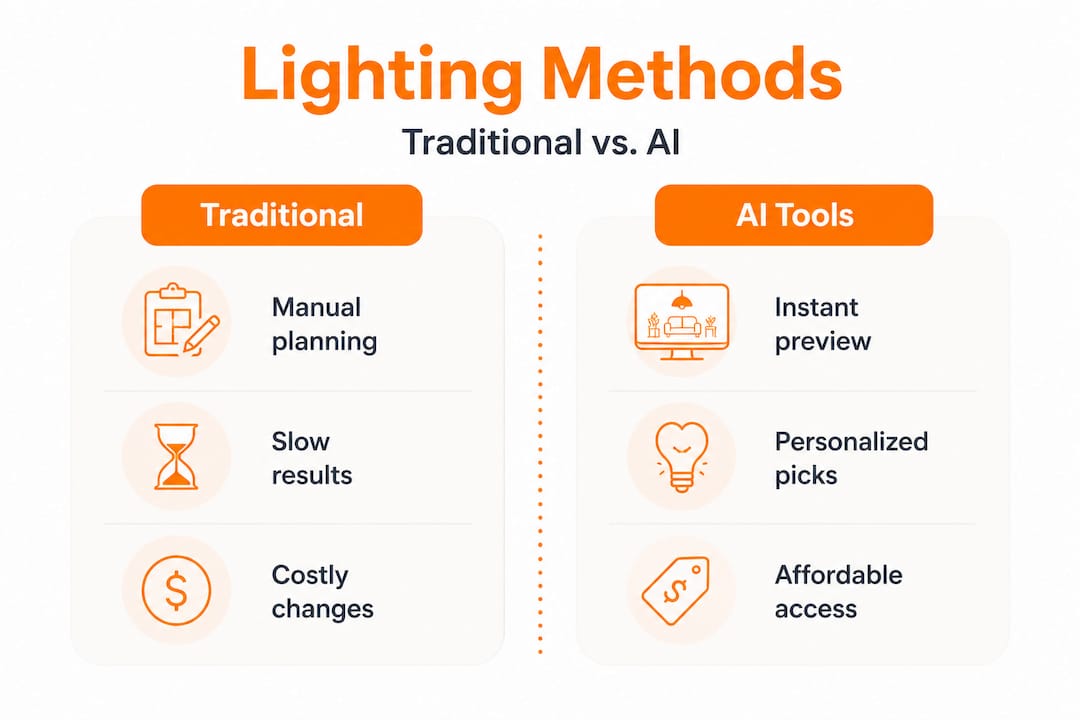
Het snelheidsvoordeel alleen al is transformerend. Een huiseigenaar die voorheen weken door catalogi en Pinterest-borden bladerde, kan nu in één middag een dozijn armatuurcombinaties testen. Vooral voor huurders betekent dit minder dure fouten met items die niet kunnen worden geretourneerd of complexe installatie vereisen. Het is alsof je een interieurontwerper en een virtuele showroom in één handig pakket hebt.
Statistiek: Interieurdesignplatforms melden dat gebruikers die een armatuur visualiseren in hun eigen ruimte voordat ze tot aankoop overgaan, aanzienlijk vaker tevreden zijn met hun uiteindelijke keuze, waardoor de neiging om items te retourneren en opnieuw te beginnen met wel 40% afneemt.
Pro-tip: Verifieer AI-gegenereerde renders altijd aan de hand van de werkelijke daglichtomstandigheden in je kamer. AI-tools modelleren kunstmatige verlichtingsscenario's doorgaans goed, maar ochtendzon die door ramen op het oosten stroomt, kan de manier waarop een warmgetint armatuur daadwerkelijk oogt in je ruimte veranderen. Zie de render als een sterk uitgangspunt, en houd vervolgens een fysiek staaltje of afwerkingsmonster op verschillende tijdstippen van de dag in de kamer om perfecte harmonie te garanderen.
Specifiek voor slaapkamers onthult het verkennen van moderne slaapkamerverlichting door een AI-lens hoe dramatisch de juiste hanglamp of bedwandlamp de sfeer kan veranderen van klinisch naar meeslepend. Buitenruimtes profiteren evenzeer van deze aanpak. Een goed ontworpen slimme verlichtingsplan voor thuis gebruikt dezelfde laagprincipes als interieurs, en AI-tools zijn steeds beter in staat om ook buitenrenders te verwerken. Bekijk moderne buitenverlichting om te zien hoe deze principes verder reiken dan je voordeur.
De Rol van Kwaliteitsinput en Menselijke Aanraking bij AI-Verlichting
Hoe krachtig deze tools ook zijn, ze zijn afhankelijk van kwaliteitsinputs en jouw betrokkenheid. Zie AI als een briljante assistent; het kan alleen werken met de informatie die jij verstrekt. Hier lees je hoe je het meeste uit AI-aanbevelingen haalt en ervoor zorgt dat je resultaten werkelijk spectaculair zijn.
Er bestaat een verleidelijke misvatting dat AI-tools al het zware werk doen. Dat is niet zo. De kwaliteit van wat je erin stopt, bepaalt de kwaliteit van wat eruit komt. Een wazige, slecht verlichte kamerfoto die vanuit een vreemde hoek is genomen, genereert een render die je ruimte verkeerd weergeeft. Omgekeerd zal een scherpe, goed verlichte foto, genomen vanuit een hoek om de hele kamer vast te leggen, iets opleveren dat echt nuttig en inspirerend is. Het is het klassieke "rotzooi erin, rotzooi eruit"-principe.
“AI democratiseert verlichtingsontwerp voor huiseigenaren en huurders door toegankelijke, gratis en betaalbare tools voor visualisatie te bieden zonder professionele krachten in te huren, maar succes hangt af van kwaliteitsinput en menselijke verificatie.”
Hier is een stap-voor-stap proces om je AI-verlichtingstoolervaring te maximaliseren:
- Fotografeer je Kamer Correct: Dit is aantoonbaar de meest kritische stap.
- Hoek: Ga in een hoek staan en fotografeer diagonaal om zoveel mogelijk van de ruimte vast te leggen, inclusief plafonds, muren en vloeren.
- Verlichting: Gebruik natuurlijk daglicht indien beschikbaar, en schakel kunstlicht uit om een ware weergave van het basislicht in de kamer te krijgen. Vermijd flitslicht, dat diepte afvlakt en kleuren vervormt.
- Helderheid: Zorg ervoor dat de foto scherp en goed belicht is. Een hoge-resolutieafbeelding geeft de AI meer gegevens om mee te werken.
- Opruimen: Hoewel niet strikt noodzakelijk voor de werking van de AI, helpt een opgeruimdere kamer de AI zich te concentreren op de architectonische elementen en biedt het een schoner canvas voor zijn suggesties.
- Noteer de Vaste Elementen van je Kamer: Geef zoveel mogelijk details. Schrijf de plafondhoogte, het vloermateriaal, de bestaande muurkleuren en eventuele architectonische kenmerken zoals zichtbare balken, sierlijsten, ingebouwde planken of unieke raamvormen op. Sommige tools laten je deze handmatig invoeren, waardoor de AI een rijker begrip van je ruimte krijgt.
- Kies een Stijlrichting Voordat je Uploadt: Ga niet blindelings te werk! Als je een ruwe esthetiek in gedachten hebt (warm minimalistisch, eclectisch maximalistisch, zacht industrieel, modern landelijk), helpt dit je om de suggesties van de AI kritisch te evalueren in plaats van je te laten beïnvloeden door nieuwheid. Maak een mini-moodboard of noteer trefwoorden die je gewenste sfeer beschrijven.
- Voer Meerdere Stijl-Iteraties Uit: Stop niet bij de eerste render. De meeste tools stellen je in staat om door verschillende esthetische richtingen te bladeren of variaties van een enkel concept te genereren. Vergelijk ze naast elkaar, let op hoe verschillende armaturen de sfeer en functionaliteit van de kamer veranderen.
- Kruisverwijzing met Echte Productspecificaties: Zodra de AI een armatuur tevoorschijn tovert waar je van houdt, zoek dan de werkelijke lumenoutput (helderheid), kleurtemperatuur (gemeten in Kelvin, bijv. 2700K voor warm, 5000K voor koel) en precieze afmetingen op voordat je tot aankoop overgaat. AI is geweldig voor visualisatie, maar real-world specificaties zijn essentieel.
- Beoordeel de Render in Context: Print de render af of toon deze op een groot scherm in je eigen kamer. Dit klinkt misschien ouderwets, maar het is verrassend effectief om schaalproblemen te detecteren, te begrijpen hoe kleuren zich vertalen en een gevoel te krijgen voor de voorgestelde lichtverdeling.
Menselijke controle is niet optioneel. Het is de stap die een verlichtingsupgrade die eruitziet als een tijdschriftpagina, onderscheidt van een die gewoon duur lijkt. AI biedt de inspiratie en de visuele snelkoppeling. Jij levert het praktische oordeel, rekening houdend met factoren zoals je dagelijkse routines, de hoeveelheid natuurlijk licht op verschillende tijdstippen van de dag en je persoonlijke comfort. Voor woonkamers geeft het bladeren door industriële woonkamerverlichting naast je AI-renders je een real-world productanker. Voor slaapkamers kan artistieke slaapkamerinspiratie ideeën aanwakkeren die de AI misschien niet vanzelf naar boven haalt.
Pro-tip: Ga na ontvangst van AI-suggesties fysiek naar een verlichtingsshowroom of bestel kleine staaltjes van de afwerkingsmaterialen. Geborsteld messing in een render kan er heel anders uitzien onder het specifieke lichtspectrum van jouw kamer dan hoe het op je scherm verschijnt.
Voor meer tips over het voorbereiden van je ruimte voor ontwerptools, bekijk deze gids over hoe je goede interieurfoto's maakt.
AI-Oplossingen Toepassen: Praktische Workflows voor Elke Ruimte
Klaar om deze tools aan het werk te zetten? Hier lees je hoe je stap voor stap definitieve verlichtingsoplossingen kunt toepassen in elke kamer, waarbij je