Hoe Visueel Zoeken de Verlichtingsselectie Transfomeert
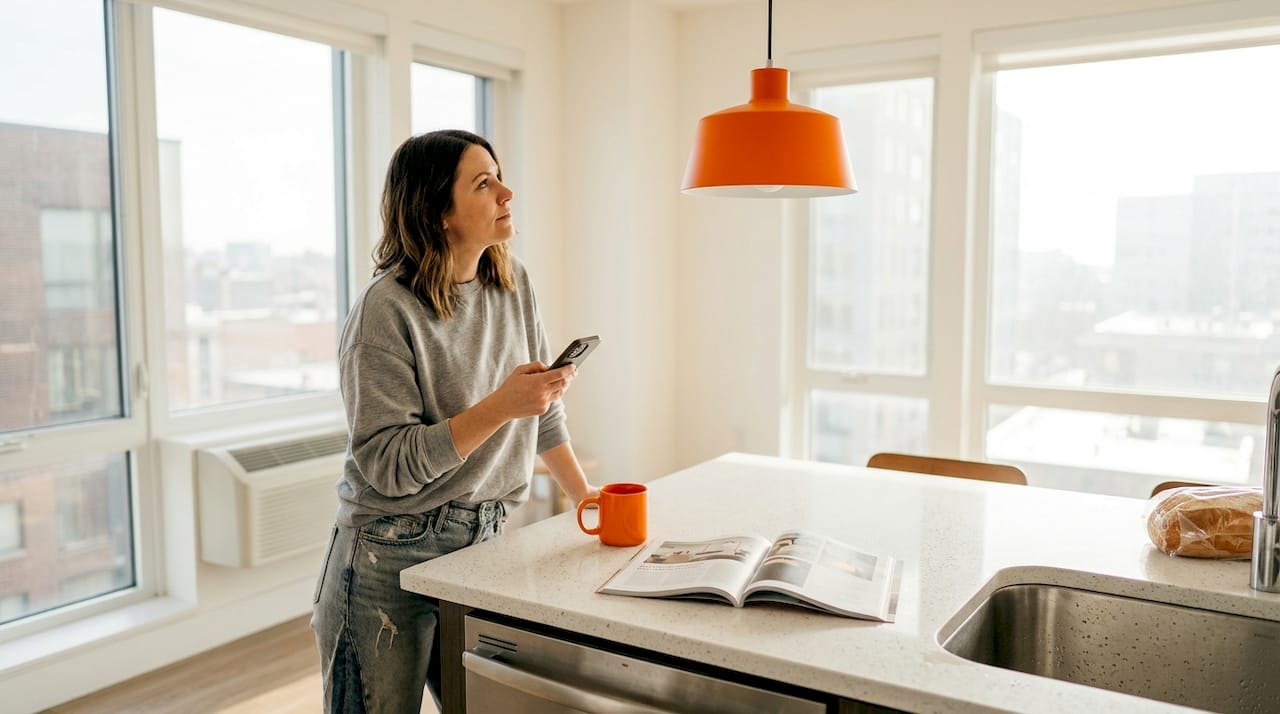
Stel je voor: je scrollt door Pinterest, en je oog valt op de *perfecte* hanglamp voor je kookeiland. Hij is strak, chic, en precies wat je al die tijd al droomde. Maar dan slaat de realiteit toe. Hoe vind je hem? Je probeert trefwoorden: "zwarte minimalistische hanglamp," "moderne keukenlamp," "geometrische kroonluchter." Je scrollt, je klikt, en je verdwaalt in een zee van "bijna's" en "net-niet's." Klinkt dit bekend?
Die frustrerende cyclus van trefwoordraden, eindeloos scrollen en uiteindelijk genoegen nemen met iets generieks heeft te lang de verlichtingsaankoop gedefinieerd. Maar raad eens? Die dagen zijn officieel voorbij. Dankzij de magie van AI-gestuurd visueel zoeken, is dat prachtige armatuur dat je op Instagram, in een boetiekhotel of zelfs bij een vriend thuis zag, nu slechts een foto verwijderd van jou. Door één enkele afbeelding te uploaden, kunnen huiseigenaren nu binnen een seconde overeenkomende of bijna identieke armaturen identificeren, met 96% snellere zoekresultaten vergeleken met handmatig browsen. Welkom in de toekomst van verlichtingsontdekking!
Dit is niet zomaar een kleine upgrade; het is een complete revolutie in hoe we verlichting vinden en selecteren. Deze gids neemt je mee door precies hoe je die kracht kunt benutten, van het begrijpen van de geavanceerde technologie erachter tot het kiezen van de juiste tools en het behalen van de best mogelijke resultaten voor jouw ruimte. Maak je klaar om je verlichtingsselectie-ervaring moeiteloos te transformeren!
Inhoudsopgave
- Waarom Visueel Zoeken Belangrijk Is voor Verlichtingsinspiratie
- Hoe AI-gestuurde Visuele Zoektools Werken voor Huisverlichting
- Gespecialiseerd vs. Algemeen Visueel Zoeken: Wat is het Verschil?
- Resultaten uit de Praktijk: Hoeveel Sneller en Nauwkeuriger Is Visueel Zoeken?
- Tips voor de Beste Resultaten met Visueel Verlichtingszoeken
- De Verborgen Kracht van Visueel Zoeken: Waarom het Meer Is Dan Alleen een Snelkoppeling
- Klaar om Jouw Perfecte Licht te Ontdekken? Probeer Vandaag Nog Visueel Zoeken
- Veelgestelde Vragen
Belangrijkste Conclusies
| Punt | Details |
|---|---|
| Visueel zoeken bespaart tijd | AI-tools verkorten de verlichtingsselectie van minuten naar seconden voor huiseigenaren. |
| Nauwkeurige en gepersonaliseerde matches | Visueel zoeken levert tot 95% matchnauwkeurigheid op door stijl- en afwerkingsdetails te lezen. |
| Fotokwaliteit is cruciaal | Heldere, goed belichte foto's leiden tot betere en creatievere verlichtingsmatches. |
| Gespecialiseerde tools presteren beter dan algemene apps | Tools die zijn gebouwd voor verlichting, behandelen armatuurdetails die algemeen visueel zoeken vaak mist. |
| Iedereen kan ontwerpen als een pro | Visueel zoeken stelt alle huiseigenaren in staat om ontwerpidëeën betaalbaar tot leven te brengen. |
Waarom Visueel Zoeken Belangrijk Is voor Verlichtingsinspiratie
Nu we de context hebben geschetst waarom de oude manier van verlichtingszoeken achterhaald aanvoelt, laten we eens kijken wat visueel zoeken tot een gamechanger maakt voor zowel huiseigenaren als designliefhebbers. Het gaat niet alleen om snelheid; het gaat om het ontsluiten van een nieuw niveau van ontwerpvrijheid en precisie.
De traditionele benadering om een opvallende kroonluchter of een sfeervolle bedlamp te vinden, omvatte trefwoordraden, stijlbenamingen die vaak verschillende dingen betekenden voor verschillende catalogi, en een uitputtende hoeveelheid tabbladen wisselen. Je probeerde "industriële hanglamp," dan "landelijke kroonluchter," dan "moderne rustieke armatuur," in de hoop iets in de buurt te vinden. Visueel zoeken elimineert deze frustrerende vertaalslag volledig. Je ziet een armatuur dat je mooi vindt – in een restaurant, een designblog, de woonkamer van een vriend, of een glossy magazine – en je zoekt met de afbeelding zelf. Je hoeft geen complexe designvocabulaire te ontcijferen; de afbeelding spreekt voor zich.
Wat dit bijzonder spannend maakt voor designliefhebbers, is de directheid van de verbinding. Visueel zoeken revolutioneert verlichtingsontdekking voor huiseigenaren door een intuïtieve pijplijn te bouwen van inspiratie naar aankoop, vooral voor mensen die esthetiek browsen op sociale platforms. Het algoritme zoekt niet alleen naar een "zwarte hanglamp" — het leest tegelijkertijd silhouetcomplexiteit, materiaaltextuur, proportionele schaal en omgevingsdiffusie-stijl. Dit betekent dat het de *sfeer* begrijpt die je zoekt, niet alleen de basisbeschrijvingen.
Dit is wat visueel zoeken écht ontsluit voor de geïnspireerde huiseigenaar:
- Directe inspiratie-naar-productstroom: Maak een screenshot van een armatuur vanaf elk socialmediaplatform, een digitaal magazine, of maak zelfs een snelle foto in het echte leven, en zoek direct. Geen trefwoordvertaling nodig, alleen pure visuele matching.
- Voorbij trefwoorden: Stijl- en functieherkenning: AI onderscheidt een warm-diffuserende bolvormige hanglamp van een scherp-schaduwende industriële kooi, twee zeer verschillende verlichtingssferen die in vergelijkbare vormen zijn gehuisvest. Het begrijpt de subtiele verschillen in materialen zoals geborsteld messing versus gepolijst chroom, of matglas versus helder glas.
- Ontdekking van zeldzame en niche-armaturen: Op zoek naar een ongebruikelijke Art Deco wandlamp met geribbeld glas, een specifieke mid-century moderne kroonluchter, of een uniek Scandinavisch design? Visueel zoeken brengt opties naar boven die trefwoorden nooit zouden vangen. Het duikt diep in catalogi om die verborgen parels te vinden.
- Gepersonaliseerde browse-ervaring: Omdat de tool jouw geüploade esthetiek begrijpt, komen de resultaten precies overeen met jouw smaak, in plaats van een generieke populariteitsranglijst. Het leert wat je leuk vindt en verfijnt zijn suggesties na verloop van tijd.
- Het doorbreken van designjargonbarrières: Niet iedereen spreekt vloeiend "Bauhaus," "Boho Chic," of "Industriële Loft." Visueel zoeken elimineert de noodzaak van een designwoordenboek, waardoor je je visie eenvoudig kunt communiceren door deze te laten zien. Zoals Architectural Digest vaak benadrukt, is verlichting een sleutelelement van design, en visueel zoeken maakt het voor iedereen toegankelijk.
“Het moment dat je stopt met zoeken met woorden en begint met zoeken met afbeeldingen, stop je met compromissen sluiten over design en begin je te vinden wat je daadwerkelijk voor ogen had.”
Die verschuiving, van het benaderen van je visie in tekst naar het visueel presenteren ervan, is waar de creatieve energie leeft. Het is het verschil tussen het beschrijven van een lied en het afspelen ervan – je *begrijpt* het meteen.
Hoe AI-gestuurde Visuele Zoektools Werken voor Huisverlichting
Nu je de creatieve waarde ziet, laten we eens achter de schermen kijken hoe deze AI-tools daadwerkelijk werken — en waarom dat empowering is voor design, en niet intimiderend.
De kern van elke visuele zoektool is een geavanceerd stukje technologie genaamd een convolutioneel neuraal netwerk (CNN). Zie een CNN als een superintelligente visuele detective. In plaats van alleen naar het totaalbeeld te kijken, leest het afbeeldingen laag voor laag, waarbij het ingewikkelde details identificeert: eerst eenvoudige randen en lijnen; dan basisvormen en texturen; en tenslotte complexe ruimtelijke relaties en hele objecten. Specifiek voor verlichting wordt de AI getraind op honderdduizenden, zo niet miljoenen, armatuurafbeeldingen, elk minutieus getagd met attributen zoals hanglamp vs. plafondlamp, matte vs. gepolijste afwerking, warme vs. koele lichtdiffusie, organische vs. geometrische vorm, en zelfs historische periode. Wanneer je een foto uploadt, extraheert het model een unieke visuele "vingerafdruk" van jouw afbeelding en vergelijkt deze binnen milliseconden met zijn enorme catalogus, om de dichtstbijzijnde overeenkomsten te vinden.
Hier is hoe het proces vanuit jouw perspectief als gebruiker werkt:
- Zoek je Inspiratiebeeld: Dit is het leuke deel! Maak een screenshot van Pinterest, Instagram, of een designmagazine. Fotografeer een prachtig armatuur in een hotellobby, een restaurant, of de woonkamer van een vriend. Elke redelijk scherpe foto werkt als je startpunt.
- Upload naar de Visuele Zoektool: Met één tik wordt je afbeelding naar de AI gestuurd. Onmiddellijk scant het systeem op armatuurkenmerken: de schaal ten opzichte van de kamer (indien zichtbaar), het silhouettype (bijv. bol, lineair, kooivormig), de afwerkingstint (bijv. warm goud, koel zilver, rustiek brons), en de overkoepelende stilistische taal (bijv. modern, traditioneel, industrieel).
- Bekijk de Gevonden Resultaten: AI-tools zoals Find a Lamp tonen armaturen die overeenkomen op meerdere attributen tegelijk, niet alleen de basisvorm. Je ziet bijna identieke opties naast creatieve alternatieven die belangrijke ontwerpelementen delen, zodat je variaties op je oorspronkelijke inspiratie kunt verkennen.
- Verfijn met Filters: De initiële resultaten zijn nog maar het begin. Gebruik intuïtieve categoriefilters om je zoekopdracht te verfijnen op kamertype (bijv. eetkamer, slaapkamer), afwerking, grootte, prijsklasse, of zelfs specifieke merken. De meeste gespecialiseerde tools maken progressieve verfijning mogelijk zonder opnieuw te uploaden, wat het ontdekkingsproces naadloos maakt.
- Visualiseer in Je Ruimte (Geavanceerde Platforms): Sommige geavanceerde platforms bieden zelfs augmented reality (AR) functies die geselecteerde armaturen over een foto van je eigen kamer leggen. Deze ongelooflijke functie stelt je in staat om de schaal te valideren, de sfeer te controleren en ervoor te zorgen dat het armatuur perfect bij je bestaande inrichting past voordat je een aankoop doet.
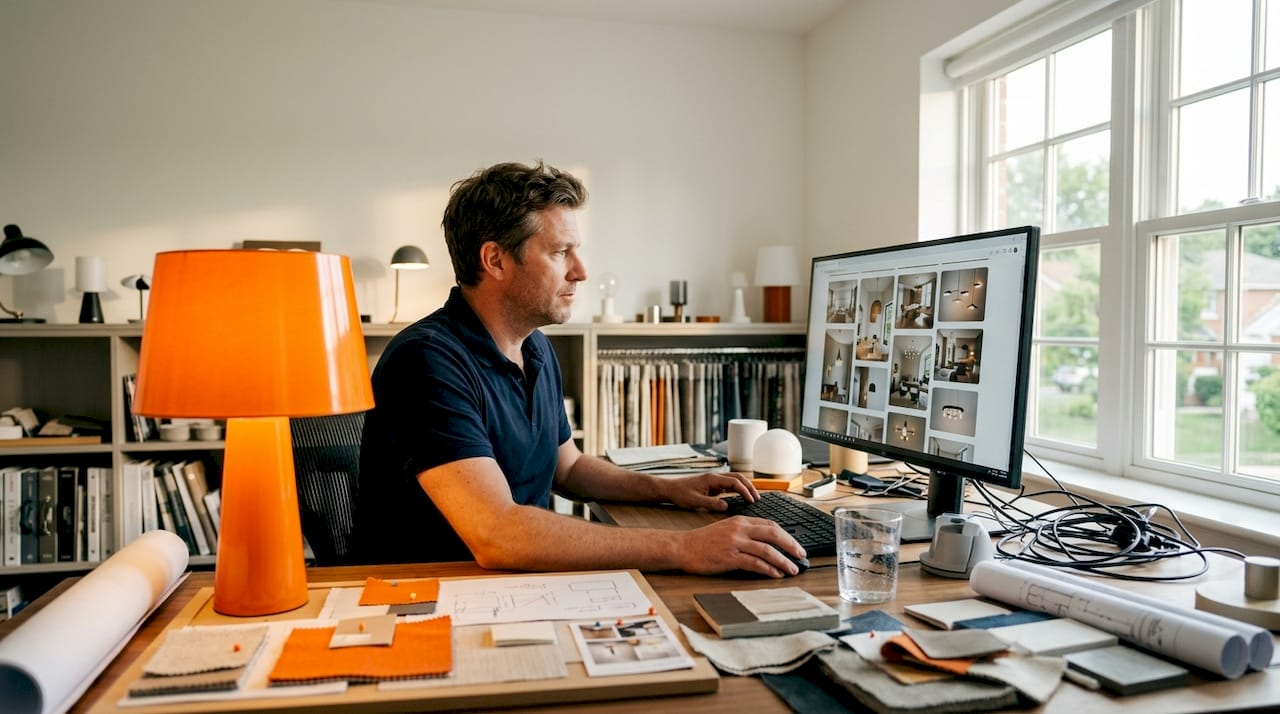
Een gebied waar deze technologie opmerkelijk goed presteert, is in kamers met duidelijke designtalen. Winkelen voor moderne eet- en keukenverlichting werkt bijzonder goed met visueel zoeken, omdat de AI het verschil kan zien tussen een minimalistische lineaire ophanging en een warme mid-century bolvormige cluster — twee zeer verschillende armaturen die beide onder een generieke "eetkamer hanglamp" trefwoordzoekopdracht zouden kunnen verschijnen. Op dezelfde manier, als je een kinderruimte inricht en een specifiek armatuur in gedachten hebt, zal visueel zoeken naar speelse slaapkamerverlichting resultaten opleveren die daadwerkelijk overeenkomen met de grillige, verkleinde esthetiek die je voor ogen hebt, in plaats van zomaar een "kinderlamp".
Pro Tip: Snijd je inspiratiefoto strak rond het armatuur bij voordat je deze uploadt. Het verwijderen van afleidende achtergrondmeubels, muurkleuren of andere elementen helpt de AI om de analyse uitsluitend op het licht zelf te richten, wat resulteert in preciezere en relevantere matches. Voor een diepere duik in hoe AI afbeeldingen verwerkt, bekijk deze uitleg van beeldherkenningstechnologie.
| Functie | AI visueel zoeken | Handmatig zoeken op trefwoord |
|---|---|---|
| Zoektijd | Minder dan 1 seconde | 15 tot 20 minuten |
| Attribuutherkenning | Meerlagig (vorm, afwerking, schaal, sfeer, materiaal) | Beperkt tot tekstlabels |
| Behandelt zeldzame armaturen | Ja, met hoge nauwkeurigheid | Zelden, mist vaak nuances |
| Resultaatpersonalisatie | Hoog, gebaseerd op visuele input | Laag, gebaseerd op algemene trefwoorden |
| Vereist designvocabulaire | Nee, visuele input is voldoende | Ja, precieze termen nodig |
Gespecialiseerd vs. Algemeen Visueel Zoeken: Wat is het Verschil?
Begrijpen hoe deze tools werken leidt natuurlijk tot een praktische vraag: moet je een speciale verlichtingszoektool gebruiken, of volstaat een algemene app zoals Google Lens of Pinterest Lens?
Beide hebben een rol, maar ze dienen fundamenteel verschillende doelen. Gespecialiseerde tools zijn specifiek gebouwd voor decoratieve verlichting, wat betekent dat ze rekening houden met de ingewikkelde nuances die het meest van belang zijn voor kroonluchters, hanglampen en wandlampen. Ze begrijpen kaptypes, armconfiguraties, kapgeometrieën, de warmte van een matglazen diffuser versus een helder glazen exemplaar, en hoe deze elementen bijdragen aan de algehele stijl en functie van een armatuur. Algemene tools, hoewel indrukwekkend in hun brede mogelijkheden, beschikken simpelweg niet over dat niveau van categoriespecifieke intelligentie.
Algemene visuele zoektools zoals Google Lens en Pinterest Lens zijn echt nuttig voor vroege inspiratie: het identificeren van een brede stijl, het ontdekken van de naam van een ontwerper, of het linken naar een moodboard. Ze analyseren kleur, vorm en contextuele omgeving effectief. Als je bijvoorbeeld een foto van een woonkamer maakt, kunnen ze meubels, vloerkleden of verfkleuren suggereren. Maar wanneer je een vervangende wandlamp moet vinden die perfect past bij drie andere die al aan je muur hangen, of een specifieke Art Nouveau hanglamp voor een renovatieproject moet vinden, leveren die brede tools vaak irrelevante woondecoratiepagina's, lifestyle-afbeeldingen of zelfs volledig ongerelateerde producten op in plaats van koopbare verlichtingsarmaturen.
Hier is wanneer je welk type tool moet gebruiken:
- Gebruik gespecialiseerd visueel zoeken naar verlichting wanneer:
- Je een specifieke armatuur stijl in gedachten hebt en koopbare matches nodig hebt uit een samengestelde catalogus.
- Het armatuur ongebruikelijk, architectonisch of zeer gestileerd is (denk aan sculpturale of glamoureuze eet- en keukenverlichting).
- Je matches nodig hebt binnen een gedefinieerde catalogus met precieze filters voor prijs, grootte, afwerking en lichtbron.
- Je zoekt voor een renovatie of een kamer waar consistentie en exacte matching tussen armaturen cruciaal zijn.
- Je de "ruis" van irrelevante resultaten wilt vermijden en direct naar verlichtingsopties wilt gaan.
- Gebruik algemeen visueel zoeken wanneer:
- Je je in een zeer vroege inspiratiefase bevindt en breed verkent over vele woondecoratiecategorieën.
- Je een ontwerper, merk of esthetische beweging van een algemeen item op een foto wilt identificeren, niet noodzakelijkerwijs een specifiek product.
- Je een moodboard samenstelt zonder onmiddellijke aankoopintentie, en algemene visuele aanwijzingen voldoende zijn.
- Je tekst, bezienswaardigheden of planten in een afbeelding moet identificeren.
Voor een kamer met een meer klassieke uitstraling leveren gespecialiseerde tools resultaten op binnen de juiste esthetische taal. Zoeken naar traditionele eet- en keukenverlichting via een AI-getrainde catalogus betekent dat de resultaten het juiste silhouetgewicht, de juiste afwerkingswarmte en de juiste periode-specifieke details hebben die een generieke afbeeldingsengine simpelweg niet zou prioriteren. Het is het verschil tussen vragen "wat voor licht is dit?" en "laat me zien waar ik *dat specifieke licht* of iets ongelooflijk vergelijkbaars kan kopen."
| Criterium | Gespecialiseerd verlichtingszoeken | Algemeen visueel zoeken |
|---|---|---|
| Nauwkeurigheid armatuurdetails | Zeer hoog, begrijpt verlichtingsnuances | Matig, richt zich op brede vormen/kleuren |
| Koopbare resultaten | Ja, direct uit samengestelde catalogi | Vaak indirect, kan linken naar algemene blogs |
| Stijlnuance (hanglampen, wandlampen) | Uitstekend, herkent specifieke vormen | Beperkt, kan ongelijksoortige stijlen groeperen |
| Breedte inspiratie | Matig, gericht op verlichtingsproducten | Zeer breed, omvat alle visuele elementen |
| Beste use case | Gericht armatuur vinden & kopen | Vroege exploratie & algemene info |
Pro Tip: Gebruik beide achter elkaar voor de ultieme designkracht. Begin met Pinterest Lens of Google Lens om een brede visuele richting te verkennen of een algemene stijl te identificeren. Zodra je een specifiek armatuur hebt gevonden dat je mooi vindt, upload je die favoriete afbeelding naar een gespecialiseerde tool zoals de AI visuele zoekfunctie van Find a Lamp om het daadwerkelijke koopbare product te vinden dat bij je moodboard past!
Resultaten uit de Praktijk: Hoeveel Sneller en Nauwkeuriger Is Visueel Zoeken?
We hebben het gehad over het "hoe" en het "waarom", maar wat zeggen de cijfers? Hier is hoe visueel zoeken daadwerkelijk presteert wanneer het op de proef wordt gesteld in de veeleisende wereld van interieurdesign en verlichting.
De gegevens zijn opvallend en consistent indrukwekkend. In een visueel zoekonderzoek naar meubels en woondecoratie daalde de zoektijd van gemiddeld 18 minuten naar een verbazingwekkende 0,8 seconden. Dat is een reductie van 96% in de tijd die wordt besteed aan het jagen op het juiste product! Bovendien steeg de matchnauwkeurigheid tot 95%, wat betekent dat gebruikers overweldigend tevreden waren met de relevantie van de resultaten. Voor designprofessionals is de impact even diepgaand: het aantal benodigde ontwerpersuren voor het vinden van producten daalde met gemiddeld 90%. Dit zijn geen marginale verbeteringen; ze vertegenwoordigen een fundamentele, baanbrekende verschuiving in hoe snel en effectief goede designbeslissingen kunnen worden genomen.
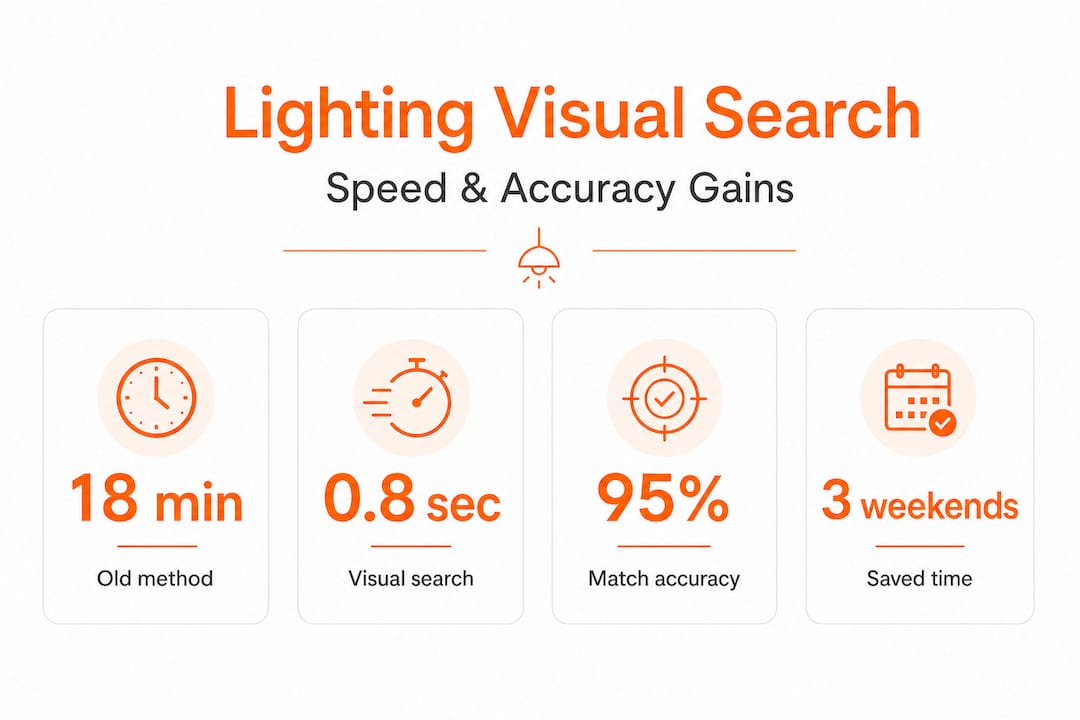
Wat betekent dat praktisch voor jou, de huiseigenaar? Iemand die voorheen drie frustrerende weekenden besteedde aan het vinden van de juiste verlichtingsarmatuur voor zijn woonkamer, kan nu dezelfde taak in één middag volbrengen, compleet met visuele bevestiging van hoe het armatuur eruitziet in zijn daadwerkelijke ruimte. Stel je voor dat je die kostbare tijd terugkrijgt! Deze drastische vermindering van de zoektijd vermindert ook aanzienlijk de beslissingsmoeheid, waardoor je je designkeuzes met frisse ogen en hernieuwde energie kunt benaderen.
| Metriek | Vóór visueel zoeken | Ná visueel zoeken |
|---|---|---|
| Gemiddelde zoektijd | ~18 minuten | ~0,8 seconden |
| Matchnauwkeurigheid | Variabel/subjectief, vaak frustrerend | Tot 95%, zeer betrouwbaar |
| Ontwerpersuren (inkoop) | Hoog, aanzienlijke tijdsinvestering | Verminderd met 90%, waardoor creatieve tijd vrijkomt |
| Gebruikerstevredenheid | Vaak gefrustreerd, geneigd tot schikken | Consistent hoger, leidt tot zelfverzekerde keuzes |
| Beslissingsmoeheid | Hoog, kan projecten vertragen | Aanzienlijk verminderd |
De creatieve implicaties reiken veel verder dan louter gemak. Wanneer de tijd voor het vinden van producten instort, verschuift de energie die ooit werd besteed aan jagen naar cureren, vergelijken en verfijnen. Huiseigenaren kunnen drie of vier serieuze kandidaat-armaturen doorlopen in de tijd die het voorheen kostte om er één te vinden. Dat is een creatieve vermenigvuldiger die leidt tot werkelijk uitzonderlijke resultaten. De snelheid en nauwkeurigheid stellen je in staat om meer opties te verkennen, ze rigoureus te vergelijken en uiteindelijk een keuze te maken waar je jarenlang oprecht van zult houden. Voor meer inzichten in de impact van visueel zoeken in de detailhandel, biedt een Forbes-artikel over visueel zoeken in e-commerce een breed perspectief.
Voor kamers waar verlichting de hele sfeer bepaalt, zoals moderne woonkamerverlichting waarbij één statementstuk de hele esthetiek verankert, verandert die snelheid en nauwkeurigheid de kwaliteit van de uiteindelijke ontwerpbeslissing echt. Je schikt niet langer; je cureert echt.