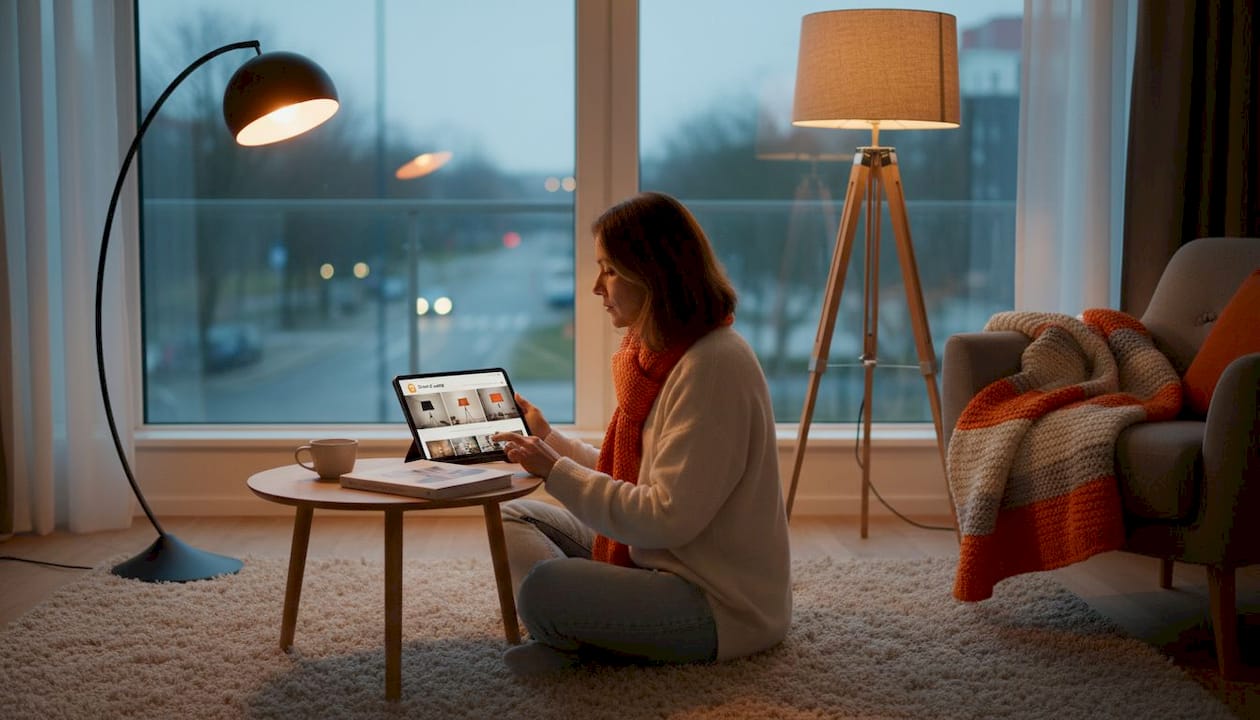
Ever walked into a room and felt an immediate sense of "wow"? Chances are, it wasn't just the sofa or the paint color doing all the heavy lifting. More often than not, it's the magical interplay of light, specifically through thoughtfully chosen lamps, that elevates a space from merely decorated to truly designed. Most homeowners treat lamp shopping like a matching exercise, hunting for a “set” that coordinates by color, brand, or era. But that instinct, however well-meaning, is precisely what keeps rooms feeling flat and forgettable. True curated lamp selection is less about identical pairs and more about intentional orchestration, layering different heights, finishes, and silhouettes to create a space that feels composed rather than assembled.
When we think of curation the way a gallery director thinks of an exhibition, lighting stops being an afterthought and becomes the signature detail that makes every room unmistakably yours. It's about crafting a narrative, where each lamp contributes to the overall story, creating moments of drama, intimacy, and functionality. And with AI-powered tools reshaping how we shop and visualize, that level of personalization and sophistication is finally within reach for every homeowner, empowering you to create spaces that genuinely reflect your unique style without the guesswork.
Understanding Curated Lamp Selection: Beyond the "Matchy-Matchy"
With the misconception challenged, let us clarify what curated lamp selection really means and what it looks like in practice. Imagine a perfectly styled bookshelf: it’s not just rows of identical books. Instead, you see a mix of hardcovers and paperbacks, varying heights, perhaps a few decorative objects or photos nestled amongst them, all contributing to a rich, interesting display. Curated lamp selection works much the same way.
At its core, curated lamp selection is an intentional design decision. Rather than purchasing a matched lamp set because it's convenient or "safe," you are making deliberate choices about scale, material, silhouette, and light quality. Each choice is anchored to the specific character and needs of your room, treating every lamp as a sculptural participant in a larger visual conversation. It's about achieving harmony not through uniformity, but through thoughtful contrast and balance.
One of the most freeing ideas in modern interior design is that curated rooms avoid “matchy-matchy” in favor of harmony achieved through contrast, texture blending, and proportion. Translation: your bedside lamps do not need to be twins. In fact, a raw-linen drum shade on a substantial ceramic base paired with a slim, polished brass table lamp featuring a sleek fabric shade can feel far more sophisticated and collected than two identical pieces from the same collection. The magic is in the dialogue between them, the subtle nods and interesting differences.
What does intentional curation actually involve? Consider these core principles:
- Contrast in Texture: Juxtapose different tactile qualities. Think a sleek, matte black metal base against a soft, pleated silk shade, or a rough-hewn terracotta lamp paired with a smooth, polished chrome arc lamp. This creates visual interest and depth, inviting the eye to linger.
- Harmony in Proportion and Scale: Lamps should always relate to the furniture beneath them and the overall room size. A tall buffet lamp overwhelming a low credenza defeats the composition, while a tiny lamp on a grand console looks lost. Aim for lamps that are proportional to their surroundings, contributing to the visual weight and balance of the arrangement.
- Finish Blending: Instead of matching, blend. Repeating one metal finish across different lamp styles (e.g., brushed brass in a floor lamp and a table lamp of distinct designs) ties a room together without forcing uniformity. Mixing warm metals (brass, copper) with cool metals (chrome, nickel) or natural materials (wood, rattan) can create a dynamic yet cohesive feel.
- Color Story Alignment: Even if lamp shapes and materials vary widely, a shared warm-toned palette or a consistent accent color can keep the visual narrative cohesive. Lamps can introduce subtle pops of color or reinforce an existing scheme through their bases or shades.
- Layering Light Types: True curation involves understanding the three main types of lighting: ambient (general illumination), task (focused light for activities), and accent (highlighting features). A well-curated room utilizes a mix of lamps to provide all three, ensuring both functionality and mood.
“The goal isn’t symmetry for its own sake — it’s a room that feels like it was assembled with intention, where every piece earns its place through relationship, not repetition.”
Exploring harmonizing lamp styles across different design movements can reveal surprising combinations you would never have considered from a catalog page alone. It's about embracing individuality within a thoughtful framework.
Why Lamp Selection Shapes Ambience and Balance: More Than Just Illumination
Now that we know the principles behind curated lamp selection, let us see why these choices matter so profoundly for your room’s feel and composition. A lamp is never just a light source. When chosen with care, it functions as a sculptural accent, an architectural anchor, and an ambience machine all at once. The way a deeply pleated linen shade diffuses light versus the way an open-cage Edison bulb projects it creates entirely different emotional temperatures in the same physical space. This is the power of intentional lighting design.
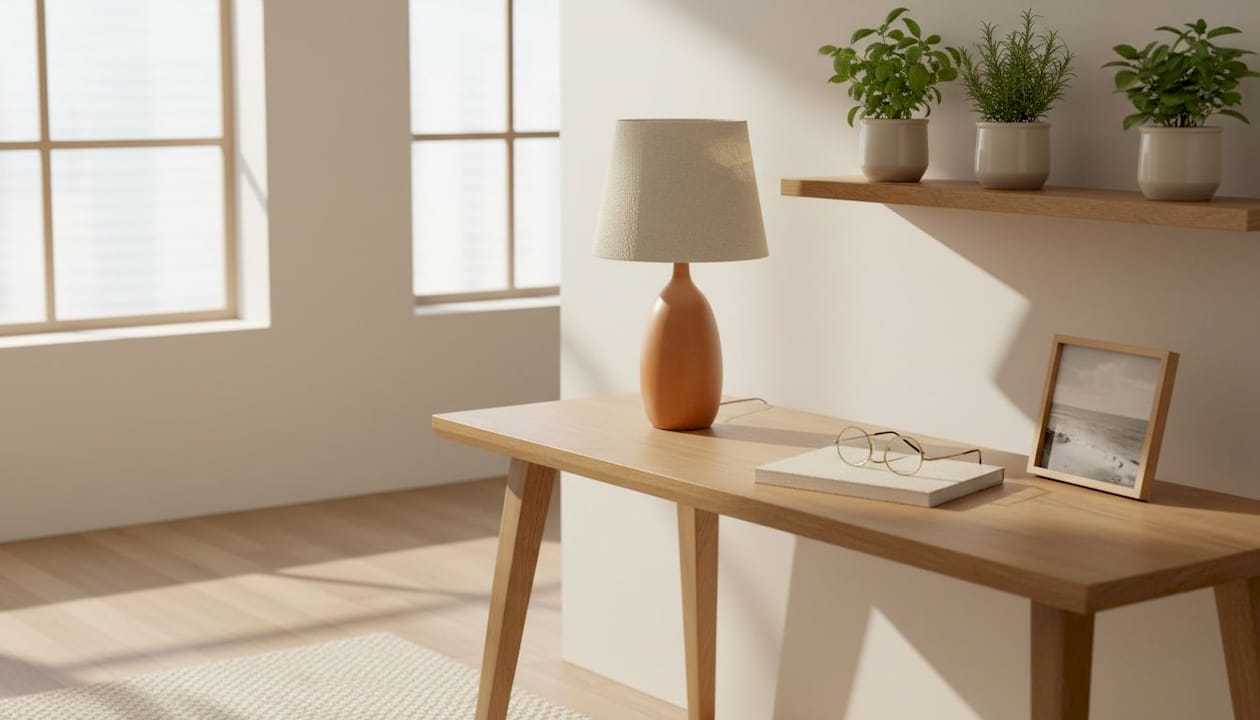
Lamp selection is often judged by how it shapes ambience and visual balance, specifically through the use of lamps as sculptural and architectural accents and ensuring scale fits the room. Scale, in particular, is the variable most homeowners underestimate. A lamp that is too small for a sofa table quietly undermines the whole seating arrangement; a floor lamp that towers over a reading chair transforms that corner into a distinct destination, sometimes for the better, sometimes for the worse if not carefully considered.
Here is a quick reference for understanding lamp scale and room type, along with additional considerations:
| Room Area/Purpose | Recommended Lamp Height | Ideal Base Style | Shade Width Guideline | Key Ambience Factor |
|---|---|---|---|---|
| Living Room Sofa Table | 26–30 inches | Substantial, sculptural, or slender and elegant | 16–20 inches wide (proportionate to table) | Soft, diffused ambient light |
| Bedroom Nightstand | 24–27 inches (bottom of shade at shoulder height when seated) | Slender, organic, or compact for smaller spaces | 12–16 inches wide (avoid overwhelming nightstand) | Gentle task light for reading, warm glow |
| Office Desk | 18–22 inches (adjustable for task focus) | Articulated arm, industrial, or minimalist design | Focused beam preferred, often opaque shade | Direct, glare-free task lighting |
| Entryway Console | 30–34 inches (often taller for visual impact) | Bold, statement base, perhaps a pair for symmetry | 18–22 inches wide (commanding presence) | Welcoming ambient light, visual anchor |
| Reading Nook | 58–65 inches (floor lamp), or 24-28 inches (table lamp on side table) | Arched, adjustable, or substantial for floor; cozy for table | Downward-facing shade for floor; diffused for table | Warm, focused task light for comfort |
To put this into practice with real rooms, walk through these steps:
- Map Your Light Layers: Before looking at a single lamp, identify which areas need ambient light for general illumination, task light for specific activities (reading, cooking, working), and accent light to highlight art or architectural features. This strategic mapping ensures every lamp serves a purpose beyond just looking pretty.
- Anchor to a Focal Point: Every room benefits from one lamp that commands attention, usually the largest, most sculptural, or uniquely designed piece. This anchor lamp sets the tone for the entire lighting scheme.
- Build Relationships: Choose subsequent lamps that echo one element (finish, color family, material, or design era) from the focal lamp without duplicating its full design. This creates a subtle visual thread that connects the different pieces.
- Test the Scale On Paper (or Digitally!): Before buying, use a physical cutout or, even better, an AI visualization tool (more on this soon!) to see how a lamp's silhouette and height will actually appear in your space. This sounds old-fashioned but it is still one of the most accurate reality checks available, saving you from costly returns.
- Consider the Light Cast: A lamp that looks stunning but throws harsh, downward light into a seating area works against the ambience you are building. Pay attention to the shade material, shape, and bulb type. Does it create a soft glow, a directed beam, or an upward wash? Each has a different effect on the mood and functionality of the space.
Pro Tip: Photograph your room in natural daylight and again at night with only your current lighting on. The contrast between those two images will immediately reveal where the light feels thin, too warm, or unbalanced, giving you a precise brief for your next lamp selection. This simple exercise can be incredibly illuminating!
Pairing this exercise with a lamp selection guide calibrated to specific rooms will sharpen your instincts considerably. And for a broader view of how different interior lighting types interact, layering your curated lamps with overhead and recessed fixtures becomes a richer, more nuanced conversation, creating a truly dynamic and functional lighting scheme.
The Role of AI in Personalized Lamp Curation: Your Smart Design Assistant
As we look for practical ways to achieve curated lamp harmony, let us explore how AI makes personalized selection smarter and more accessible than ever. Manual lamp selection, however inspired, comes with real limitations. You browse endless pages of options, try to hold mental images of your room in your head, and often default to safe choices because the risk of getting it wrong feels too high. AI-driven curation rewrites that equation entirely, transforming a daunting task into an enjoyable, confident journey.
Here is how AI curation stacks up against the traditional approach, highlighting its transformative power:
| Criteria | Traditional Selection (Manual) | AI-Powered Curation (Smart) |
|---|---|---|
| Style Matching | Manual browsing by category, guessing what "fits" | Visual analysis of room photo, identifying existing style vocabulary (e.g., Mid-Century Modern, Coastal Organic, Industrial) |
| Proportion Fit | Guesswork from measurements, often leading to scale errors | Scale assessment against furniture and room dimensions, recommending appropriate sizes |
| Finish Coordination | Memory-based or physical swatch comparison, prone to error | Algorithmic color and material matching, suggesting complementary finishes |
| Visualization | Imagined in your head, hoping it looks good in reality | Virtual placement of lamps in your actual space via augmented reality |
| Discovery Range | Limited by search terms and personal bias, often missing hidden gems | Broadened by visual similarity search and intelligent recommendations based on desired effect |
| Time Investment | Hours of browsing, decision fatigue, potential returns | Minutes of guided recommendations, streamlined decision-making, higher satisfaction |
| Overcoming Design Paralysis | High risk of analysis paralysis, defaulting to safe/boring choices | Provides confident, data-backed suggestions, encouraging bold yet harmonious choices |
The core advantage is that AI removes the friction between having good taste and acting on it. When you upload a photo of your living room, an AI system analyzes the existing color palette, the proportions of your furniture, the style vocabulary of your space (whether it reads as mid-century modern, coastal organic, or industrial eclectic), and then filters thousands of lamp options down to a curated shortlist that fits your actual room, not a hypothetical one. It’s like having an interior designer with an encyclopedic knowledge of lamps, available 24/7.
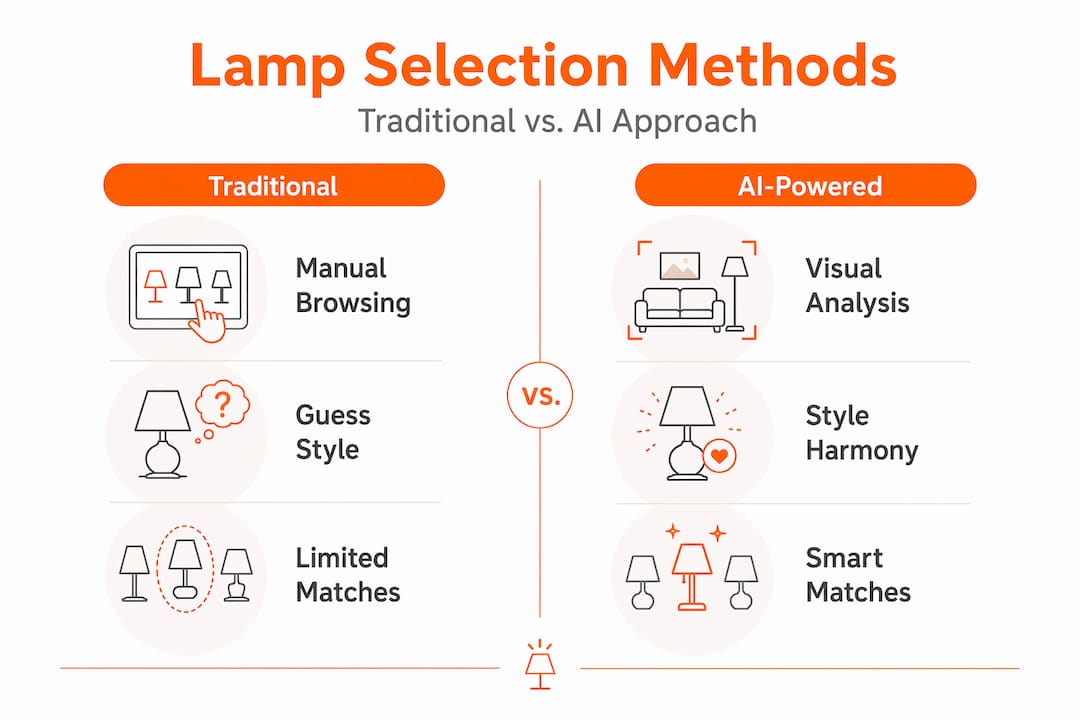
As curated interiors favor contrast and proportion over matching sets, AI is uniquely equipped to identify those contrasting elements that still cohere visually. It can flag that a rattan-wrapped floor lamp and a smoked-glass table lamp share enough warmth in their tonal palette to feel unified, even if their materials are worlds apart. It understands the nuances of "visual weight" and how different forms interact within a space, suggesting combinations that a human eye might miss or hesitate to try.
The ambience and visual balance that expert designers prioritize, those elusive qualities of scale and sculptural presence, can now be surfaced algorithmically. The result is not just speed. It is confidence. You are not guessing; you are working with a system that has analyzed thousands of successful room compositions and applied those principles directly to your home.
AI also excels at visual search. Spotted a lamp in a design magazine or on social media that you love? Upload that image and AI tools can find similar items within a curated catalog, bridging the gap between inspiration and acquisition. Explore the lighting style guide to understand how different design movements map onto specific lamp forms and finish families, a vocabulary that AI uses as its reference library, translating your aesthetic preferences into tangible options.
One striking reality: homeowners who use AI visualization tools before purchasing report significantly higher satisfaction with their choices, primarily because they have eliminated the guesswork about how a lamp will actually look in situ. Seeing a warm-amber ceramic base lamp glowing in your own virtual living room corner is a completely different experience from trusting a product photo. It empowers you to make informed decisions and truly personalize your space.
Applying Curated Lamp Selection: Real-World Tips for Your Home
Equipped with an understanding of curated lamp selection and the power of AI, it is time to turn these principles into practical strategies for your home. The first step is resisting the pull toward matching sets. When you walk into a furniture store and see a coordinated lamp collection, that convenience is doing the design thinking for you. Instead, use the lamp selection guide to anchor your choices to the actual needs of your space rather than a manufacturer’s aesthetic package.
Here are the strategies we recommend for effective curated selection, designed to give your home that coveted designer touch:
- Start with One Anchor Lamp: Choose your most significant lamp first, typically a floor lamp or a prominent table lamp in your main gathering space (e.g., next to the sofa, in a reading nook). This "hero" lamp should be a statement piece that excites you. Every subsequent choice should respond to this one piece in terms of scale, warmth, or finish, creating a harmonious dialogue.
- Limit Your Finish Palette to Two or Three: While mixing finishes is encouraged, overdoing it can lead to visual chaos. A strong triadic palette might be matte black, warm brass, and natural materials (wood, rattan, ceramic). More than three distinct, dominant finishes creates visual noise rather than richness. Subtle variations within a finish (e.g., antique brass and polished brass) are fine.
- Mix Shade Materials Deliberately: The shade is crucial for light diffusion and aesthetic. A linen shade softens and diffuses light beautifully; a metal shade sharpens and directs it. Use shade material as a tuning knob for ambience in each zone of the room. Consider drum shades for modern appeal, empire shades for a classic touch, or even sculptural, open-weave shades for textural interest.
- Use AI Visualization Before Committing: This is arguably the most impactful tip. Upload your room photo and virtually test different lamp options in your actual space. This single step eliminates the most common regret in lamp purchasing: the scale surprise, the color mismatch, or the "it just doesn't feel right" dilemma.
- Shop Across Design Eras: Don't be confined by a single style. A sculptural 1970s-inspired ceramic lamp beside a slender contemporary brass piece is exactly the kind of tension that makes a curated interior feel collected rather than purchased. This juxtaposition creates depth and personality, telling a story of evolving taste.
- Pay Attention to Bulb Temperature and Brightness: Even perfectly chosen lamps can undermine ambience if one runs at 2700K (warm amber, cozy) and another at 4000K (cool white, task-oriented). Aim for consistent color temperature across all lamps in a single room for a cohesive feel. Additionally, consider dimmers for flexibility in brightness, allowing you to adjust the mood instantly. Understanding bulb basics can make a huge difference.
- Consider Cord Management: While often overlooked, visible, tangled cords can detract from even the most beautiful lamp. Plan for outlets, or consider creative ways to conceal or integrate cords into your design, especially for floor lamps.
Expert designers assess lamp choices by their sculptural presence as much as their light output. That means a lamp you choose for a reading corner should feel interesting even when it is switched off. It should look like something that belongs in that specific corner of that specific room, a piece that adds character and depth.
Pro Tip: Take a screenshot of a lamp that excites you aesthetically, even if it seems stylistically mismatched to your room, then use an AI visual search tool to find similar items at various price points and in finishes better suited to your existing palette. Sometimes the lamp you fall for in the wrong finish leads you directly to the right one, or inspires a creative mix you hadn't considered.
Why Most Lamp Curation Guides Miss the Mark: The Pitfalls of Prescribed Style
Most lamp curation guides make a fundamental error: they organize their advice around rigid style categories. “If your home is modern, choose these lamps. If it is traditional, choose those.” This framework sounds logical but it leads to rooms that feel like mood boards rather than homes – aesthetically correct, perhaps, but lacking soul and genuine personality.
Real design is messier and far more interesting than that. The most compelling interiors we encounter are almost never stylistically pure. They are the product of accumulated decisions, some planned, some intuitive, that create a layered environment with genuine personality. A mid-century sofa does not obligate you to a mid-century lamp. In fact, the conversation between a sinuous organic lamp base and a geometric sofa can generate far more visual interest and depth than a room where everything subscribes to the same aesthetic memo. This kind of thoughtful juxtaposition is the hallmark of a truly curated space, reflecting a life lived and tastes acquired over time.
The other major failure in conventional guides is the treatment of lamp selection as a finishing touch, something you do after the “real” design decisions have been made. We believe this gets it exactly backwards. Because interior lighting types and their placement shape how every other element in the room is perceived – from the color of your walls to the texture of your rug – lighting deserves to be part of the foundational design conversation, not the afterthought. It dictates mood, highlights architectural features, defines zones, and makes a space feel welcoming or stark. To relegate it to the final step is to miss its immense power.
This is precisely where AI tools genuinely change the game. They do not impose a style category on your room. They read the room as it actually exists – its colors, textures, proportions, and existing design elements – and surface options that respond to its specific visual character. The result is curation that feels personal, authentic, and evolved rather than prescribed or generic. AI understands that your home is a reflection of you, not a showroom.
The curated room avoids “matchy-matchy” by embracing contrast and proportion as the true connective tissue. AI codifies that principle and makes it actionable for homeowners who may not have years of design training but absolutely have a clear sense of what feels right in their own space. Trust that instinct, and let intelligent tools help you act on it with confidence, transforming your vision into a beautifully lit reality.
Find Your Perfect Lamp with AI Curation: Your Design Journey Starts Here
You have the principles. You understand the power of intentional curation and the limitations of traditional shopping. Now here is how to put them into action without the hours of exhausting browsing and the anxiety of getting it wrong that traditional lamp shopping demands.

At Find a Lamp, our AI-powered platform reads your room, not just your search terms. Upload a photo of your space and receive recommendations calibrated to your room’s existing palette, proportions, and style vocabulary. Whether you are searching for living room lamps that balance a statement sofa, or exploring our vintage lamp collection for that perfect sculptural accent with a collected aesthetic, our catalog is built for intentional selection. Use our virtual visualization tool to see your shortlisted lamps placed in your actual space before you spend a dollar. Eliminate guesswork, embrace confidence, and discover lamps that don't just illuminate, but truly elevate your home. Start your curated lighting journey with AI lamp recommendations designed around your specific home.
Frequently Asked Questions
How does AI-curated lamp selection differ from traditional methods?
AI-curated lamp selection leverages advanced visual analysis and algorithmic matching to intelligently assess your room's existing style, scale, color palette, and light requirements. It then surfaces a tailored selection of lamps that create harmony through thoughtful contrast, balanced proportions, and complementary aesthetics. Traditional methods, in contrast, often rely on manual browsing by predefined categories or simply trying to match lamp sets, which frequently leads to predictable or uninspired results that lack true personality and cohesion.
Can curated lamp selection help small spaces feel bigger?
Absolutely! Curated selection is particularly beneficial for small spaces because it prioritizes appropriate proportion and visual balance. By carefully choosing lamps that are scaled correctly to your furniture and the overall floor area, you prevent visual crowding and ensure each piece contributes positively to the composition. The right lamp, even a statement piece, when perfectly scaled, can make a compact space feel considered, intentional, and even expansive, rather than cramped or cluttered.
What is the main advantage of using AI to select lamps?
The main advantage of using AI to select lamps is its ability to remove the guesswork and decision fatigue inherent in traditional shopping. By analyzing your actual room rather than a hypothetical preference profile, AI delivers highly personalized recommendations that blend harmoniously through intelligent contrast with your existing décor. The virtual visualization feature further enhances this by allowing you to see exactly how a lamp performs within your space before committing, eliminating buyer's remorse and boosting confidence in your design choices.
Should all lamps in a room match for a curated look?
No, quite the opposite! Curated rooms actively avoid the "matchy-matchy" aesthetic. Instead, they build harmony through a sophisticated interplay of shared finish accents, complementary proportions, and intentional contrast between different lamp forms, materials, and styles. A room where every lamp is identical tends to read as coordinated but lacks the depth, personality, and collected feel that defines a truly curated space. The goal is a visual dialogue, not a monologue of identical pieces.