Illuminate Your Impact: The Ultimate Guide to Office Lighting for Productivity & Style

Ever walked into an office that just felt… off? Dim, dreary, or perhaps too bright and sterile? The culprit is often the lighting. Poor office lighting is one of those invisible productivity killers that rarely makes it onto anyone’s improvement checklist. Yet, the quality, color, and placement of the lamps around you profoundly shape your focus, your mood, and even how your workspace is perceived by clients and colleagues. It's not just about seeing; it's about feeling, performing, and thriving.
Studies consistently show that optimized lighting can boost productivity by around 2%, with daylight-mimicking fixtures proving especially powerful for focus and mood. But it's more than just productivity metrics. Great lighting reduces eye strain, minimizes headaches, and can even contribute to better sleep patterns by supporting your natural circadian rhythm. In short, it’s an investment in your team’s well-being and your business’s bottom line.
At Find a Lamp, we believe every workspace deserves to be bathed in light that empowers, inspires, and elevates. This comprehensive guide will walk you through the essential lamp types available for office environments, the key specifications that truly matter, and how to layer them strategically for both measurable performance gains and genuine visual appeal. Get ready to transform your office from simply functional to fabulously effective!
Table of Contents
- How to Choose Office Lamps: The Science of Your Shine
- Main Types of Lamps for Offices: Your Lighting Toolkit
- Comparison table: Which office lamp type is best for you?
- Why LEDs Rule the Roost: A Game-Changer for Office Lighting
- Matching Lamp Types to Your Office's DNA: Layout by Layout
- Our Take: Unmasking Common Office Lighting Blunders (and How to Fix Them!)
- Find your ideal office lamp with expert AI-powered recommendations
- Frequently asked questions
Key Takeaways
| Point | Details |
|---|---|
| Layered lighting matters | Combining ambient, task, and accent lamps reduces eye strain and boosts comfort. |
| LEDs outperform fluorescents | LED office lamps save energy, last longer, and support employee well-being. |
| Daylight color is best | Lamps with a daylight spectrum improve alertness, mood, and accuracy. |
| Smart and adjustable | Smart, dimmable, or app-controlled lamps suit flexible and hybrid workspaces. |
How to Choose Office Lamps: The Science of Your Shine
Before you start browsing fixtures, you need a filter. Not every lamp that looks sharp on a catalog page is actually doing anything useful for your team. Here are the specs that matter most when selecting office lamps, because getting these right is what separates a thoughtfully lit workspace from a headache-inducing one.
Color Temperature (Kelvin - K): Your Mood Setter
Color temperature is measured in Kelvin (K) and determines whether your light feels warm and cozy or crisp and alerting. For office work, you want to sit in the 4000K to 6500K range — this is the daylight spectrum that supports alertness, cognitive performance, and sustained focus. Think of it this way: a warm 2700K light is perfect for winding down in the evening, but it signals your brain to relax, not to crunch numbers. A cooler 5000K light, on the other hand, mimics midday sun, keeping you energized and focused. This range is crucial for maintaining natural circadian rhythms, which dictate our sleep-wake cycles and overall energy levels.
CRI (Color Rendering Index): The Truth Teller
CRI tells you how accurately a lamp renders colors compared to natural sunlight, on a scale from 0 to 100. Why does this matter? A CRI of 80 or above is the practical minimum for office environments, while 90+ is ideal for tasks involving color-sensitive work like design, photography editing, or detailed document review. Low CRI lighting creates visual fatigue because your brain is constantly compensating for distorted color information, making colors appear washed out or unnatural. High CRI light ensures that documents, fabrics, and digital displays appear as they should, reducing strain and improving accuracy.
Dimmability and Adjustability: Your Personal Control Panel
These features seem optional until you’ve spent an afternoon staring at a glare-filled screen or struggling to read a document under insufficient light. Dimmable fixtures let occupants tune light intensity to match the task at hand, whether that’s an intense focus sprint or a relaxed team brainstorm. This adaptability is key in modern, dynamic workspaces. Adjustable arm lamps and tiltable overhead fixtures give users physical control over the direction of light, which is just as important for preventing shadows and glare on screens or work surfaces. Smart dimmers that can be controlled via apps or voice commands take this personalization to the next level.
Flicker-Free LEDs: The Invisible Comfort Factor
This deserves a special mention. Many older fluorescent tubes and even some budget LED fixtures flicker at frequencies invisible to the naked eye but still registered by the nervous system. The result? Fatigue, headaches, reduced concentration, and even migraines for sensitive individuals. Always look for lamps rated as flicker-free, particularly for workstations where people spend six to eight hours daily. It's a non-negotiable for employee well-being.
Energy Efficiency: Good for the Planet, Great for Your Wallet
While not a direct comfort factor, energy-efficient lighting, primarily LED, dramatically reduces operational costs and your carbon footprint. Look for certifications like ENERGY STAR or equivalent ratings to ensure you're getting the most bang for your buck and being environmentally responsible.
Key selection criteria at a glance:
- Color temperature: 4000K to 6500K for focus and alertness
- CRI: 80 minimum, 90+ for color-accurate tasks
- Dimmable controls: For flexible intensity management
- Adjustable positioning: (arm, tilt, or height) for personalized direction
- Flicker-free LED technology: For sustained comfort and health
- Energy-efficient certification: (ENERGY STAR or equivalent) for cost savings and sustainability
One framework we consistently return to is layered lighting. Rather than relying on a single overhead source to do all the heavy lifting, layered lighting combines ambient (general), task (focused), and accent (decorative or architectural) layers. This approach creates a dynamic, comfortable, and highly functional environment, eliminating harsh shadows and monotonous illumination. Explore home office lighting tips for a deeper look at how this principle translates into practical setup ideas.
Pro Tip: In windowless offices, full-spectrum daylight lamps rated at 5000K or above can genuinely replicate the energizing effect of natural light. Combine them with warm accent lighting in breakout zones to create spaces that feel human, not institutional. Consider human-centric lighting solutions that dynamically adjust color temperature and intensity throughout the day to support natural circadian rhythms.
Main Types of Lamps for Offices: Your Lighting Toolkit
With the criteria clear, let’s look at the actual lamp categories available for office use. Each one plays a distinct role in the lighting ecosystem of a workspace, and understanding those roles is what allows you to build genuinely effective lighting setups.
1. Task Lamps (Desk Lamps): The Focused Powerhouse
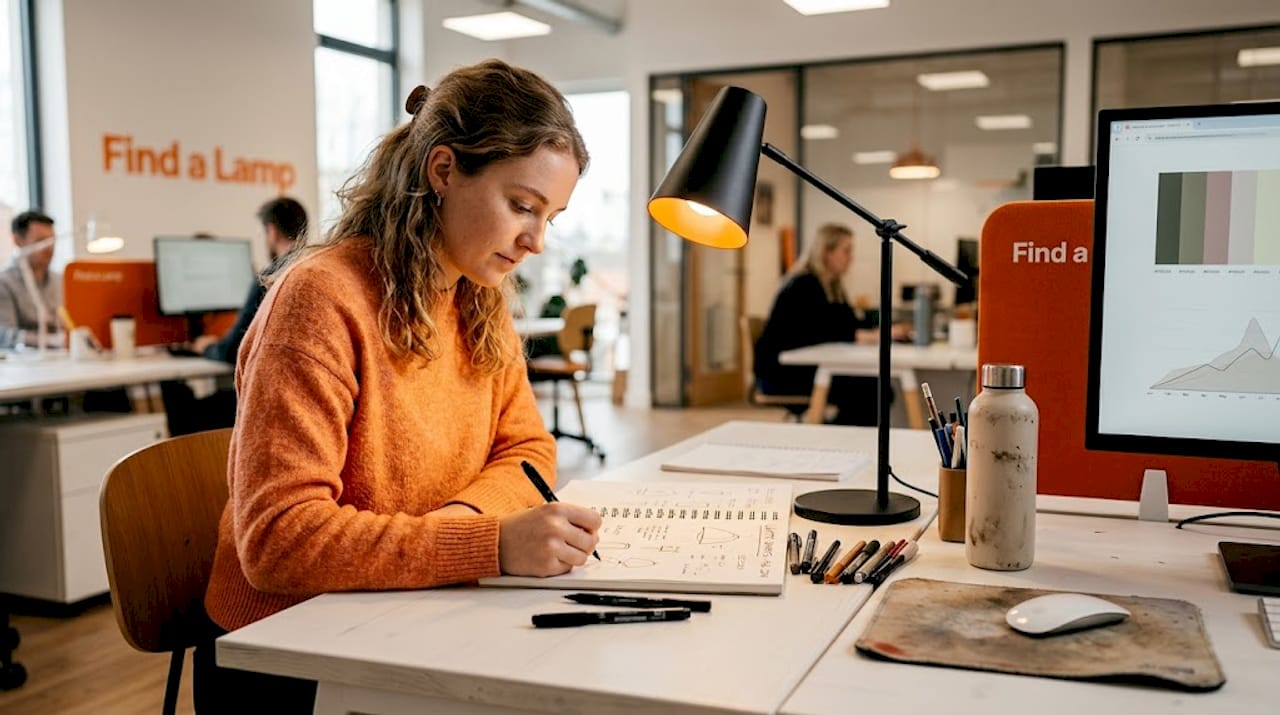
Task lamps are the workhorses of individual workstations. Positioned on desks or clamped to desk edges, they deliver focused, directional light exactly where the work is happening. This is crucial for reducing eye strain during close-up tasks like reading, writing, or detailed computer work, especially when ambient light isn't enough or creates shadows. The best modern desk lamps include built-in dimmer controls, multiple color temperature modes (so users can switch between warm and daylight settings), and often thoughtful additions like USB charging ports or wireless charging pads. For lamps for every office style, task lamps come in everything from minimalist matte-black profiles to articulated architect-style arms that feel more like precision instruments than furniture accessories. They empower individuals to customize their immediate lighting environment.
2. Floor Lamps: The Flexible Ambiance Creator
Floor lamps in offices often get overlooked because they’re associated with residential living rooms. That’s a missed opportunity! In collaborative zones, breakout areas, or open-plan offices with lounge seating, a well-placed floor lamp provides warm ambient fill lighting without requiring any ceiling installation. Torchiere-style floor lamps bounce light off ceilings for diffused general illumination, softening the overall feel of a room. Task-style floor lamps with adjustable heads serve focused reading or workstation needs, especially useful in spaces where desk lamps aren't practical. They’re also exceptionally practical for rented offices where ceiling modifications aren’t possible, offering great flexibility in layout changes.
3. Overhead Fixtures: LED Panels and Troffers: The Foundation of General Illumination
Troffers (recessed rectangular fixtures) and surface-mounted LED panels are the dominant ambient light source in most commercial offices. Done right, they provide even, shadow-free illumination across large open-plan spaces, ensuring a baseline level of brightness. Done poorly, they’re the source of the harsh, flat lighting that drains the energy out of a room. The key upgrades here are switching to panels with high CRI ratings (85+), adding dimming capability, and where possible, specifying tunable white fixtures that can shift color temperature throughout the day to track natural light cycles. This allows the general lighting to adapt from an energizing cool white in the morning to a softer, warmer tone in the afternoon, promoting comfort and well-being.
4. Wall Sconces and Architectural Lights: The Depth and Character Builders
Wall sconces bring something overhead panels simply cannot: vertical accent lighting that adds depth, texture, and sophistication to an office interior. In reception areas, meeting rooms, or executive offices, sconces layered against artwork, feature walls, or between architectural elements elevate the space from functional to genuinely designed. They also eliminate the flat, two-dimensional look that comes from illuminating only horizontal surfaces, creating a more dynamic and inviting atmosphere. Follow lighting installation and design tips if you’re planning a wall-mounted lighting project.
5. LED Strips and Under-Cabinet Lamps: The Shadow Eliminators & Detail Enhancers
LED strips are the secret weapon for creating subtle yet impactful lighting. Installed beneath shelving units, along desk edges, inside display cases, or as cove lighting above cabinetry, they create ambient glow that visually expands a space and highlights architectural features. Under-cabinet LED strips on workstation shelving eliminate the shadow that overhead lighting often casts directly onto a desk surface—one of the most common and underappreciated causes of eye strain in offices with open shelving above workstations. They are incredibly versatile for accenting, task support, and even wayfinding.
Layered lighting combining ambient, task, and accent sources is the strategy professionals rely on to eliminate eye strain, reduce harsh shadows, and prevent the glare that single-source lighting inevitably creates. It’s about creating a rich, adaptable lighting environment.
Pro Tip: In hybrid or hotdesking offices, invest in smart lamps with app or voice control. When occupants change daily, preset scene programs let anyone dial in their preferred lighting setup instantly without needing to physically adjust every fixture. This maximizes flexibility and user satisfaction.
Comparison table: Which office lamp type is best for you?
After exploring the core options in detail, a side-by-side comparison helps clarify the decision for specific contexts.
| Lamp type | Relative cost | Adjustability | Best use case | Key advantage |
|---|---|---|---|---|
| Task / desk lamp | Low to medium | High | Individual workstations, detailed work | Focused, personalized task light; reduces eye strain |
| Floor lamp | Medium | Medium to high | Lounge, breakout, open-plan fill, reading nooks | Flexible, no ceiling work needed; adds warmth |
| LED panel / troffer | Medium to high | Low (unless tunable) | Open-plan general illumination, primary ambient source | Even, wide-area coverage; foundational lighting |
| Wall sconce | Medium | Low to medium | Reception, exec offices, meeting rooms, hallways | Depth, accent, architectural interest; elevates aesthetics |
| LED strips | Low | Low (fixed install) | Shelves, desk edges, cove lighting, display cases | Ambient glow, shadow elimination; highlights features |
Why LEDs Rule the Roost: A Game-Changer for Office Lighting
The clear winner across nearly every category is LED technology, regardless of fixture type. While the initial investment might be slightly higher than traditional fluorescent or incandescent options, the long-term benefits are simply incomparable. LEDs deliver up to 75% energy savings over fluorescent alternatives, making a significant dent in your operational costs. But the advantages extend far beyond the energy bill:
- Unmatched Lifespan: LEDs operate for 50,000+ hours, meaning lamp replacement cycles extend from every 1-2 years to 10 or more years. Imagine the reduction in maintenance costs and disruption!
- Superior Light Quality: LEDs offer excellent CRI, ensuring true color rendition. More importantly, they operate flicker-free, eliminating the headaches, eye strain, and fatigue commonly associated with fluorescent lighting. This directly contributes to a healthier, more comfortable work environment.
- Circadian Rhythm Support: Modern LED technology allows for tunable white light, which means you can adjust the color temperature throughout the day. This ability to mimic natural daylight patterns supports your team's circadian rhythm, improving alertness during the day and promoting better sleep at night.
- Reduced Heat Output: LEDs generate significantly less heat than traditional bulbs, which can reduce your HVAC load and contribute to a more comfortable indoor temperature, especially in large open-plan offices.
- Smart Integration: LEDs are inherently compatible with smart controls, dimmers, and app-controlled systems. This allows for unparalleled flexibility, scene-setting, and energy management, adapting your lighting to your team's evolving needs.
That’s not a marginal improvement. That’s a fundamental upgrade to the health, economics, and overall experience of your office environment. Browse our curated modern office lighting picks to see how LED technology translates into beautifully designed fixtures across every office style.
Matching Lamp Types to Your Office's DNA: Layout by Layout
Knowing what each lamp type does is one thing. Knowing which combination serves your specific office layout is where the real decisions get made. A thoughtful lighting plan considers the function, aesthetics, and human experience of each zone.
Open-Plan Offices: The Collaborative Hub
Open-plan offices present the most complex lighting challenge due to diverse activities happening simultaneously. You need even ambient coverage from high-CRI LED panels or troffers (around 4000K) to provide a comfortable baseline. This must be supplemented by adjustable task lamps at individual workstations for personalized control, allowing employees to mitigate glare and illuminate their specific work area. To create a sense of zoning and visual interest, acoustic or pendant fixtures suspended above collaboration tables or lounge areas add a sense of identity while improving task light in group settings. Consider smart controls to manage different zones independently.
Private Offices: The Personal Sanctuary
Private offices benefit enormously from a three-layer approach. Start with a dimmable overhead panel for general illumination, ideally tunable white for flexibility. Add a high-quality, adjustable desk lamp for close work, ensuring focused light where it's needed most. Finally, a floor lamp or wall sconce introduces ambient warmth and depth, softening the space during calls, creative thinking sessions, or when simply needing a moment of calm. This layering creates a versatile environment that supports both intense focus and relaxed contemplation.
Meeting and Conference Rooms: The Versatile Venue
These rooms require lighting that can shift dramatically between presentation mode (dimmed, focused on the screen or whiteboard) and discussion mode (brighter, even, and flattering for video calls). Dimmable LED panels, especially tunable white ones, combined with wall-mounted accent lights (like sconces) offer this versatility most elegantly. Program different lighting scenes into a smart control system so that a single touch can transform the room's ambiance from a focused presentation to a lively brainstorming session.
Reception Areas: The First Impression Architect
Reception areas are where first impressions live. Here, aesthetic impact deserves equal weight alongside function. Statement floor lamps, architectural sconces, and LED cove lighting work together to project a brand identity through light. Use warmer color temperatures (3000-3500K) to create a welcoming and comfortable atmosphere. Highlight artwork, architectural features, or branding elements with focused accent lighting to draw the eye and create visual interest.
Windowless Offices: The Daylight Mimicry Challenge
Windowless offices require the most deliberate strategy to combat feelings of confinement and promote well-being. Full-spectrum daylight lamps rated at 5000K or above are essential here, mimicking the quality of outdoor light and significantly reducing the psychological sense of enclosure. Layer them with warmer accent sources for balance, and consider circadian-tuning systems that shift color temperature throughout the day to maintain natural alertness rhythms. For natural light alternatives and supplementary strategies, explore options designed to replicate the full spectral quality of daylight indoors, such as light therapy lamps or virtual windows.
Lighting strategies by office layout:
| Office type | Primary layer | Task layer | Accent layer |
|---|---|---|---|
| Open plan | LED panels (4000K, dimmable) | Desk lamps per workstation | Pendant clusters above collaboration zones, LED strips |
| Private office | Dimmable, tunable overhead | Adjustable desk lamp (CCT adjustable) | Floor lamp or wall sconce (warmer K) |
| Meeting room | Tunable LED panels (scene presets) | N/A (or integrated table lights) | Dimmable wall sconces, indirect cove lighting |
| Reception | Cove or pendant LED (warmer K) | N/A | Statement floor lamps, architectural sconces, spotlighting |
| Windowless | Full-spectrum 5000K+ panels (circadian tuned) | Task lamp per desk | Warm accent LEDs for balance, indirect uplighting |
For workplaces with playful or creative brand identities, explore playful office lamp ideas to find fixtures that bring personality to the task of office illumination.
Pro Tip: App-controlled smart lamps let you create scene presets tailored to different activities – focused deep work, collaborative standups, client meetings, or end-of-day wind-down – so your lighting adapts as naturally as your workday does. This level of customization is a powerful tool for modern productivity.
Our Take: Unmasking Common Office Lighting Blunders (and How to Fix Them!)
Here’s the uncomfortable reality we see repeatedly: most offices treat lighting as an afterthought, defaulting to a grid of recessed LED panels and calling it a day. The overhead-only approach feels efficient on paper but creates a flat, shadowless environment that is simultaneously too harsh for relaxed collaboration and too uniform for focused individual work. It’s a one-size-fits-all solution in a world of genuinely varied work modes, leading to eye strain, fatigue, and a general lack of inspiration. This generic approach often ignores the fundamental principles of office ergonomics and human well-being.
What we believe, based on the patterns we observe in how people actually shop for and respond to office lighting, is that desk lamps and floor lamps are the single most underinvested categories in commercial office budgets. A $200 articulated desk lamp at every workstation does more for individual well-being and focus than thousands spent on upgraded overhead panel arrays. It puts control in the hands of the person doing the work, which is exactly where it belongs. It acknowledges that each person has unique needs and preferences, and that empowering them to adjust their immediate environment leads to greater comfort and productivity.
The other mistake is treating accent lighting as mere decoration rather than strategy. A wall sconce in a meeting room isn’t just pretty. It eliminates the flatness that makes spaces feel forgettable, adds the visual warmth that puts people at ease during difficult conversations, and signals that the environment has been thoughtfully considered. That matters for morale, for how clients perceive your organization, and for creating a distinct brand identity. Accent lighting gives a space soul and dimension.
Our recommendation: audit your current setup honestly. Does each workstation have dedicated task light? Do collaborative zones feel warmer and more human than focus areas? Is there any layering happening at all? If the answer to any of these is no, the fix doesn’t require a full renovation. A few well-chosen desk lamps and a strategically placed