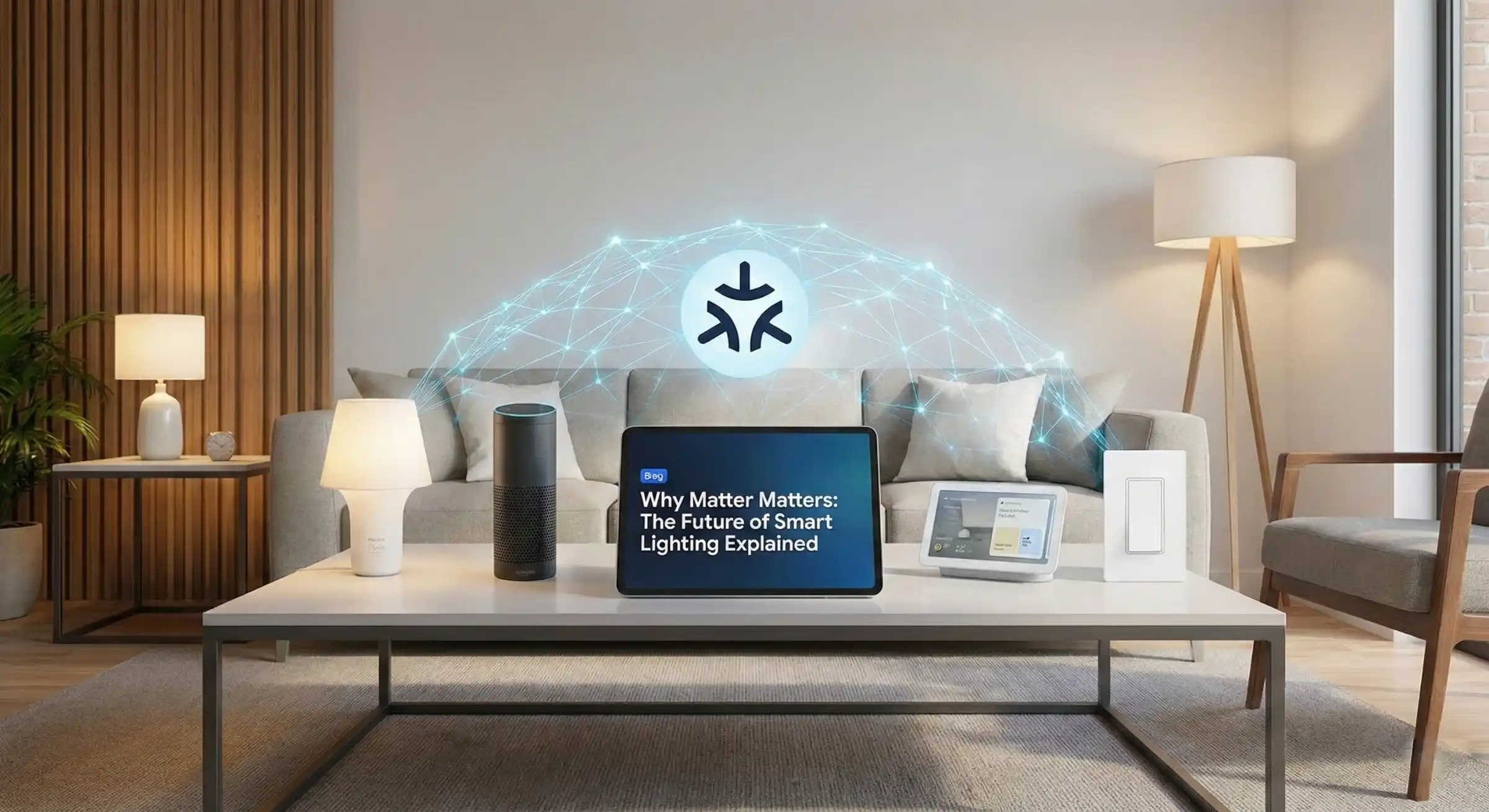
The Universal Standard: Why Matter is Lighting Up the Future
Tired of smart home devices that don't play well together? You're not alone! For years, the smart home landscape has been a fragmented mess of competing protocols, proprietary apps, and frustrating compatibility issues. But there's good news: a universal standard called Matter is here to change all that, especially when it comes to smart lighting.
Matter aims to solve the smart home fragmentation problem by creating an open-source, IP-based connectivity standard. Think of it as the "USB-C" of smart home devices. It's backed by the Connectivity Standards Alliance (CSA), a group of industry giants working together to ensure seamless interoperability. The CSA includes companies like Apple, Google, Amazon, Samsung, and many more.
The adoption of Matter is rapidly accelerating. Industry experts predict that over 5.5 billion Matter-compliant devices will be shipped globally by 2026. In 2023 alone, the CSA granted over 2,150 Matter certifications, proving its growing importance across lighting, sensors, locks, climate controls, and more.
So, why should you care about Matter, especially when choosing smart lamps and lighting solutions for your home? Let's dive into the key advantages.
Key Advantages of Matter for Smart Lighting
-
Local Control: Goodbye "Device Unavailable" Errors!
One of the most frustrating aspects of older smart home devices is their reliance on a constant internet connection. If your Wi-Fi goes down, your lights go dark. Matter solves this by working locally over Wi-Fi or Thread, a low-power mesh networking protocol we'll discuss later. This means your lights respond instantly, even if the internet is temporarily unavailable. No more "device unavailable" messages when your router hiccups!
Example: Imagine you're hosting a dinner party, and your internet goes down mid-meal. With older smart bulbs, you might be stuck fumbling for the light switch in the dark. But with Matter-enabled bulbs, your pre-set lighting scenes will continue to work flawlessly, ensuring a seamless and enjoyable evening.
-
Multi-Admin Support: Control From Any App
Before Matter, using different smart home ecosystems (like Apple Home, Amazon Alexa, and Google Home) often required complex bridges, hubs, or re-pairing devices. Matter simplifies this with multi-admin support. You can control the same light via Apple Home, Amazon Alexa, and Google Home simultaneously without any hassle. Simply add a lamp once, and use it from any supported app. It's a true game-changer for households with multiple users and preferred ecosystems.
Example: Let's say you prefer using Apple HomeKit, while your partner prefers Google Home. With Matter, you can both control the same smart lamp in your living room using your respective apps, without needing to switch between platforms or worry about compatibility issues.
-
Enhanced Security: Protecting Your Smart Home
Security is a major concern in the world of smart homes. Older proprietary systems are often vulnerable to hacks and security breaches. Matter addresses this with standardized encryption and attestation, making Matter devices significantly more secure. The specification is built with privacy and secure commissioning in mind from the ground up, ensuring that your smart home remains protected.
Example: Matter devices undergo a rigorous certification process to ensure they meet strict security standards. This includes verifying the device's identity and encrypting all communication to prevent unauthorized access. You can rest assured that your Matter-enabled lights are protected against common smart home vulnerabilities.
Matter and Thread: A Powerful Partnership for Smart Lighting
Matter doesn't replace existing wireless technologies like Wi-Fi or Thread—it builds upon them. Think of Matter as the application layer that sits on top of these underlying networks, providing a standardized way for devices to communicate. For smart lighting, Thread is often the preferred transport protocol. Here's why:
- Low Power Consumption: Thread is designed for battery-powered devices, making it ideal for sensors and other low-energy applications.
- Mesh Networking: Thread creates a self-healing mesh network, extending the range of your smart home devices and eliminating dead spots. Each Thread device can act as a repeater, relaying signals to other devices in the network.
- Fast Response Times: Thread offers low latency, ensuring that your lights respond instantly to your commands.
- Reliability: Because of the mesh network, if one device fails, the network can automatically re-route traffic through other devices, ensuring continued connectivity.
By mid-2025, the Thread Group reported over 1,100 Thread-certified products and 240+ member companies, demonstrating the growing popularity of this technology. Thread 1.4 (released in 2024) and Matter 1.4 brought a critical fix: border routers can now share network credentials across platforms, so your iPhone and your partner’s Android phone can both manage the same Thread network without lock-in to one ecosystem.
Example: Imagine a large home with multiple floors. With traditional Wi-Fi, you might experience connectivity issues in certain areas. But with a Thread-based smart lighting system, the mesh network ensures that all your lights remain connected and responsive, regardless of their location.
Matter 1.4 and 1.5: Expanding the Smart Home Ecosystem
The Matter standard is constantly evolving, with new features and capabilities being added regularly. Here's a quick look at some of the key updates introduced in Matter 1.4 and 1.5:
Matter 1.4 (November 2024):
- Home Routers and Access Points (HRAP): Simplifies network setup by combining Wi-Fi and Thread in a single device.
- Improved Power Management: Extends the battery life of Thread-based sensors and switches, bringing it closer to the efficiency of Zigbee.
Matter 1.5 (November 2025):
- Expanded Device Support: Extends Matter beyond lighting and climate to include cameras, video doorbells, closures (blinds and shades), and energy-management features.
The key takeaway is that Matter is evolving into a comprehensive home standard. By investing in Matter-compatible bulbs and switches today, you're future-proofing your home and ensuring that your lighting system will seamlessly integrate with other smart devices as the ecosystem continues to grow. You can stay up-to-date on the latest Matter specifications and news by visiting the CSA newsroom and Thread specification pages.
Who's Behind Matter? The Power of Collaboration
Matter is developed by the Connectivity Standards Alliance, a collaborative effort involving hundreds of manufacturers, including industry giants like Apple, Google, Amazon, Samsung, Signify (Philips Hue), and IKEA. This broad backing is what makes Matter so promising. It's not a proprietary technology controlled by a single company; it's an open standard designed to work across brands and ecosystems.
IKEA, for example, has launched a strong Thread and Matter lineup with many affordable products. Philips Hue, Aqara, and Meross also offer Matter-compatible lighting and accessories. For a comprehensive list of certified devices and platforms, check the CSA resources and your platform's support pages (e.g., Apple's Matter support for developers).
Choosing Matter for Your Lighting: What to Look For
When shopping for smart lamps and switches, here are a few key things to keep in mind:
- Look for the Matter Logo: This ensures that the product is certified and compliant with the Matter standard.
- Check for Wi-Fi or Thread Support: Thread-based lighting typically offers faster response times and better reliability in larger homes due to its mesh networking capabilities.
- Consider Your Existing Ecosystem: If you already use Apple Home, Google Home, or Alexa, Matter devices will integrate seamlessly without requiring a brand-specific hub in many cases, especially with Matter 1.4+ and the increasing prevalence of built-in Thread border routers in phones, tablets, and smart speakers.
The Road Ahead: Matter's Bright Future
The Thread Group is actively working on Thread 1.5 and driving deeper adoption in both consumer and commercial markets through 2026. Matter and Thread are no longer niche technologies; they are becoming the foundation for new smart lighting systems and a smart choice for anyone looking to future-proof their home.
By choosing Matter today, you're investing in a lighting system that will work seamlessly with the ecosystems and devices you adopt tomorrow. It's a smart move for creating a truly connected and interoperable smart home.
For more information on smart home lighting trends, consider checking out resources like Architectural Digest for design inspiration and The Illuminating Engineering Society (IES) for technical lighting information.