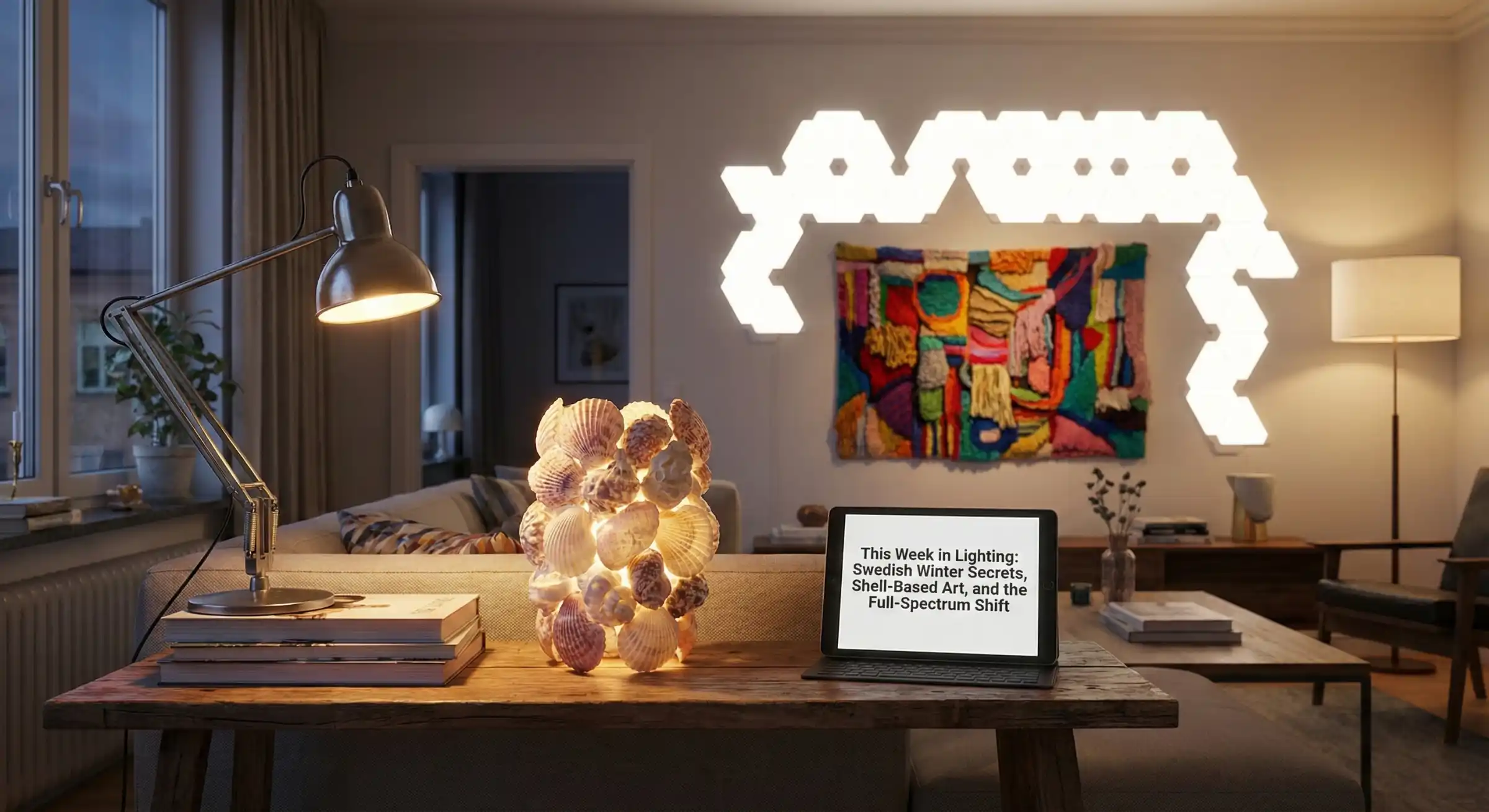
Welcome to the February 9th edition of our weekly briefing. As the winter chill lingers, the design world has turned its attention to the science of warmth—both literal and aesthetic. This week, we are seeing a fascinating convergence of Nordic wisdom, sustainable experimentation in Mexico City, and a technical push toward full-spectrum wellness. Let's dive into the illuminating trends shaping the future of lighting!
1. The Nordic Masterclass: Lighting Like a Swede (and Surviving Winter!)
With much of the northern hemisphere still shrouded in winter darkness, finding the right light becomes crucial for both productivity and well-being. Thankfully, The New York Times released a definitive guide on how to light a room like a Swede. The article highlights the importance of creating a cozy and inviting atmosphere through strategic lighting choices.
The highlight? The PJ60 table lamp by Box Arkitekter, a refined take on industrial work lamps. Its minimalist design and warm light output perfectly embody the Swedish aesthetic. The Swedish philosophy of lagom (not too much, not too little) is perfectly captured here through the use of multiple low-wattage light sources rather than a single harsh overhead fixture. Think soft pools of light that mimic the gentle glow of candlelight.
But it's not just about aesthetics. The Nordic approach to lighting is deeply rooted in practicality. They understand the impact of limited sunlight on mood and energy levels. That's why layering light sources is key. Consider these tips inspired by Swedish design:
- Embrace the Warmth: Opt for bulbs with a color temperature between 2700K and 3000K. These emit a warm, inviting glow that combats the winter blues.
- Layer Your Light: Combine table lamps, floor lamps, and wall sconces to create a multi-dimensional lighting scheme. Avoid relying solely on a single overhead light.
- Harness Natural Light: Maximize natural light by keeping windows clean and using sheer curtains. Mirrors can also help reflect and amplify daylight.
- Introduce Candles and Firelight: There's nothing quite like the flickering glow of candles or a crackling fire to create a cozy atmosphere. Use them sparingly but strategically to add warmth and ambiance.
This aligns perfectly with Real Simple’s latest advice on optimizing indoor lighting for winter. Experts Nathan Orsman and Lindsey Zborowski emphasize that 'winterizing' your light isn't just about brightness; it’s about creating a protective glow that counters the psychological weight of short days. Think of your lighting as a warm hug on a cold day.
2. Mexico City Art Week: Lighting as Sculpture and Sustainability
Across the globe, Mexico City Art Week 2026 has become a hotbed for Functional Art, pushing the boundaries of what lighting can be. Forget purely utilitarian designs; these artists are creating light fixtures that are as much works of art as they are sources of illumination.
Dezeen reported on a standout installation by Studio Davidpompa, where fixtures were crafted from discarded shells. These unique pieces showcase the beauty and potential of sustainable materials. The shells are transformed into translucent sculptures that emit a soft, ethereal glow. This project proves that 2026’s sustainability goals are moving beyond recyclability and toward the creative upcycling of biological waste into luxury design.
This trend reflects a growing awareness of the environmental impact of design and a desire to create pieces that are both beautiful and responsible. By using discarded materials, designers are not only reducing waste but also giving new life to objects that would otherwise end up in landfills.
In the same circuit, Lee Broom displayed what he calls a 'sculptural tableau of light'. Broom’s work continues to push the boundary of the 'Conversation Lamp,' treating light as a medium for spatial drama rather than just a utility. His installations are designed to evoke emotions and create a sense of wonder, transforming spaces into immersive experiences.
Key takeaways from Mexico City Art Week:
- Sustainable Materials: Expect to see more lighting fixtures crafted from recycled and upcycled materials.
- Artistic Expression: Lighting is increasingly being viewed as a form of art, with designers pushing the boundaries of creativity and innovation.
- Immersive Experiences: Lighting is being used to create immersive and emotional experiences, transforming spaces into works of art.
3. The 'No Big Light' Rebellion Gains Mainstream Momentum
The grassroots internet movement against the 'Big Light' (central overhead fixtures) has officially hit the mainstream. The days of harsh, unflattering overhead lighting are numbered! People are realizing the importance of creating a more nuanced and inviting atmosphere in their homes.
Stylist recently featured a guide on affordable luxury lampshades, explicitly citing the 'no big light' contingent. The trend is clear: homeowners are reclaiming their space's atmosphere by layering table lamps, floor lamps, and sconces to avoid the 'interrogation room' feel of poor overhead lighting.
Here's why the 'No Big Light' movement is gaining traction:
- Atmosphere: Layered lighting creates a warmer, more inviting atmosphere than a single overhead light.
- Flexibility: Multiple light sources allow you to adjust the lighting to suit different activities and moods.
- Personalization: Choosing different lamps and lampshades allows you to express your personal style.
- Well-being: Harsh overhead lighting can be stressful and contribute to eye strain. Softer, more diffused lighting is gentler on the eyes and promotes relaxation.
Think of it this way: your home is not an office. It's a sanctuary. Treat your lighting accordingly!
4. Innovation: Modular Wall Art and Full-Spectrum Tech
The future of lighting is all about customization and control. From modular wall art to full-spectrum technology, designers are finding new ways to empower users to create personalized lighting experiences.
For those who want to play the role of the 'Tech-Enabled Artisan,' Design Milk and Yanko Design both spotlighted the ARID Modular Lighting System by Nahtrang Studio for Bover. At $550, this system allows users to create their own configurations of light nodes and panels, blurring the line between a lighting fixture and custom wall art. Imagine creating a unique piece of art that also illuminates your space!
These modular systems offer endless possibilities for customization. You can change the configuration to suit your mood or the occasion, creating a dynamic and ever-evolving lighting display.
On the architectural side, The Architect’s Newspaper explored the shift toward Full-Spectrum Architectural Lighting. By using high-CRI (Color Rendering Index) whites, designers can now support the original design intent of a space, ensuring that materials like wood, stone, and textiles look as vibrant at midnight as they do at noon.
Full-spectrum lighting mimics natural sunlight, providing a more balanced and accurate representation of colors. This can have a significant impact on the overall look and feel of a space, enhancing the beauty of the materials and creating a more visually appealing environment.
5. The Emotional Dimension of Photobiology
Rounding out the week, MIRORlab is making waves by tapping into the emotional dimensions of light. Lighting designer Ran Hu argues that traditional lighting is too focused on function. In 2026, the industry is pivoting toward fixtures that evoke specific emotional responses, a concept mirrored by the CIE's (International Commission on Illumination) new focus on Interior Environment and Lighting Design standards, which now prioritize occupant satisfaction and biological wellbeing as much as energy efficiency.
This shift reflects a growing understanding of the profound impact that light has on our emotions and well-being. Different colors and intensities of light can evoke different feelings, from relaxation and calm to energy and excitement. By understanding the emotional dimensions of light, designers can create spaces that are not only visually appealing but also emotionally supportive.
Consider these examples:
- Warm, amber light: Creates a sense of coziness and intimacy, perfect for bedrooms and living rooms.
- Cool, blue light: Promotes alertness and focus, ideal for workspaces and kitchens.
- Green light: Associated with nature and tranquility, can be used to create a calming atmosphere in bathrooms and meditation spaces.
Summary of 2026 Design Signals:
- Materiality: Discarded shells and textured alabaster are the new benchmarks for luxury, emphasizing sustainability and natural beauty.
- Scale: Modular systems allow for 'supersized' personalized installations, giving users unprecedented control over their lighting environment.
- Wellness: Full-spectrum LEDs are no longer optional for high-end residential projects, reflecting a growing awareness of the impact of light on health and well-being.
Visual Search Tip: Saw a sculptural shell lamp or a Swedish industrial work light that you can't live without? Take a screenshot and upload it to our AI Visual Search tool. We’ll find you a Matter-ready match in our catalog that perfectly fits your 2026 smart home ecosystem. Happy illuminating!