Personalized lighting for your home: 5 key benefits
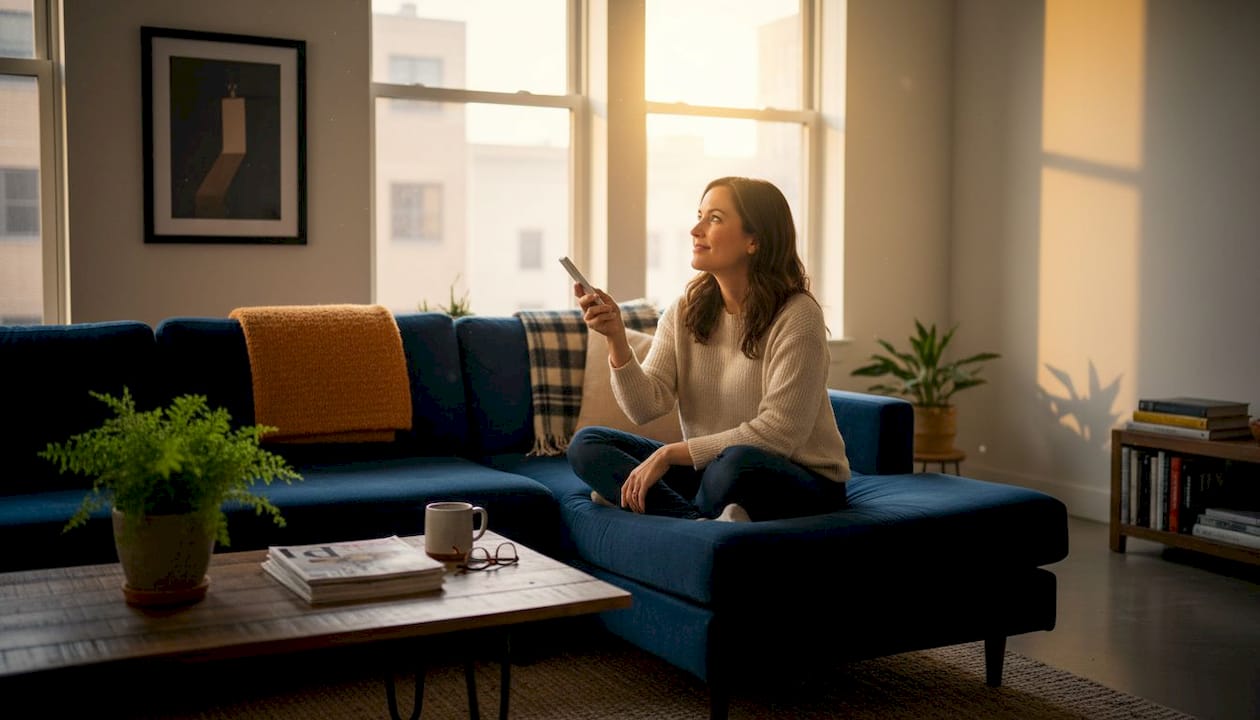
Most homeowners spend hours choosing paint colors and furniture, then grab whatever lamp fits the budget and call it done. That’s a mistake that quietly undermines every other design decision in the room. Lighting isn’t just about visibility. It shapes how a space feels, how productive you are in your home office, how relaxed you feel in your bedroom, and even how welcoming your living room seems to guests. Personalized lighting tailors illumination to individual preferences and space needs, and once you understand how it works, you’ll never look at a bare bulb the same way again.
Table of Contents
- Understanding personalized lighting
- The benefits of personalized lighting
- Key elements and technologies behind personalized lighting
- How to personalize lighting in every room
- Common mistakes to avoid when personalizing lighting
- Our perspective: Why personalized lighting is the future of home design
- Get started with personalized lighting solutions
- Frequently asked questions
Key Takeaways
| Point | Details |
|---|---|
| Personalized lighting defined | It means customizing light fixtures, colors, and controls to fit your lifestyle and visual tastes. |
| Boosts home comfort | Tailored lighting enhances mood and function in every room, from kitchen to bedroom. |
| Tech makes it easy | Smart bulbs and visualization tools simplify the process and prevent costly mistakes. |
| Avoid common errors | Testing, layering, and understanding color temperature are crucial to ensure great results. |
Understanding personalized lighting
Personalized lighting means designing your home’s illumination around your specific needs, routines, and aesthetic preferences rather than defaulting to a single overhead fixture and hoping for the best. It draws from lighting basics like layering and color temperature, then adds modern tools like smart controls and AI-powered recommendations to give you real flexibility.
Here’s a quick comparison to show what separates standard setups from personalized ones:
| Feature | Standard lighting | Personalized lighting |
|---|---|---|
| Control | On/off switch | Dimmers, remotes, apps |
| Flexibility | Fixed brightness | Adjustable intensity and color |
| Room fit | Generic | Tailored to room function |
| Technology | Basic bulbs | Smart bulbs, AI recommendations |
| Cost over time | Higher energy use | More energy efficient |
The difference isn’t just cosmetic. A personalized setup accounts for how you actually use each room, not just how it looks in a catalog photo.
Key features that define a personalized lighting system include:
- Layering: Combining ambient, task, and accent lighting in one room
- Dimmers: Adjusting brightness to match mood or time of day
- Color temperature: Choosing warm or cool tones for different activities
- Smart technology: Scheduling, voice control, and app-based automation
Pro Tip: Don’t try to overhaul every room at once. Start with the space where you spend the most time, like the living room or home office, and notice how much a single well-planned lighting layer changes the feel.
The benefits of personalized lighting
With the definition clear, it’s time to get specific: what positive changes can personalized lighting actually deliver to your daily home experience?
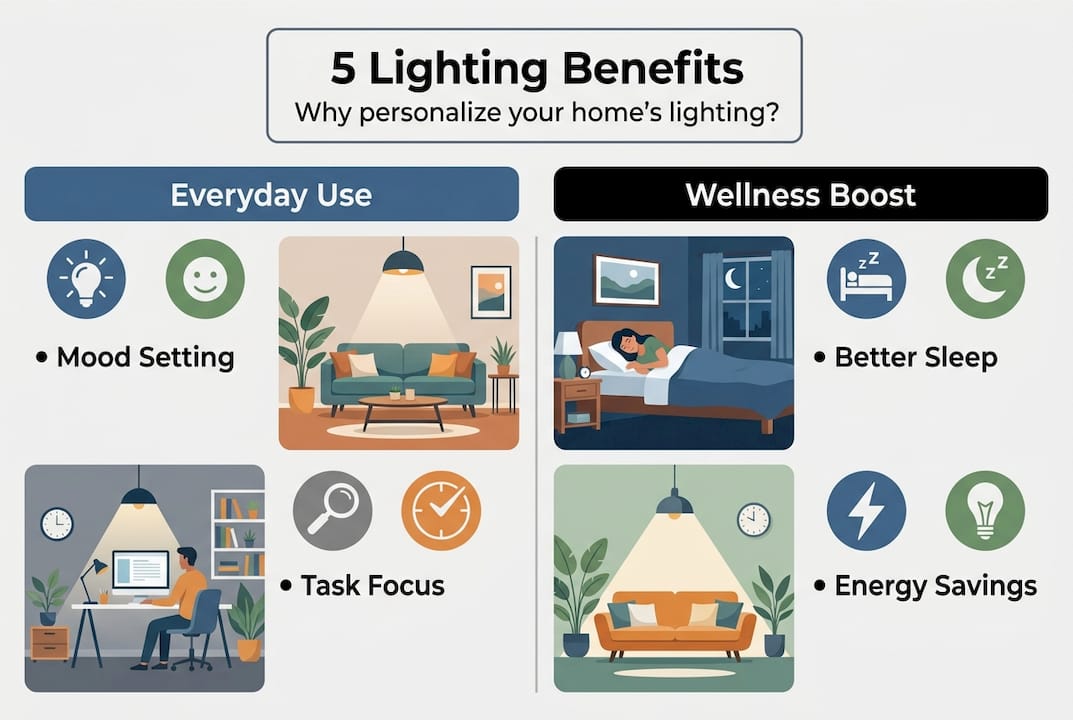
The advantages go well beyond aesthetics. Here’s what you can realistically expect:
- Improved mood and focus: Cooler, brighter light supports concentration during work hours; warmer, dimmer light signals your brain to wind down in the evening
- Energy savings: Smart bulbs and automated schedules reduce unnecessary usage
- Higher home appeal: Well-lit spaces photograph better and feel more inviting to buyers
- Adaptability: The same room can serve multiple purposes depending on lighting settings
- Convenience: Remote and voice control means you never have to get up to adjust a lamp
“Lighting customization can enhance mood, productivity, and home appeal in ways that most homeowners dramatically underestimate.”
One of the most underrated benefits is adaptability. Your kitchen at 7 a.m. during breakfast prep needs a completely different light than the same kitchen at 8 p.m. during a dinner party. Personalized lighting lets you program those shifts automatically, so the room adjusts to your life rather than the other way around.

According to research on personalized lighting advantages, people who invest in customized lighting report feeling more comfortable and satisfied with their home environment overall. That’s a meaningful return on what is often a modest investment. A room-by-room lighting guide can help you map out which benefits matter most in each specific space.
Key elements and technologies behind personalized lighting
Spotting the benefits is only the first step. Let’s see what tools and products actually make personalized lighting possible today.
The technology landscape has changed dramatically in the past decade. Smart bulbs and lamp selection apps make tailoring lighting accessible to homeowners without any technical background. Here’s how traditional setups compare to smart and AI-powered options:
| Control type | Traditional | Smart/AI-powered |
|---|---|---|
| Adjustment method | Manual switch | App, voice, schedule |
| Color options | Fixed | Millions of shades |
| Energy tracking | None | Real-time monitoring |
| Personalization | None | Room-specific profiles |
| Setup complexity | Minimal | Low to moderate |
The future of smart lighting points toward systems that learn your habits over time and adjust automatically, but you don’t need to wait for that. You can start today with a few straightforward steps:
- Define your goals: Decide what you want from each room (relaxation, focus, ambiance)
- Choose a platform: Pick a smart bulb ecosystem or app that fits your budget and devices
- Install and integrate: Connect bulbs to your home network and set up basic controls
- Automate settings: Create schedules or scenes for morning, work, and evening modes
For room-specific guidance, the kitchen lighting expert tips on layering task and ambient light are a great starting point for one of the most-used rooms in any home.
Pro Tip: Always use a visualization app before buying a new fixture. Seeing a lamp rendered in your actual room prevents expensive regrets and saves you the hassle of returns.
How to personalize lighting in every room
You’re equipped with the basics. Now let’s get practical and see how to apply these strategies in every part of your home.
As noted in the lighting by room guide, different rooms require unique lighting strategies for the best results. Here’s a quick breakdown:
- Living room: Layer floor lamps, table lamps, and overhead fixtures. Add dimmers for movie nights and brighter settings for reading or entertaining. Browse traditional living room lighting for classic fixture ideas.
- Kitchen: Combine under-cabinet task lighting with a central pendant or recessed lights. Bright and cool tones work best for food prep.
- Bedroom: Use warm, dimmable bedside lamps and avoid cool overhead light in the evening to support better sleep.
- Home office: Prioritize cool, bright task lighting at your desk and add a warmer ambient source to reduce eye strain during long sessions.
- Hallway: Install motion-activated or dimmable sconces for safety without harsh brightness at night.
“When I finally layered lighting in my living room instead of relying on one ceiling fixture, the room went from feeling flat to feeling like a completely different space.”
The key is thinking about both task and mood in every room. Lighting for every style of home, from modern minimalist to rustic farmhouse, follows the same core principle: match the light to the moment. Even in lighting in renovation projects, layering and adaptability consistently rank as the most impactful upgrades homeowners make.
Common mistakes to avoid when personalizing lighting
While the possibilities are exciting, there are also traps that can sabotage your efforts. Here’s how to avoid them.
Ignoring layering or color temperature often leads to unsatisfactory lighting results that leave homeowners frustrated despite their investment. The most common mistakes include:
- Relying on one fixture: A single overhead light creates flat, unflattering illumination in almost every room
- Skipping dimmers: Fixed brightness locks you into one mood and one function for the entire space
- Ignoring color temperature: Using cool white bulbs in a bedroom or warm bulbs in a workspace undermines both comfort and productivity
- Underestimating natural light: Failing to account for how sunlight shifts throughout the day leads to setups that look great at noon but feel wrong by evening
- Overlooking controls: Buying smart bulbs but never setting up schedules or scenes wastes most of their potential
For a deeper look at what goes wrong, the lighting mistakes to avoid resource from the Lighting Design Lab covers professional-grade pitfalls that apply to home setups too.
Studies on buyer satisfaction show that poor lighting choices are among the top regrets homeowners report after renovation projects, often ranking above flooring and paint color decisions.
Pro Tip: Always test your full lighting setup at night before finalizing fixture placement. Daytime testing is misleading because natural light masks gaps and imbalances that become obvious after dark.
Our perspective: Why personalized lighting is the future of home design
Amid all the tools and techniques, let’s step back and explore what truly sets personalized lighting apart for now and the future.
The conventional approach to home lighting, one ceiling fixture per room and a lamp in the corner, was never really a design choice. It was a default. And defaults rarely serve anyone well.
What we’ve seen, working with homeowners across every style and budget, is that lighting is the single most underinvested element in home design relative to the impact it delivers. People will spend thousands on a sofa and $30 on the lamp that sits next to it. That imbalance shows.
Technology is erasing the old excuse that personalized lighting is only for luxury homes. Smart bulbs cost a few dollars each. AI-powered tools like those at Find a Lamp let you visualize changes before spending a cent. The barrier to entry has essentially disappeared.
Our honest prediction: within five years, homeowners will expect their lighting to adapt automatically, just like their thermostats and security systems already do. The homes that feel dated won’t be the ones with old furniture. They’ll be the ones still running on a single switch.
Get started with personalized lighting solutions
If you’re eager to see what personalized lighting can do for your home, the next step is simple.

Find a Lamp gives you AI-powered lamp recommendations based on photos of your actual room, so you’re not guessing what will work. Upload a photo, explore curated suggestions matched to your space’s style and function, and use the visualization tool to see exactly how a fixture will look before you buy. Whether you need focused task lighting for a home office or a statement piece for your living room, the platform covers every space and style. Start with something specific, like browsing the desk lamps selection, and build your personalized setup one smart choice at a time.
Frequently asked questions
What is personalized lighting in home design?
Personalized lighting adapts design to users’ wants and space requirements by combining custom fixtures, adjustable controls, and intentional layouts that reflect how you actually live in each room.
How does personalized lighting improve a living space?
It matches illumination to different tasks and times of day, so lighting that boosts mood and productivity during work hours can shift to warm, relaxing tones in the evening without changing a single fixture.
What are some simple steps to personalize my home lighting?
Start by adding dimmers and layering light sources like floor, table, and accent lamps. Layering and adjustable controls make every room more functional and more personal without requiring a full renovation.
Can technology help with personalized home lighting?
Absolutely. Personalized lighting technology is now accessible for typical homeowners through smart bulbs, AI-powered lamp recommendations, and visualization apps that show you exactly how a fixture will look in your space before you commit.
Recommended
- 2025 Lighting Trends: Smart, Sustainable & Sculptural - Find a Lamp - Find a Lamp
- Home Office Lighting for Productivity & Comfort - Find a Lamp - Find a Lamp
- Find a Lamp - Lamps for Every Space with AI recommendations, Identify by Photo or Visualize in Your Room
- Why Matter Matters: Smart Home Lighting Guide - Find a Lamp - Find a Lamp
- Smart home lighting explained: Value, safety, and curb appeal