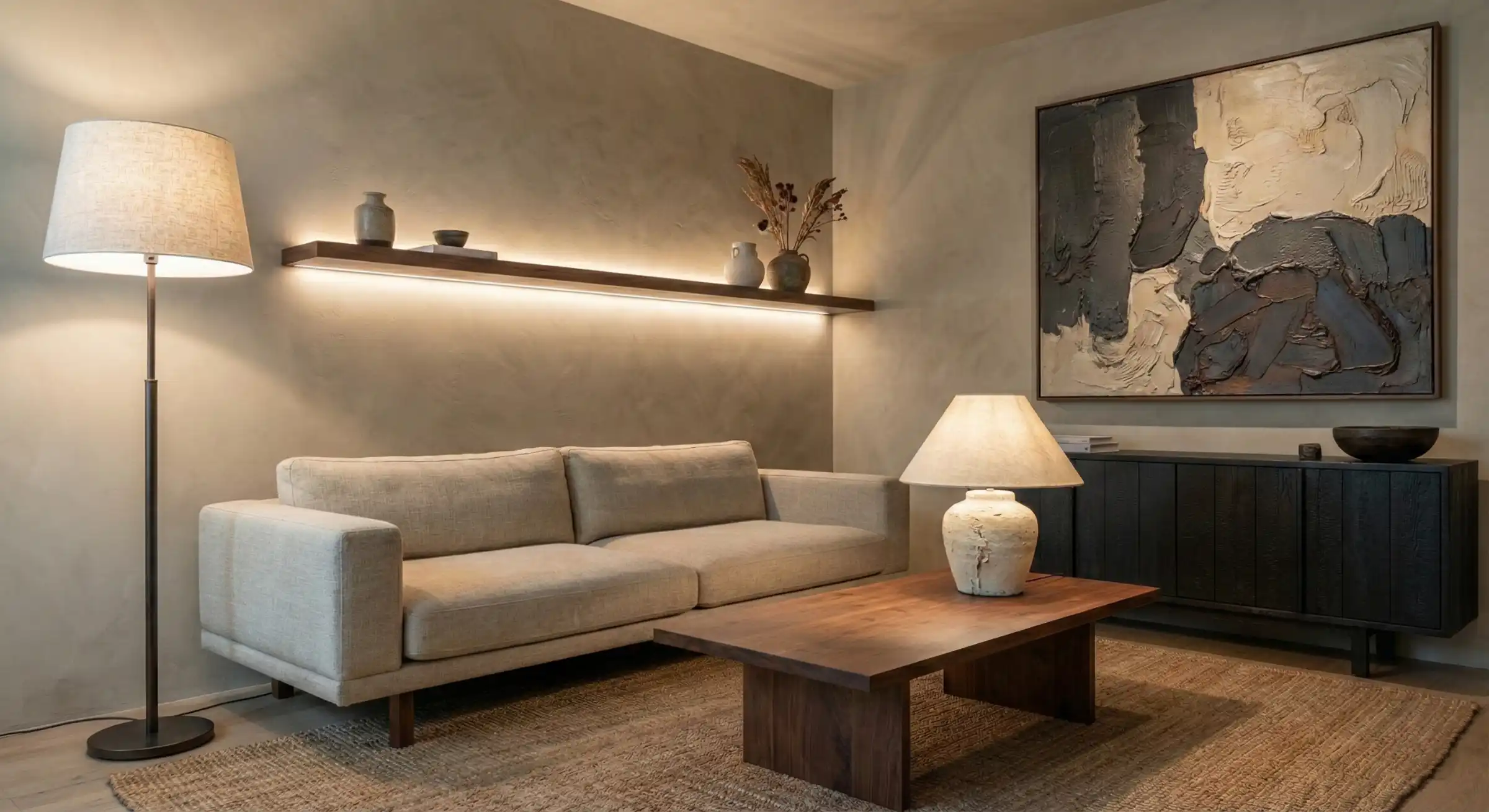
Remember the early 2020s? The design world was swept away by 'Japandi' – a serene blend of Japanese rustic charm and Scandinavian practicality. Think light oak, calming beiges, and a minimalist aesthetic so clean it almost sparkled. But design never stands still! As we cruise through 2026, that beloved style has evolved into something richer, deeper, and even more emotionally resonant: welcome to Japandi 2.0.
This isn't just about visual tranquility anymore. Japandi 2.0 is fueled by a global desire for Emotional Minimalism and a collective response to the feeling of constant uncertainty – what some call a 'permacrisis.' It's about embracing contrast, savoring texture, and creating a true 'sanctuary' that nurtures your well-being.
1. The Rise of Deep Contrast and Wabi-Sabi Imperfection
The most noticeable change in Japandi 2.0 is the move away from strictly beige palettes. While the core values of nature and simplicity remain central, we're seeing designers boldly incorporate Darker Woods. Think rich walnut, sophisticated charcoal-stained ash, and even traditional Japanese shou sugi ban (that stunning burnt cedar technique).
- Why the Dark Side? These deeper tones provide a visual anchor, adding a sense of stability and grounding to a space. They create a sophisticated, calming contrast against lighter elements.
- Example: Imagine a living room with creamy linen sofas, a light oak coffee table, and then – BAM – a stunning walnut media console that immediately draws the eye and adds depth.
But it's not just about color! Japandi 2.0 fully embraces Wabi-Sabi textures. Forget factory-perfect finishes. We're celebrating the beauty of imperfection and the 'human hand' in design. Think unpolished stone, hand-applied plaster with subtle variations, and ceramics with intentional irregularities.
- What is Wabi-Sabi? It's a Japanese philosophy that finds beauty in transience and imperfection. Think chipped pottery, weathered wood, and handmade objects that tell a story.
- Example: A dining room featuring a smooth concrete floor paired with a handcrafted ceramic pendant light. The contrast between the industrial and the artisanal creates a captivating tension.
- Get Inspired: Check out Architectural Digest's guide to Wabi-Sabi for stunning examples of this philosophy in action.
2. Lighting Strategy: Ditching the 'Big Light' for Layered Ambiance
Here's a key rule of Japandi 2.0: say goodbye to harsh, direct overhead lighting! The days of a 'grid of recessed can lights' – the dreaded 'Big Light' – are over. This type of illumination creates flat, uninviting spaces that are the antithesis of a relaxing sanctuary. Japandi 2.0 is all about Layered Lighting to create inviting 'pools of intimacy':
- Low-Profile Focus: Emphasize low-level lighting close to the ground. Floor lamps and table lamps are your best friends! They create a sense of peace, balance, and visual interest.
- Architectural Integration: Seamlessly integrate light into the building's structure. Think linear cove lighting or hidden tape lights tucked into millwork. The goal is to see the glow, not the source.
- The Triad of Light: Every room should have a balance of these three types of lighting:
- Ambient: The foundational glow that fills the room. Think soft overhead lighting (but not harsh can lights!), wall sconces, or large paper lanterns.
- Task: Focused light for specific activities. A desk lamp for reading, pendant lights over a kitchen island, or adjustable spotlights for artwork.
- Accent: The decorative 'jewelry' that adds visual interest and highlights architectural features. Picture lights, small spotlights on plants, or a strategically placed table lamp.
Pro Tip: Dimmers are essential! They allow you to adjust the intensity of your lights to create the perfect mood for any occasion.
3. Materiality: Hyper-Tactility and Natural Diffusion
In 2026, texture is the ultimate signifier of luxury. Japandi 2.0 lighting fixtures use 'Hyper-Tactile' materials to transform the quality of illumination and add a sensory experience to your space:
- Paper and Linen: These are essential for diffusing harsh LED light into a soft, warm, candle-like radiance. They create a gentle, inviting glow that's perfect for relaxation.
- Example: A large paper lantern hanging above a dining table, casting a diffused, flattering light on everyone seated below.
- Textured Ceramics: Earth-rooted materials like clay or travertine provide a heavy, grounded feel that absorbs light rather than reflecting it. They add a sense of warmth and authenticity.
- Example: A ceramic table lamp with a textured, matte finish that diffuses light beautifully and adds a tactile element to a side table.
- Blown Glass with Imperfection: Fixtures featuring glass with air bubbles, ripples, or striations scatter light in unique, dappled patterns that mimic the natural world. They add a touch of whimsy and artistry.
- Example: A hand-blown glass pendant light with subtle imperfections that create a mesmerizing play of light and shadow on the walls.
- Explore Further: The Illuminating Engineering Society (IES) offers a wealth of information on how different materials affect light quality.
4. Tech Integration: Wellness and Seamless Interoperability
Don't let the rustic aesthetic fool you. The heart of a Japandi 2.0 home is often high-tech, designed to support your health and well-being through Human-Centric Lighting.
Using smart LED systems, Japandi 2.0 lighting automatically adjusts intensity and color temperature throughout the day, mimicking the sun's natural cycle to boost morning alertness and promote evening relaxation. Imagine waking up to cool, energizing light and winding down with warm, amber hues that signal bedtime.
This seamless integration is made possible by the Matter protocol, which allows you to mix sculptural artisanal lamps with advanced smart switches across different brands without compatibility headaches. Finally, a truly smart home that's also beautiful!
- Benefits of Human-Centric Lighting: Improved sleep quality, enhanced mood, increased productivity, and reduced eye strain.
- Matter: The Future of Smart Home: This open-source connectivity standard ensures that your smart home devices from different manufacturers can work together seamlessly.
- Learn More: Check out this article on Wired to understand the impact of Matter on the smart home landscape.
5. Practical Implementation Checklist: Transform Your Space
Ready to bring the Japandi 2.0 aesthetic into your own home? Here's a simple checklist to get you started:
- Introduce Contrast: Pair your existing light-colored furniture with walnut or dark ash accents to add depth and visual interest. A dark wood coffee table, media console, or even just a few well-placed accessories can make a big difference.
- Prioritize Diffusion: Replace exposed bulbs with paper, fabric, or frosted glass shades to eliminate harsh glare and create a softer, more inviting ambiance.
- Layer Your Light: Add at least two side-lit sources (like a floor lamp and a wall sconce) to every room to supplement overhead lighting. This will create a more balanced and visually appealing space.
- Go Cordless: Use rechargeable table lamps to place a 'gentle glow' on bookshelves, dining tables, or anywhere else where outlets are unavailable. These portable lamps are a game-changer for creating instant ambiance.
Japandi 2.0 is more than just a design trend; it's a philosophy of enlightened living that combines ancient craft with the cutting-edge wellness tech of the future. It's about creating a home that is both beautiful and functional, a sanctuary that nurtures your body, mind, and soul.
Visual Search Tip: Obsessed with a specific 'Organic Modern' or Japandi look you saw in a designer gallery? Take a screenshot and upload it to our AI Visual Search tool. We'll instantly identify the materials and find you a Matter-compatible match in seconds. Happy decorating!