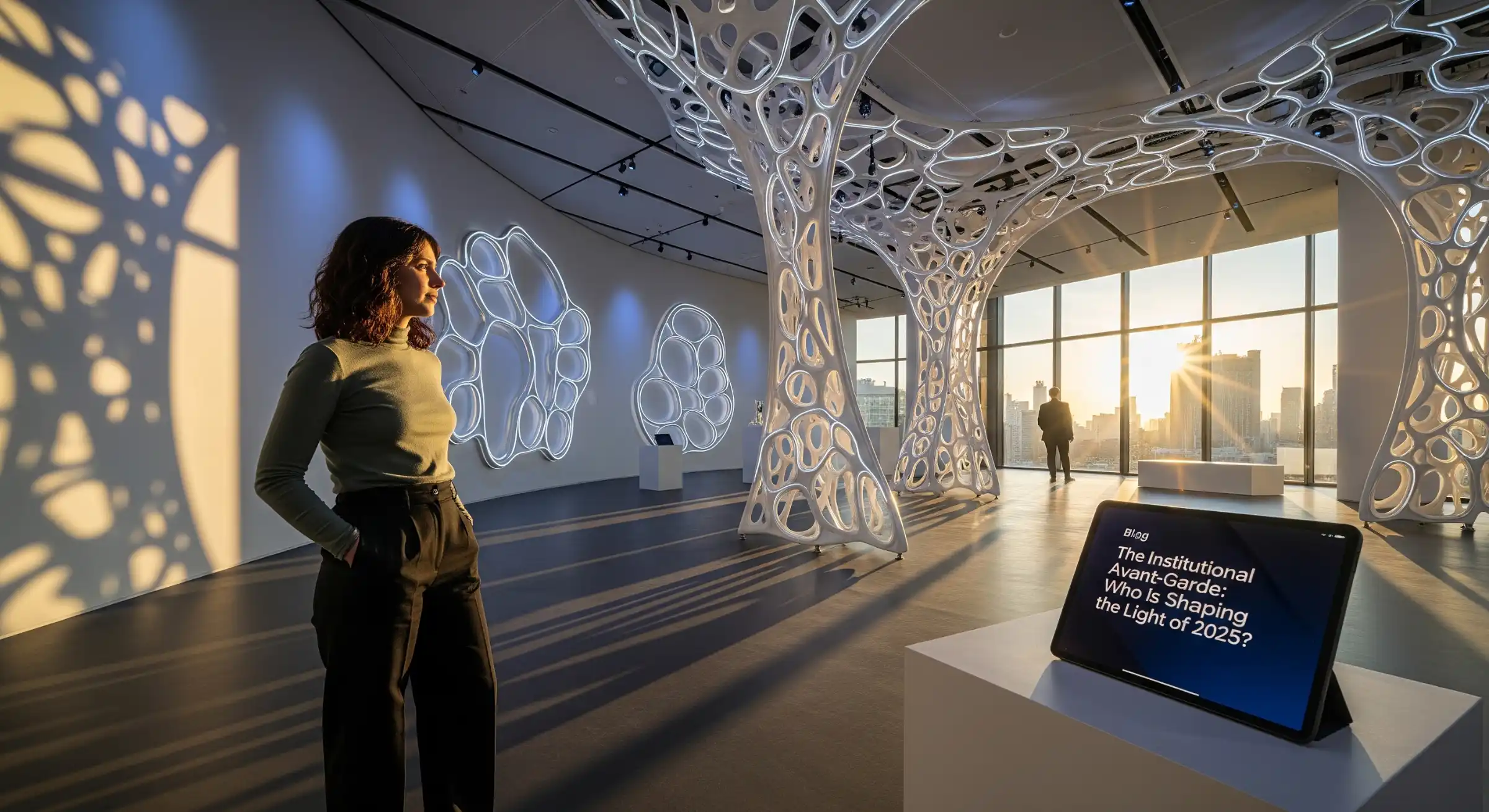
If you’ve stepped into a stadium recently—perhaps caught in the tidal wave of Taylor Swift’s Eras Tour or the high-gloss futurism of Beyoncé’s Renaissance—you weren't just watching a concert; you were witnessing a masterclass in the Institutional Avant-Garde. In 2025, lighting has officially transitioned from a secondary architectural finish to a primary medium for experiential storytelling and biological regulation.
Today, we are diving deep into the figures and institutions that are redefining the relationship between humans and photons. This is no longer about 'buying a bulb'; it’s about understanding the pioneers who are sculpting the very atmosphere of our lives.
1. The Guardians of the Glow: IALD and IES
Before we look at the 'rockstars' of design, we must look at the architects of the rules. The International Association of Lighting Designers (IALD) and the Illuminating Engineering Society (IES) are the hidden hands behind every well-lit space. In 2025, these organizations have pivoted from technical specs to Holistic Standards.
They are the ones ensuring that the move toward Human-Centric Lighting (HCL) isn't just a marketing buzzword but a technical reality that supports our circadian rhythms. Their technical exchanges facilitate the standards that prevent LED flicker and ensure that 'warm-dim' technology actually mimics the sunset accurately.
2. The Neri Oxman Effect: Material Ecology
One of the most profound influences on 2025 design doesn't come from a lamp catalog, but from the MIT Media Lab. Neri Oxman and her philosophy of Material Ecology have revolutionized how we think about fixtures. Her work treats nature not as an inspiration, but as a co-designer.
This has led directly to the Biomorphic Silhouette trend. In our homes, this translates to fixtures that look less like 'machines' and more like 'organisms'. Think 3D-printed lamps inspired by cellular structures or the Shoal collection by Scabetti, which uses ceramic 'fish' to mimic the fluid motion of a living school under light. Oxman has taught the industry that light should not be 'contained' but integrated into the biological fabric of the room.
3. Stadium-to-Sofa: Pop Culture as a Laboratory
The massive-scale kinetic technology used in global entertainment tours acts as a laboratory for residential design. The high-speed motorized fixtures and color-synched environments seen on stage are the direct ancestors of the Kinetic Sculptures we now see in living rooms.
Designers like Michael Anastassiades, whose Mobile Chandeliers prioritize balance and movement, represent this shift. We no longer want static objects; we want 'Light that Learns to Dance'. Whether it’s Kutarq Studio’s Totem de Luz or Frank Buchwald’s Helios, the goal is to bring the 'Main Character Energy' of a world-class production into the intimacy of the home.
4. Urban Revitalization: The Fenix Museum Example
The avant-garde is also a tool for social change. In Rotterdam, the Fenix Museum for Migration serves as a global case study for 'Light in Layers'. By using photons to breathe life into an industrial skeleton, the designers proved that light can navigate the complex emotions of history and hope.
For the homeowner, this project reinforces the Art of Layering. It teaches us that to create a 'restorative' space, we must move away from the 'Big Light' and instead use focused task lighting and soft ambient washes to define the zones of our lives.
5. Ecological Stewardship and the Dark Sky Movement
Finally, the most influential trend of 2025 is Dark Sky Compliance. Led by organizations like the International Dark-Sky Association (IDA), the avant-garde has embraced the 'Science of the Dark'. Leading designers are now winning awards for projects that provide safety without contributing to light pollution.
As we noted in our LUNA V2.0 update, the goal is to use fixtures that are fully shielded and have warmer color temperatures (under 3000K) to protect local biodiversity. In 2025, being 'cool' means being ecological.
How to Bring the Avant-Garde Home
- Embrace the Curve: Look for 'Organic Modern' fixtures that move away from rigid lines.
- Prioritize High-CRI: Ensure your bulbs have a CRI of 90+ to replicate the precision of a museum installation.
- Automate Your Wellness: Use Matter-certified smart systems to mimic the natural progression of the sun.
Visual Search Tip: Seen a piece of light art in a gallery or a fixture at Stockholm Design Week that you need? Take a screenshot and upload it to our AI Visual Search tool. We will find you a 98% match that brings the 2025 Institutional Avant-Garde into your home today!